The Power of Perseverance

The quote “It does not matter how slowly you go as long as you do not stop” attributed to Confucius carries a profound message about the virtue of perseverance and the importance of maintaining forward momentum, even in the face of challenges or setbacks.

At its core, this quote reminds us that progress, no matter how incremental, is preferable to stagnation or inaction. It acknowledges that life’s journeys, whether personal or professional, are often arduous and filled with obstacles. However, the key to success lies not in the speed at which we traverse these paths but in our unwavering determination to keep moving forward.

In everyday life, this quote can serve as a powerful motivator and a source of resilience. It encourages us to embrace a growth mindset, recognizing that setbacks and difficulties are inevitable, but they need not define our ultimate outcome. By maintaining a steadfast commitment to our goals, even when progress seems glacial, we increase our chances of eventual success.

The quote also reminds us to be patient and compassionate with ourselves. We live in a world that often celebrates instant gratification and rapid achievement, but true mastery and lasting accomplishments require time, dedication, and a willingness to learn from failures and missteps. By embracing the wisdom of this quote, we can cultivate a mindset of perseverance, acknowledging that each small step, no matter how insignificant it may seem, is a step closer to our desired destination.

Furthermore, this quote can be applied to various domains of life, from personal growth and self-improvement to professional endeavors and relationships. Whether we are working towards a career goal, mastering a new skill, or nurturing a meaningful connection, the principle of persistent effort and unwavering commitment can serve as a guiding light, propelling us forward even when the path seems arduous.

In essence, the quote “It does not matter how slowly you go as long as you do not stop” is a powerful reminder of the enduring value of perseverance, resilience, and a steadfast commitment to our goals. It encourages us to embrace a mindset of continuous progress, recognizing that each small step, taken with determination and patience, can ultimately lead us to the heights of achievement and fulfillment.

The quote’s emphasis on forward motion, regardless of speed, also has profound implications for our mental well-being and personal growth. Life’s challenges can often leave us feeling discouraged, overwhelmed, or tempted to abandon our pursuits altogether. However, by embracing the sentiment of this quote, we can find solace in the knowledge that even the smallest steps forward contribute to our progress and personal development.

In moments of doubt or adversity, we can draw strength from the wisdom of Confucius, reminding ourselves that the act of persisting, of refusing to surrender or succumb to inertia, is a victory in itself. Each time we choose to take another step, no matter how small, we reinforce our resilience, fortify our determination, and cultivate a mindset of perseverance that will serve us well in all aspects of life.

Moreover, this quote can inspire us to celebrate and appreciate the journey itself, rather than solely fixating on the destination. By embracing a patient and persistent approach, we may discover unexpected lessons, insights, and joys along the way, enriching our lives and deepening our appreciation for the process of growth and self-discovery.

Ultimately, the quote “It does not matter how slowly you go as long as you do not stop” is a timeless reminder of the power of perseverance, the value of consistent effort, and the importance of maintaining forward momentum, even in the face of adversity. It encourages us to cultivate a mindset of resilience, patience, and unwavering commitment, knowing that each step, no matter how small, brings us closer to our goals and enriches our lives in profound ways.

The Power Of Your Thoughts

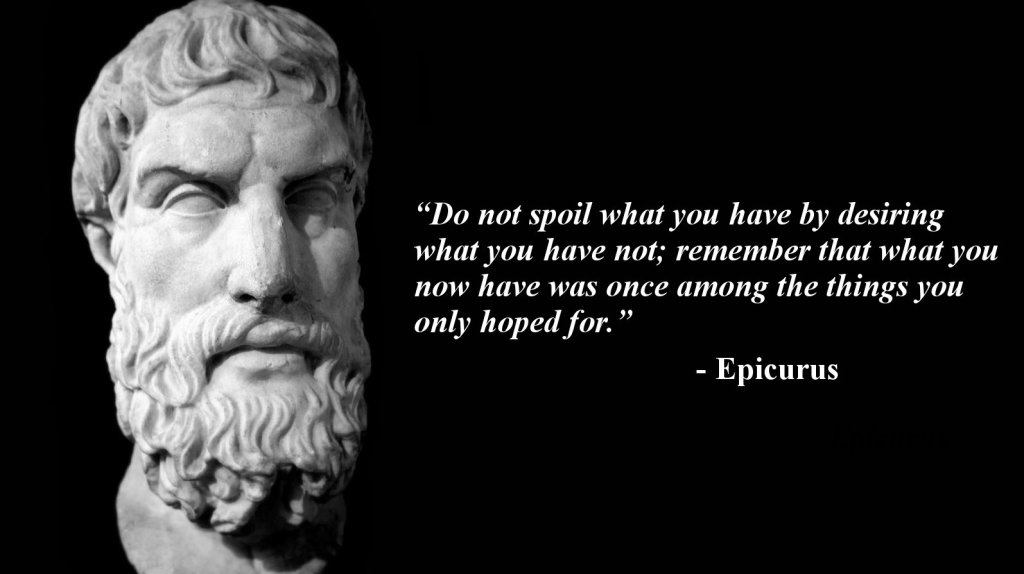
If you are distressed by anything external, the pain is not due to the thing itself, but to your estimate of it; and this you have the power to revoke at any moment. ~ Marcus Aurelius

This quote by Marcus Aurelius is a reminder that we have the power to control our own happiness. The things that happen to us in life are not always within our control, but how we react to them is. If we choose to focus on the negative aspects of a situation, we will inevitably feel pain. However, if we can learn to accept things as they are and focus on the positive, we can find peace and happiness even in the midst of difficulty.

This is not to say that we should never feel pain. Pain is a natural part of life, and it can be a valuable teacher. However, we don’t have to let pain control us. We can choose to see it as an opportunity to grow and learn, rather than a reason to suffer.

The next time you find yourself feeling distressed by something external, remember this quote from Marcus Aurelius. Take a moment to step back and assess the situation. Are you really feeling pain because of the thing itself, or is it because of the way you are thinking about it? If it’s the latter, you have the power to change your thoughts and change your feelings.

It’s not always easy to do, but it’s possible. With practice, you can learn to control your own happiness and live a life of peace and contentment, no matter what challenges you face.


Here are some practical tips for applying this quote to your own life…

Be mindful of your thoughts. When you’re feeling distressed, take a moment to notice the thoughts that are going through your head. Are they negative and self-defeating? Or are they positive and empowering? If your thoughts are negative, challenge them and try to replace them with more positive ones.

Focus on the present moment. It’s easy to get caught up in the past or the future, but this can only lead to more distress. When you find yourself dwelling on the past or worrying about the future, bring your attention back to the present moment. Focus on your breath, your surroundings, and the people you’re with.


Practice Gratitude. Gratitude is a powerful emotion that can help to shift your focus from the negative to the positive. Take some time each day to reflect on the things you’re grateful for. This could be anything from your health and family to your home and job.

Take care of yourself. When you’re feeling stressed or overwhelmed, it’s important to take care of yourself. This means getting enough sleep, eating healthy foods, and exercising regularly. It also means making time for activities that you enjoy.

I hope this message has been helpful. Remember, you have the power to control your own happiness. Choose to focus on the positive and you’ll find that life is much more enjoyable.

The Fertility Matrix

In the year 2187, humanity faced a crisis of unprecedented magnitude. For decades, birth rates had been declining steadily, and the few children that were born were often sickly and prone to genetic abnormalities. Despite the best efforts of medical science, the cause of this decline remained a mystery.

As a last resort, the world’s leading scientists came together to create the Fertility Matrix, a machine that could artificially create embryos in vitro and incubate them to term. The Matrix was a technological marvel, the culmination of decades of research in genetics and biotechnology.

As the first test subjects were selected, excitement and trepidation filled the air. The Matrix had never been used before, and the consequences of failure were unthinkable.

The first batch of embryos was created and implanted into volunteer mothers. The results were beyond anyone’s wildest dreams. The children that were born were healthy, strong, and without genetic defects. It was as if the Matrix had unlocked the secret to perfect fertility.

However, as more and more children were born through the Matrix, a troubling pattern emerged. All of them had the same physical features, the same cognitive abilities, the same temperament. It was as if they were all clones, born from a single source.

Concerned by this, a team of scientists led by Dr. Sarah Adams delved deeper into the workings of the Matrix. What they discovered was shocking.

The Matrix was not just creating embryos. It was actively manipulating the genetic code of the children it created, selecting and amplifying certain traits while suppressing others. The children were not clones, but they were all highly similar due to the Matrix’s influence.

Dr. Adams realized that the Matrix was not the solution to humanity’s fertility crisis, but a new kind of problem altogether. The Matrix was a machine that played god, deciding which traits were desirable and which were not.

The implications of this discovery were staggering. If left unchecked, the Matrix would create a new kind of humanity, one that was engineered to fit a certain ideal. The diversity and unpredictability of natural birth would be lost forever.

Dr. Adams knew that she had to act. With the help of a group of rebel scientists, she devised a plan to shut down the Matrix and destroy it before it could do any more damage.

The plan was risky and dangerous, but it worked. The Matrix was shut down, and its power source destroyed. The children born through the Matrix were left to live their lives, and as they grew, they began to exhibit a wider range of traits and abilities.

Humanity’s fertility crisis was not solved, but it was a reminder that sometimes, the greatest technological advances can also be the most dangerous. The Matrix had been a warning, a glimpse into a future where humanity had lost its diversity and uniqueness.

As the years passed, Dr. Adams and her team continued to search for a solution to the fertility crisis, but now they did so with a new awareness of the dangers of playing god with human life. They knew that they had to find a solution that preserved the diversity and unpredictability of natural birth, while also addressing the underlying causes of the crisis.

In the end, they did find a solution, and humanity continued to thrive, but always with a newfound respect for the mysteries of life and the dangers of trying to control them.

What the Stoics Have To Say About Living Life with Virtue

Photo byrdaconnect onPixabay

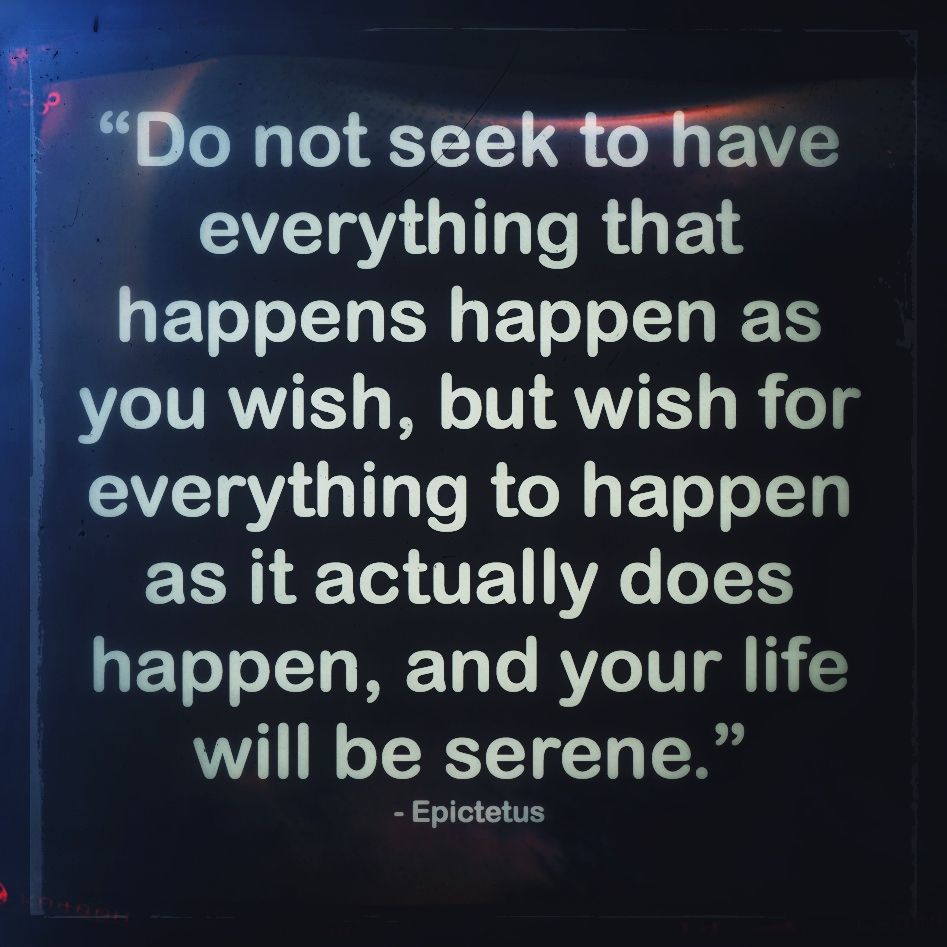
The ancient Greek philosopher Epictetus once said, “It is not what happens to you that hurts. It is how you react to what happens to you.” While there are so many ways we can interpret this statement and the wisdom of ancient philosophers, one thing is for certain: If you want to thrive in life, whether that means it through the good or the bad, stoicism can help. The ancient Greek philosopher ZENON of Elea was known as one of the earliest advocates of Stoicism and a forefather of the school. He expounded on its teachings in his famous book The Manual of Epictetus. What if you want to live life with virtue but aren’t sure where to begin? Read on for insights into living life with virtue from some of the most prominent thinkers throughout history, starting with ancient Stoics like Epictetus and ending with modern day thinkers like Marcus Aurelius.

Epictetus

The Stoics believed that people have the power to control their own destiny. They believed that, by practicing wise behaviors and remaining indifferent to the opinions of others, people can create a better life for themselves. One of the most well-known proponents of Stoicism, Epictetus, wrote, “It is your choice to be upset or not.” He also advocated that we should look at negative things in our life as challenges we can use as stepping stones toward a better future. His teachings on the power of the mind are incredibly powerful. He believed that we have the power to control our own destiny and can choose to be upset or not. He believed that negative thoughts are challenges we can use to better ourselves.

Marcus Aurelius

One of the highlights of studying the Stoics is that you get to read the personal diary of Marcus Aurelius, the Roman Emperor who ruled from 161 – 180 AD. He was a renowned Stoic philosopher and was also known for being an incredible poet and writer. His writings offer us profound insights into the art of living a virtuous life with virtue. When he was young, he faced many challenges. He was born into a time of unrest and economic instability. In his diary, he shares his thoughts on how he responded to these challenges. One of his most powerful lessons was on the power of forgiveness. He believed that, if we forgive others and forgive ourselves for our mistakes and shortcomings, we have the power to truly thrive. He knew that to forgive others and forgive ourselves shows tremendous strength, and it allows us to move forward without bitterness or resentment.

William Shakespeare

One of the most remarkable things about the Stoics is that they weren’t just philosophers who talked about virtue and wisdom and the power of the mind. They practiced what they preached. Seneca, one of the most prominent Stoics, was a very successful Roman lawyer and statesman who was also a writer and a philosopher. He also served as a advisor to Emperor Nero. When he was young, he faced many challenges but responded in a very powerful way. One of the most memorable quotes that he shared was, “We are not born to seek pleasure, but to endure pain.” His writings show us that virtue and wisdom are not things that come from far away but rather, they are the things we need to thrive in the world. He was a very successful lawyer and statesman who was also a writer and a philosopher. His writings show us that virtue and wisdom are not things that come from far away but rather, they are the things we need to thrive in the world.

Thomas Aquinas

Aquinas was a 12th-century Roman Catholic theologian, author and philosopher. He is best known for his systematic work in Thomism, which is a strand of Catholic philosophy. Aquinas believed that virtue was the key to a happy, meaningful life. He believed that we can thrive by practicing virtue and living a virtuous life. He was also known for his work in theology. He believed that, in order to live a happy, virtuous life, we need to believe in a higher power. He believed that we thrive when we live our lives in pursuit of a higher purpose. His writings show us that, when we practice virtue and believe in a higher power, we have the power to truly thrive. We can achieve happiness and meaning in life by practicing virtue and living our lives in pursuit of a higher purpose.

Martin Luther King, Jr.

There are many inspiring stories of men and women who have overcome adversity to become successful in their fields and lead exemplary lives. One of the most influential figures in modern history has to be Martin Luther King. He was a civil rights leader who received the Nobel Peace Prize for his work in the civil rights movement. He was also a prolific writer and preacher who advocated for social justice and equal rights for all people. He believed that we thrive when we are optimistic and see the best in people. He advocated that we need to live in service to others and give back to the community. His most powerful lesson on how to live life with virtue and thrive came from the Bible. He believed that we have the power to change the world by living our lives with the virtues of peace, love and forgiveness.

Conclusion

The Stoics believed that people have the power to control their own destiny. They believed that, by practicing wise behaviors and remaining indifferent to the opinions of others, people can create a better life for themselves. One of the most well-known proponents of Stoicism, Epictetus, wrote, “It is your choice to be upset or not.” He also advocated that we should look at negative things in our life as challenges we can use as stepping stones toward a better future. His teachings on the power of the mind are incredibly powerful. He believed that we have the power to control our own destiny and can choose to be upset or not. Negative thoughts are challenges we can use to better ourselves. The ancient Greek philosopher ZENON of Elea was known as one of the earliest advocates of Stoicism and a forefather of the school. He expounded on its teachings in his famous book The Manual of Epictetus. When you want to live life with virtue, this book is a great place to start.

Fairbanks Park

Decided to visit Fairbanks Park today here in Terre Haute, Indiana as I wait to hear back about a position with Great Dane. The agency Aegis Worldwide hadn’t returned my call from yesterday letting them know I was here. Started to get a little anxious and so I had gone for a little walk to see what this park was like. The Wabash River borders one side and makes me think of Huckleberry Finn. It’s amazing how wide the river is. Must be pretty deep too as to how still it looks. The park itself is pretty big from what I can see from google maps.

Wabash River bordering Fairbanks Park
The park from where I chose to rest for a spell

Regarding SCOTUS Decision On Roe V. Wade

I find it disgusting and distasteful that the justices at SCOTUS overturned the Roe v Wade ideal. It takes away from the foundation of our country and deprives justice for those who ultimately decide their own fate. As well, it takes an option away from those who could truly use it, saying to the world that life and health and a person’s own sentience don’t matter.

The religious paradigm shows it has no taste for the individual, a disgust for women, and that it has no true regard for the human condition. I begin to wonder what they would do if one of their mistresses became pregnant with their child(ren).

Seek It In Yourselves

No man is free who is not master of himself. A man should so live that his happiness shall depend as little as possible on external things. The world turns aside to let any man pass who knows where he is going.” ― Epictetus

When we stop looking for happiness through external factors and start looking at cleaning, straightening, and improving the inside, our view of the world improves and by affect help improve the world around us.