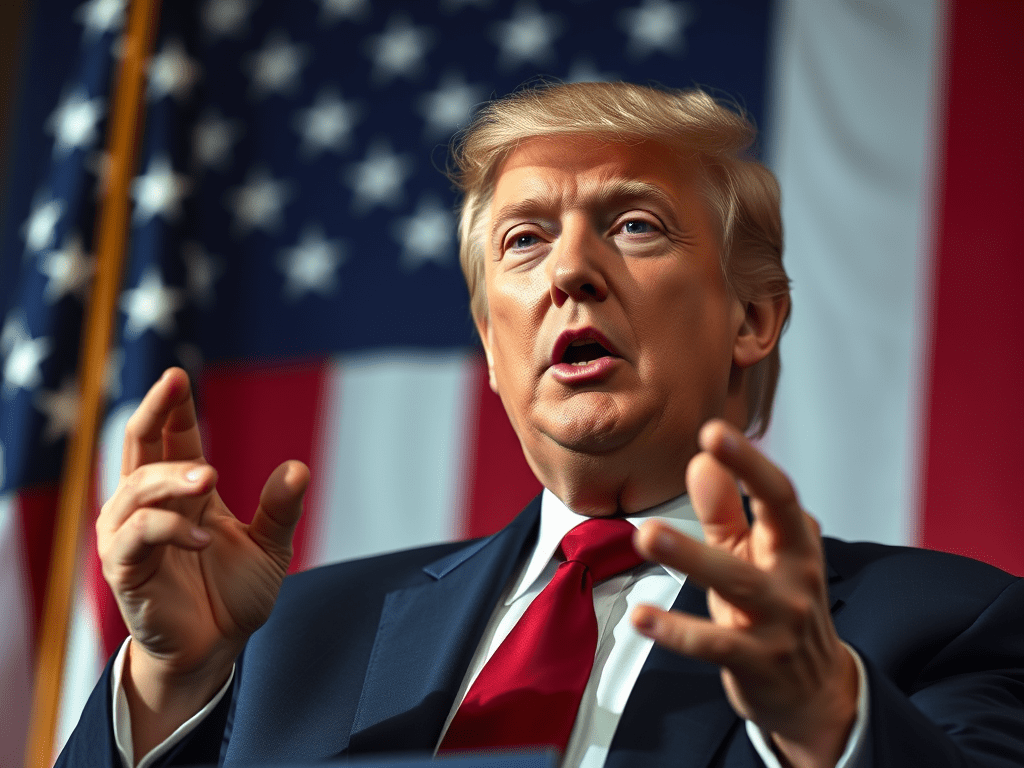
Agenda 47 is Donald Trump’s comprehensive policy platform for his 2024 presidential campaign, outlining his proposed actions and priorities if elected as the 47th President of the United States[1]. Here are the key aspects of Agenda 47:
## Overview
Agenda 47 is presented on Trump’s campaign website as a series of videos featuring Trump himself explaining each proposal[1]. The platform covers a wide range of policy areas and is designed to appeal to Republican primary voters and Trump’s base[1].
## Key Policy Proposals
Some of the main policy proposals included in Agenda 47 are:
1. **Immigration and Border Security**:
– Sealing the border and stopping what Trump calls a “migrant invasion”
– Carrying out the largest deportation operation in American history[5]
2. **Economy and Energy**:
– Ending inflation and making America “affordable again”
– Making the U.S. the dominant energy producer in the world
– Implementing large tax cuts for workers and eliminating tax on tips[5]
3. **Education**:
– Focusing on “Knowledge and Skills, Not CRT and Gender Indoctrination”
– Removing what Trump calls the “left’s ‘equity’ agenda” from classrooms
– Reinstating the 1776 Commission[1]
4. **Government Reform**:
– Cutting federal regulations
– Implementing a regulatory budget to reduce the federal government annually
– Bringing independent regulatory agencies under Presidential authority[1]
5. **Constitutional Rights**:
– Defending the Constitution, Bill of Rights, and fundamental freedoms
– Protecting freedom of speech, religion, and the right to bear arms[5]
6. **Foreign Policy and National Security**:
– Preventing World War III and restoring peace in Europe and the Middle East
– Building a missile defense shield over the entire country[5]
## Implementation and Criticism
Many of Agenda 47’s proposals would rely on executive orders and expanded executive power[1]. Some of the plans are legally controversial and may require constitutional amendments[1]. Critics have raised concerns about the platform’s approach to climate change, public health, and its potential impact on inflation[1].
It’s worth noting that while Agenda 47 is Trump’s official campaign platform, it shares many themes and policies with Project 2025, a separate initiative by the Heritage Foundation that aligns closely with Trump’s vision[4].
Citations:
[1] Agenda 47 https://en.wikipedia.org/wiki/Agenda_47
[2] Agenda 47 vs. Project 2025: Trump’s Bold Plan for … – YouTube https://www.youtube.com/watch?v=cwYpnE748MA
[3] Trump’s Agenda 47 — What It Means for Democracy https://www.democracydocket.com/analysis/trumps-agenda-47-and-what-it-means-for-democracy/
[4] What to Know About Donald Trump’s Agenda 47, and Project 2025 https://www.harpersbazaar.com/culture/politics/a62830793/donald-trump-agenda-47-project-2025-explained/
[5] Platform | Donald J. Trump https://www.donaldjtrump.com/platform
Category: Uncategorized
Role of CCR5-Δ32 Mutation in HIV Research and Treatment
The CCR5-Δ32 mutation indeed plays a significant role in conferring resistance to HIV infection, but it’s important to note that it does not provide complete immunity. This genetic mutation has garnered considerable attention in the field of HIV research and treatment due to its protective effects against certain strains of HIV.
Understanding CCR5-Δ32 Mutation
The CCR5-Δ32 mutation is a genetic alteration that affects the CCR5 gene, which codes for a protein on the surface of white blood cells. This protein, known as the CCR5 receptor, is one of the primary entry points for HIV to infect cells.
Mechanism of Protection
The mutation results in a shortened, non-functional CCR5 protein that is not expressed on the cell surface. Without this receptor, certain strains of HIV (specifically, R5-tropic HIV strains) cannot effectively bind to and enter the cell, thus providing a level of protection against infection.
Degree of Protection
It’s crucial to understand that the level of protection provided by the CCR5-Δ32 mutation depends on whether an individual has inherited one or two copies of the mutated gene:
- Heterozygous Carriers: Individuals with one copy of the CCR5-Δ32 mutation (heterozygous) have some protection against HIV infection and may experience slower disease progression if infected.
- Homozygous Carriers: Those who inherit two copies of the mutation (homozygous) have significantly increased resistance to HIV infection. However, it’s important to note that even homozygous individuals are not completely immune to all strains of HIV.
Limitations of Protection
While the CCR5-Δ32 mutation provides substantial protection against R5-tropic HIV strains, it does not confer immunity against all types of HIV:
- Some HIV strains can use alternative co-receptors, such as CXCR4, to enter cells.
- Certain HIV subtypes, particularly those prevalent in Africa and Asia, may be less affected by this mutation.
Prevalence and Evolutionary Significance
The CCR5-Δ32 mutation is most common in populations of European descent, with approximately 10% of Europeans carrying one copy of the mutation and about 1% being homozygous. The high frequency of this mutation in certain populations has led to speculation about its evolutionary origins and potential selective advantages in the past, possibly related to protection against other historical diseases.
Implications for HIV Treatment and Research
The discovery of the CCR5-Δ32 mutation has had significant implications for HIV research and treatment strategies:
- It has inspired the development of CCR5 antagonists, a class of antiretroviral drugs that block the CCR5 receptor.
- The mutation has been the basis for experimental gene therapy approaches aimed at mimicking its protective effects.
- The case of the “Berlin Patient,” who was effectively cured of HIV after receiving a stem cell transplant from a donor with the homozygous CCR5-Δ32 mutation, has further highlighted the potential of targeting the CCR5 receptor in HIV treatment.
In conclusion, while the CCR5-Δ32 mutation does provide significant protection against certain strains of HIV, it’s more accurate to describe it as conferring resistance rather than complete immunity. The mutation’s role in HIV resistance continues to be an important area of study in the ongoing efforts to combat the global HIV epidemic.The CCR5-Δ32 mutation indeed plays a significant role in conferring resistance to HIV infection, but it’s important to note that it does not provide complete immunity. This genetic mutation has garnered considerable attention in the field of HIV research and treatment due to its protective effects against certain strains of HIV.
Understanding CCR5-Δ32 Mutation
The CCR5-Δ32 mutation is a genetic alteration that affects the CCR5 gene, which codes for a protein on the surface of white blood cells. This protein, known as the CCR5 receptor, is one of the primary entry points for HIV to infect cells.
Mechanism of Protection
The mutation results in a shortened, non-functional CCR5 protein that is not expressed on the cell surface. Without this receptor, certain strains of HIV (specifically, R5-tropic HIV strains) cannot effectively bind to and enter the cell, thus providing a level of protection against infection.
Degree of Protection
It’s crucial to understand that the level of protection provided by the CCR5-Δ32 mutation depends on whether an individual has inherited one or two copies of the mutated gene:
- Heterozygous Carriers: Individuals with one copy of the CCR5-Δ32 mutation (heterozygous) have some protection against HIV infection and may experience slower disease progression if infected.
- Homozygous Carriers: Those who inherit two copies of the mutation (homozygous) have significantly increased resistance to HIV infection. However, it’s important to note that even homozygous individuals are not completely immune to all strains of HIV.
Limitations of Protection
While the CCR5-Δ32 mutation provides substantial protection against R5-tropic HIV strains, it does not confer immunity against all types of HIV:
- Some HIV strains can use alternative co-receptors, such as CXCR4, to enter cells.
- Certain HIV subtypes, particularly those prevalent in Africa and Asia, may be less affected by this mutation.
Prevalence and Evolutionary Significance
The CCR5-Δ32 mutation is most common in populations of European descent, with approximately 10% of Europeans carrying one copy of the mutation and about 1% being homozygous. The high frequency of this mutation in certain populations has led to speculation about its evolutionary origins and potential selective advantages in the past, possibly related to protection against other historical diseases.
Implications for HIV Treatment and Research
The discovery of the CCR5-Δ32 mutation has had significant implications for HIV research and treatment strategies:
- It has inspired the development of CCR5 antagonists, a class of antiretroviral drugs that block the CCR5 receptor.
- The mutation has been the basis for experimental gene therapy approaches aimed at mimicking its protective effects.
- The case of the “Berlin Patient,” who was effectively cured of HIV after receiving a stem cell transplant from a donor with the homozygous CCR5-Δ32 mutation, has further highlighted the potential of targeting the CCR5 receptor in HIV treatment.
While the CCR5-Δ32 mutation does provide significant protection against certain strains of HIV, it’s more accurate to describe it as conferring resistance rather than complete immunity. The mutation’s role in HIV resistance continues to be an important area of study in the ongoing efforts to combat the global HIV epidemic.
There are other genetic mutations that have been identified to provide varying degrees of resistance or protection against HIV infection. While the CCR5-Δ32 mutation is the most well-known and studied, several other genetic variants have been found to influence HIV susceptibility and disease progression. Here are some notable examples:
CCR2-64I Mutation
The CCR2-64I mutation affects the CCR2 gene, which codes for another chemokine receptor.
- Mechanism: This mutation results in a valine to isoleucine substitution at position 64 of the CCR2 protein.
- Effect: It is associated with slower HIV disease progression, although its protective effect is not as strong as CCR5-Δ32.
SDF1-3’A Mutation
This mutation occurs in the gene encoding SDF-1 (Stromal Cell-Derived Factor 1), also known as CXCL12, which is the natural ligand for the CXCR4 co-receptor.
- Mechanism: The mutation is located in the 3′ untranslated region of the SDF1 gene.
- Effect: Homozygous carriers of this mutation show delayed progression to AIDS, particularly in the later stages of HIV infection.
CCL3L1 Gene Copy Number Variation
CCL3L1 is a gene that encodes MIP-1α, a natural ligand of CCR5.
- Mechanism: Some individuals have multiple copies of this gene.
- Effect: A higher copy number of CCL3L1 is associated with lower susceptibility to HIV infection and slower progression to AIDS.
HLA-B57 and HLA-B27 Alleles
These are specific variants of Human Leukocyte Antigen (HLA) genes, which play a crucial role in the immune system’s ability to recognize and respond to pathogens.
- Mechanism: These HLA variants affect how the immune system presents HIV antigens to T cells.
- Effect: Individuals with these alleles often exhibit better control of HIV infection and slower disease progression.
TRIM5α Variants
TRIM5α is a protein that interferes with the uncoating of the HIV capsid after entry into the cell.
- Mechanism: Certain variants of TRIM5α are more effective at restricting HIV replication.
- Effect: While human TRIM5α generally has weak anti-HIV activity, some variants have been associated with lower susceptibility to HIV infection.
APOBEC3G and APOBEC3F Variants
These genes encode cytidine deaminases that can introduce mutations into the HIV genome during reverse transcription.
- Mechanism: Certain variants of these genes may be more effective at inhibiting HIV replication.
- Effect: Some studies have suggested that specific variants of APOBEC3G and APOBEC3F may confer some level of protection against HIV infection or influence disease progression.
Conclusion
While these genetic factors provide varying degrees of protection or influence disease progression, it’s important to note that none of them confer complete immunity to HIV. The interplay between host genetics and HIV infection is complex and multifaceted. Understanding these genetic factors not only provides insights into natural resistance mechanisms but also informs potential strategies for HIV prevention and treatment.
Research in this area is ongoing, and new genetic factors influencing HIV susceptibility and progression continue to be discovered. These findings contribute to our understanding of HIV pathogenesis and may lead to novel therapeutic approaches in the future.
Why CCR5-Δ32 Mutation is Key to HIV Immunity
There’s compelling evidence that certain immunity to HIV may be linked to a genetic mutation known as CCR5-Δ32. This mutation likely emerged in response to historical plagues, possibly the bubonic plague or smallpox. This mutation involves a deletion in the CCR5 gene. This gene codes for a receptor on the surface of white blood cells. HIV uses this receptor to enter and infect cells. People with two copies of this mutation, one from each parent, are highly resistant to HIV infection. The virus cannot enter their cells.
Here’s how it connects to ancient plagues:
- High Frequency in Europe: The CCR5-Δ32 mutation is notably common among people of European descent, where it appears in about 10% of the population. It’s much rarer or nearly absent in other populations, which aligns with the geographic impact of historic plagues in Europe, especially the bubonic plague and smallpox, both of which ravaged Europe for centuries.
- Selective Pressure from Historical Pandemics: The high prevalence of CCR5-Δ32 in Europe suggests it was positively selected. Researchers theorize that during the bubonic plague or smallpox epidemics, individuals with this mutation had a survival advantage, as these diseases may have also used the CCR5 receptor pathway.
- Protection Against HIV: The mutation’s relevance to HIV immunity was discovered later. People with two copies of CCR5-Δ32 are almost entirely immune to HIV infection, while those with one copy may have a delayed progression if infected. This suggests that the mutation, originally advantageous against historic pathogens, inadvertently protects against HIV.
While it’s uncertain if CCR5-Δ32 specifically evolved in response to the bubonic plague or other pandemics, it’s clear that the mutation has roots in an ancestral selection pressure, likely due to a severe, recurrent epidemic.
Biblical Examples of Polygamy: Key Figures and Their Stories
There are several examples of polygamy in the Bible, particularly in the Old Testament. Some notable figures who had multiple wives include:
- Lamech (Genesis 4:19): The first mention of polygamy in the Bible. Lamech, a descendant of Cain, had two wives, Adah and Zillah.
- Abraham (Genesis 16; 25:1-6): While his primary wife was Sarah, Abraham also took Hagar, Sarah’s maid, as a secondary wife (or concubine) to bear a child, Ishmael. After Sarah’s death, Abraham married Keturah, who bore him more children.
- Jacob (Genesis 29-30): Jacob had two wives, Leah and Rachel, who were sisters. He also had children with their maidservants, Bilhah and Zilpah, making him the father of the twelve tribes of Israel.
- Esau (Genesis 26:34; 28:9; 36:2-3): Esau had multiple wives, including Judith, Basemath, and Mahalath.
- Elkanah (1 Samuel 1): Elkanah had two wives, Hannah and Peninnah. The story of Hannah’s longing for a child is central to this narrative, leading to the birth of the prophet Samuel.
- David (2 Samuel 3:2-5; 5:13): King David had multiple wives, including Michal, Abigail, and Bathsheba. He also took more wives and concubines after becoming king in Jerusalem.
- Solomon (1 Kings 11:1-3): Perhaps the most famous example of polygamy, King Solomon had 700 wives and 300 concubines. His many marriages, especially to foreign women, were said to lead him away from his devotion to God.
These instances reflect cultural norms of ancient times. They are described rather than explicitly condoned or condemned in most biblical texts. Polygamy became less prevalent and eventually fell out of favor in later Jewish and Christian traditions.
The examples of polygamy in the Bible reflect the social and cultural norms of the times. They are not an endorsement or explicit acceptance of the practice. Polygamy was relatively common in ancient Near Eastern societies. However, the biblical text does not uniformly present it in a positive light. Here are a few considerations:
- Descriptive vs. Prescriptive: The Bible often describes practices without explicitly approving or condemning them. The instances of polygamy in the Bible are mainly descriptive. While God does not always directly rebuke these practices, neither does He establish them as the ideal. For example, the stories of Abraham, Jacob, David, and Solomon show that having multiple wives often led to conflict, jealousy, and other complications.
- Negative Outcomes:
- Abraham: The union with Hagar, Sarah’s maidservant, led to significant tension between Sarah and Hagar (Genesis 16). Later, there were conflicts between Ishmael (Hagar’s son) and Isaac (Sarah’s son), which had long-term implications for their descendants.
- Jacob: Jacob’s marriages to Leah and Rachel caused deep rivalry between the sisters, leading to envy and competition (Genesis 29-30).
- David: David’s multiple marriages led to family disputes and tragic events, including issues of succession, rebellion, and internal strife (2 Samuel 13-18).
- Solomon: Solomon’s many marriages, particularly to foreign women, are explicitly criticized in 1 Kings 11:1-13, as they led him to idolatry and a turning away from God.
- Biblical Ideal of Marriage: The creation narrative in Genesis 2:24 speaks of a man leaving his parents to unite with his wife, and “they shall become one flesh.” This verse, along with Jesus’ teachings in the New Testament (Matthew 19:4-6; Mark 10:6-9), suggests a model of monogamous marriage. The emphasis on “one flesh” implies an ideal of unity that is consistent with monogamy.
- New Testament Perspective: By the time of the New Testament, monogamy had become the expected norm among Jewish communities. In Christian teachings, leaders in the church, such as bishops and deacons, were explicitly instructed to be “the husband of one wife” (1 Timothy 3:2, 12; Titus 1:6). This further supports the shift toward monogamy as the standard.
The Old Testament includes numerous examples of polygamy. These narratives often highlight the problems and complexities that arise from such arrangements. The portrayal of an original design of monogamous marriage suggests that polygamy is tolerated in some cases. The New Testament’s emphasis on monogamy suggests that polygamy is not promoted as an ideal.
The Bible does not explicitly promote polygamy as an ideal. However, there are aspects of the Old Testament that can be interpreted as tolerating or accommodating the practice. This reflects the cultural norms of ancient times. Here are a few points that could be seen as indirectly supporting polygamy:
- Laws Regulating Polygamy:
- The Mosaic Law includes regulations that address situations involving multiple wives, which implies a recognition and allowance of polygamy. For example, Deuteronomy 21:15-17 provides rules about inheritance for children from different wives, ensuring that the rights of the firstborn son are respected even if he is the son of a less-favored wife. This law seeks to protect family order and justice within a polygamous setting rather than forbidding the practice.
- Deuteronomy 25:5-10 describes the practice of “levirate marriage,” where a man is required to marry his deceased brother’s widow if she has no children. This could lead to a man having more than one wife if he was already married, though the primary goal was to preserve the family line.
- God’s Provision for Polygamous Families:
- God’s interactions with polygamous figures like Abraham, Jacob, David, and Solomon can be seen as accommodating polygamous relationships. Despite the problems that sometimes arose, God continued to work through these individuals, and they were still part of God’s covenant promises.
- For example, God promised Abraham that he would be the father of many nations, which included the descendants of both Isaac (Sarah’s son) and Ishmael (Hagar’s son). While the union with Hagar was born out of Sarah’s desire to secure an heir, it shows that God did not reject this polygamous situation outright.
- God’s Commands Leading to Polygamy:
- In some cases, God’s commands could lead to polygamous situations. For example, after King Saul’s death, God instructed David to take over as king, and David ended up taking more wives during his reign (2 Samuel 5:13). Though not a direct endorsement of polygamy, this could be interpreted as tacit acceptance within a cultural context where multiple marriages were common for kings to form alliances and secure power.
- Similarly, God’s instructions regarding levirate marriage (Deuteronomy 25) could lead to a man having multiple wives, especially if his brother died without children while he was already married.
- Patriarchs and Kings Practicing Polygamy:
- Many of the most significant figures in the Old Testament, such as Abraham, Jacob, David, and Solomon, had multiple wives. Their stories are central to the biblical narrative, and in some cases, their polygamous relationships played a role in God’s larger plans. For example, Jacob’s twelve sons from his four wives became the twelve tribes of Israel, forming the foundation of the nation. While the Bible does not explicitly command or promote their polygamy, their practices were integrated into the unfolding of the biblical story.
- Wealth and Status:
- In ancient cultures, having multiple wives could be a sign of wealth, status, and power. Kings and wealthy men often had several wives, concubines, or both. The Bible, while not actively promoting this, does reflect these cultural norms without overt condemnation, suggesting a level of social acceptance. For example, Solomon’s many marriages were a way of forming political alliances with neighboring nations (1 Kings 3:1, 11:1).
In conclusion, while the Bible does not actively promote polygamy, it contains regulations and narratives that indicate an acceptance of the practice in certain contexts. The lack of outright prohibition and the accommodation of polygamous relationships among some key biblical figures reflect the cultural realities of the time. However, these examples do not necessarily present polygamy as a divine ideal; instead, they show how God’s plans unfolded within the cultural frameworks of ancient societies.
Why Newcomers to Colorado Often Face Allergies for the First Time
Yes, developing allergies for the first time after moving to Colorado is relatively common. There are a few key reasons for this:
- Exposure to new allergens: Colorado has a unique set of allergens that newcomers may not have encountered before. The state’s landscape is dotted with numerous trees like cottonwood, aspen, elm, juniper, and oak, which release pollen at various times throughout the year[1][2]. People who move to Colorado may be exposed to these unfamiliar allergens for the first time, triggering new allergic reactions.
- High elevation effects: Colorado’s high elevation can impact how people experience allergies. Due to the lower oxygen pressure at high altitudes, allergy symptoms may develop sooner and be more prominent than they would be at sea level[1].
- Extended allergy season: Colorado’s allergy season is quite long, typically starting in late February or March and lasting through summer and fall until the first freeze in winter[1]. This prolonged exposure to allergens can increase the likelihood of developing allergies.
- Changing environment: Moving to a new location exposes individuals to a different climate, air quality, and plant life. These environmental changes can sometimes trigger the onset of allergies in people who were previously unaffected.
Dr. Andi Hudler, a pulmonary health physician at Denver Health, confirms this phenomenon: “If you’ve recently moved to the state and are experiencing a variety of new allergens that you were not exposed to in the past, it is very common for you to have allergies for the first time”[1].
It’s worth noting that while developing new allergies after moving to Colorado is common, the state is generally considered one of the more allergy-friendly places in the United States. Denver, for example, ranks as the third-best city for seasonal allergies according to the Asthma and Allergy Foundation of America[4].
If you’re new to Colorado and experiencing allergy symptoms for the first time, it’s advisable to monitor your symptoms and consult with a healthcare professional if they persist or worsen. They can help identify specific triggers and recommend appropriate treatment options.
Citations:
[1] https://kdvr.com/news/local/common-allergens-in-colorado-and-what-to-know-for-allergy-season/
[2] https://www.aspireallergy.com/blog/allergies-in-denver-info
[3] https://coloradoent.com/blog/seasonal-allergies-causes-symptoms-treatment/
[4] https://goquello.com/blogs/allergy-remedies/how-to-overcome-colorado-allergy-season
[5] https://www.cbsnews.com/news/first-time-allergy-sufferers-what-you-need-to-know/
[6] https://www.westword.com/news/climate-change-brings-longer-allergy-season-to-colorado-20519132
Proposition 131: Changes to Colorado Elections Explained
Proposition 131 is a significant ballot measure in Colorado for the 2024 election that would substantially change the state’s election process for certain federal and state offices. Here are the key points about Proposition 131:
Proposed Changes
All-Candidate Primary
Proposition 131 would create a new all-candidate primary election for several offices, including:
- U.S. Senate
- U.S. House of Representatives
- Governor
- Attorney General
- Secretary of State
- State Treasurer
- CU Board of Regents
- State Board of Education
- Colorado State Legislature
In this primary, voters could vote for any one candidate per office, regardless of the voter’s or candidate’s political party affiliation[1]. The top four candidates who receive the most votes would advance to the general election[1].
Ranked Choice Voting in General Elections
For the general election, Proposition 131 would implement ranked choice voting for the offices mentioned above. Voters would be able to rank candidates for each office on their ballot[1].
Implementation Timeline
While Proposition 131 is intended to take effect in 2026, its implementation may be delayed due to Senate Bill 210, passed by the Colorado State Legislature in 2024[2][3]. This bill requires certain conditions to be met before statewide implementation:
- At least 12 municipalities must conduct ranked choice voting
- These municipalities must be audited by the Secretary of State’s Office
- They must represent a specific demographic distribution across counties of various sizes[1]
Due to these requirements, it’s possible that the implementation could be delayed until 2028[2].
Current Status and Support
As of September 2024, Proposition 131 appears to have strong support:
- A poll commissioned by Colorado Voters First showed the measure is poised to pass[2]
- Governor Jared Polis has endorsed the measure[2]
- Colorado Voters First, the organization supporting Proposition 131, had raised $8.4 million for the campaign[2]
Arguments in Favor
Supporters argue that Proposition 131 would:
- Give voters more choices
- Encourage participation
- Improve democracy
- Bring voice and choice back to the people[2][3]
Opposition
While there is significant support for the measure, there is also some opposition. However, as of September 2024, considerably less money had been raised to oppose the initiative compared to the funds supporting it[3].
Proposition 131 represents a potentially major shift in Colorado’s election process, aiming to increase voter choice and participation. However, its implementation timeline remains uncertain due to legislative requirements.
Citations:
[1] https://www.9news.com/article/news/politics/elections/voters-decide-to-change-colorado-elections/73-e2c0f867-1af6-49fb-b91c-85f3e6bfac33
[2] https://coloradosun.com/2024/09/20/proposition-131-polling-colorado-ranked-choice-voting/
[3] https://ballotpedia.org/Colorado_Proposition_131,Top-Four_Ranked-Choice_Voting_Initiative%282024%29
[4] https://leg.colorado.gov/ballots/establishing-all-candidate-primary-and-ranked-choice-voting-general-elections
Federal Reserve Cuts Interest Rates: Key Implications
The Federal Reserve has recently made a significant change to its monetary policy by cutting interest rates. Here are the key details about this rate cut and its implications:
Rate Cut Details
The Federal Reserve lowered the benchmark federal funds rate by 0.50 percentage points, bringing it to a range of 4.75% to 5.00%[1][3]. This marks the first interest rate cut by the Fed in over four years and represents a larger-than-usual reduction[2][3].
Reasons for the Cut
The Fed cited several factors for this decision:
- Inflation has declined significantly from its peak, now standing at 2.5%, close to the Fed’s 2% target[1]
- Improved economic conditions and an evaluation of risks[1]
- A desire to support continued low unemployment[3]
Federal Reserve Chair Jerome Powell described the move as a “recalibration” to account for the sharp decline in inflation[2].
Future Outlook
The Fed has signaled that further rate cuts are likely:
- Another 0.50 percentage point cut is expected by the end of 2024[2]
- A full percentage point reduction is predicted for 2025[2]
- An additional 0.50 percentage point cut is anticipated in 2026[2]
Impact on Consumers and Businesses
The rate cut is expected to have various effects:
- Mortgage rates may continue to decline, potentially benefiting prospective homebuyers[1]
- Interest rates for auto loans and credit cards are projected to decrease, though savings may be minimal[1]
- Borrowing costs for businesses are likely to decrease[3]
However, it’s important to note that many households with fixed-rate mortgages may not see immediate benefits[1].
Economic and Political Implications
The rate cut could have broader economic and political consequences:
- It may help maintain economic stability, particularly in the labor market[1]
- The decision could influence voter sentiment ahead of the November 5 presidential election[1]
- There is potential for increased business spending and rising stock values[3]
While the rate cut represents a significant shift in monetary policy, its full effects may take time to materialize in the broader economy.
Citations:
[1] https://www.aljazeera.com/economy/2024/9/23/the-us-fed-cut-interest-rates-by-more-than-expected-so-what
[2] https://www.weforum.org/agenda/2024/09/us-federal-reserve-interest-rates-cut-economy-news-20-september/
[3] https://apnews.com/article/interest-rates-inflation-prices-federal-reserve-economy-0283bc6f92e9f9920094b78d821df227
[4] https://www.fool.com/the-ascent/federal-reserve-interest-rates/
[5] https://www.federalreserve.gov/releases/h15/
[6] https://www.statista.com/statistics/187616/effective-rate-of-us-federal-funds-monthly/
[7] https://www.cbsnews.com/news/federal-reserve-rate-cut-credit-cards-mortgages-already-lowering-rates/
[8] https://www.cnbc.com/2024/09/18/fed-cuts-rates-september-2024-.html
Denver Suburbs Consider Lawsuit Over Migrant Policies
Several suburbs around Denver are considering legal action against the city over its policies regarding migrants. Here are the key details:
Background
- Denver has served over 42,000 migrants from the southern border since December 2022[1][2].
- The influx of migrants has strained resources in Denver and surrounding communities[4].
Potential Legal Action
- The Castle Rock Town Council voted unanimously to explore suing Denver over its migrant policies[1][2].
- Other municipalities like Parker and Aurora are also considering joining potential legal action[2].
- Several Colorado counties have already filed a lawsuit against the state and Governor Jared Polis, challenging laws that prevent local governments from cooperating with federal immigration authorities[2].
Reasons for Potential Lawsuit
- Concerns that Denver’s policies are negatively impacting surrounding communities[1].
- Claims that Denver has had trouble housing migrants, leading to spillover into neighboring areas[2].
- Worries about potential increases in crime, though evidence of widespread issues is limited[1].
Key Figures
- Castle Rock Councilmember Max Brooks proposed exploring legal action, stating: “This isn’t just a decision that Denver gets to make because it’s impacting the rest of the Front Range.”[2]
- Douglas County Sheriff Darren Weekly acknowledged some arrests of foreign nationals but said there are no confirmed connections between crime in the county and foreign gangs[1].
Current Status
- Castle Rock’s town attorney is exploring legal options and having conversations with other municipalities[2].
- The next step is for attorneys from interested towns and counties to discuss potential legal proceedings[2][3].
- Denver has not yet commented on the potential lawsuit[3].
While some officials and residents express concerns about the impact of migrants, others believe communities have a moral obligation to be welcoming. The situation remains contentious as suburbs consider their legal options in response to Denver’s policies.
Citations:
[1] https://coloradocommunitymedia.com/2024/09/03/castle-rock-to-explore-suing-denver-over-its-approach-to-migrants/
[2] https://www.cbsnews.com/colorado/news/castle-rock-explores-lawsuit-against-denver-migrant-policies/
[3] https://san.com/cc/denver-suburbs-consider-suing-over-sanctuary-city-migrant-policies/
[4] https://rockymountainvoice.com/2024/09/fed-up-suburbs-plan-to-sue-denver-after-sanctuary-city-welcomes-42000-migrants-including-tren-de-aragua-gang/
[5] https://coloradosun.com/2024/03/13/denver-migrants-immigration/
[6] https://nypost.com/2024/09/15/us-news/denver-suburbs-look-to-sue-over-over-sanctuary-city-policies-that-welcomed-migrants/
Kamala Harris Surges in 2024 Presidential Polls
Recent polls indicate that Vice President Kamala Harris has experienced a significant surge in popularity as the 2024 presidential election campaign intensifies. Here are the key details:
Harris Takes the Lead
Harris is now leading former President Donald Trump in several national polls:
- An NBC News poll shows Harris ahead of Trump 49% to 44% among registered voters[5][6].
- A USA TODAY/Suffolk University Poll has Harris leading Trump 48% to 43%[4].
- A CBS/Ipsos poll puts Harris ahead 52% to 48%[3].
While these leads are often within the margin of error, they represent a notable shift from earlier polling that had Trump ahead.
Record-Breaking Favorability Increase
Harris has seen a dramatic rise in her favorability ratings:
- Her favorability has increased by 16 percentage points in NBC’s polling since July[6].
- This marks the largest favorability increase for any candidate in NBC News polling since George W. Bush after 9/11[3][6].
Key Factors Driving Harris’ Momentum
Several elements appear to be contributing to Harris’ surge:
- Democratic Enthusiasm: About 78% of Democratic voters now express enthusiasm about voting with Harris as the nominee, up from 55% when Biden was the candidate[2].
- Demographic Shifts: Harris has made significant gains among Hispanic voters, Black voters, young people (18-34), and lower-income Americans[4].
- Perception of Change: Harris is being viewed as a candidate representing change, which is resonating with voters[6].
Battleground State Impact
While national polls show Harris leading, the race remains tight in key battleground states:
- CBS rates seven key swing states as tossups, with Harris holding a slight edge in most[3].
- Harris leads Trump by narrow margins in Arizona, Georgia, and Nevada according to some polls[2].
Challenges Remain
Despite her surge, Harris still faces hurdles:
- The economy remains a strong issue for Trump, though Harris has narrowed the gap[3].
- Some Republican voters who currently express hesitation about Trump may ultimately return to supporting him, as seen in previous elections[6].
As the election approaches, both campaigns are intensifying efforts to mobilize voters in key states. With early voting already underway in some areas, the race remains highly competitive and fluid[3][6].
Citations:
[1] https://www.270towin.com/2024-presidential-election-polls/
[2] https://www.theguardian.com/us-news/article/2024/aug/30/2024-us-presidential-polls-harris-enthusiasm
[3] https://fortune.com/2024/09/22/kamala-harris-favorability-polling-biggest-george-w-bush-9-11/
[4] https://www.usatoday.com/story/news/politics/elections/2024/08/29/kamala-harris-donald-trump-suffolk-usa-today-poll-results/74984967007/
[5] https://www.nbcnews.com/nightly-news/video/a-new-nbc-news-poll-shows-vice-president-harris-ahead-of-trump-219902021723
[6] https://www.nbcnews.com/politics/2024-election/poll-newly-popular-harris-challenging-trump-change-rcna171308
[7] https://www.nbcnews.com/politics/2024-election/live-blog/harris-trump-presidential-election-live-updates-rcna172152
[8] https://www.washingtonpost.com/elections/2024/09/23/2024-election-campaign-updates-harris-trump/
Examining the Truth: Do Haitians Really Eat Cats and Dogs?
Do Haitians eat cats and dogs?
Based on the available information, there is no credible evidence that Haitians eat cats and dogs. This claim appears to be part of a disinformation campaign targeting Haitian immigrants. Here are the key points:
1. Officials in Springfield, Ohio, where rumors about Haitian immigrants eating pets originated, have stated there are “no credible reports or specific allegations of pets being harmed, injured or abused by individuals within the immigrant community”[1][8].
2. The Springfield police department has not received any reports of stolen or consumed pets[7].
3. Experts on Haitian culture and Vodou practices state that cats and dogs are not part of Haitian religious rituals or diet. Dr. Ingrid Kummels, a Latin American ethnologist, notes that “Afro-Caribbean religions, including Haitian Vodou, only involve the sacrifice of animals considered edible, such as chickens and goats. Cats and dogs are not part of these practices”[5].
4. Haitian individuals have spoken out against these claims. One Haitian stated, “For the Record we (Haitians) don’t eat cats and dogs in Haiti. They are seen as loved companion animals”[3].
5. Scholars point out that the “dog eater” stereotype is a fearmongering tactic historically used against various immigrant groups, particularly those of Asian heritage[6].
6. The rumors appear to be part of a broader disinformation campaign targeting Haitian immigrants, fueled by social media posts and amplified by some politicians[1][2].
In conclusion, the claim that Haitians eat cats and dogs is not supported by evidence and appears to be a harmful stereotype rooted in xenophobia and misinformation.
Citations:
[1] Where did Trump’s Springfield dog-eating debate claims come from? https://www.the-independent.com/news/world/americas/us-politics/springfield-ohio-haiti-immigrants-pets-b2611074.html
[2] America’s Racist, Xenophobic, and Highly Specific Fear of Haiti https://theintercept.com/2024/09/12/trump-springfield-haiti-cats-dogs-racism-immigration/
[3] For the Record we (Haitians) don’t eat cats and dogs in Haiti … – Reddit https://www.reddit.com/r/h3h3productions/comments/1ffv8qb/for_the_record_we_haitians_dont_eat_cats_and_dogs/
[4] Haiti’s Voodoo Culture Consists Of Sacrificing Cats, “Eating Animals, And Humans,” According To Reports https://www.eviemagazine.com/post/haiti-voodoo-culture-eating-animals-humans-jack-brewer
[5] Fact check: Disinformation targets Haitian migrants – DW – 09/13/2024 https://www.dw.com/en/fact-check-how-the-stigmatization-of-haitian-vodou-led-to-a-disinformation-campaign/a-70200764
[6] the racist US history behind Trump’s Haitian pet eater claim https://www.theguardian.com/us-news/2024/sep/14/racist-history-trump-pet-eating-immigrant
[7] Trump falsely accuses immigrants in Ohio of abducting and eating pets https://apnews.com/article/haitian-immigrants-vance-trump-ohio-6e4a47c52b23ae2c802d216369512ca5
[8] Ohio City Responds to Claims of Animal Sacrifices by Haitian Migrants https://www.newsweek.com/immigration-haitian-migrants-springfield-ohio-eating-pets-maga-1951125
The Role of Animal Sacrifice in Haitian Vodou Religion
Based on the available information, here are the key points regarding animal sacrifice in Haitian Vodou and related practices:
## Animal Sacrifice in Haitian Vodou
Haitian Vodou does incorporate animal sacrifice as part of its religious rituals, but with some important nuances:
– Animal sacrifice is considered an important way of feeding and interacting with the lwa (spirits)[4].
– Common animals sacrificed include chickens, goats, and bulls. Pigs are often favored for Petwo lwa[4].
– The choice of animal depends on the specific lwa being honored[4].
– The sacrificed animal may be washed, dressed in colors associated with the lwa, and marked with food or water before the ritual[4].
– After sacrifice, parts of the animal are often placed on altars as offerings[4].
## Misconceptions and Disinformation
There are some common misconceptions about animal sacrifice in Haitian Vodou:
– Cats and dogs are not typically used for sacrifice in Haitian Vodou[3][5].
– Experts state that Afro-Caribbean religions like Haitian Vodou only sacrifice animals considered edible, such as chickens and goats[3].
– Claims of Haitians eating cats or dogs as part of Vodou rituals are considered false by scholars[3][5].
– There is a long history of stigmatization and misinformation about Vodou practices, often stemming from misunderstandings[3].
## Context of Recent Claims
Recent disinformation campaigns have made unsubstantiated claims about Haitian immigrants and animal sacrifice:
– Unfounded rumors spread on social media claiming Haitian immigrants in Springfield, Ohio were stealing and eating pets[3][5].
– These claims have been debunked by local authorities and fact-checkers[5][7].
– The rumors appear to be part of a broader disinformation campaign targeting Haitian immigrants[3][7].
In conclusion, while animal sacrifice is a part of Haitian Vodou, it typically involves livestock animals, not pets like cats and dogs. Recent claims about Haitians sacrificing or eating pets appear to be baseless and part of a disinformation campaign rather than reflecting actual religious practices.
Citations:
[1] Dog and Animal Sacrifice – WPP – Wounded Paw Project https://woundedpawproject.org/animal-sacrifice/dog-and-animal-sacrifice/
[2] Animal Sacrifice in the Name of Religious Freedom – WPP https://woundedpawproject.org/animal-sacrifice-and-religious-freedom/
[3] Fact check: Disinformation targets Haitian migrants – DW – 09/13/2024 https://www.dw.com/en/fact-check-how-the-stigmatization-of-haitian-vodou-led-to-a-disinformation-campaign/a-70200764
[4] Haitian Vodou – Wikipedia https://en.wikipedia.org/wiki/Haitian_Vodou
[5] Elon Musk shares Haitian woman’s video to back Trump’s ‘eating … https://www.indiatoday.in/world/story/elon-musk-shares-haitian-woman-video-donald-trump-immigrants-eating-pets-ohio-2598966-2024-09-13
[6] Haiti’s Voodoo Culture Consists Of Sacrificing Cats, “Eating Animals … https://www.eviemagazine.com/post/haiti-voodoo-culture-eating-animals-humans-jack-brewer
[7] Ohio City Responds to Claims of Animal Sacrifices by Haitian Migrants https://www.newsweek.com/immigration-haitian-migrants-springfield-ohio-eating-pets-maga-1951125
[8] Voodoo animal sacrifice (Saut d’Eau, Haiti) – Jan Sochor Photography https://www.jansochor.com/photo-blog/vodou-animal-sacrifice-haiti
Spawn, Ghost Rider, And The Punisher
In the dead of night, under the dim glow of a blood-red moon, three of the most fearsome anti-heroes in existence converged on the decaying remains of an abandoned church in the heart of New York City. The city’s shadows whispered of their arrival—Spawn, Ghost Rider, and The Punisher. Each had been drawn by a common enemy, a force so malevolent that it threatened to consume the world in darkness.
Spawn, once Al Simmons, a betrayed soldier returned from the grave as Hell’s general, emerged from the darkness, his cape billowing like the wings of a raven. His eyes glowed a fiery green, casting eerie shadows on the crumbling walls of the church. He had sensed the presence of something unnatural, something that reeked of both Hell and Heaven’s wrath.
Ghost Rider, the Spirit of Vengeance, roared in on his hellfire motorcycle, the chains wrapped around his skeletal form clinking with every movement. His skull burned with a searing flame, and his hollow eyes bore into the night, searching for the evil that called him here. He was vengeance incarnate, drawn to this place by the scent of sin and the promise of retribution.
The Punisher, Frank Castle, arrived last, his approach silent but no less deadly. Dressed in black, with his iconic skull emblem emblazoned on his chest, he was the embodiment of justice, albeit of the brutal kind. His weapons were many, but his resolve was singular: to destroy those who preyed on the innocent. The intelligence he had gathered hinted at a threat far beyond the scope of mere criminals—a supernatural force that demanded an alliance with beings he would normally consider enemies.
The three stood in a tense silence, sizing each other up. Each knew the other’s reputation, and none trusted easily. But they were united by a shared understanding—there was something worse out there, something that demanded they put aside their differences.
“The hell are you doing here?” Frank Castle growled, his hand hovering near his sidearm.
“Same as you,” Spawn responded, his voice deep and otherworldly. “There’s a power rising. One that threatens both Heaven and Hell. I won’t let that happen.”
Ghost Rider said nothing, but the flames on his skull flared, as if in agreement.
Before they could exchange more words, the church shook, and the ground beneath them began to crack. From the depths of the earth, a demonic horde burst forth, led by a towering figure draped in darkness. This was Mephisto, a demon lord with ambitions to seize power from both Heaven and Hell by merging the realms into one chaotic, infernal domain.
“Welcome, champions,” Mephisto sneered, his voice dripping with malice. “You’ve walked right into my trap.”
Spawn’s chains lashed out, slicing through the air towards Mephisto, but the demon lord merely laughed, deflecting the attack with a wave of his hand. Ghost Rider’s motorcycle roared to life, and he charged forward, unleashing the Penance Stare, but Mephisto was immune, his soul long devoid of any lingering humanity.
The Punisher, always the strategist, fired a barrage of specialized rounds designed to pierce demonic flesh, but they barely slowed Mephisto’s advance. It was clear that brute force alone would not be enough.
“He’s feeding off our anger,” Ghost Rider hissed, his voice echoing with a thousand tortured souls.
“We need to hit him where it hurts,” Spawn growled. “His connection to Hell.”
The Punisher nodded, already formulating a plan. “We take out his anchor to this world. He’s using the church as a conduit. We bring it down, we cut off his power.”
The three moved in perfect synchronization, each playing to their strengths. Ghost Rider circled the church, his hellfire scorching the ground and severing the demonic horde’s connection to the underworld. Spawn used his necroplasmic powers to create a barrier, holding back the waves of lesser demons trying to overwhelm them. The Punisher, with precision and calm, set explosive charges at the church’s foundation.
Mephisto, sensing the disruption, roared in fury. He summoned a vortex of hellfire, intending to engulf them all, but Ghost Rider countered with a hellfire of his own, the two flames clashing in a battle of wills. Spawn’s chains shot forward again, this time piercing through the vortex and striking Mephisto directly. The demon lord howled as the chains siphoned off his dark energy.
With a final nod from The Punisher, the explosives detonated, and the church began to collapse. The ground beneath it gave way, creating a massive sinkhole that swallowed the building and the remnants of the demonic horde.
Mephisto, weakened and enraged, tried to retreat, but Ghost Rider’s chains wrapped around him, pulling him back. “No escape,” the Spirit of Vengeance intoned. “You pay for your sins.”
Spawn joined in, his powers flaring as he opened a portal to Hell. “This is where you belong.”
With a combined effort, they dragged Mephisto into the portal, sealing it shut behind him. The night fell silent once more, the only sound the distant wail of sirens approaching the scene.
The three anti-heroes stood amidst the rubble, their mission complete but their paths still uncertain.
“We’re not allies,” The Punisher said, breaking the silence. “This was a one-time thing.”
“Agreed,” Spawn replied. “But remember, if you ever stray too far into darkness, I’ll be there.”
Ghost Rider simply revved his engine, the flames around his skull dimming as he turned to leave. “Vengeance never rests,” he said, his voice a haunting whisper in the night.
With that, they parted ways, each returning to their own solitary crusades, but knowing that if the darkness ever rose again, they might be forced to join forces once more.
Elon Musk’s X and NPR Article Flagging: Free Speech Debate Intensifies
Elon Musk’s social media platform, X (formerly known as Twitter), recently flagged an NPR article as “spammy or unsafe,” sparking controversy and raising questions about Musk’s stance on free speech. The article in question reported on a campaign video by former President Donald Trump, which was allegedly filmed at Arlington National Cemetery in violation of federal law. The incident involved Trump’s campaign staff reportedly pushing away a cemetery staffer who tried to stop the filming, an altercation confirmed by an Army spokesperson[1][2][3].
The flagging of the article is part of an ongoing tension between Musk and NPR. Previously, in April 2023, NPR stopped posting on X after being labeled “state-affiliated media,” a designation typically reserved for outlets disseminating propaganda for authoritarian regimes. Although this label was eventually removed, NPR has refrained from using the platform since then[3][4].
This incident has led to criticism of Musk’s commitment to free speech, as he has positioned himself as a proponent of unfettered expression by reducing moderation on X. However, the decision to flag the NPR article suggests there might be exceptions to this stance, particularly when it involves content critical of Trump, whom Musk has publicly endorsed[2][4].
The warning label on the NPR article was initially intended to caution users about potentially “violent or misleading content” or “malicious” websites. However, the label was removed after about an hour, and there has been no official explanation from X regarding the warning[3][4]. This incident highlights the ongoing debate over content moderation and the balance between free speech and platform safety.
Citations:
[1] https://www.businessinsider.com/elon-musk-x-trump-arlington-national-cemetery-visit-spam-unsafe-2024-8
[2] https://www.hindustantimes.com/world-news/us-news/elon-musks-x-flagged-donald-trumps-npr-story-spammy-and-unsafe-because-101725003178722.html
[3] https://www.huffpost.com/entry/x-npr-trump-arlington-altercation-story-spam_n_66d08dfce4b02e9516061b45
[4] https://newrepublic.com/post/185457/elon-musk-x-twitter-npr-story-trump-arlington-cemetery-spam-unsafe
[5] https://newrepublic.com/post/185415/trump-fight-arlington-national-cemetery-official-retaliation
[6] https://www.npr.org/2024/08/16/nx-s1-5078636/x-twitter-artificial-intelligence-trump-kamala-harris-election
[7] https://www.yahoo.com/news/donald-trump-latest-lindsey-graham-092650469.html
[8] https://thehill.com/homenews/media/4853870-donald-trump-npr-x-post-flagged-unsafe-arlington-cemetery-clash/