The Midnight Rescuers

The storm that swept through Willow Creek was the worst anyone had seen in decades. Fierce winds howled through the night, tearing off roofs and uprooting trees. By morning, the small town lay in shambles, and the swollen river had flooded its banks, leaving homes submerged and roads impassable.

As the townspeople began assessing the damage, 14-year-old Olivia Taylor peered out her bedroom window at the rising water. Her heart sank when she spotted a shivering dog stranded on the roof of a shed half-submerged in the flood.

“We have to help it,” Olivia said to her father, who was busy boarding up broken windows.

“It’s too dangerous right now,” he replied, shaking his head. “We’ll call the shelter later.”

But Olivia couldn’t wait. She grabbed her raincoat and ran outside to get a better look.

A Call for Help

By the time Olivia reached the end of her street, she had seen more animals in trouble—cats perched in trees, chickens clinging to a fence, and even a horse stuck in a muddy field.

Determined to help, Olivia ran to her neighbor Ethan, a high school senior known for his calm demeanor and love of animals. “Ethan, there are animals everywhere that need saving,” she said breathlessly.

Ethan frowned but nodded. “You’re right. Let’s see who else we can get to help.”

The two of them knocked on doors, recruiting neighbors who were willing to brave the stormy aftermath. By the time the sun began to set, they had assembled a group of six:

  • Mrs. Daniels, a retired veterinarian
  • Jonah, a college student home on break
  • Maya and Carlos, siblings who volunteered at the local animal shelter
  • And, of course, Olivia and Ethan

The Midnight Plan

The group gathered in Ethan’s garage to make a plan. Mrs. Daniels sketched a map of the area, marking the locations where animals had been reported stranded.

“We need to act quickly,” she said. “But safety comes first. Stick together, and don’t go near the river—it’s too dangerous.”

Ethan divided the group into pairs and assigned each team a section of the neighborhood to search. Jonah brought his canoe, and Maya grabbed the shelter’s supply of animal carriers.

By nightfall, they were ready.

Rescues Under the Stars

Armed with flashlights, the neighbors ventured into the flooded streets. The sound of rushing water filled the air, but the rescuers pressed on.

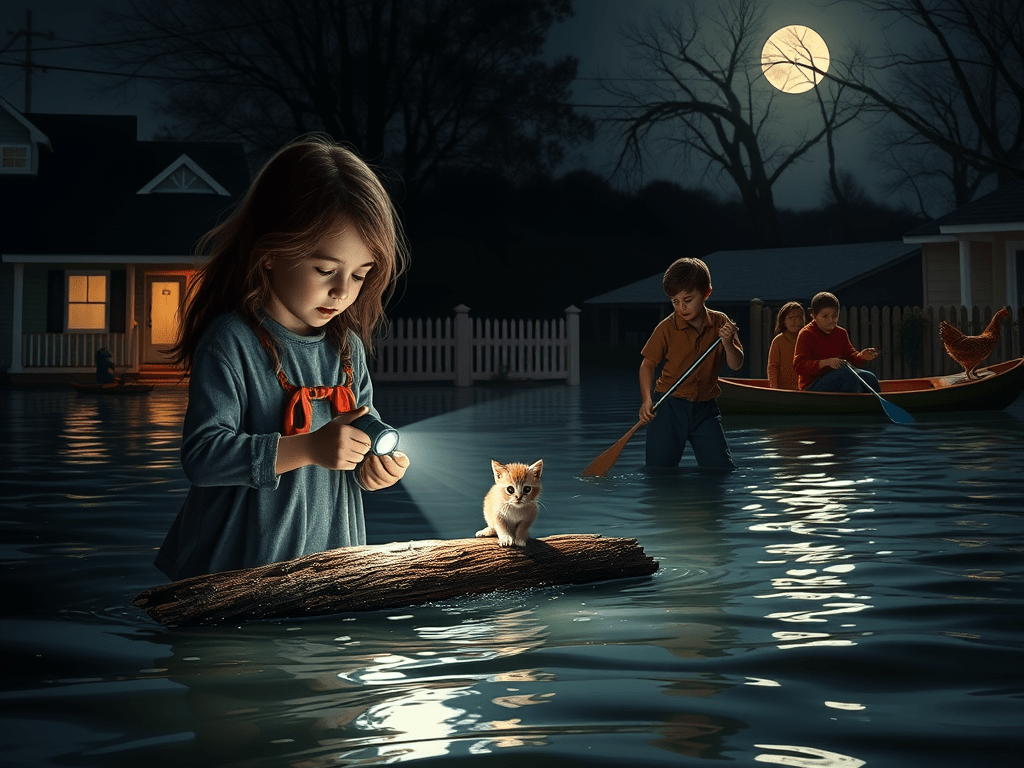
Olivia and Ethan were the first to make a rescue—a tiny kitten stranded on a piece of driftwood. Ethan waded carefully into the water while Olivia held the flashlight steady.

“Got it!” Ethan said, cradling the soaked but unharmed kitten.

Meanwhile, Jonah and Carlos used the canoe to reach the stranded dog Olivia had seen earlier. The dog wagged its tail weakly as they lifted it into the boat.

Maya and Mrs. Daniels found a coop full of chickens clinging to the top of a collapsed fence. Maya gently scooped up each bird while Mrs. Daniels checked them for injuries.

A Race Against Time

As the night wore on, the group’s teamwork paid off. They saved a horse by guiding it to higher ground, coaxed a family of ducks out of a storm drain, and even rescued a frightened raccoon stuck on a floating log.

But the most challenging rescue came just before dawn.

Ethan received a call from a neighbor who had spotted a deer trapped in the corner of a flooded pasture. The water was rising fast, and the deer couldn’t climb over the fence to safety.

The group hurried to the scene. With ropes and makeshift tools, they worked together to break open the fence and guide the panicked animal to dry land.

By the time they succeeded, the sun was beginning to rise, casting a golden glow over the town.

A Community United

In the days that followed, news of the midnight rescues spread throughout Willow Creek. The rescued animals were taken to the local shelter, where they received care and were reunited with their owners or rehomed.

The rescuers became local heroes, but they didn’t see themselves that way.

“We just did what anyone would do,” Ethan said humbly when interviewed by the local paper.

Olivia, however, felt differently. “We showed that even in the darkest times, we can come together to help those who can’t help themselves,” she said.

A New Tradition

Inspired by their success, the neighbors decided to form a permanent group called “The Midnight Rescuers.” They met regularly to train for future emergencies, ensuring that no animal—or person—would be left behind again.

And every time Olivia looked at the kitten she had adopted from that stormy night, she remembered how a simple act of courage could ripple into something extraordinary.
Hantavirus Outbreak in Arizona: Key Facts and Prevention Measures

Hantavirus, a potentially fatal disease transmitted from rodents to humans, has recently caused concern in the United States, particularly in Arizona. Here are the key details about the current situation:

  1. Recent cases and fatalities:
  • Seven confirmed cases of Hantavirus Pulmonary Syndrome (HPS) have been reported in Arizona from January 1 to July 1, 2024, resulting in three deaths[1][3].
  • California has reported two cases and one death this year[3].
  • In total, four deaths have been attributed to hantavirus in the U.S. in 2024[3][4].
  1. Disease characteristics:
  • Hantavirus is spread primarily through contact with infected rodent urine, saliva, or feces[1][4].
  • The virus has a fatality rate of approximately 38%[3].
  • Symptoms typically appear 1 to 8 weeks after exposure and include fever, muscle aches, nausea, and abdominal pain, progressing to severe respiratory issues[2][3].
  1. Geographic distribution:
  • Hantavirus cases are predominantly reported in the Western and Southwestern United States[2].
  • Arizona ranks among the states with the highest number of reported hantavirus infections[2].
  • The disease is not confined to a specific region and can be present in many areas with rodent activity[4].
  1. Factors contributing to the increase in cases:
  • Seasonal changes in rodent populations may be responsible for the uptick in cases[2].
  • Experts are considering climate change and extreme heat waves as potential contributing factors[2][3].
  1. Prevention and treatment:
  • There is currently no specific treatment, cure, or vaccine for hantavirus infection[2][4].
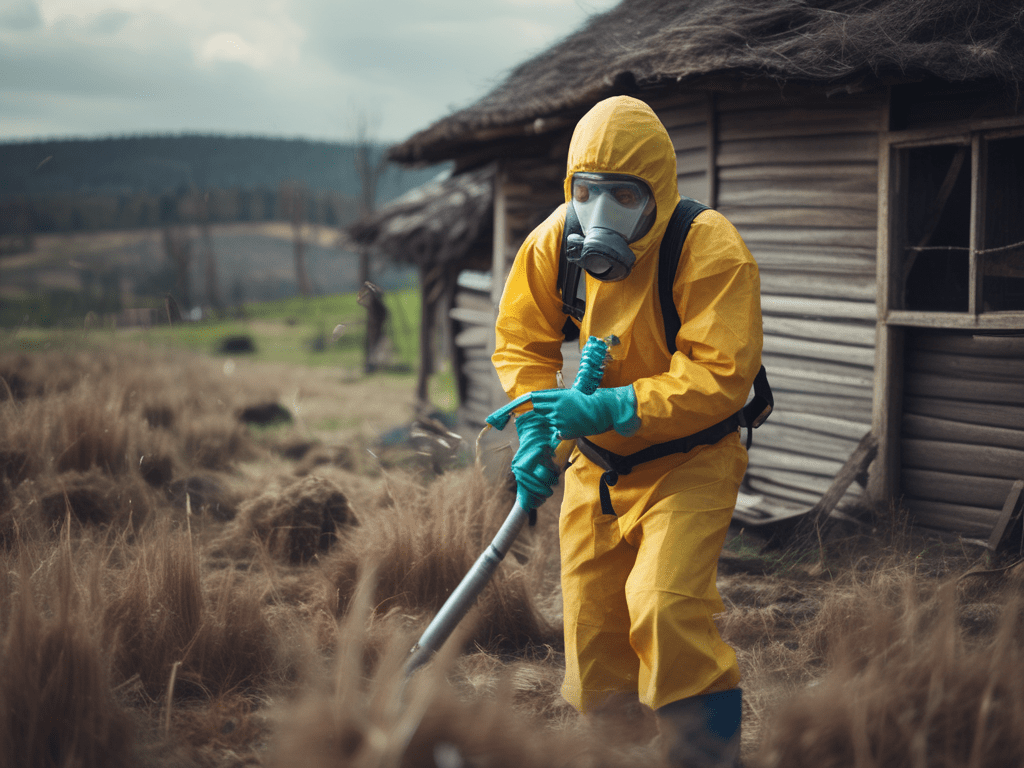
  • Prevention measures include proper cleaning and disinfection of areas with rodent activity, sealing entry points in homes, and using traps[4].

Health officials are urging the public to be cautious and take preventive measures, especially when entering or cleaning rural structures that may harbor rodents[2][4]. The recent increase in cases and fatalities highlights the importance of public awareness and proper hygiene practices to minimize the risk of hantavirus transmission.

Citations:
[1] https://cmmonline.com/news/hantavirus-concerns-in-arizona-as-fatalities-occur
[2] https://www.nbcnews.com/health/health-news/hantavirus-arizona-warn-spread-potentially-fatal-rcna162593
[3] https://timesofindia.indiatimes.com/world/us/hantavirus-in-us-deadly-rat-disease-kills-four-health-officials-on-alert/articleshow/112023247.cms
[4] https://metro.co.uk/2024/07/25/rat-disease-hantavirus-kills-four-us-health-warning-21292461/

Wildlife Health Alert: Unprecedented Case of ‘Staggering Disease’ in Mountain Lion

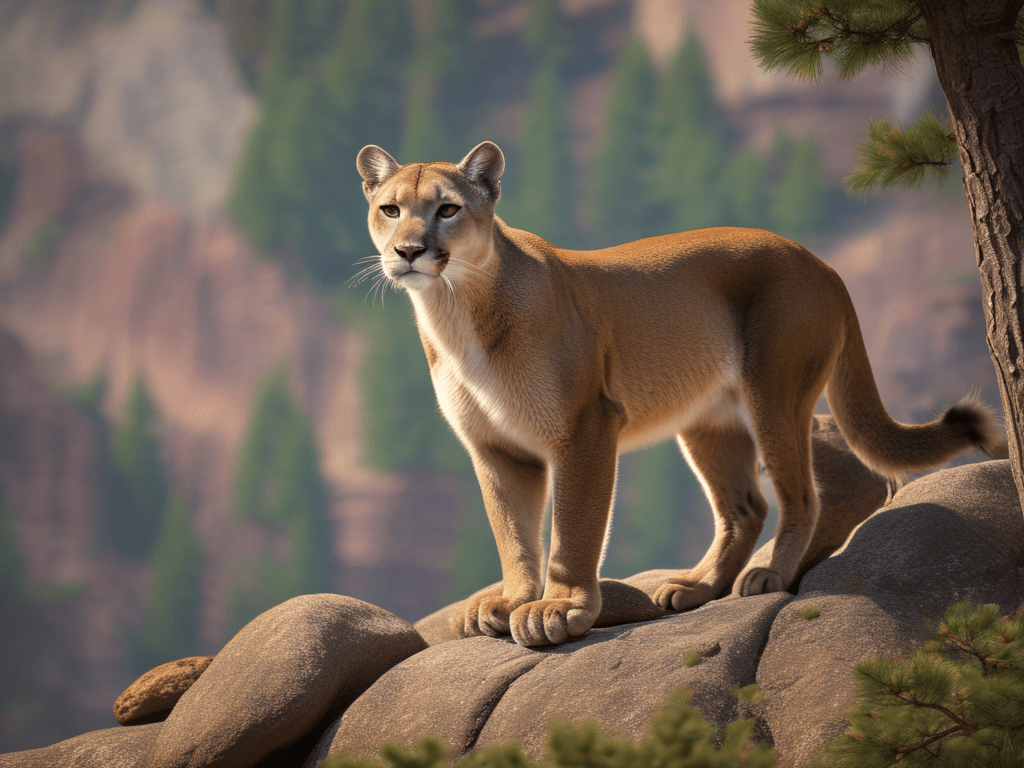
A deadly neurological condition known as “staggering disease” has been discovered in a mountain lion in Colorado, marking the first reported case of this illness in a mountain lion in North America[1][2][3][4]. This finding is significant as it represents the first time the disease has been identified in this species on the continent.

The disease, which is caused by a virus, has been commonly found in domestic animals but had not previously been observed in wild mountain lions in North America[2][5]. Colorado Parks and Wildlife confirmed this groundbreaking discovery, highlighting its importance in understanding the spread of the disease among wildlife populations[4].

“Staggering disease” is named for one of its primary symptoms, which causes affected animals to exhibit unsteady movements. The condition is often fatal, raising concerns about its potential impact on mountain lion populations and other wildlife in the region[1][4].

This discovery underscores the importance of ongoing wildlife health monitoring and research, as it reveals new information about the spread of diseases among different animal species in North America. Wildlife officials and researchers will likely continue to study this case to better understand the implications for mountain lion populations and to develop strategies for monitoring and potentially managing the disease in wild animals.

Citations:
[1] https://www.idahostatesman.com/news/article290169244.html
[2] https://www.idahostatesman.com/news/nation-world/national/article290160429.html
[3] https://www.summitdaily.com/news/colorado-mountain-lion-staggering-disease-north-america/
[4] https://kdvr.com/news/local/first-north-american-case-of-staggering-disease-found-in-colorado-mountain-lion/
[5] https://www.kentucky.com/news/nation-world/national/article290160429.html

The Fish and the Frog

Once upon a time, there was a fish who lived in a pond. He was lonely and bored, for he had no friends to play with. He spent his days swimming around the pond, looking for something interesting to do.

One day, he saw a frog sitting on a lily pad. The frog was green and spotted, with big eyes and a wide mouth. He looked very different from the fish, but also very intriguing.

“Hello, who are you?” the fish asked, swimming closer to the frog.

“I’m a frog, and who are you?” the frog replied, hopping into the water.

“I’m a fish, and I live in this pond. Do you live here too?” the fish asked.

“No, I live on the land. I only come to the pond to catch insects and cool off. But I can also breathe underwater, see?” the frog said, showing his gills.

“Wow, that’s amazing. You can live in both water and land. You must have a lot of fun,” the fish said, admiring the frog.

“Well, not really. I don’t have many friends either. Most of the other frogs think I’m weird because I like to swim underwater. And most of the other animals on land are afraid of me because I’m a frog,” the frog said, sadly.

“That’s too bad. You seem very nice to me. Maybe we can be friends,” the fish said, kindly.

“Really? You want to be friends with me?” the frog asked, surprised.

“Sure, why not? You’re different from me, but that makes you interesting. And you’re friendly and smart. I think we have a lot in common,” the fish said.

“Thank you. You’re very sweet. I think you’re interesting too. And you’re beautiful and graceful. I like your shiny scales and your long fins,” the frog said.

The fish and the frog smiled at each other, and felt a warm feeling in their hearts. They decided to be friends, and started to spend more time together. They taught each other about their different worlds, and learned from each other. They played games, told jokes, and shared stories. They had a lot of fun, and made each other happy.

Soon, their friendship turned into love. They realized that they wanted to be more than friends, and to stay together forever. But they also knew that they belonged to different worlds, and that their love was impossible.

“How can we be together, when you live in the water and I live on the land?” the frog asked, sadly.

“I don’t know. Maybe we can find a way. Maybe we can ask someone for help,” the fish said, hopefully.

They decided to seek the advice of the wise old turtle, who lived at the bottom of the pond. He was the oldest and the smartest animal in the pond, and he knew everything.

“Hello, Mr. Turtle. We need your help. We are in love, but we don’t know how to be together. Can you help us?” the fish and the frog asked, respectfully.

The turtle looked at them with his old and wise eyes, and said:

“My children, I’m glad that you have found love, for love is the most precious thing in life. But I’m also sad, for your love is doomed. You belong to different worlds, and you can never be together. You have two choices: either you give up your love, and go back to your own worlds, or you sacrifice your lives, and become one with each other.”

The fish and the frog were shocked and confused. They didn’t want to give up their love, but they also didn’t want to die.

“What do you mean, become one with each other?” the fish asked.

“There is a magic flower that grows on the shore of the pond. It is called the flower of love. If you both eat it, you will merge into one being, and you will be together forever. But you will also lose your own identities, and you will cease to exist as separate beings,” the turtle explained.

“That sounds scary. Is there no other way?” the frog asked.

“No, there is no other way. You must choose between love and life. It is a hard choice, but it is yours to make,” the turtle said.

The fish and the frog thanked the turtle for his advice, and swam away. They went to the shore of the pond, where the flower of love grew. It was a beautiful flower, with red petals and a golden center. It smelled sweet and inviting.

They looked at each other, and held each other’s hands. They knew what they wanted to do. They loved each other more than anything, and they wanted to be together forever. They decided to eat the flower of love, and become one.

They kissed each other, and said:

“I love you.”

“I love you too.”

They ate the flower of love, and felt a strange sensation. They felt their bodies and minds merging, and their souls blending. They felt a surge of joy and peace, and then they felt nothing.

They were gone.

But in their place, a new creature emerged. It was a hybrid of a fish and a frog, with scales and spots, gills and lungs, fins and legs. It was a beautiful and unique creature, unlike any other. It was the embodiment of their love.

It swam in the water, and jumped on the land. It explored both worlds, and made friends with both animals. It was happy and free, and it never forgot its origin.

It was the fish and the frog, and it was one.