
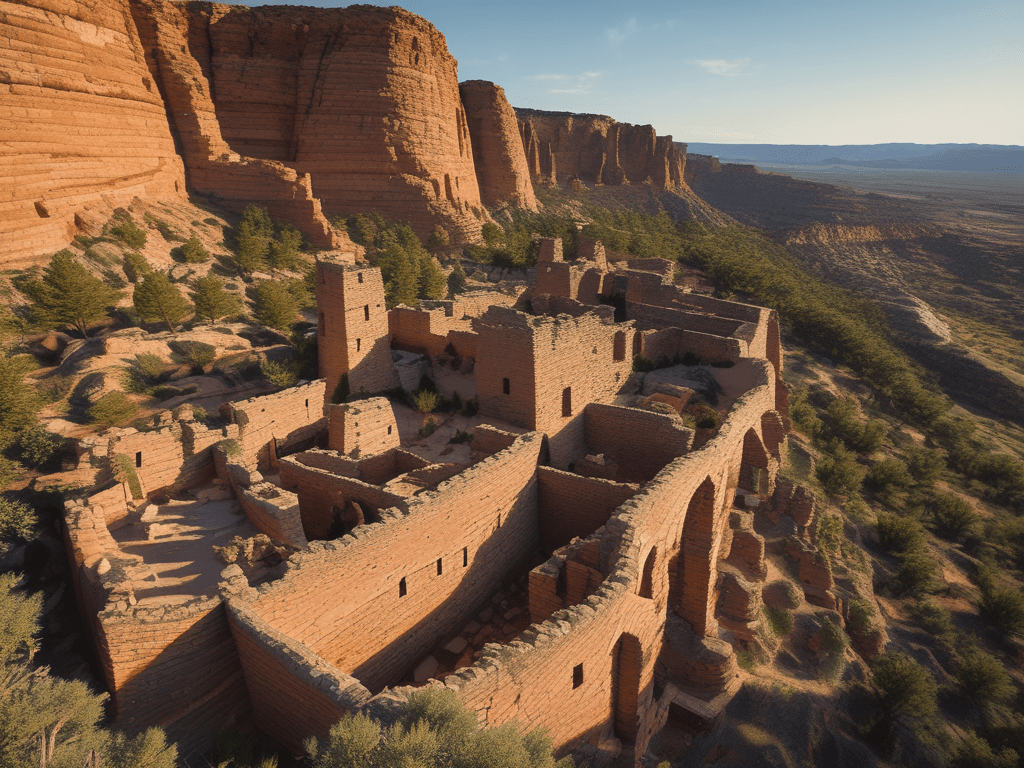
Hovenweep National Monument: A Deserted Valley
Hovenweep National Monument, straddling the Colorado-Utah border, is a significant archaeological site known for its well-preserved ancient Puebloan villages. The name “Hovenweep” is derived from a Paiute/Ute word meaning “deserted valley,” aptly describing the area’s historical and geographical context[1][2][3].
Historical Significance
Hovenweep was once home to more than 2,500 people between A.D. 900 and 1300. The site includes six prehistoric villages built by the ancestral Puebloans, a sedentary farming culture. These villages feature a variety of structures, including multistory towers, kivas (ceremonial structures), and storage granaries[2][4][5]. The towers, which are square, oval, circular, and D-shaped, are particularly notable for their intricate masonry and strategic locations on canyon rims and boulders[2][4].
Architectural Marvels
The structures at Hovenweep are remarkable for their architectural diversity and craftsmanship. The towers might have served multiple purposes, including celestial observation, defense, storage, and civic activities. The masonry work is considered some of the finest prehistoric construction in the United States, with carefully shaped stones and mortar used to fill gaps and protect against the elements[2][4].
Solitude and Natural Beauty
Hovenweep is celebrated for its solitude and undeveloped natural character, making it an ideal spot for visitors seeking tranquility and a connection with ancient history. The monument is also an International Dark Sky Park, offering stunning night skies for stargazing[3].
Visitor Information
- Main Attractions: Square Tower Group, Little Ruin Canyon, Cutthroat Castle, Horseshoe & Hackberry, and Holly[1][4].
- Activities: Hiking, camping, and exploring the archaeological sites. Pets are allowed on trails and in the campground but must be leashed[3][4].
- Facilities: Visitor center, restrooms, picnic shelters, and a campground. Limited services are available, so visitors are advised to bring water, food, and other essentials[3][4].
- Access: The monument is accessible via paved and gravel roads, with the main routes being the McElmo Canyon Route and the Pleasant View Route[2][4].
Practical Tips
- Weather: The high desert region experiences wide temperature fluctuations. Summer temperatures can exceed 100°F (38°C), while winters can be quite cold[3].
- Safety: Hydration is crucial, and visitors should carry ample water and protect themselves from the sun with sunscreen, hats, and light-colored clothing[3].
- Respect the Site: Visitors are encouraged to stay on designated trails and not enter the ruins to help preserve the site’s integrity[1][3].
Hovenweep National Monument offers a unique glimpse into the lives of the ancestral Puebloans and stands as a testament to their ingenuity and resilience. Its remote location and well-preserved structures make it a fascinating destination for history enthusiasts and nature lovers alike.
Citations:
[1] https://www.utah.com/destinations/national-monuments/hovenweep-national-monument/
[2] https://mesaverdecountry.com/hovenweep-national-monument/
[3] https://cnha.org/visit/hovenweep-national-monument/
[4] https://bluffutah.org/hovenweep-national-monument/
[5] https://www.nps.gov/hove/learn/historyculture/index.htm
[6] https://www.nps.gov/hove/
 Life's Adventure