Kroger’s Pricing Errors: Impact of Chronic Understaffing at King Soopers

Key Points
Research suggests King Soopers’ understaffing likely leads to deceptive pricing, overcharging customers.
Consumer Reports found expired sales tags caused overcharges, averaging 18.4% per item.
Kroger disputes claims, saying errors are few compared to billions of transactions.
UFCW Local 7 highlights understaffing impacts both workers and consumers, sparking debate.
Background
King Soopers, owned by Kroger, has faced scrutiny over store understaffing, which seems to result in pricing errors. This issue affects how much customers pay at checkout compared to shelf prices, raising concerns about fairness.
Investigation Findings
An investigation by Consumer Reports, detailed in their report , found that expired sales tags led to overcharges on over 150 items, with an average overcharge of 18.4%. This means customers often paid more than advertised, especially for items like Cheerios and beef.
Company Response
Kroger argues these are isolated incidents, emphasizing their commitment to accurate pricing and regular checks, as noted in a news report . They claim their “Make It Right” policy addresses errors, but critics say the problem is systemic.
Union Perspective
UFCW Local 7, representing workers, argues understaffing burdens employees and leads to pricing issues, as seen in their X post . They call for better staffing to protect both workers and consumers, highlighting ongoing labor disputes.
Survey Note: Detailed Analysis of King Soopers’ Understaffing and Deceptive Pricing
This survey note provides a comprehensive examination of the investigation into Kroger-owned King Soopers’ chronic understaffing and its alleged impact on deceptive pricing practices, as raised by UFCW Local 7 and supported by Consumer Reports. The analysis integrates findings from multiple sources, including news articles, consumer reviews, and union statements, to offer a detailed understanding of the issue as of May 21, 2025.
Context and Background
The controversy began with an X post from UFCW Local 7 on May 15, 2025, titled “Investigation Confirms Kroger-owned King Soopers’ Chronic Understaffing of Stores Has Led to Deceptive Pricing for Consumers” . The post included a press release detailing how understaffing has led to pricing discrepancies, violating Colorado consumer protection laws. This issue is part of broader labor disputes, including strike authorizations and lawsuits by the Colorado Attorney General against Kroger for deceptive pricing.
King Soopers, a subsidiary of Kroger, operates in Colorado and Wyoming, with UFCW Local 7 representing over 15,000 workers. The union has been vocal about understaffing, linking it to operational challenges like incorrect shelf tags and overcharges at checkout, as confirmed by Consumer Reports’ findings since January 2025.
Investigation Details
Consumer Reports conducted a months-long investigation, collaborating with The Guardian and the Food & Environment Reporting Network, checking prices at 26 Kroger and Kroger-owned stores, including King Soopers, across 14 states and D.C. from March to May 2025. The findings, published on May 14, 2025 , revealed:
Expired sales labels led to overcharges on over 150 grocery items, including Cheerios, Mucinex, Nescafé, boneless beef, salmon, and dog food.
One-third of expired tags were out of date by at least 10 days, with five products expired by at least 90 days.
The average overcharge was $1.70 per item, or 18.4%, significantly impacting shoppers during inflation.
Specific to King Soopers, Joy Alexander, an 18-year employee at a suburban Denver store, noted customers on fixed incomes being overcharged, such as paying $3.75 instead of $2.50 advertised. Colorado union officials and Chris Lacey, a service manager, reported growing customer anger, with management failing to address expired discount tags.
State-specific data showed King Soopers failed price check tests twice since January 2025, as noted in the Consumer Reports article. A senior Kroger executive questioned why tags weren’t being updated in a January meeting with union reps, per meeting minutes.
Impact on Staffing and Operations
The investigation linked understaffing to pricing errors, with data showing Kroger stores with significant price issues, including King Soopers, reduced average employees by 10.3% (17 per store) and hours by 9.9% (2.7 hours/week) since 2019, compared to stores with fewer errors, which saw a 6.2% reduction (9.5 per store) and 9.3% hours cut (2.4 hours/week). Kroger disputed labor hour reductions, claiming data-driven staffing for smooth operations .
Customer reviews on platforms like WorthEPenny and PissedConsumer corroborated these findings, with complaints about incorrect prices always favoring King Soopers, such as one reviewer noting overcharges requiring returns to customer service (Check King Soopers Ratings & Customer Reviews; 321 King Soopers Reviews). Another review highlighted a rat in the pharmacy area, indicating broader operational issues .
Kroger’s Response and Controversy
Kroger responded to the investigation, stating the allegations “boil down to misinformation,” reviewing a handful of discrete issues from billions of daily transactions, and emphasizing their “Make It Right” policy for on-the-spot fixes . They also piloted digital tags for better accuracy, as noted in industry blogs (futurestores.wbresearch.com/blog/kroger-rolls-out-edge-clean-energy-cloud-based-signature-solution-strategy-for-retail-shelves), and conduct audits, with one finding 6% incorrect tags, exceeding their 1% policy limit.
However, the evidence leans toward a systemic issue, with state regulators in Colorado and Ohio noting repeated failures, and consumer complaints in Michigan (229 since 2020, with 25 violations found) highlighting overcharging and bait-and-switch tactics . Legal experts, like Nina DiSalvo from Towards Justice, suggest these errors could violate federal and state consumer protection laws.
Union Advocacy and Broader Implications
UFCW Local 7’s X post emphasized their role in advocating for workers and consumers, demanding accountability from Kroger and King Soopers . The union highlighted ongoing labor disputes, including a strike authorization and lawsuit by the Colorado Attorney General, noting Kroger’s $2 billion profits while cutting jobs and hours, exacerbating understaffing.
The proposed Kroger-Albertsons merger raises concerns, with UFCW Local 7 fearing further consolidation could worsen pricing and staffing issues. A reply to the X post from Quantomic suggested unionizing a specific King Soopers store in Cheyenne could address management problems, indicating grassroots support .
Comparative Analysis
This issue isn’t unique to Kroger; a 2022 lawsuit against Walmart in Niles, Illinois, alleged overcharging by 10-15%, indicating a broader trend in U.S. grocery chains . Consumer advocate Edgar Dworsky emphasized shoppers’ reliance on accurate shelf prices, calling it a “big problem” .
Table: Summary of Key Findings
Aspect
Details
Investigation Source
Consumer Reports, The Guardian, Food & Environment Reporting Network
Stores Checked
26 Kroger-owned, including King Soopers, in 14 states and D.C.
Overcharge Items
Over 150, e.g., Cheerios, beef, salmon
Average Overcharge
$1.70 per item, 18.4%
Staffing Impact
10.3% employee reduction, 9.9% hours cut since 2019 at affected stores
Kroger Response
Claims errors are few, commits to accurate pricing, “Make It Right” policy
Union Stance
UFCW Local 7 demands better staffing, highlights worker and consumer impact
Conclusion
The evidence suggests King Soopers’ understaffing likely contributes to deceptive pricing, with Consumer Reports confirming significant overcharges due to expired tags. While Kroger disputes the scale, the controversy highlights tensions between corporate profits, worker conditions, and consumer rights, with UFCW Local 7 advocating for systemic change. This issue, part of broader industry trends, underscores the need for transparency and accountability in grocery pricing practices.
Key Citations
Kroger Stores Overcharging Shoppers on Sale Items, CR Price Check Finds
Consumer Reports found price when you swipe higher than on shelf at Kroger-owned stores
UFCW Local 7 Investigation Confirms Kroger-owned King Soopers’ Chronic Understaffing
Check King Soopers Ratings & Customer Reviews
321 King Soopers Reviews at PissedConsumer
‘Customers are being duped’: how murky grocery sales tactics are squeezing some Kroger shoppers
Kroger accused of price discrepancies by Consumer Reports
futurestores.wbresearch.com blog on Kroger’s digital tags (futurestores.wbresearch.com/blog/kroger-rolls-out-edge-clean-energy-cloud-based-signature-solution-strategy-for-retail-shelves)

Colorado Gun Laws: The Debate on Rights vs. Regulations

Colorado has become a significant battleground in America’s ongoing debate over gun rights and regulations. Recent legislation, legal challenges, and rising gun violence statistics have placed the state at the center of national attention on this issue. The discourse in Colorado reflects broader national tensions between public safety concerns and constitutional rights protections, with advocates on both sides presenting data-driven arguments to support their positions. This report examines the strongest arguments from proponents of stricter gun regulation and those advocating for broader gun rights, drawing from recent legislation, court decisions, and statistical evidence that shape Colorado’s evolving landscape of firearm policy.

The Case for Stronger Gun Regulations

Public Health and Safety Concerns

Advocates for stronger gun laws in Colorado frequently frame gun violence as a critical public health crisis that requires legislative intervention. According to data from the Johns Hopkins Center for Gun Violence Solutions, 1,036 people died from gun violence in Colorado in 2022, which translates to approximately one person killed every eight hours5. This represents a troubling 48% increase in the overall gun death rate over the preceding decade, positioning Colorado with the 18th highest gun death rate in the nation5. These statistics serve as powerful motivation for those advocating for more comprehensive gun safety measures.

Particularly concerning for public health advocates is the impact on vulnerable populations. Firearms were identified as the leading cause of death among Colorado children and teens ages 1-17 in 2022, with 61 young lives lost5. The data also reveals stark disparities in how gun violence affects different communities. Young Black males ages 15-34 were 20 times more likely to die by gun homicide than their white counterparts, while young Hispanic/Latino males faced nearly four times the risk5. These disparities underscore arguments that gun violence represents not just a public safety issue but also a matter of social justice.

The economic burden of gun violence further strengthens the public health argument. Gun violence costs Coloradans an estimated $11.4 billion per year, encompassing direct expenses like medical care and law enforcement as well as indirect costs like lost productivity and quality of life5. Proponents of stronger regulations argue that these substantial societal costs justify legislative intervention to reduce gun violence.

Effectiveness of Specific Regulatory Measures

Supporters of gun regulations point to evidence suggesting that certain policy interventions can effectively reduce gun deaths. One frequently cited example is Colorado’s “red flag” law, officially known as the Extreme Risk Protection Order (ERPO) law, passed in 2019. This law allows family members or law enforcement to request the temporary confiscation of firearms from individuals deemed to pose a threat to themselves or others4. Red flag laws are designed to intervene in potential crisis situations before violence occurs.

“It’s really intended to intervene on that trajectory of violence,” explained Shannon Frattaroli, a professor with the Johns Hopkins Center for Gun Violence Solutions4. The process includes judicial oversight, requiring evidence and hearings to balance public safety with individual rights. Advocates argue this approach provides a crucial tool for preventing mass shootings, domestic violence incidents, and suicides.

Research on waiting periods provides another pillar of support for regulatory advocates. A study published in the Proceedings of the National Academy of Sciences found that handgun waiting periods could reduce gun homicides by approximately 17%9. This finding suggests that creating a brief cooling-off period between the decision to purchase a firearm and taking possession may prevent impulsive acts of violence9. Supporters argue that such modest restrictions impose minimal burdens on law-abiding gun owners while potentially saving hundreds of lives.

Recent Legislative Approaches

Colorado’s most recent significant gun legislation, Senate Bill 3, represents one of the state’s most restrictive firearms regulations to date. Signed into law by Governor Jared Polis in April 2025, the bill bans the manufacture and drastically restricts the sale of certain semiautomatic firearms that can accept detachable ammunition magazines2. The law particularly targets weapons commonly used in mass shootings, including AR-15 and AK-47 rifles and their variants, along with tactical shotguns and some handguns.

“I really think this will make Colorado safer,” Governor Polis stated before signing the bill2. The law includes exceptions for military, law enforcement, and certain businesses, while also immediately banning rapid-fire trigger devices like bump stocks2. Regulation advocates argue that such measures specifically target the most lethal weapons that enable mass casualties, while still preserving access to firearms for personal protection, hunting, and sport shooting.

Colorado has implemented a comprehensive package of gun safety measures in recent years, which according to Giffords.org includes universal background checks, a large-capacity magazine ban, child access prevention laws, waiting periods, and lost and stolen firearm reporting requirements6. Proponents argue that this multi-faceted approach addresses various pathways to gun violence while respecting responsible gun ownership.

The Case for Gun Rights Protection

Constitutional Framework and Legal Precedents

Gun rights advocates ground their arguments primarily in constitutional protections and recent judicial interpretations that have strengthened Second Amendment rights. They point to the Supreme Court’s decisions in cases like District of Columbia v. Heller (2008) and New York State Rifle & Pistol Association v. Bruen (2022) as establishing clear limits on government authority to restrict firearm ownership and use.

David B. Kopel, a legal scholar cited in testimony against Colorado’s waiting period legislation, argues that such measures stand on “shaky constitutional ground” because “forced delays in firearms acquisition by adults did not exist when the Second Amendment was ratified in 1791, nor in 1868, when the Fourteenth Amendment was ratified”8. This argument reflects the “historical tradition” test established by the Supreme Court in Bruen, which requires gun regulations to be consistent with the nation’s historical understanding and practice regarding firearms regulation.

This constitutional framework has formed the basis for legal challenges to Colorado’s gun laws. Rocky Mountain Gun Owners (RMGO), described as “Colorado’s only no-compromise gun rights lobby,” filed a federal lawsuit challenging Colorado’s homemade firearm ban (Senate Bill 23-279), specifically citing the Bruen decision’s historical tradition standard7. “This law is an outright assault on the constitutional rights of peaceable Coloradans. It’s not just an overreach; it’s a direct defiance to our Second Amendment freedoms,” stated a representative from RMGO7.

Gun rights advocates argue that these constitutional principles must guide any firearms regulation, placing the burden on the government to prove that restrictions align with historical understanding rather than merely demonstrating a compelling public interest.

Self-Defense and Individual Rights

Central to the gun rights position is the argument that firearms provide essential tools for self-defense-a natural right that precedes government authority. Colorado law explicitly recognizes this principle, allowing “a person to carry a firearm in a vehicle if its use is for lawful protection of such person or another’s person or property”1. Advocates maintain that this right to self-protection is particularly important for vulnerable individuals who may be unable to physically defend themselves against stronger attackers.

Gun rights supporters argue that restrictive laws disproportionately affect law-abiding citizens while doing little to deter those with criminal intent. They contend that measures like Colorado’s semiautomatic weapon restrictions primarily burden responsible gun owners while motivated criminals will simply ignore or circumvent such laws. The focus, they argue, should be on enforcing existing laws against violent criminals rather than creating new barriers for peaceful citizens exercising their constitutional rights.

Furthermore, advocates emphasize that firearms serve as an equalizing force in society, providing women, elderly persons, and physically disabled individuals with effective means of protection against potential attackers. They argue that the right to keep and bear arms represents a fundamental expression of individual autonomy and self-determination that governments should not unnecessarily restrict.

Questioning the Efficacy of Gun Control Measures

Gun rights proponents challenge the effectiveness of many gun control measures, pointing to research that calls into question whether certain regulations actually reduce violence. For instance, Kopel’s testimony on Colorado’s waiting period legislation cited research suggesting that “background checks have no statistically discernable effect on homicide or suicide, and may lead to statistically significant increases in crime and suicide”8. This challenges the foundational assumptions behind many gun control policies.

Advocates argue that laws focusing on restricting access to firearms fail to address the root causes of violence, including mental health issues, socioeconomic factors, and the breakdown of community support systems. They suggest that resources would be better directed toward addressing these underlying issues rather than restricting constitutional rights.

Some gun rights supporters also point to data indicating that areas with strict gun control measures often continue to experience high rates of gun violence, suggesting that such policies may be ineffective at achieving their stated goals. They argue that Colorado’s increasing gun death rate despite expanding gun regulations demonstrates this disconnect between policy intentions and outcomes5.

Areas of Potential Common Ground

Mental Health Interventions and Resources

Despite deep disagreements on many aspects of gun policy, both sides often express support for improved mental health resources as part of a comprehensive approach to reducing gun violence. With 691 of Colorado’s 1,036 gun deaths in 2022 being suicides5, there is widespread recognition that addressing mental health crises could save many lives regardless of one’s position on gun rights.

Both gun control advocates and Second Amendment supporters have shown willingness to support policies that temporarily remove firearms from individuals experiencing acute mental health crises when proper due process protections are in place. The debate often centers not on whether such interventions should exist but rather on the specific legal mechanisms and safeguards that should govern them.

Enhanced Enforcement of Existing Laws

Another area of potential agreement involves better enforcement of laws prohibiting firearm possession by individuals with serious criminal histories or documented threats of violence. Both sides generally agree that focusing enforcement resources on individuals most likely to commit violence could reduce harm without imposing new restrictions on law-abiding gun owners.

This approach could include improved data sharing between agencies, more consistent prosecution of prohibited persons who attempt to purchase firearms, and ensuring that relevant records are promptly entered into background check systems. Such measures focus on individuals who have demonstrated higher risk rather than imposing broad restrictions affecting all gun owners.

Conclusion

The debate over gun laws in Colorado reflects fundamental differences in values, priorities, and constitutional interpretation that mirror the national conversation on firearms. Regulation advocates emphasize public health data showing the human and economic toll of gun violence, pointing to research suggesting certain policies can reduce deaths while still respecting responsible gun ownership. Gun rights supporters prioritize constitutional protections and individual liberty, questioning whether many regulations effectively address violence while expressing concern about government overreach.

What makes this issue particularly challenging is that both perspectives contain legitimate concerns and values. Public safety and constitutional rights are both essential elements of American society, creating tension when they appear to conflict. Colorado’s ongoing experience with evolving gun laws, legal challenges, and public discourse represents an important case study in how communities navigate these complex tradeoffs in a democratic society.

As Colorado and other states continue to grapple with these questions, the most productive path forward likely involves acknowledging the legitimate concerns on both sides, evaluating policies based on rigorous evidence rather than political ideology, and seeking solutions that effectively reduce violence while respecting constitutional principles.

Recommendations for Further Learning

Books

  • “Gunfight: The Battle Over the Right to Bear Arms in America” by Adam Winkler – Offers a balanced historical perspective on the Second Amendment debate
  • “Reducing Gun Violence in America: Informing Policy with Evidence and Analysis” edited by Daniel Webster and Jon Vernick – Provides research-based approaches to gun policy
  • “The Second Amendment: A Biography” by Michael Waldman – Explores the historical context and evolution of Second Amendment interpretation
  • “More Guns, Less Crime” by John Lott – Presents research supporting gun rights positions
  • “The Gun Debate: What Everyone Needs to Know” by Philip J. Cook and Kristin A. Goss – Offers accessible overview of key issues from multiple perspectives

Websites

  • Giffords Law Center to Prevent Gun Violence (giffords.org) – Research and advocacy for gun safety laws6
  • Rocky Mountain Gun Owners (rmgo.org) – Colorado-based gun rights advocacy organization7
  • Johns Hopkins Center for Gun Violence Solutions (publichealth.jhu.edu/center-for-gun-violence-solutions) – Academic research center focused on gun violence prevention5
  • Colorado Department of Public Safety (publicsafety.colorado.gov) – Official state information on gun laws and regulations1
  • RAND Corporation’s Gun Policy in America initiative – Research-based analysis of gun policies and their effects

Videos and Documentaries

  • “The Price of Freedom” – Documentary examining the gun debate in America
  • “Assaulted: Civil Rights Under Fire” – Explores Second Amendment rights perspective
  • Congressional hearings on gun policy (available on C-SPAN)
  • TED Talks by researchers from both perspectives on gun violence solutions
  • Colorado Public Radio debates and discussions on state gun legislation

Citations:

  1. https://publicsafety.colorado.gov/get-involved/colorado-gun-laws
  2. https://www.cpr.org/2025/04/13/colorado-gun-ban-senate-bill-3-explained/
  3. https://www.pisanilaw.com/understanding-colorado-gun-laws/
  4. https://www.cpr.org/2022/11/22/how-colorados-red-flag-law-works-and-how-it-compares-to-other-states/
  5. https://publichealth.jhu.edu/center-for-gun-violence-solutions/colorado
  6. https://giffords.org/lawcenter/gun-laws/states/colorado/
  7. https://www.rmgo.org/about-us/rm/rocky-mountain-gun-owners-file-lawsuit-challenging-colorados-ghost-gun-ban/
  8. https://completecolorado.com/2023/03/01/kopel-colorado-bill-forcing-delay-of-firearms-acquisition-on-shaky-constitutional-ground/
  9. https://www.pnas.org/doi/abs/10.1073/pnas.1619896114
  10. https://foac-illea.org/Colorados-Dave-Kopel-To-U-S-Senate-Committee:-red-Flag-Laws-Must-Fully-Respect-Due-Process/News-Item/9403
  11. https://www.nraila.org/gun-laws/state-gun-laws/colorado/
  12. https://www.koaa.com/news/news5-investigates/a-look-at-colorados-red-flag-law-and-how-often-its-used
  13. https://everystat.org/wp-content/uploads/2024/05/Gun-Violence-in-Colorado-2024-05.pdf
  14. https://www.rand.org/research/gun-policy/key-findings/what-science-tells-us-about-the-effects-of-gun-policies.html
  15. https://en.wikipedia.org/wiki/Gun_laws_in_Colorado
  16. https://news.cuanschutz.edu/coloradosph/extreme-risk-protection-orders-in-communities-across-colorado
  17. https://csp.colorado.gov/colorado-gun-laws
  18. https://journalistsresource.org/criminal-justice/mass-shootings-red-flag-laws-update/
  19. https://www.cbsnews.com/colorado/news/semi-automatic-firearms-colorado-restrictive-gun-law-signed-governor-jared-polis/
  20. https://www.shouselaw.com/co/defense/gun-laws/
  21. https://www.cohousedems.com/news/sb25-003-signed-into-law
  22. https://bresee.com/blog/gun-laws-colorado/
  23. https://oag.ca.gov/news/press-releases/attorney-general-bonta-defends-colorados-three-day-waiting-period-firearms
  24. https://www.everytown.org/press/as-the-2025-legislative-session-begins-colorado-lawmakers-need-to-prioritize-legislation-to-close-the-states-high-capacity-magazine-ban-loophole/
  25. https://cdpsdocs.state.co.us/ors/Docs/Briefs/2024-11_FirearmUsage-ViolentCrimes-2019-2023.pdf
  26. https://preventfirearmsuicide.efsgv.org/states/colorado/
  27. https://www.rmgo.org/about-us/rm/rocky-mountain-gun-owners-sues-over-unconstitutional-three-day-minimum-waiting-periods-and-the-18-to-20-year-old-gun-ban/
  28. https://completecolorado.com/2024/03/19/kopel-colorado-senate-bill-131-creating-safe-zones-for-mass-shooters/
  29. https://www.shouselaw.com/co/blog/colorado-red-flag-laws-what-you-need-to-know/
  30. https://www.cpr.org/2023/11/14/colorado-keeping-three-day-gun-law/
  31. https://concealedcarryclassdenver.com/2024/01/29/does-colorado-have-a-firearm-magazine-capacity-limit/
  32. https://cdphe.colorado.gov/colorado-gun-violence-prevention-resource-bank/colorado-firearm-laws-and-regulations/extreme-risk
  33. https://cdphe.colorado.gov/colorado-gun-violence-prevention-resource-bank/firearm-injury-and-death/firearm-homicide
  34. https://cdphe.colorado.gov/colorado-gun-violence-prevention-resource-bank/firearm-injury-and-death/community-violence
  35. https://www.cdc.gov/nchs/pressroom/sosmap/firearm_mortality/firearm.htm
  36. http://coloradoceasefire.org/wp-content/uploads/2020/06/States-United-June-2020-Report-on-Gun-Deaths-Colorado-2.pdf
  37. https://cdphe.colorado.gov/sites/cdphe/files/documents/Firearm%20Deaths%20Fact%20Sheet%202016-2021%20FINAL.pdf
  38. https://www.cbsnews.com/colorado/news/colorado-lawmakers-consider-bill-create-do-not-sell-registry-prevent-suicides-firearms/
  39. https://giffords.org/lawcenter/resources/scorecard/
  40. https://gunsandamerica.org/story/20/02/06/giffords-gun-law-scorecard/
  41. https://thereload.com/colorado-sees-biggest-boost-in-gun-control-group-annual-rankings/
  42. https://www.nytimes.com/2019/04/19/us/politics/gabby-giffords-minnesota-guns.html
  43. https://pubmed.ncbi.nlm.nih.gov/29078268/
  44. https://legislature.maine.gov/testimony/resources/JUD20240307Goettsche%20Spurling,%20MD133542708513568157.pdf
  45. https://behavioralscientist.org/the-case-for-handgun-waiting-periods/
  46. https://www.cnn.com/2017/10/16/health/waiting-period-firearms-study
  47. https://congressionalsportsmen.org/news/following-heavy-amendments-the-semi-auto-firearms-ban-advances-in-colorado/
  48. https://www.pnas.org/gun-violence

Answer from Perplexity: pplx.ai/share

Scott Bottoms: Military Veteran and Colorado Gubernatorial Hopeful

Representative Scott Bottoms, a Colorado Springs Republican and church pastor, has formally entered the 2026 Colorado gubernatorial race with a bold promise to “save” the state from what he perceives as mismanagement under current Democratic leadership. Bottoms, currently serving his second term in the Colorado House of Representatives for District 15, filed his paperwork with the Colorado Secretary of State’s Office in early 2025, becoming one of the first major Republican candidates to declare for the race to replace term-limited Governor Jared Polis7. His campaign presents a deeply conservative vision centered around fiscal responsibility, parental rights, and traditional values, positioning himself as the solution to what he characterizes as Colorado’s downward trajectory under progressive policies. Bottoms brings his background as a U.S. Navy veteran, religious leader, and staunch conservative to a race that will determine Colorado’s political direction following eight years of Democratic governance. His campaign raises important questions about the state’s political future and whether his brand of conservatism can appeal to the increasingly moderate-to-liberal Colorado electorate.

Background and Political Rise

Scott Bottoms brings a diverse background to his gubernatorial candidacy, having served in multiple leadership roles throughout his career. Before entering politics, Bottoms served eight years in the U.S. Navy, establishing his credentials as a patriot committed to national service5. His educational background includes a Bachelor of Arts in Church Ministries from Southwestern Assemblies of God University, a Master of Arts in Urban and Intercultural Ministries, and a Doctorate of Ministry in Intercultural Spiritual Leadership, credentials he earned between 2002 and 201125. This academic foundation in religious studies aligns with his professional role as lead pastor of the Church at Briargate in Colorado Springs, a position he has held for nearly thirteen years, following earlier ministerial work in Strasburg and Rocky Ford that broadened his connections across both rural and urban Colorado communities5.

Bottoms’ community involvement extends beyond his pastoral duties to include leadership positions on several executive boards. He has served on boards for the Assemblies of God, Nelson University, and Strong Cross Ministries, where he chaired Sarah’s Home, an organization supporting vulnerable Coloradans5. This combination of military service, religious leadership, and community involvement formed the foundation of Bottoms’ entry into politics, where he won election to the Colorado House of Representatives in 2022. Since taking office in January 2023, Bottoms has established himself as one of the most conservative members of the legislative body, often generating controversy through his strong positions on social issues and occasional conflicts with Democratic colleagues over chamber decorum7. His relatively brief political resume-having served less than one full term before announcing his gubernatorial ambitions-suggests a rapid political ascent driven by ideological conviction rather than traditional political ladder-climbing.

Representative Bottoms maintains strong family values that inform his policy positions, having been married to his wife, Linda, for 34 years5. Together they have raised three children and welcomed two daughters-in-law and three grandchildren, all part of what his campaign describes as “their Colorado story”5. This personal narrative of family stability and religious devotion forms a central component of Bottoms’ political identity and appeal to socially conservative voters in Colorado.

Campaign Launch and Central Message

Scott Bottoms made his gubernatorial ambitions official in a distinctive and personally authentic manner, announcing his candidacy during a Sunday church service where he serves as lead pastor3. The announcement, which blended his religious role with his political aspirations, provided an early glimpse into how Bottoms intends to position himself in the race-as a candidate whose faith informs his politics and who isn’t afraid to merge these aspects of his life. During his announcement, Bottoms displayed his characteristic blunt approach, jokingly telling his congregation, “If I don’t get elected, nothing changes except probably four or five bitter sermons for the next few weeks after that”3. This remark, while humorous, highlighted the deep connection between his pastoral role and political identity that distinguishes him from many other candidates.

The central message of Bottoms’ campaign revolves around the narrative that Colorado is in decline under Democratic leadership and requires rescue through conservative governance. His campaign materials present stark claims about the state’s condition, asserting that Colorado ranks first nationally in bank robberies and cocaine use, second in car theft, third in drug use and addiction, and stands as the third most dangerous state in the country5. These alarming statistics, prominently featured on his campaign website, serve to support Bottoms’ assertion that Colorado has “buckled” under what he describes as “reckless spending, rising crime, and failing schools”5. This framing allows Bottoms to position himself as the solution to these problems by offering what he characterizes as “real solutions” rather than “empty promises” from political elites whom he portrays as being disconnected from ordinary Coloradans5.

Bottoms’ campaign launch coincided with that of another Republican legislator, Senator Mark Baisley of Woodland Park, who has also entered the 2026 gubernatorial race7. Both candidates are positioning themselves as conservative alternatives to the policies implemented under Governor Polis’s administration, though Bottoms appears to be staking out positions further to the right on social issues7. The early entry of these candidates into a race still nearly two years away signals the Republican Party’s eagerness to begin building momentum toward recapturing the governor’s mansion after what will be 20 years of Democratic control, with the exception of Bill Owens who served until 20077.

Bottoms’ Vision and Platform for Colorado

At the core of Representative Bottoms’ gubernatorial platform is a promise to bring radical transparency to state government through what he calls the “Colorado D.O.G.E.”-although the specific meaning and implementation of this acronym is not fully explained in the available materials5. This transparency initiative appears central to his approach to fiscal management, promising taxpayers will know “exactly where your tax dollars go”5. His economic vision emphasizes support for small businesses by reducing what he characterizes as excessive regulations that he believes have hampered growth under current leadership5. This deregulatory approach aligns with traditional Republican economic philosophy and would represent a significant shift from the current administration’s policies if implemented.

The educational component of Bottoms’ platform centers around empowering parents and promoting what he calls “honest education”5. While not explicitly defining this term, the context suggests alignment with conservative education movements that have opposed progressive curriculum changes related to history, gender, and sexuality in public schools. His description of “standing with parents” reflects the growing Republican focus on parental rights in education that has gained traction nationally following debates over critical race theory, comprehensive sexuality education, and policies regarding transgender students5. Bottoms’ legislative record, which includes opposition to gender-affirming care and support for restrictions on related medical practices, suggests his educational policies would likely incorporate similar socially conservative positions78.

Public safety represents another key pillar of Bottoms’ campaign platform, with his website highlighting concerning crime statistics to underscore what he portrays as a failure of current leadership to maintain order and security5. The specific policies he would implement to address these issues remain somewhat undefined in available materials, though his legislative record suggests an approach that emphasizes stricter enforcement rather than the criminal justice reforms that have characterized Democratic governance in recent years78. This focus on crime rates and public safety concerns may resonate with voters regardless of political affiliation, particularly in communities experiencing increased crime rates and declining perceptions of public safety.

Legislative Record and Policy Positions

Representative Bottoms’ legislative record provides significant insight into his policy priorities and the approaches he might take as governor. During his tenure in the Colorado House of Representatives, Bottoms has sponsored several controversial bills that reflect his deeply conservative stance on social issues. One of his most notable legislative efforts was House Bill 25-1145, which proposed making it a felony human trafficking offense to bring a minor from another state to Colorado for abortion or gender-affirming care8. This bill, which Bottoms introduced without any co-sponsors, demonstrated his willingness to pursue aggressive legislative approaches to restrict access to services that conflict with his religious and social values, even in a state that has explicitly protected such access through other legislation8.

Other legislative initiatives from Bottoms have included a bill to classify helping an out-of-state minor come to Colorado for gender-affirming care as a Class 2 felony and a proposal to ban commercial insect production for human consumption7. He also co-sponsored legislation with fellow gubernatorial candidate Mark Baisley that would have made it more difficult for medical professionals providing gender-affirming care to minors to obtain medical malpractice insurance7. These bills, all of which were defeated in the Democratic-controlled legislature, provide a window into the policy directions Bottoms might pursue if elected governor with a more supportive legislative environment. His focus on restricting gender-affirming care for minors has been particularly consistent, suggesting this would remain a priority in his administration78.

On broader social issues, Bottoms is described in reporting as having “embraced election conspiracies” and being a “fierce abortion opponent”3. These positions place him firmly within the more conservative wing of the Republican Party nationally and may present challenges in a state that has increasingly voted for Democratic candidates and policies in recent election cycles. Bottoms has also worked to promote religious expression in public life, co-sponsoring legislation to create an “In God We Trust” license plate option for Colorado drivers7. This initiative aligns with his background as a religious leader and his apparent desire to bring faith-based values into his governing philosophy.

Campaign Strategy and Electoral Challenges

Bottoms’ gubernatorial campaign faces significant strategic challenges in a state that has been trending increasingly Democratic in recent election cycles. Colorado has not elected a Republican governor since Bill Owens won reelection in 2002, representing a two-decade drought for the GOP in statewide executive races7. To overcome this historical disadvantage, Bottoms appears to be pursuing a strategy that emphasizes mobilizing the conservative base through strong positions on social issues rather than moderating his stance to appeal to the broader electorate. His campaign materials and legislative record suggest he believes energizing conservative voters who share his values, particularly on religious and family issues, offers his best path to victory.

The reception to Bottoms’ candidacy has been mixed, with supportive coverage from conservative outlets like Free State Colorado describing him as “one of Colorado’s top-rated Pro-Liberty Legislators” who has been a “passionate defender of Colorado values”4. In contrast, more progressive sources like Colorado Pols have been harshly critical, describing him as “one of the dimmest bulbs in the House Republican Caucus” and dismissing his chances of electoral success3. This polarized reception reflects both the divisiveness of Bottoms’ policy positions and the highly partisan nature of Colorado’s political environment. How Bottoms navigates these divided perceptions will significantly impact his ability to build a coalition capable of winning a statewide election.

The timing of Bottoms’ announcement, coming more than 18 months before the election, provides him with an extended runway to build name recognition and develop his campaign infrastructure. As one of the first major candidates to declare, Bottoms has an opportunity to define himself to voters before his opponents can do so, though this early announcement also means sustaining campaign momentum over a longer period37. His use of his church platform for his announcement suggests he will likely continue leveraging his religious connections as both a messaging channel and potential source of grassroots support and volunteers throughout the campaign3. This strategy may prove effective for mobilizing conservative religious voters but could potentially alienate more secular or moderate voters in the general election.

Political and Ideological Context

Scott Bottoms’ gubernatorial campaign emerges within a complex political environment in Colorado, a once-reliable Republican state that has shifted significantly toward the Democratic Party over the past two decades. His candidacy represents an attempt to reverse this trend through an unapologetically conservative platform that contrasts sharply with the state’s recent political direction. Bottoms appears to be positioning himself as part of a broader conservative movement seeking to “reclaim” states from progressive governance, as suggested by his campaign website’s tagline: “Reclaiming Our State’s…”5. This framing suggests Bottoms views his candidacy as more than just a conventional political campaign but rather as part of an ideological mission to fundamentally redirect Colorado’s political trajectory.

The current political landscape in Colorado presents both opportunities and obstacles for Bottoms’ candidacy. The state legislature has been under Democratic control since 2018, allowing for the passage of progressive legislation on issues ranging from climate change to reproductive rights that conflicts with Bottoms’ conservative vision7. This legislative record provides Bottoms with clear points of contrast to highlight in his campaign messaging, but it also reflects the political preferences of a majority of Colorado voters in recent elections. The 2026 gubernatorial election will occur without an incumbent on the ballot due to term limits for Governor Polis, potentially creating a more open competition that could benefit a Republican challenger7.

Bottoms’ strong stances on divisive social issues place him firmly within the culture war dynamics that have increasingly defined American politics. His opposition to abortion access and gender-affirming care, coupled with his embrace of election conspiracies, aligns him with national Republican messaging on these issues3. However, Colorado voters have consistently supported abortion rights, including voting against restrictions in multiple ballot initiatives, suggesting a potential misalignment between Bottoms’ positions and the electorate’s preferences on at least some key issues8. This tension between Bottoms’ ideological commitments and Colorado’s political center of gravity represents perhaps his greatest challenge in translating his candidacy into electoral success.

Conclusion and Electoral Outlook

Representative Scott Bottoms’ gubernatorial campaign represents one of the earliest and most clearly defined conservative alternatives for Colorado’s 2026 election. His background as a pastor, veteran, and outspoken conservative legislator provides him with a distinctive identity in what will likely become a crowded field of candidates seeking to succeed Governor Polis. Bottoms’ platform, centered around fiscal responsibility, parental rights in education, reduced business regulation, and socially conservative values, offers a stark contrast to the progressive policies implemented during eight years of Democratic control of the governor’s office. This clear differentiation could prove beneficial in a Republican primary where candidates typically compete to appeal to the party’s conservative base.

The electoral viability of Bottoms’ candidacy in a general election remains questionable given Colorado’s recent political trajectory. His embrace of positions that have alienated moderate voters in other contexts, such as election conspiracy theories and strong opposition to abortion access, may limit his appeal beyond the Republican base3. Some political observers have already dismissed his chances, with Colorado Pols bluntly stating, “Scott Bottoms will not be Colorado’s next Governor. You can write it down with a Sharpie”3. However, the political environment in 2026 could differ significantly from current conditions, potentially creating opportunities for Republican candidates if Democratic governance faces public backlash over issues like crime, inflation, or other emerging concerns.

As the campaign progresses, Bottoms will face the challenge of balancing his deeply held conservative principles with the pragmatic necessities of winning a statewide election in a purple-trending-blue state. His early entry into the race provides time to refine his messaging and build campaign infrastructure, but also extends the period during which he will face scrutiny of his legislative record and policy positions. Whether Bottoms can translate his vision to “save” Colorado into an effective campaign narrative that resonates beyond his conservative base will ultimately determine if his gubernatorial ambitions advance beyond the primary stage to present a serious challenge for control of the state’s highest office.

Citations:

  1. https://leg.colorado.gov/legislators/scott-bottoms
  2. https://ballotpedia.org/Scott_Bottoms
  3. https://www.coloradopols.com/diary/209081/scott-bottoms-is-doing-what-now
  4. https://freestatecolorado.com/bottoms-governor/
  5. https://www.scottbottoms.com
  6. https://savethecolorado.org/stc-board/
  7. https://www.cpr.org/2025/02/28/republicans-mark-baisley-scott-bottoms-colorado-2026-governor-race/
  8. https://coloradotimesrecorder.com/2025/02/bill-would-make-bringing-a-minor-to-colorado-for-abortion-gender-affirming-care-a-felony/67235/
  9. https://www.pastorscottforhd15.com
  10. https://coloradosun.com/2025/01/20/scott-bottoms-colorado-governor-2026/
  11. https://en.wikipedia.org/wiki/Scott_Bottoms
  12. https://www.coloradohouserepublicans.com/rep-bottoms
  13. https://www.billtrack50.com/legislatordetail/27887
  14. https://www.youtube.com/watch?v=_8iFWsEtZUU
  15. https://www.pastorscottforhd15.com
  16. https://gusto.com/resources/states/colorado/securechoice
  17. https://www.fox5atlanta.com/news/keisha-lance-bottoms-confirms-she-plans-run-ga-governor-2026
  18. https://rockymountainvoice.com/2025/03/a-shepherd-in-the-trenches-rep-scott-bottoms-answers-the-call-to-fight-for-colorado/
  19. https://www.wabe.org/bottoms-stresses-equity-transparency-first-state-city-address/
  20. https://en.wikipedia.org/wiki/Scott_Bottoms
  21. https://www.instagram.com/repscottbottoms/
  22. https://www.politico.com/newsletters/west-wing-playbook-remaking-government/2025/05/14/doge-cuts-run-into-wall-on-the-hill-00349978
  23. https://thefreedomindex.org/co/legislator/23996/votes/report-2023/pdf/sca/
  24. https://rumble.com/v6t7vtz-rep-scott-bottoms-plans-to-save-colorado-by-becoming-governor.html
  25. https://leg.colorado.gov/legislators/scott-bottoms
  26. https://www.scottbottoms.com
  27. https://coloradosun.com/2025/01/20/scott-bottoms-colorado-governor-2026/
  28. https://www.coloradopols.com/diary/209081/scott-bottoms-is-doing-what-now
  29. https://thehill.com/homenews/campaign/5232971-former-atlanta-mayor-plans-run-for-georgia-governor/
  30. https://savethecolorado.org/stc-board/
  31. https://coloradosun.com/2022/11/03/scott-bottom-house-district-15/
  32. https://coag.gov/2025/statement-on-doge-access-to-sensitive-information/
  33. https://leg.colorado.gov/bills/sb25-135
  34. https://coloradosun.com/2025/05/11/colorado-americorps-mile-high-youth-corps-doge-cuts/
  35. https://www.9news.com/article/money/elon-musk-doge-cuts-colorado/73-0cf1999b-5a32-4d25-9486-150ac8569ef1
  36. https://berthoudsurveyor.com/doge-cuts-and-chaos-come-to-colorado/
  37. https://roughdraftatlanta.com/2018/05/02/atlanta-mayor-bottoms-discusses-transparency-unity-in-state-of-the-city/
  38. https://coloradosun.com/2025/03/26/colorado-250-million-health-services-doge-cuts/
  39. https://www.youtube.com/watch?v=XViR_ZlNEJs
  40. https://twitter.com/NickRogersBTL/status/1921348181155098699
  41. https://twitter.com/repscottbottoms/status/1900646822588412096
  42. https://www.foxnews.com/media/colorado-female-staffers-allegedly-fear-retaliation-filing-bathroom-complaint-transgender-aide
  43. https://www.hks.harvard.edu/faculty-research/policy-topics/public-finance/what-awaits-department-government-efficiency-hks
  44. https://budget.house.gov/press-release/via-the-hill-what-a-trump-musk-government-efficiency-department-should-do-in-its-first-100-days
  45. https://www.reddit.com/r/Denver/comments/1kkjtqh/americorps_workers_are_doing_good_all_over/
  46. https://www.axios.com/2024/11/07/elon-musk-government-efficiency-trump

Answer from Perplexity: pplx.ai/share

Reviving Colorado: A Call for Change and Hope

Introduction: In a recent interview, Representative Scott Bottoms, a Republican candidate for governor, shared his vision for Colorado’s future. He emphasized the need for change and the importance of returning to the state’s roots of independence and prosperity. This blog post explores his insights and proposals for a brighter Colorado.

Current Challenges in Colorado: Representative Bottoms highlighted the increasing control by leftist policies, which he believes are detrimental to the state’s growth and prosperity . He pointed out the financial strain caused by unnecessary spending and the need for budget cuts to redirect funds to more critical areas .

Vision for Change: Bottoms advocates for a return to common-sense policies that prioritize the needs of Colorado’s residents over political agendas . He stresses the importance of empowering small businesses and reducing the regulatory burden on housing developers .

Community and Economic Development: Emphasizing the need for affordable housing, Bottoms criticizes the current policies that hinder home builders . He also calls for a focus on revitalizing Colorado’s cities and rural areas, ensuring they remain attractive and livable .

Political Strategy and Engagement: Bottoms encourages political engagement and transparency, urging citizens to stay informed and involved in state governance . He believes in the power of grassroots movements to bring about meaningful change .

Supporting Statistics:

  • Educational Attainment: For Colorado, the percentage of people reporting graduating from High School increased from 90.7% in 2011-2015 to 92.1% in 2016-2020 . The percentage of the population 25 or older with a bachelor’s degree or higher increased from 38.1% in 2011-2015 to 41.6% in 2016-2020 .
  • Homelessness: The most recent Point-in-Time Count found that 2,210 people (both adults and children) were experiencing homelessness on the night of the count .
  • Population: Colorado is home to a population of 5.81 million people, with 95% being citizens . As of 2023, 9.51% of Colorado residents were born outside of the country .

Conclusion: Representative Scott Bottoms’ campaign is built on the promise of restoring Colorado’s independence and prosperity. By addressing current challenges and proposing practical solutions, he aims to create a state where residents can thrive. As the gubernatorial race heats up, Bottoms’ vision offers a hopeful alternative for Colorado’s future.

Call to Action: Stay informed about the developments in Colorado’s political landscape. Visit Representative Bottoms’ campaign website to learn more about his policies and how you can get involved in shaping the state’s future .


: From your document. : New Statistics About Colorado’s Communities were Released March 17th from the American Community Survey 2016-2020. : A snapshot of homelessness through Colorado’s Point-in-Time Count. : Colorado – Data USA.View of Rocky Mountain National Park in summer.Vision for Change: – Bottoms advocates for a return to common-sense policies that prioritize the needs of Colorado’s residents over political agendas【4:5†source】. – He stresses the importance of empowering small businesses and reducing the regulatory burden on housing developers【4:18†source】. – Community and Economic Development: – Emphasizing the need for affordable housing, Bottoms criticizes the current policies that hinder home builders【4:18†source】. – He also calls for a focus on revitalizing Colorado’s cities and rural areas, ensuring they remain attractive and livable【4:12†source】. – Political Strategy and Engagement: – Bottoms encourages political engagement and transparency, urging citizens to stay informed and involved in state governance【4:16†source】. – He believes in the power of grassroots movements to bring about meaningful change【4:13†source】.  Conclusion: Representative Scott Bottoms’ campaign is built on the promise of restoring Colorado’s independence and prosperity. By addressing current challenges and proposing practical solutions, he aims to create a state where residents can thrive. As the gubernatorial race heats up, Bottoms’ vision offers a hopeful alternative for Colorado’s future.  Call to Action: Stay informed about the developments in Colorado’s political landscape. Visit Representative Bottoms’ campaign website to learn more about his policies and how you can get involved in shaping the state’s future【4:10†source】. This blog post can be published on WordPress by copying the content into the WordPress editor, adding relevant images, and formatting it to fit your site’s style.

You can publish this blog post on WordPress by copying the content into the WordPress editor, adding relevant images, and formatting it to fit your site’s style. If you need any further assistance, feel free to ask! 😊

Restoring Common Sense in Colorado: Mikesell for Governor


“I Want My Colorado Back!” — Sheriff Jason Mikesell Enters the Governor’s Race With a Bold Message

In a time when many Coloradans feel their voices are being drowned out by rising crime, economic uncertainty, and divisive politics, Sheriff Jason Mikesell has stepped forward with a message that’s resonating far beyond his home county.

In a powerful new video titled “I Want My Colorado Back!”, Mikesell officially launches his campaign for Governor with a promise to restore common sense to Colorado governance. But this is more than just a campaign slogan — it’s a personal mission.

A Sheriff’s Perspective

As the elected Sheriff of Teller County, Mikesell has seen firsthand how state policies have impacted everyday Coloradans. In the video, he doesn’t mince words about the direction he believes the state is headed — and why he’s stepping up to change it.

“Colorado used to be a place where people felt safe, supported, and proud of where they lived,” Mikesell says. “Now we’re seeing rising crime, struggling businesses, and a loss of community values.”

Key Themes in the Campaign

Mikesell’s gubernatorial platform centers on:

  • Restoring Law and Order: Supporting law enforcement and holding criminals accountable.
  • Protecting Colorado Families: From fentanyl and homelessness to education and economic opportunity.
  • Bringing Back Common Sense: Cutting red tape, empowering local leaders, and putting people before politics.

A Call to Action

Whether you’re already a supporter or just hearing his name for the first time, Mikesell’s message is sparking conversation across the state. His campaign isn’t just about winning an election — it’s about restoring a way of life that many believe has been lost.

📽️ Watch the full video here: I Want My Colorado Back! – Jason Mikesell for Governor
🔗 Learn more about the campaign: mikesell4gov.com

Colorado is at a turning point. Sheriff Mikesell believes it’s time to bring back balance, leadership, and local values.

What do you think — is it time to take Colorado back?


2026 Colorado Republican Gubernatorial Candidates Overview

Here is a detailed metric table of current Republican candidates running for Colorado state-level office in the 2026 election, focusing on the gubernatorial race. The table includes each candidate’s key policy positions, campaign issues, and available official websites or public statements outlining their platforms.

2026 Colorado Republican Gubernatorial Candidates

CandidateKey Policy Positions & Campaign IssuesNotable Public Statements / Platform Links
Greg Lopez– Affordability (cost of living)
– Public safety
– Reducing government regulations
– Political unity and “people over politics”
“We don’t need more political games, we need real leadership.”
Emphasizes listening and unity over division2.
No official campaign site found as of April 2025.
Mark Baisley– Economic opportunity
– Education (workforce development, tech/manufacturing jobs)
– Public safety
– Opposition to “radical” left policies and government “micromanagement”
“The state government has taken on an attitude of micromanaging the people’s behavior rather than respecting and empowering ‘We The People’.”3910
No official campaign site found as of April 2025.
Scott Bottoms– Strong social conservatism
– Opposes abortion
– Opposes gender-affirming care for minors
– Election integrity focus
– Free speech advocacy
“If I don’t get elected, nothing changes except probably four or five bitter sermons for the next few weeks after that.”
Has introduced bills to criminalize aiding out-of-state minors seeking gender-affirming care69.
No official campaign site found as of April 2025.
Jason Mikesell– Budget shortfall solutions
– Housing affordability
– Stricter immigration enforcement
– Crime reduction
– Emphasis on rural Colorado and local control
“Rural Colorado comprises 75% of our state and provides considerable economic benefit… but is virtually ignored when it comes to state resources.”
Advocates for local governance and law enforcement empowerment47.
No official campaign site found as of April 2025.
Stevan Gess– Economic growth via tax incentives
– Public safety and law enforcement support
– Strong immigration control
– Second Amendment rights
– Workforce development
– Mental health support
– Supports women’s right to choose (abortion)
“Empowering all Coloradans to shape our future, together, with innovative leadership and policies that prioritize economic growth, public safety, and individual freedoms.”
Official campaign website5
Jon Gray-Ginsberg– Infrastructure (trains, pipelines)
– Advanced technology and manufacturing
– Clean energy (hydro, wind)
– Water management (desalination, pipelines)
– Tourism expansion
– Civil defense and pandemic preparedness
Proposes large-scale infrastructure projects, including a water pipeline from the Gulf of Mexico and expanded hydro/wind power.
“All Colorado Lives Matter”
Official campaign website8

Notes

  • This table focuses on candidates who have officially filed or publicly announced for the 2026 Colorado gubernatorial race as Republicans as of April 2025. Other state-level races (e.g., Attorney General, Secretary of State) have not yet seen prominent Republican announcements in the available sources.
  • Some candidates, such as Stevan Gess and Jon Gray-Ginsberg, have official campaign websites with detailed policy platforms, while others have outlined their positions primarily through public statements and media coverage.
  • The field may expand as the election approaches; this list reflects the most current, confirmed candidates and their platforms based on public records and reporting12345678910.

If you need a similar table for other state-level offices or updates as new candidates file, let me know.

Citations:

  1. https://ballotpedia.org/Colorado_state_executive_official_elections,_2026
  2. https://coloradosun.com/2025/04/14/greg-lopez-colorado-gubernatorial-bid-2026/
  3. https://coloradosun.com/2025/03/03/mark-baisley-colorado-governor-2026/
  4. https://www.policemag.com/command/news/15740392/colorado-sheriff-running-for-governor
  5. https://www.stevangess.com
  6. https://coloradosun.com/2025/01/20/scott-bottoms-colorado-governor-2026/
  7. https://www.denver7.com/news/politics/teller-county-sheriff-jason-mikesell-running-for-colorado-governor-in-2026-campaign-filing-records-show
  8. https://www.grayginsbergforcoloradogovernor.com
  9. https://www.cpr.org/2025/02/28/republicans-mark-baisley-scott-bottoms-colorado-2026-governor-race/
  10. https://coloradocommunitymedia.com/2025/03/04/mark-baisley-enters-colorados-2026-race-for-governor/
  11. https://en.wikipedia.org/wiki/2026_Colorado_gubernatorial_election
  12. https://ballotpedia.org/Colorado_Secretary_of_State_election,_2026
  13. https://www.thegreenpapers.com/G26/CO
  14. https://ballotpedia.org/Colorado_gubernatorial_and_lieutenant_gubernatorial_election,_2026
  15. https://markbaisley.com/issues/
  16. https://ballotpedia.org/Mark_Baisley
  17. https://www.denver7.com/news/politics/growing-field-of-republicans-running-for-colorado-governor
  18. https://www.yahoo.com/news/teller-county-sheriff-announces-run-211417224.html
  19. https://www.coloradopols.com/diary/209081/scott-bottoms-is-doing-what-now
  20. https://www.cpr.org/2025/04/14/former-us-rep-greg-lopez-is-running-for-governor/
  21. https://www.cpr.org/2025/03/14/teller-county-sheriff-jason-mikesell-2026-governor-race/
  22. https://www.yahoo.com/news/republican-greg-lopez-announces-third-192510529.html
  23. https://www.stevangess.com/about
  24. https://www.aspentimes.com/news/michael-bennet-launches-campaign-to-be-colorados-next-governor/
  25. https://markbaisley.com
  26. https://leg.colorado.gov/legislators/mark-baisley
  27. https://en.wikipedia.org/wiki/Scott_Bottoms
  28. https://www.policemag.com/command/news/15740392/colorado-sheriff-running-for-governor
  29. https://freestatecolorado.com/bottoms-governor/
  30. https://www.yahoo.com/news/running-colorado-governor-2026-212419991.html
  31. https://www.cpr.org/2025/03/28/colorado-republicans-pick-a-new-leader-this-weekend-heres-whos-running/
  32. https://www.cpr.org/2025/03/28/colorado-gop-party-chair-ahead-of-2026-election/
  33. https://www.youtube.com/watch?v=76vwqLunmbE
  34. https://coloradocommunitymedia.com/2025/03/04/mark-baisley-enters-colorados-2026-race-for-governor/
  35. https://coloradosun.com/2025/01/20/scott-bottoms-colorado-governor-2026/
  36. https://pagosadailypost.com/2025/03/17/teller-county-sheriff-announces-run-for-colorado-governor-in-2026/
  37. https://www.grayginsbergforcoloradogovernor.com

Answer from Perplexity: pplx.ai/share

Why Newcomers to Colorado Often Face Allergies for the First Time

Yes, developing allergies for the first time after moving to Colorado is relatively common. There are a few key reasons for this:

  1. Exposure to new allergens: Colorado has a unique set of allergens that newcomers may not have encountered before. The state’s landscape is dotted with numerous trees like cottonwood, aspen, elm, juniper, and oak, which release pollen at various times throughout the year[1][2]. People who move to Colorado may be exposed to these unfamiliar allergens for the first time, triggering new allergic reactions.
  2. High elevation effects: Colorado’s high elevation can impact how people experience allergies. Due to the lower oxygen pressure at high altitudes, allergy symptoms may develop sooner and be more prominent than they would be at sea level[1].
  3. Extended allergy season: Colorado’s allergy season is quite long, typically starting in late February or March and lasting through summer and fall until the first freeze in winter[1]. This prolonged exposure to allergens can increase the likelihood of developing allergies.
  4. Changing environment: Moving to a new location exposes individuals to a different climate, air quality, and plant life. These environmental changes can sometimes trigger the onset of allergies in people who were previously unaffected.

Dr. Andi Hudler, a pulmonary health physician at Denver Health, confirms this phenomenon: “If you’ve recently moved to the state and are experiencing a variety of new allergens that you were not exposed to in the past, it is very common for you to have allergies for the first time”[1].

It’s worth noting that while developing new allergies after moving to Colorado is common, the state is generally considered one of the more allergy-friendly places in the United States. Denver, for example, ranks as the third-best city for seasonal allergies according to the Asthma and Allergy Foundation of America[4].

If you’re new to Colorado and experiencing allergy symptoms for the first time, it’s advisable to monitor your symptoms and consult with a healthcare professional if they persist or worsen. They can help identify specific triggers and recommend appropriate treatment options.

Citations:
[1] https://kdvr.com/news/local/common-allergens-in-colorado-and-what-to-know-for-allergy-season/
[2] https://www.aspireallergy.com/blog/allergies-in-denver-info
[3] https://coloradoent.com/blog/seasonal-allergies-causes-symptoms-treatment/
[4] https://goquello.com/blogs/allergy-remedies/how-to-overcome-colorado-allergy-season
[5] https://www.cbsnews.com/news/first-time-allergy-sufferers-what-you-need-to-know/
[6] https://www.westword.com/news/climate-change-brings-longer-allergy-season-to-colorado-20519132

Proposition 131: Changes to Colorado Elections Explained

Proposition 131 is a significant ballot measure in Colorado for the 2024 election that would substantially change the state’s election process for certain federal and state offices. Here are the key points about Proposition 131:

Proposed Changes

All-Candidate Primary

Proposition 131 would create a new all-candidate primary election for several offices, including:

  • U.S. Senate
  • U.S. House of Representatives
  • Governor
  • Attorney General
  • Secretary of State
  • State Treasurer
  • CU Board of Regents
  • State Board of Education
  • Colorado State Legislature

In this primary, voters could vote for any one candidate per office, regardless of the voter’s or candidate’s political party affiliation[1]. The top four candidates who receive the most votes would advance to the general election[1].

Ranked Choice Voting in General Elections

For the general election, Proposition 131 would implement ranked choice voting for the offices mentioned above. Voters would be able to rank candidates for each office on their ballot[1].

Implementation Timeline

While Proposition 131 is intended to take effect in 2026, its implementation may be delayed due to Senate Bill 210, passed by the Colorado State Legislature in 2024[2][3]. This bill requires certain conditions to be met before statewide implementation:

  • At least 12 municipalities must conduct ranked choice voting
  • These municipalities must be audited by the Secretary of State’s Office
  • They must represent a specific demographic distribution across counties of various sizes[1]

Due to these requirements, it’s possible that the implementation could be delayed until 2028[2].

Current Status and Support

As of September 2024, Proposition 131 appears to have strong support:

  • A poll commissioned by Colorado Voters First showed the measure is poised to pass[2]
  • Governor Jared Polis has endorsed the measure[2]
  • Colorado Voters First, the organization supporting Proposition 131, had raised $8.4 million for the campaign[2]

Arguments in Favor

Supporters argue that Proposition 131 would:

  • Give voters more choices
  • Encourage participation
  • Improve democracy
  • Bring voice and choice back to the people[2][3]

Opposition

While there is significant support for the measure, there is also some opposition. However, as of September 2024, considerably less money had been raised to oppose the initiative compared to the funds supporting it[3].

Proposition 131 represents a potentially major shift in Colorado’s election process, aiming to increase voter choice and participation. However, its implementation timeline remains uncertain due to legislative requirements.

Citations:
[1] https://www.9news.com/article/news/politics/elections/voters-decide-to-change-colorado-elections/73-e2c0f867-1af6-49fb-b91c-85f3e6bfac33
[2] https://coloradosun.com/2024/09/20/proposition-131-polling-colorado-ranked-choice-voting/
[3] https://ballotpedia.org/Colorado_Proposition_131,Top-Four_Ranked-Choice_Voting_Initiative%282024%29
[4] https://leg.colorado.gov/ballots/establishing-all-candidate-primary-and-ranked-choice-voting-general-elections

Denver Suburbs Consider Lawsuit Over Migrant Policies

Several suburbs around Denver are considering legal action against the city over its policies regarding migrants. Here are the key details:

Background

  • Denver has served over 42,000 migrants from the southern border since December 2022[1][2].
  • The influx of migrants has strained resources in Denver and surrounding communities[4].

Potential Legal Action

  • The Castle Rock Town Council voted unanimously to explore suing Denver over its migrant policies[1][2].
  • Other municipalities like Parker and Aurora are also considering joining potential legal action[2].
  • Several Colorado counties have already filed a lawsuit against the state and Governor Jared Polis, challenging laws that prevent local governments from cooperating with federal immigration authorities[2].

Reasons for Potential Lawsuit

  • Concerns that Denver’s policies are negatively impacting surrounding communities[1].
  • Claims that Denver has had trouble housing migrants, leading to spillover into neighboring areas[2].
  • Worries about potential increases in crime, though evidence of widespread issues is limited[1].

Key Figures

  • Castle Rock Councilmember Max Brooks proposed exploring legal action, stating: “This isn’t just a decision that Denver gets to make because it’s impacting the rest of the Front Range.”[2]
  • Douglas County Sheriff Darren Weekly acknowledged some arrests of foreign nationals but said there are no confirmed connections between crime in the county and foreign gangs[1].

Current Status

  • Castle Rock’s town attorney is exploring legal options and having conversations with other municipalities[2].
  • The next step is for attorneys from interested towns and counties to discuss potential legal proceedings[2][3].
  • Denver has not yet commented on the potential lawsuit[3].

While some officials and residents express concerns about the impact of migrants, others believe communities have a moral obligation to be welcoming. The situation remains contentious as suburbs consider their legal options in response to Denver’s policies.

Citations:
[1] https://coloradocommunitymedia.com/2024/09/03/castle-rock-to-explore-suing-denver-over-its-approach-to-migrants/
[2] https://www.cbsnews.com/colorado/news/castle-rock-explores-lawsuit-against-denver-migrant-policies/
[3] https://san.com/cc/denver-suburbs-consider-suing-over-sanctuary-city-migrant-policies/
[4] https://rockymountainvoice.com/2024/09/fed-up-suburbs-plan-to-sue-denver-after-sanctuary-city-welcomes-42000-migrants-including-tren-de-aragua-gang/
[5] https://coloradosun.com/2024/03/13/denver-migrants-immigration/
[6] https://nypost.com/2024/09/15/us-news/denver-suburbs-look-to-sue-over-over-sanctuary-city-policies-that-welcomed-migrants/

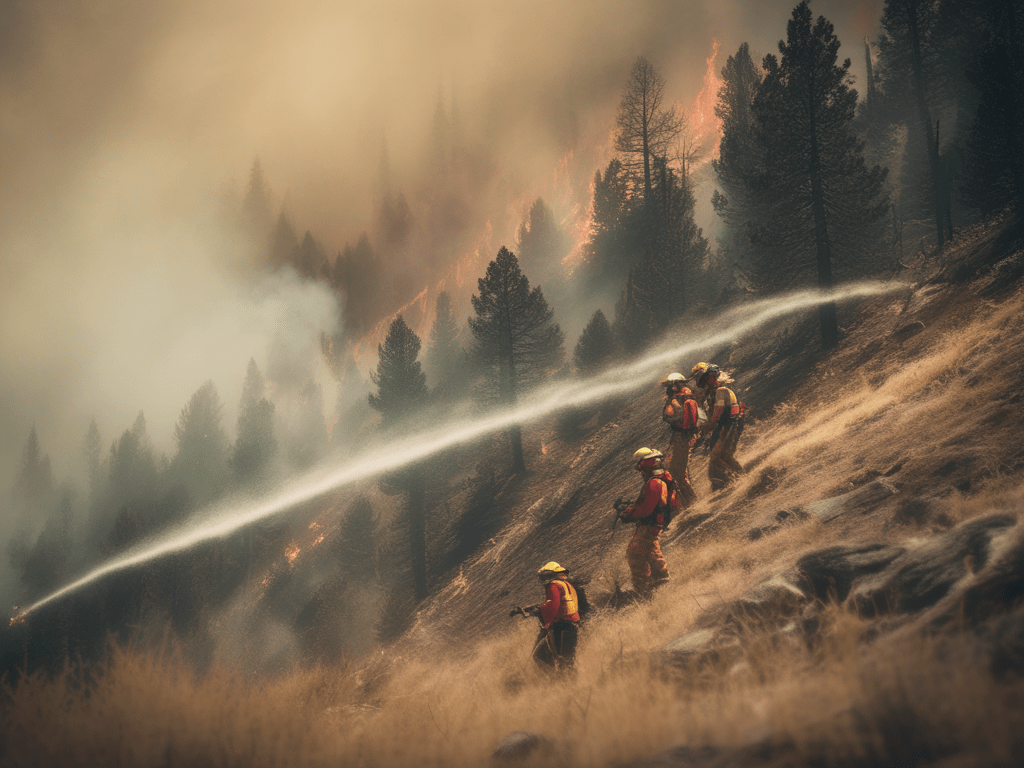
Colorado Front Range Wildfires Update: August 1, 2024

Latest Updates on the Colorado Front Range Wildfires

As of August 1, 2024, four significant wildfires are burning along Colorado’s Front Range, causing widespread evacuations, destruction, and one confirmed fatality. The fires are exacerbated by hot, dry, and windy conditions, making containment efforts challenging.

Current Wildfires

  1. Stone Canyon Fire
  • Location: Boulder and Larimer counties, near Lyons.
  • Status: 20% contained.
  • Impact: One person killed, at least two homes destroyed, and five structures affected.
  • Resources: Approximately 70 firefighters are working on containment.
  • Challenges: Difficult terrain and adverse weather conditions.
  1. Alexander Mountain Fire
  • Location: Larimer County, near Loveland.
  • Status: 1% contained.
  • Impact: Thousands evacuated, no structures reported destroyed.
  • Resources: Around 270 firefighters, including numerous aviation assets.
  • Challenges: Steep and rugged terrain.
  1. Quarry Fire
  • Location: Jefferson County, near Deer Creek Canyon.
  • Status: 0% contained.
  • Impact: 575 homes evacuated, no structures reported destroyed.
  • Resources: Local firefighting units and aerial support.
  • Challenges: Rapid growth due to windy conditions and proximity to populated areas.
  1. Lake Shore Fire
  • Location: Boulder County, around Gross Reservoir.
  • Status: 0% contained.
  • Impact: Evacuations in place, human-caused but not believed to be intentional.
  • Resources: Local firefighting units and ongoing investigations.
  • Challenges: Dry conditions and limited resources.

Containment Efforts and Challenges

  • Weather Conditions: The region is experiencing a heatwave with dry and windy conditions, complicating firefighting efforts. Temperatures are expected to remain high, with potential thunderstorms later in the week that could bring both relief and new challenges due to lightning.
  • Resource Allocation: Governor Jared Polis has authorized the deployment of the Colorado National Guard and requested federal assistance to support firefighting efforts. There is a struggle to secure enough resources as multiple fires are burning across the Western United States.
  • Investigation: Colorado’s newly expanded wildfire investigations team is actively looking into the causes of the fires, particularly the Stone Canyon Fire, with the help of advanced investigative techniques and resources.

Community Impact

  • Evacuations: Thousands of residents have been evacuated from their homes across the affected areas. Emergency shelters and resources are being provided to those displaced.
  • Fatality and Injuries: One person has been confirmed dead in the Stone Canyon Fire, and four firefighters have been injured.
  • Property Damage: Several homes and structures have been destroyed or damaged, with ongoing assessments to determine the full extent of the damage.

Looking Ahead

  • Weather Forecast: Cooler and wetter conditions are expected early next week, which should aid in slowing the fires’ growth and assist containment efforts.
  • Continued Efforts: Firefighters will continue to work around the clock to contain the fires, with additional resources being mobilized as needed.

The situation remains dynamic, and residents are urged to stay informed through local news and official channels for the latest updates and evacuation orders.

Citations:
[1] https://www.washingtonpost.com/nation/2024/08/01/colorado-wildfires-front-range/
[2] https://www.cpr.org/2024/07/31/colorado-wildfire-investigations-team-stone-canyon-fire/
[3] https://www.denverpost.com/2024/08/01/colorado-wildfires-lake-shore-quarry-stone-canyon-alexander-mountain/
[4] https://www.denver7.com/news/wildfire/heres-the-latest-on-the-3-major-wildfires-burning-on-colorados-front-range
[5] https://www.colorado.edu/today/2024/08/01/supporting-our-campus-through-wildfire-recovery
[6] https://www.denverpost.com/2024/07/31/colorado-wildfires-alexander-mountain-stone-canyon/
[7] https://abcnews.go.com/US/wireStory/human-remains-found-house-destroyed-colorado-wildfire-112445768
[8] https://coloradonewsline.com/briefs/3-wildfires-colorado-front-range/

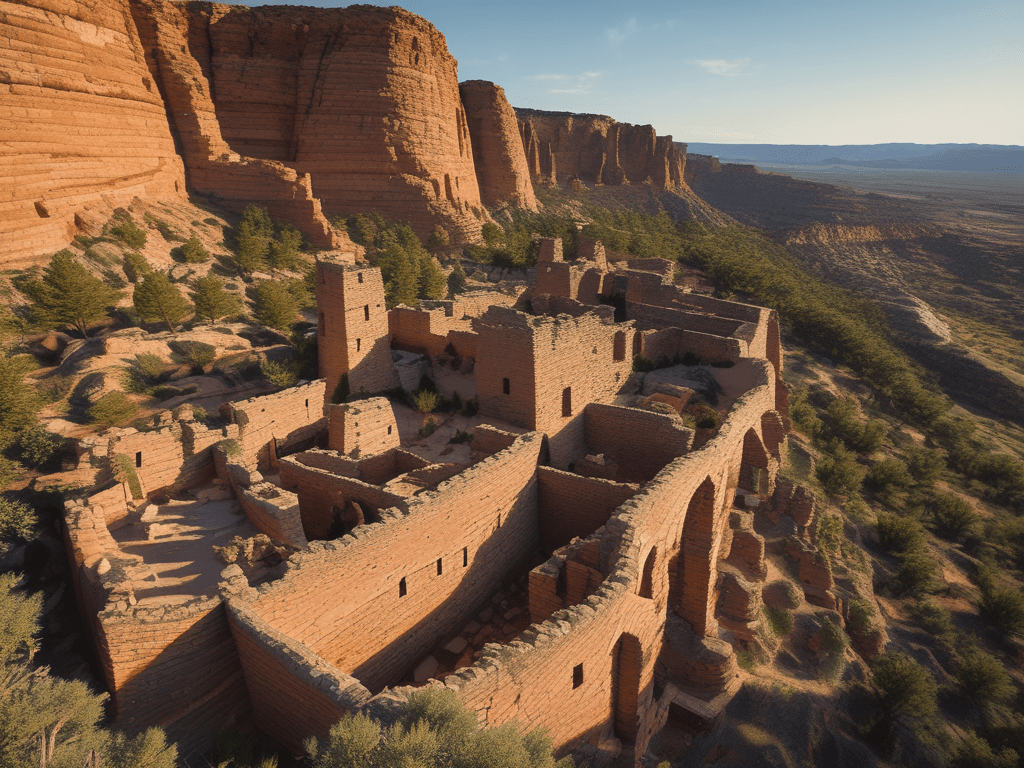
Hovenweep National Monument: Ancient Puebloan Villages and Deserted Valley

Hovenweep National Monument: A Deserted Valley

Hovenweep National Monument, straddling the Colorado-Utah border, is a significant archaeological site known for its well-preserved ancient Puebloan villages. The name “Hovenweep” is derived from a Paiute/Ute word meaning “deserted valley,” aptly describing the area’s historical and geographical context[1][2][3].

Historical Significance

Hovenweep was once home to more than 2,500 people between A.D. 900 and 1300. The site includes six prehistoric villages built by the ancestral Puebloans, a sedentary farming culture. These villages feature a variety of structures, including multistory towers, kivas (ceremonial structures), and storage granaries[2][4][5]. The towers, which are square, oval, circular, and D-shaped, are particularly notable for their intricate masonry and strategic locations on canyon rims and boulders[2][4].

Architectural Marvels

The structures at Hovenweep are remarkable for their architectural diversity and craftsmanship. The towers might have served multiple purposes, including celestial observation, defense, storage, and civic activities. The masonry work is considered some of the finest prehistoric construction in the United States, with carefully shaped stones and mortar used to fill gaps and protect against the elements[2][4].

Solitude and Natural Beauty

Hovenweep is celebrated for its solitude and undeveloped natural character, making it an ideal spot for visitors seeking tranquility and a connection with ancient history. The monument is also an International Dark Sky Park, offering stunning night skies for stargazing[3].

Visitor Information

  • Main Attractions: Square Tower Group, Little Ruin Canyon, Cutthroat Castle, Horseshoe & Hackberry, and Holly[1][4].
  • Activities: Hiking, camping, and exploring the archaeological sites. Pets are allowed on trails and in the campground but must be leashed[3][4].
  • Facilities: Visitor center, restrooms, picnic shelters, and a campground. Limited services are available, so visitors are advised to bring water, food, and other essentials[3][4].
  • Access: The monument is accessible via paved and gravel roads, with the main routes being the McElmo Canyon Route and the Pleasant View Route[2][4].

Practical Tips

  • Weather: The high desert region experiences wide temperature fluctuations. Summer temperatures can exceed 100°F (38°C), while winters can be quite cold[3].
  • Safety: Hydration is crucial, and visitors should carry ample water and protect themselves from the sun with sunscreen, hats, and light-colored clothing[3].
  • Respect the Site: Visitors are encouraged to stay on designated trails and not enter the ruins to help preserve the site’s integrity[1][3].

Hovenweep National Monument offers a unique glimpse into the lives of the ancestral Puebloans and stands as a testament to their ingenuity and resilience. Its remote location and well-preserved structures make it a fascinating destination for history enthusiasts and nature lovers alike.

Citations:
[1] https://www.utah.com/destinations/national-monuments/hovenweep-national-monument/
[2] https://mesaverdecountry.com/hovenweep-national-monument/
[3] https://cnha.org/visit/hovenweep-national-monument/
[4] https://bluffutah.org/hovenweep-national-monument/
[5] https://www.nps.gov/hove/learn/historyculture/index.htm
[6] https://www.nps.gov/hove/

Alexander Mountain Fire: Evacuation Orders, Centers, and Safety Guidelines

Alexander Mountain Fire in Northern Colorado

Current Status

The Alexander Mountain Fire, located west of Loveland in northern Colorado, has rapidly expanded and now covers approximately 950 acres as of the latest reports. The fire, which began in the Roosevelt National Forest, has prompted mandatory evacuations due to its swift growth and potential danger to nearby communities.

Evacuation Orders

Mandatory evacuations have been issued for several areas, including:

  • Residents from Drake to The Dam Store along Highway 34
  • Areas around Storm Mountain and Palisade Mountain
  • Waltonia Road, Sylvan Dale to Ellis Ranch, and Eden Valley to Sunrise Ranch
  • Bobcat Ridge and Flatiron Reservoir areas

Voluntary evacuations are in effect for:

  • County Road 86C north of Rustic
  • Glade Road from Highway 34 to Indian Creek
  • County Road 18E from County Road 31 to County Road 29

Residents in these areas are advised to gather essential items and prepare for immediate evacuation if necessary[1][2][4].

Evacuation Centers

Evacuation centers have been set up at:

  • Namaqua Elementary School, 209 N. Namaqua Ave., Loveland, CO 80537
  • Estes Park Events Complex, 1125 Rooftop Way, Estes Park, CO 80517

For those with large animals, the designated evacuation site is The Ranch Events Center, 5400 Arena Circle, Loveland, CO 80538. Small animals and pets can be taken to the NOCO Humane Society, 3501 E. 71st Street, Loveland, CO 80538[4][7].

Firefighting Efforts

Firefighting teams, including air support, have been deployed to control the blaze. The U.S. Forest Service has been actively mapping the fire to provide accurate size estimates and coordinate efforts effectively. As of the latest updates, the fire’s size has been estimated to range between 247 and 950 acres due to varying reports and ongoing assessments[1][3][5].

Air Quality and Health Advisories

An air quality alert has been issued for southeastern Larimer County, including Loveland, Windsor, Severance, and south Fort Collins, due to heavy smoke from the fire. Residents, especially those with heart or respiratory conditions, are advised to stay indoors if visibility drops below five miles, indicating unhealthy levels of smoke[5].

Additional Information

Residents can receive real-time updates by texting LCEVAC to 888-777. For more detailed evacuation maps and further instructions, visit the Larimer County Sheriff’s Office social media channels and the NOCO Alert website[4][6].

Stay safe and follow all evacuation orders and advisories from local authorities to ensure your safety and the safety of your community.

Citations:
[1] https://www.usatoday.com/story/news/nation/2024/07/29/colorado-fire-map-loveland/74592751007/
[2] https://www.yahoo.com/news/live-updates-fire-west-loveland-184223072.html
[3] https://www.denver7.com/news/local-news/photos-show-magnitude-of-alexander-mountain-fire-burning-west-of-loveland
[4] https://www.denver7.com/news/wildfire/mandatory-evacuations-issued-for-parts-of-larimer-county-as-wildfire-burns-near-drake
[5] https://www.denverpost.com/2024/07/29/alexander-mountain-wildfire-larimer-county-mandatory-evacuation/
[6] https://www.newsweek.com/latimer-wildfire-colorado-evacuations-map-1931671
[7] https://eu.coloradoan.com/story/news/2024/07/29/evacuation-centers-for-large-animals-people-in-alexander-mountain-fire/74594602007/
[8] https://coloradosun.com/2024/07/29/wildfire-larimer-county-mandatory-evacuations/
[9] https://www.cpr.org/2024/07/29/storm-mountain-wildfire-evacuations/
[10] https://www.denverpost.com/2024/07/29/photos-alexander-mountain-fire-loveland/
[11] https://www.cbsnews.com/colorado/news/mandatory-evacuations-ordered-wildfire-storm-mountain-larimer-county/
[12] https://www.reporterherald.com/2024/07/29/wildfire-west-of-loveland-prompts-evacuation-orders/
[13] https://eu.coloradoan.com/story/news/2024/07/29/updates-on-the-alexander-mountain-fire-west-of-loveland-colorado/74591871007/
[14] https://kdvr.com/news/local/wildfire-reported-west-of-sylvandale-ranch-near-highway-34/
[15] https://www.newsnationnow.com/us-news/west/live-updates-800-acre-wildfire-growing-west-of-sylvan-dale-ranch-near-highway-34/
[16] https://www.kktv.com/video/2024/07/29/watch-alexander-mountain-fire-burning-southwest-fort-collins-729-140-pm-update/

Colorado’s Evolving Wildfire Suppression Strategies

Changes in Fire Suppression in Colorado

As wildfire haze continues to affect Denver, it’s important to understand the evolving strategies in fire suppression that Colorado has adopted over the years. These changes reflect a broader shift in wildfire management, balancing ecological needs with public safety.

Historical Context

For much of the 20th century, wildfire suppression in the United States, including Colorado, was focused on extinguishing all fires as quickly as possible. This approach was driven by the fear of uncontrollable and destructive fires, such as the Great Fire of 1910. However, by the 1960s, ecological studies began to highlight the importance of fire as a natural process essential for the health of many ecosystems. This led to a gradual shift in policy from complete suppression to fire management, allowing some fires to burn under controlled conditions to promote ecological balance[4].

Modern Fire Suppression Techniques

Today, Colorado employs a variety of modern fire suppression techniques:

  1. Controlled Burns: Also known as prescribed burns, these are intentionally set and carefully managed fires that reduce the buildup of combustible vegetation. This method is considered one of the most effective ways to prevent larger, more destructive wildfires. However, controlled burns are often limited by strict regulations, public resistance, and erratic weather conditions, which can make them difficult to execute safely[3].
  2. Mechanical Thinning: This involves the physical removal of trees and other vegetation to reduce fuel loads. This method is often used in conjunction with controlled burns to manage fire risk in forests and grasslands.
  3. Artificial Intelligence (AI) Technology: Colorado has started integrating AI into its wildfire detection and management systems. For example, the Telluride Fire Protection District has partnered with Pano AI to use high-definition, 360-degree cameras and satellite data to detect fires early and respond more effectively[7].

Challenges and Adaptations

Despite these advancements, Colorado faces significant challenges in wildfire management:

  • Regulatory Hurdles: Conducting controlled burns requires navigating a complex web of regulations and obtaining permits, which can vary across the state’s 64 counties. These regulations are designed to prevent air quality violations and ensure public safety but can also delay critical fire prevention efforts[3].
  • Climate Change: Increasingly severe weather patterns, driven by climate change, have made wildfires more frequent and intense. This has necessitated more adaptive and proactive fire management strategies[3].
  • Public Resistance: Past incidents, such as the Lower North Fork Fire in 2012, which resulted in fatalities and property loss, have led to public skepticism about the safety of controlled burns. This resistance can hinder efforts to implement these crucial fire management practices[3].

Current Situation in Denver

The recent haze over Denver, caused by wildfire smoke from the Pacific Northwest and Canada, underscores the ongoing wildfire risk. The smoke has significantly reduced air quality, prompting health warnings and advisories for residents to limit outdoor activities[1][2][6]. This situation highlights the importance of effective wildfire management and the need for continued innovation in fire suppression techniques.

In conclusion, Colorado’s approach to wildfire suppression has evolved significantly, incorporating controlled burns, mechanical thinning, and advanced technologies like AI. These methods aim to balance ecological health with public safety, addressing the increasing challenges posed by climate change and regulatory constraints.

Citations:
[1] https://www.cbsnews.com/colorado/news/wildfire-smoke-denver-colorado-hazy-skies-air-quality/
[2] https://www.cpr.org/2024/07/25/haze-and-wildfire-smoke-in-colorado-clearing/
[3] https://www.propublica.org/article/colorado-wildfires-controlled-burns-marshall-fire
[4] https://en.wikipedia.org/wiki/History_of_wildfire_suppression_in_the_United_States
[5] https://www.yahoo.com/news/wildfire-haze-lingers-over-denver-233825404.html
[6] https://coloradonewsline.com/briefs/wildfire-smoke-smog-denver/
[7] https://www.denverpost.com/2023/03/23/artificial-intelligence-ai-wildfire-colorado-detect/
[8] https://www.cpr.org/2024/07/22/colorado-front-range-haze-smoke-ozone-wildfires/
[9] https://www.cbsnews.com/colorado/news/wildfire-smoke-returns-colorado/