Project 2025: How Trump’s Actions Align with Conservative Goals

Project 2025, a comprehensive conservative policy roadmap, is increasingly being implemented through President Donald Trump’s executive actions, despite his public disavowal of the initiative. As of April 2025, the evidence shows a striking alignment between Trump’s policies and this extensive blueprint for reshaping the federal government.

What is Project 2025?

Project 2025 is a multi-pronged initiative overseen by the Heritage Foundation, a conservative think tank, designed to provide a detailed roadmap for the next Republican president. At its core is the “Mandate for Leadership,” a 922-page blueprint that outlines ways to completely overhaul the executive branch of the federal government[1][2]. This extensive document was crafted in 2023 by the Heritage Foundation and other conservative groups as a comprehensive guide for implementing conservative policies across all aspects of federal governance[4].

The initiative covers a wide range of policy areas, from immigration and defense to regulatory reform and federal workforce management. Its stated goal is to dramatically reshape federal governance according to conservative principles, with particular emphasis on reducing the size of government, promoting “America First” policies, and rolling back progressive initiatives implemented during the Biden administration[4][5].

Trump’s Public Stance on Project 2025

Throughout his presidential campaign, Donald Trump repeatedly distanced himself from Project 2025. He insisted that he had “nothing to do with Project 2025,” claimed he had not read it, and had no intention of reading it[1]. As Democrats highlighted the initiative as a key reason to vote against Trump in the election, he further reinforced his disavowal, describing some of its proposals as “abysmal” and “ridiculous”[1][5].

Despite these public statements, there is significant evidence that the Trump administration is implementing policies that closely align with the Project 2025 blueprint. This has led Paul Dans, who previously oversaw Project 2025 at the Heritage Foundation, to express enthusiasm about Trump’s actions, describing them as “home runs” and “in many cases more than we could have even dared hope for”[1].

Evidence of Implementation

Personnel Connections

A notable indication of alignment between Trump’s administration and Project 2025 is the presence of key personnel who contributed to the initiative. Several authors of Project 2025’s policy chapters served in Trump’s first administration and now hold positions in his second term. These include Russ Vought, Trump’s pick to lead the Office of Management and Budget, and John Ratcliffe, who now serves as CIA director[1].

Policy Alignments

Federal Workforce Restructuring

One of the most dramatic implementations of Project 2025 principles has been Trump’s aggressive approach to downsizing the federal workforce. By March 2025, federal agencies faced a deadline to provide the administration with plans for a reduction in force, known as ARRPs (Agency Reorganization and Reduction in Force Plans)[3]. This initiative, guided by billionaire Elon Musk and his Department Of Government Efficiency (DOGE), has already resulted in mass firings of federal employees across multiple agencies[3].

The layoffs have particularly affected probationary federal workers, including employees in their first year or two on the job, those who recently moved between federal agencies, and those who were recently promoted. These cuts have impacted all 50 states and included employees at agencies that Americans frequently interact with, such as the National Park Service, U.S. Department of Agriculture, Veterans Affairs, Internal Revenue Service, and National Institutes of Health[3].

FEMA Restructuring

In alignment with Project 2025’s recommendations, Trump has established a review council to advise him on the Federal Emergency Management Agency’s capabilities and has suggested he could potentially “get rid” of FEMA entirely, leaving disaster response management to the states[1][2].

This action directly reflects Project 2025’s call for “reforming FEMA emergency spending to shift the majority of preparedness and response costs to states and localities instead of the federal government.” The initiative’s blueprint specifically recommends changing the cost-sharing arrangement so the federal government covers only 25% of costs for small disasters and up to 75% for “truly catastrophic disasters,” a significant reduction in federal responsibility[1].

Immigration and Border Security

Trump has taken significant actions on immigration that mirror Project 2025 proposals, including assigning troops “the mission to seal the borders and maintain the sovereignty, territorial integrity and security of the United States”[1]. This aligns with Project 2025’s recommendation that the Pentagon should “explicitly acknowledge and adjust personnel and priorities to participate actively in the defense, including using military personnel and hardware to prevent illegal crossings between ports of entry”[1].

Additionally, Trump has suspended entry into the U.S. by refugees under the U.S. Refugee Admissions Program, reflecting Project 2025’s call for “rightsizing refugee admissions” and an “indefinite curtailment” of refugee admissions[1].

Dismantling DEI Initiatives

Trump has taken substantial steps to dismantle diversity, equity, and inclusion (DEI) initiatives throughout the government and in the private sector, signing multiple executive orders aimed at abolishing these programs[4]. This mirrors Project 2025’s calls for the next conservative president to “eliminate every one of [the Biden administration’s] wrongful and burdensome ideological projects,” asserting that “Nondiscrimination and equality are the law; DEI is not”[4].

In a particularly striking alignment, Trump revoked a 60-year-old policy from 1965 that prohibited employment discrimination by government contractors. Project 2025 explicitly called for revoking this Lyndon B. Johnson-era executive order, arguing that abolishing it would mean contractors will “be less subject to the changing political whims of a President that might impose significant new costs or burdens”[4].

The Scale of Implementation

A CNN analysis of Trump’s first week in office found that more than two-thirds of his executive orders and actions (36 out of 53) evoked proposals outlined in Project 2025’s blueprint[2]. This extensive alignment covers not only Trump’s most-touted pledges like cracking down on illegal immigration and dismantling DEI initiatives but also more provocative and unexpected early actions[2].

These included punishing countries that refuse deported migrants, revoking security clearances of top national security officials accused by conservatives of political bias, and curbing foreign aid from countries “not fully aligned” with his global aims—all policies that were foreshadowed in Project 2025’s recommendations[2].

Conclusion

Despite President Trump’s public disavowal of Project 2025, the evidence demonstrates a substantial alignment between his administration’s actions and the initiative’s policy recommendations. From federal workforce cuts to immigration policy changes, from dismantling DEI initiatives to restructuring FEMA, Trump’s executive actions appear to be following much of the conservative blueprint laid out in Project 2025’s “Mandate for Leadership.”

As former Project 2025 director Paul Dans stated, the initiatives being implemented are “exactly the work we set out to do”[2]. While Trump continues to maintain distance from the project publicly, the implementation of its recommendations suggests that Project 2025 is indeed serving as an influential roadmap for his second administration’s approach to governance and policy.

Citations:
[1] https://www.cbsnews.com/news/trump-project-2025-playbook/
[2] https://www.cnn.com/2025/01/31/politics/trump-policy-project-2025-executive-orders-invs/index.html
[3] https://www.usatoday.com/story/news/politics/2025/03/12/trump-doge-federal-layoffs-timeline/82240271007/
[4] https://www.forbes.com/sites/alisondurkee/2025/03/17/heres-how-trumps-executive-orders-align-with-project-2025-as-he-touts-agenda-in-speech-to-congress/
[5] https://www.forbes.com/sites/alisondurkee/2025/03/05/heres-how-trumps-executive-orders-align-with-project-2025-as-he-touts-agenda-in-speech-to-congress/
[6] https://www.npr.org/2025/03/15/nx-s1-5328721/reduction-in-force-rif-federal-workers-job-cuts-musk-doge-layoffs
[7] https://progressivereform.org/tracking-trump-2/project-2025-executive-action-tracker/
[8] https://en.wikipedia.org/wiki/Project_2025
[9] https://www.whitehouse.gov/fact-sheets/2025/02/fact-sheet-president-donald-j-trump-works-to-remake-americas-federal-workforce/
[10] https://www.pbs.org/newshour/show/the-project-2025-policies-the-trump-administration-is-already-implementing
[11] https://www.npr.org/2025/01/31/nx-s1-5280364/trump-enacts-project-2025-policies-which-he-distanced-himself-from-while-campaigning
[12] https://www.selc.org/news/we-all-suffer-from-federal-workforce-cuts/
[13] https://www.aclu.org/project-2025-explained
[14] https://www.bbc.com/news/articles/c977njnvq2do
[15] https://www.brookings.edu/articles/trumps-dramatic-plan-to-cut-the-federal-workforce/
[16] https://www.nature.com/articles/d41586-025-00780-2
[17] https://www.cnn.com/politics/tracking-federal-workforce-firings-dg/index.html
[18] https://www.project2025.org
[19] https://apnews.com/article/trump-elon-musk-federal-workers-layoffs-d295d4bb2cdd5023c27d9cb03754e81b
[20] https://nul.org/node/6770


Answer from Perplexity: pplx.ai/share
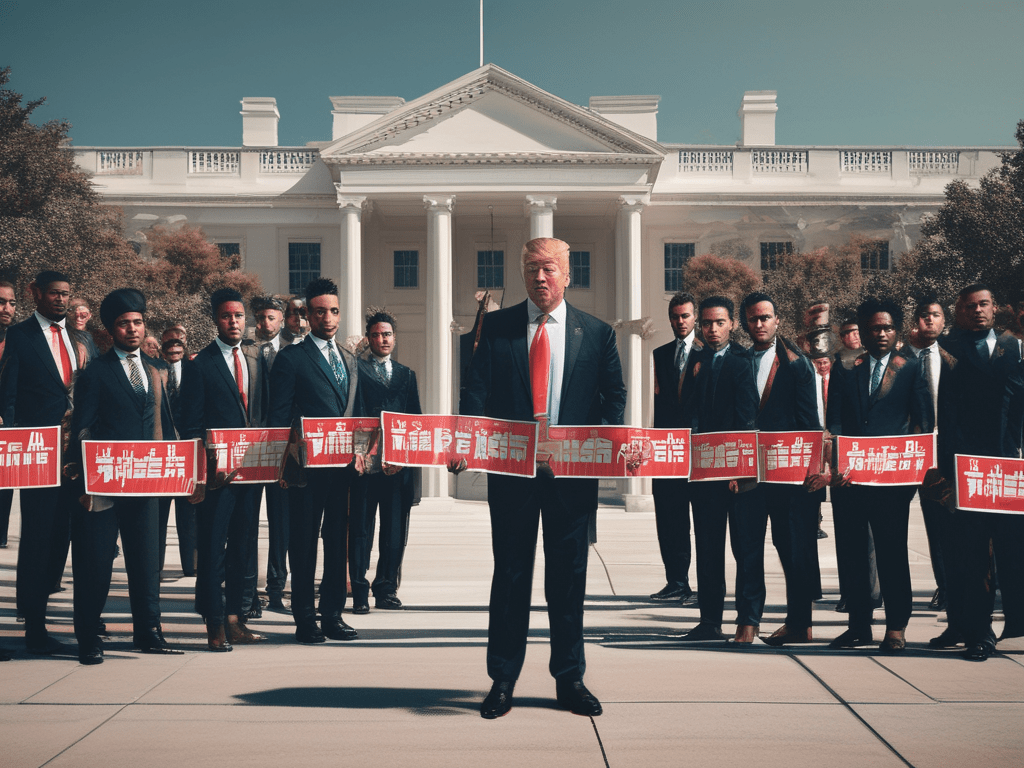
The Controversy Surrounding Project 2025 and Its Potential Impact on Trump’s 2024 Campaign

Donald Trump’s attempt to distance himself from Project 2025 appears to be backfiring, as recent developments have highlighted the close ties between the former president and the controversial conservative policy initiative. Here’s an overview of the situation:

Trump’s Denial and Democratic Response

Late Wednesday night, Trump took to Truth Social to disavow any connection to Project 2025, stating, “I know nothing about Project 2025. I have not seen it, have no idea who is in charge of it, and unlike our very well received Republican Platform, had nothing to do with it.”[1] He accused Democrats of spreading “pure disinformation” by trying to link him to the project’s policies.

However, evidence suggests that Trump’s claim of ignorance is likely untrue. A CNN analysis found at least 140 people who worked in Trump’s administration were involved in Project 2025, including six former cabinet secretaries[1]. The project’s 900-page master plan even includes roughly 20 pages credited to Trump’s first deputy chief of staff[1].

Project 2025 and Its Ties to Trump

Project 2025 is a comprehensive policy plan developed by the Heritage Foundation and other conservative organizations. While not directly created by Trump, it is closely aligned with his potential second-term agenda:

  1. Many of Trump’s associates are linked to the project, including former Trump appointee Russ Vought and Ed Martin, who sit on the advisory board[1].
  2. The project outlines extreme conservative policies, including a federal ban on abortion and IVF, which has become a point of contention[1].
  3. Several former Trump administration officials are directly involved, such as ex-Office of Management and Budget director Russ Vought, former acting Defense Secretary Christopher Miller, and former HUD Secretary Ben Carson[4].

Democratic Strategy and Public Response

Democrats, particularly the Biden campaign, have seized on Project 2025 as a way to attack Trump:

  1. The DNC placed Project 2025 billboards around Trump’s rally in Florida[1].
  2. Biden’s campaign launched a website tying Trump to the project and released a video warning that “Project 2025 will destroy America”[1].
  3. Public interest in Project 2025 has grown significantly, with Google Trends showing a dramatic increase in searches for the term[3].

Potential Impact on Trump’s Campaign

The controversy surrounding Project 2025 may be damaging to Trump’s campaign:

  1. It exposes potential contradictions between Trump’s public stance and the policies advocated by his allies.
  2. The project’s extreme positions on issues like abortion and IVF are at odds with the majority of the electorate[1].
  3. Increased public awareness of Project 2025 could influence swing voters and those still undecided about voting[3].

As the 2024 election approaches, the debate over Project 2025 is likely to intensify. Democrats are celebrating what they see as a successful strategy to expose Trump’s connections to extreme conservative policies, while Trump and his campaign attempt to create distance from the initiative. The controversy highlights the ongoing struggle within the Republican Party to balance appealing to its conservative base while not alienating moderate voters.

Citations:
[1] https://newrepublic.com/post/183697/trump-project-2025-meltdown
[2] https://www.nytimes.com/article/project-2025.html
[3] https://www.salon.com/2024/07/05/project-2025-was-supposed-to-boost-donald-campaign–but-it-may-be-backfiring-instead/
[4] https://www.nbcnews.com/politics/donald-trump/project-2025-trump-heritage-foundation-what-know-rcna161338
[5] https://newrepublic.com/post/183706/report-trump-ties-project-2025
[6] https://apnews.com/article/trump-project-2025-biden-9d372469033d23e1e3aef5cf0470a2e6
[7] https://www.thedailybeast.com/project-2025-director-paul-dans-in-resurfaced-interview-donald-trump-is-very-bought-in
[8] https://www.theguardian.com/us-news/article/2024/jul/08/trump-project-2025
[9] https://abcnews.go.com/US/trump-distance-project-2025-architects-helped-shape-rnc/story?id=111759747
[10] https://www.cnn.com/2024/07/11/politics/trump-allies-project-2025/index.html
[11] https://www.bbc.com/news/articles/c977njnvq2do
[12] https://time.com/6995370/trump-disavows-project-2025-transition-plan/
[13] https://www.npr.org/2024/07/11/nx-s1-5035272/project-2025-trump-biden-heritage-foundation-conservative
[14] https://www.democracydocket.com/analysis/what-is-project-2025-and-why-is-it-alarming/
[15] https://www.reuters.com/world/us/trump-seeks-disavow-project-2025-despite-ties-conservative-group-2024-07-05/

Project 2025: Conservative Policy Initiative Overview and Potential Threats

Project 2025: An Overview and Its Potential Threats

Project 2025 is a comprehensive policy initiative spearheaded by the Heritage Foundation and supported by over 100 conservative organizations. It aims to reshape the U.S. federal government significantly, consolidating executive power and implementing a far-reaching conservative agenda. The initiative is designed to be enacted swiftly should a Republican, presumably Donald Trump, win the 2024 presidential election.

Key Components and Proposals

1. Executive Power Consolidation:

  • Reclassification of Civil Servants: Project 2025 proposes reclassifying tens of thousands of federal civil service workers as political appointees. This would allow the replacement of career civil servants with individuals loyal to the administration’s policies[2].
  • Unitary Executive Theory: The project asserts that the entire executive branch is under the direct control of the president, based on Article II of the U.S. Constitution[2].

2. Economic Reforms:

  • Tax Policy: The project seeks to extend the Tax Cuts and Jobs Act of 2017, simplify individual income taxes to two brackets (15% and 30%), reduce the corporate tax rate to 18%, and impose a 15% tax on capital gains and dividends[2].
  • Federal Reserve: It proposes abolishing the Federal Reserve and advocates for a commodity-backed currency like the gold standard[2].

3. Social and Civil Policies:

  • Civil Rights: Critics argue that Project 2025 would undermine civil liberties, including the rights of women, persons of color, and the LGBTQ community[2].
  • Reproductive Rights: The project includes proposals to restrict access to reproductive care and prohibit the abortion pill[5].
  • Education: It envisions reducing the federal government’s role in education, promoting school choice, and eliminating what it calls “woke propaganda” in public schools[2].

4. Environmental and Labor Policies:

  • Climate Change: The project is criticized for its lack of concern for climate change and its intent to roll back environmental protections[1].
  • Labor Protections: It aims to cut overtime pay, relax worker safety rules, and allow more workplace discrimination[1].

Potential Threats and Criticisms

1. Undermining Democracy:

  • Authoritarianism: Critics, including legal experts and anti-authoritarian groups, argue that Project 2025 represents an authoritarian plan that could transform the U.S. into an autocracy by undermining the rule of law, separation of powers, and civil liberties[2][3].
  • Executive Overreach: The project’s emphasis on consolidating executive power and bypassing congressional approval for many actions is seen as a significant threat to democratic governance[1][2].

2. Economic and Social Impact:

  • Economic Inequality: The proposed tax reforms and deregulation could exacerbate economic inequality and increase the national debt[2].
  • Social Safety Nets: The project includes plans to dismantle social safety net programs, which could reduce food assistance for millions and cut support for veterans with disabilities[1].

3. Environmental Degradation:

  • Climate Policy: The project’s disregard for climate change and environmental protections could lead to increased pollution and long-term environmental harm[1].

Political Reactions

Donald Trump has recently attempted to distance himself from Project 2025, despite its alignment with his administration’s principles and the involvement of his former aides in its creation. This disavowal is seen by some as a strategic move to avoid alienating moderate voters and to mitigate potential backlash from the project’s controversial proposals[5][6].

Conclusion

Project 2025 represents a significant shift towards a more centralized and conservative federal government. While its proponents argue it is necessary to dismantle what they see as an unaccountable bureaucracy, critics warn that it poses severe threats to democracy, civil rights, and the environment. Understanding these threats is crucial for informed public discourse and democratic engagement.

Citations:
[1] https://democracyforward.org/the-peoples-guide-to-project-2025/
[2] https://en.wikipedia.org/wiki/Project_2025
[3] https://www.wbur.org/onpoint/2024/07/11/authoritarian-promo
[4] https://www.project2025.org
[5] https://www.theguardian.com/us-news/article/2024/jul/08/trump-project-2025
[6] https://www.nytimes.com/article/project-2025.html
[7] https://www.youtube.com/watch?v=WeMjng07qB8
[8] https://www.cbsnews.com/amp/news/what-is-project-2025-trump-conservative-blueprint-heritage-foundation/
[9] https://newrepublic.com/post/183660/project-2025-trump-ally-tom-homan-revenge-threat-deportation
[10] https://www.project2025.org/about/about-project-2025/
[11] https://www.reuters.com/world/us/trump-seeks-disavow-project-2025-despite-ties-conservative-group-2024-07-05/
[12] https://www.bbc.com/news/articles/c977njnvq2do
[13] https://www.youtube.com/watch?v=nIu5gnOX6FU
[14] https://www.npr.org/2024/07/11/nx-s1-5035272/project-2025-trump-biden-heritage-foundation-conservative
[15] https://www.msnbc.com/opinion/msnbc-opinion/project-2025-what-know-trump-president-second-term-rcna160465

Project 2025: Republican Government Reshaping Plan Unveiled

Project 2025, also known as the Presidential Transition Project, is a comprehensive conservative policy proposal developed by the Heritage Foundation and other right-wing organizations to reshape the United States federal government if a Republican candidate, presumably Donald Trump, wins the 2024 presidential election[1][5]. Here are the key aspects of Project 2025:

Government Structure and Power

  • Proposes placing the entire federal bureaucracy under direct presidential control[1]
  • Advocates reclassifying tens of thousands of federal civil service workers as political appointees to replace them with loyalists[1]
  • Seeks to expand presidential power and drastically cut federal agencies like the Department of Education[3]
  • Aims to implement the controversial “unitary executive theory,” giving the president direct control over independent agencies like the Department of Justice[5]

Economic Policies

  • Recommends extending the Tax Cuts and Jobs Act of 2017[1]
  • Proposes simplifying individual income taxes to two brackets: 15% and 30%[1]
  • Aims to reduce the corporate tax rate to 18%[1]
  • Suggests abolishing the Federal Reserve and potentially returning to a gold-backed currency[5]
  • Advocates for slashing federal funding for renewable energy research and investment[5]

Social and Cultural Policies

  • Seeks to infuse the government and society with Christian values[1]
  • Proposes banning pornography and shutting down tech companies that facilitate access to such content[5]
  • Recommends withdrawing FDA approval for the abortion pill mifepristone[3][5]
  • Advocates for school choice and parental control over education[5]
  • Proposes eliminating terms like “sexual orientation,” “diversity, equity, and inclusion,” and “reproductive rights” from federal regulations[5]

Immigration and Border Security

  • Proposes increased funding for a wall on the US-Mexico border[5]
  • Recommends consolidation and expansion of powers for immigration agencies[5]
  • Suggests increasing fees on immigrants and allowing fast-tracked applications for those who pay a premium[5]

Implementation Strategy

  • Includes a 180-day playbook of actions to be taken in the first six months of a new conservative administration[2]
  • Outlines strategies for implementing policies immediately after the presidential inauguration in January 2025[5]

Critics have characterized Project 2025 as an authoritarian plan that could undermine the rule of law, separation of powers, and civil liberties[1]. However, proponents frame it as a means to dismantle what they see as an unaccountable government bureaucracy[1].

It’s worth noting that while Donald Trump has recently attempted to distance himself from Project 2025[3][4], many individuals involved in crafting the Republican Party platform and Trump’s campaign have ties to the project[3]. This has led to skepticism about Trump’s disavowal, with some suggesting it may be an attempt to avoid potential controversy during the election campaign[4].

Citations:
[1] https://en.wikipedia.org/wiki/Project_2025
[2] https://www.project2025.org
[3] https://abcnews.go.com/US/trump-distance-project-2025-architects-helped-shape-rnc/story?id=111759747
[4] https://www.theguardian.com/us-news/article/2024/jul/08/trump-project-2025
[5] https://www.bbc.com/news/articles/c977njnvq2do
[6] https://www.documentcloud.org/documents/24088042-project-2025s-mandate-for-leadership-the-conservative-promise
[7] https://www.cbsnews.com/amp/news/what-is-project-2025-trump-conservative-blueprint-heritage-foundation/
[8] https://www.heritage.org/conservatism/commentary/project-2025
[9] https://www.project2025.org/about/about-project-2025/
[10] https://www.project2025.org/policy/
[11] https://www.newsnationnow.com/politics/2024-election/heritage-foundation-project-2025-explained/
[12] https://www.democracydocket.com/analysis/what-is-project-2025-and-why-is-it-alarming/

Critiques of Heritage Foundation’s Project 2025: Potential Authoritarianism and Policy Impact

Critiques of Project 2025

Project 2025, a comprehensive policy blueprint developed by the conservative Heritage Foundation, has garnered significant attention and criticism. Here are some of the common critiques:

1. Expansion of Presidential Power

Critics argue that Project 2025 aims to significantly expand presidential authority, which could undermine democratic institutions and checks and balances. The project supports the unitary executive theory, suggesting that the president should have direct control over federal agencies, including independent ones like the Department of Justice. This centralization of power is seen as a move towards authoritarianism by opponents[1][2][6].

2. Dismantling Federal Agencies

The project proposes the elimination or significant reduction of several federal agencies, including the Department of Education and the Federal Reserve. Critics warn that such actions could destabilize essential public services and undermine efforts to address issues like education inequality and economic stability[1][4].

3. Civil Service Overhaul

Project 2025 advocates for the dismissal of thousands of civil servants, replacing them with political appointees. This move is perceived as an attempt to create a more loyal and less independent federal workforce, which could erode the professionalism and impartiality of civil service[1][2][6].

4. Immigration Policies

The project includes stringent immigration policies, such as increased funding for the US-Mexico border wall, higher fees for immigrants, and expanded powers for immigration agencies. Critics argue that these measures could lead to human rights violations and exacerbate the challenges faced by immigrants[1].

5. Climate and Economic Policies

Project 2025 proposes slashing federal funding for renewable energy and replacing carbon-reduction goals with increased energy production. Additionally, it suggests abolishing the Federal Reserve and returning to a gold-backed currency. Critics argue that these policies are regressive and could harm efforts to combat climate change and maintain economic stability[1].

6. Education Reforms

The project calls for the abolition of the Department of Education and the elimination of programs like Title I funding and Head Start. Critics argue that these changes would disproportionately affect low-income students and undermine public education. The project also promotes school choice and parental control, which opponents say could divert resources from public schools[4].

7. Social and Cultural Policies

Project 2025 includes measures to ban pornography, eliminate terms like “sexual orientation” and “gender equality” from federal regulations, and oppose critical race theory in schools. Critics argue that these policies are part of a broader agenda to impose conservative social values and roll back protections for marginalized groups[1][4][6].

8. Abortion and Reproductive Rights

The project proposes withdrawing the abortion pill mifepristone from the market and defunding abortions in certain federal programs. Critics see these measures as an attack on reproductive rights and women’s health[1][6].

9. Potential for Authoritarianism

Some critics express concerns that Project 2025 could pave the way for a more authoritarian government. They argue that the project’s emphasis on expanding executive power, dismantling federal agencies, and overhauling the civil service could lead to a concentration of power that threatens democratic norms and institutions[3][5].

In summary, while Project 2025 has its supporters, it faces substantial criticism for its potential to centralize power, dismantle key federal agencies, and implement regressive social and economic policies. Critics argue that these changes could undermine democratic institutions, harm vulnerable populations, and roll back progress on various fronts.

Citations:
[1] https://www.bbc.com/news/articles/c977njnvq2do
[2] https://www.washingtonpost.com/politics/2024/07/05/trump-project-2025-disavowal/
[3] https://www.reddit.com/r/PoliticalScience/comments/1857icc/what_do_you_all_think_of_project_2025_im_feeling/
[4] https://www.theguardian.com/education/article/2024/jul/04/trump-project-2025-heritage-foundation-education-department
[5] https://apnews.com/article/trump-project-2025-biden-9d372469033d23e1e3aef5cf0470a2e6
[6] https://thehill.com/homenews/campaign/4753684-heritage-foundation-project-2025/
[7] https://www.thedailybeast.com/donald-trump-claims-republicans-project-2025-has-nothing-to-do-with-him-abysmal
[8] https://www.forbes.com/sites/caileygleeson/2024/07/05/trump-disavows-project-2025-calls-some-of-conservative-groups-ideas-absolutely-ridiculous-and-abysmal/