Trump’s 2025 Trade Policy: Impacts and Ongoing Negotiations

Thanks for the clarification. I’ll look into trade deals and tariff-related negotiations initiated or completed by Donald Trump during his current (second) presidency, as well as those that remain unresolved.

I’ll update you shortly with a detailed breakdown of countries involved, the nature of the agreements or tariffs, and any ongoing negotiations.

Summary of U.S. Trade Deals and Tariff Actions under Trump (2025)

Country/RegionStatus
United KingdomDeal Made
ChinaDeal Made (Preliminary)
VietnamNegotiating (Near Deal)
IndiaNegotiating
JapanNegotiating
South KoreaNegotiating
European UnionTariff Dispute Ongoing
CanadaNegotiating
MexicoNegotiating
ThailandNegotiating
MalaysiaNegotiating
CambodiaNegotiating
TaiwanNegotiating
IndonesiaNegotiating
PakistanNegotiating
SwitzerlandNegotiating

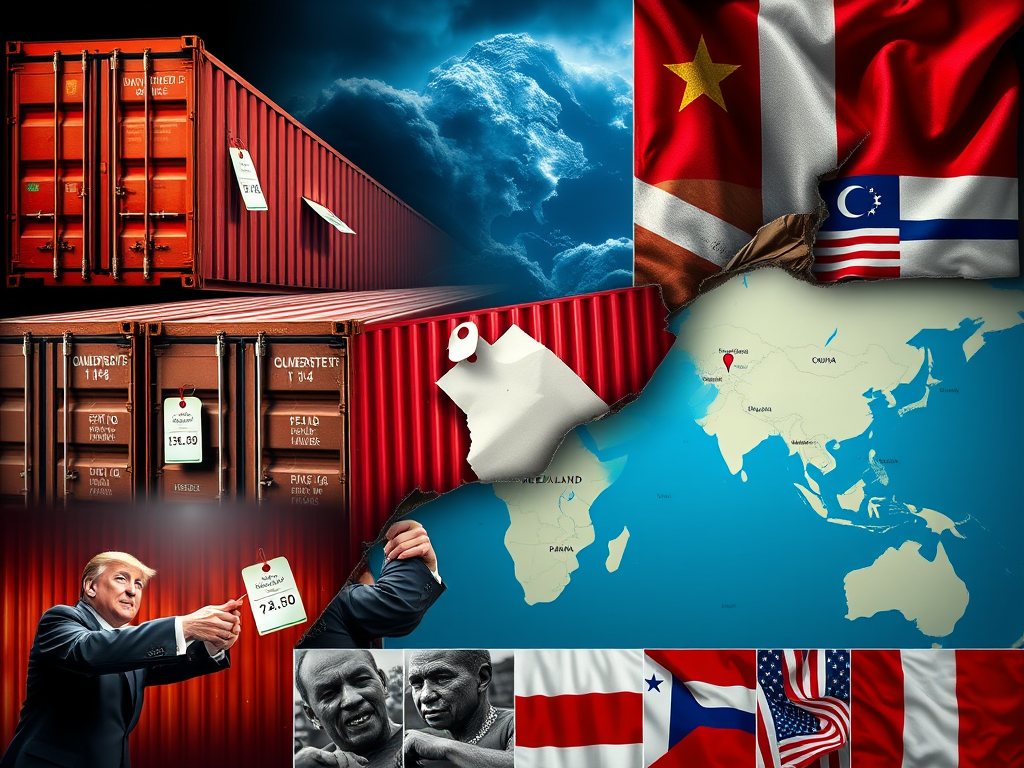
In April 2025 President Trump imposed sweeping “reciprocal” tariffs on virtually all trading partners (10% baseline on all imports, up to 50% on some). He then announced a 90‑day pause (reverting to 10% on most goods until July 9) to negotiate new bilateral deals. The following sections summarize the outcomes and ongoing talks by partner region. Key affected sectors include agriculture (corn, beef, dairy, ethanol), automotive, steel/aluminum, and tech/digital trade.

United Kingdom – New Trade Agreement

In May 2025 Trump announced a historic U.S.–UK “Economic Prosperity Deal” (signed in principle May 8) that removes many barriers and opens markets for both sides. USTR Jamieson Greer explained it “lays the groundwork to reduce tariffs on U.S. products, remove discriminatory trade barriers for U.S. agricultural and industrial goods, [and] give U.S. producers reciprocal market access”. For example, the UK agreed to remove a 20% tariff on U.S. beef and create a 13,000‑metric‑ton duty‑free quota for U.S. beef. The U.S. will reallocate 13,000 MT of its existing beef quota to the UK in return, and the UK will also open a 1.4 billion‑liter duty‑free quota for U.S. ethanol. Likewise, the U.S. will set a 100,000‑vehicle quota at a 10% tariff for UK autos, protecting some U.S. car producers while giving UK manufacturers limited access. Other provisions include negotiating preferential treatment for pharmaceuticals, and the UK committing to meet U.S. supply‑chain security rules for steel and aluminum (with the U.S. promising MFN‑rate quotas on UK steel/alum if those are met).

Trump and USTR officials celebrated this deal as immediately expanding market access for American farmers and manufacturers. USTR noted it “lowers trade barriers, opening $5 billion of increased market access for American exports, especially for American farmers”. Farm and ethanol groups likewise praised newly opened markets for U.S. corn, beef, dairy, and biofuels. (E.g. Nebraska’s delegation cited $700 million in new ethanol exports and $250 million in beef exports under the quota.) The agreement also codifies modern digital‑trade rules (USMCA‑style) to benefit U.S. tech firms.

Key sectors: U.S. agriculture (beef, dairy, ethanol, corn, pork), autos (100k vehicles at 10%), aerospace and manufacturing, and digital/tech (strong e‑commerce rules) are most affected. Notably, Section 232 tariffs on steel and aluminum remain in place on both sides (these were explicitly not removed). (Canada–U.S. automotive rules under USMCA also apply.) The UK deal was finalized at the G7 summit (effective June 30, 2025) and immediately implemented, though it left 50% steel/aluminum duties unresolved.

China – Preliminary Trade Agreement

Also in June 2025 the U.S. reached a framework trade agreement with China. Details are limited, but USTR and press reports indicate China agreed to ease export controls on rare earths and certain technology minerals, while the U.S. agreed to lift some of its export controls on Chinese tech. (Treasury Sec. Bessent said China will more readily approve exports of magnets and rare earths used in chips.) However, major issues were not resolved: the pact “includes absolutely nothing related to the U.S.’s concerns regarding China’s trade surplus or non-market behavior”, and longstanding complaints about Chinese subsidies and IP theft remain. Sources confirm the deal was reached on June 26, 2025; it eased China’s restrictions on critical minerals for U.S. industry and prompted a reciprocal easing of U.S. curbs. The agreement was described as a “de‑escalation” of tariffs, but it left most tariffs in place (import duties remained at newly negotiated high levels pending further talks).

Key sectors: Technology and defense‑related industries are central: rare earth minerals, computer chips, and other high-tech inputs; as well as renewable-energy components. U.S. exporters hope for improved access (e.g. electric-vehicle batteries, electronics). Agriculture was less prominent in this pact, though past tensions over Chinese pork/dairy are still unresolved. Notably, this China deal did not immediately roll back existing tariffs on industrial goods or autos; it focused on export controls and minerals.

Asia-Pacific Negotiations

  • Vietnam: The U.S. is close to a deal with Vietnam. Reuters reported that Vietnam “expects to finalize a trade deal… before the July 9 deadline,” citing frequent talks with the Trump team. Details are not public, but an agreement in principle (often called a framework) was apparently announced. Industry sources say it likely covers access to Vietnamese markets for U.S. goods. Key sectors: U.S. manufacturers and ag exporters (e.g. cotton, poultry) aim to gain from lower barriers.
  • India: High‑level talks with India remain ongoing. Trump himself said a “very big” deal is “likely” and under negotiation, but India and the U.S. have yet to bridge gaps on sensitive products. The sticking points include U.S. demands to open India’s dairy and agricultural markets, and India’s insistence on keeping tariffs on U.S. farm goods relatively high. Negotiators met in Washington in late June 2025, but no agreement was signed by mid‑2025. Key sectors: U.S. soybean, meat, and dairy industries seek tariff cuts; India wants industrial access and tech transfer concessions.
  • Japan: Talks with Japan are stalled. Japan has demanded lower U.S. auto tariffs and wider market access, but the U.S. has resisted broad cuts. By early July 2025 President Trump publicly “puntted” on Japan, claiming it was time to move on. He sent Japan a letter on July 7 imposing a 25% tariff on all Japanese imports (up from the 24% proposed in April) effective August 1. Japanese leaders remain willing to negotiate, but no deal was reached by the deadline. Key sectors: Auto manufacturers are at the center – Japan is especially concerned about U.S. tariffs on cars and parts, which remain at 25%.
  • South Korea: Similarly, talks with South Korea continued through July with no final deal. South Korea pushed for reductions of U.S. auto and steel tariffs, while the U.S. pressed Korea on other issues (e.g. plastics, agriculture). In July, Trump sent South Korea a letter imposing a 25% tariff on Korean imports (matching the earlier announced rate) effective August 1. South Korean officials described the talks as “very difficult.” Key sectors: Korean autos (a $40B bilateral auto trade) and steel/aluminum were prime issues; steel deals were also left unsettled.
  • Southeast Asia (ASEAN): Multiple countries have active negotiations. Thailand, for example, submitted a proposal in June and is seeking a tariff cap of 10% on its goods. Malaysia agreed in late June to finalize a trade pact by the July 9 deadline. Cambodia submitted detailed tariff and investment offers. Taiwan completed a second round of talks in late June reporting “constructive progress” on tariffs and supply‑chain issues. Indonesia has eased some import licensing and offered greater U.S. access to critical minerals to move the talks forward. By July, most of these talks were ongoing; none was finalized by the deadline but all remain in play. Key sectors: U.S. exporters of electronics, agriculture, and minerals (e.g. copper, nickel) are eyeing better access. Some countries seek U.S. market openings for textiles and seafood.
  • Other Asia/Mideast: Switzerland reported ongoing talks and “optimism” for a deal by July 9. Pakistan likewise said it expects to conclude talks soon. No new agreements were announced in these cases as of mid‑2025.

Europe – EU Negotiations and Disputes

Negotiations with the European Union are progressing slowly and remain highly contentious. Trump had initially imposed a 20% tariff on all EU imports in April 2025 (covering $180B in goods), then paused it at 10% for talks. In May he threatened to jack EU tariffs to 50% on everything, a move that spooked markets. The EU responded by preparing retaliation: officials announced they would impose counter‑tariffs on hundreds of U.S. products (from beef and cars to aircraft and consumer goods) if no agreement was reached. Washington and Brussels agreed to keep negotiating (with Maroš Šefčovič traveling to D.C. in early July), but the underlying disputes remain unresolved.

Major friction points with the EU include automotive trade, agricultural standards, and digital taxes. The U.S. continues to enforce its Section 232 tariffs (25%) on all EU steel/aluminum and autos. The UK deal left those U.S. tariffs intact, and the EU faces the same U.S. duties (50% on steel/alum and 25% on autos). Brussels insists on tariff cuts for its cars and waivers for Airbus, while Washington presses the EU to drop its digital services taxes and regulatory barriers (e.g. on meat). Talks are ongoing, but both sides are preparing contingencies (retaliatory tariffs) if no deal is struck.

Key sectors: EU exporters of automobiles, machinery, chemicals, and wine/spirits (especially France, Germany, Italy) are most at risk from U.S. tariffs. U.S. firms exporting tech and services worry that the EU’s digital tax dispute could stall a trade pact. Steel and aluminum producers on both sides remain in limbo under the 25–50% tariffs. Agricultural goods (EU cheese, U.S. poultry, etc.) are also a flashpoint.

North America – Canada and Mexico

  • Canada: Trade talks resumed in July after Canada abandoned its planned digital services tax. Trump had halted negotiations in June when Canada imposed a 3% tax on U.S. tech (threatening ~$3B retroactive charges), but Canada later scrapped the tax. U.S. negotiators returned to the table under a G7‑agreed deadline of July 21. Canada’s stated goal is full removal of U.S. tariffs (and both sides want to improve auto and ag rules). As of mid‑2025, no deal was completed, but discussions are active. Key sectors: Canadian auto parts and aluminum producers seek U.S. exemptions; U.S. tech firms pressed Canada to drop the DST. Both farmers and manufacturers on each side hope for expanded access.
  • Mexico: Bilateral talks with Mexico focused largely on steel and aluminum tariffs. Mexico still imposes a 50% tariff on U.S. steel, and the U.S. has 25% on Mexican steel and 10% on aluminum. In June Mexico agreed to negotiate a quota system to replace its 50% steel tariff. No final pact was reported by mid‑2025, but Commerce Secretary Lutnick indicated progress. (Meanwhile, the USMCA agreement between the U.S., Canada, and Mexico is in mandatory review starting 2026; Trump’s team is expected to seek amendments.) Key sectors: Steelworkers on both sides; auto parts (subject to varying duties); agriculture under USMCA rules.

Key Industries and Sectors

Across these negotiations, agriculture and biofuels have been frequent bargaining chips. The U.S. has pressed for wide access for its farm exports, and many deals granted it. For instance, the UK deal unlocked billions in U.S. ag exports (beef, dairy, ethanol, corn, pork) via new quotas. USTR and agriculture groups noted they secured access for “virtually all” U.S. farm products. Similar pressure is seen in talks with Japan and India, where U.S. soybean, beef and dairy farmers are demanding lower tariffs.

The automotive sector is another focal point. Trump insisted on protecting U.S. carmakers by capping rival imports. The UK deal’s 100k‐vehicle quota at 10% (and a lower 7.5% rate for those cars) exemplifies this. Japan and Korea aggressively seek tariff cuts on cars, but the U.S. held firm at 25%. Auto tariffs remain a leading unresolved issue in EU and Asia negotiations.

Steel, aluminum, and industrial goods are a constant dispute. All current deals have left U.S. Section 232 tariffs in place: U.S. 25% steel/alum duties continue on EU, UK, and other imports. (Commerce revoked all prior exemptions for these tariffs in June 2025.) Britain, the EU, and others must meet U.S. security requirements to gain any relief. Thus metal industries face uncertainty: quotas may be granted (as with the UK quota), but all parties still have high default tariffs.

In technology and services, digital trade rules are a priority with close allies. The US–UK accord explicitly includes “USMCA‑style” digital provisions. The Canada talks began only after Canada renounced its tech‑company tax. In contrast, with China the focus is on semiconductor and mineral supply chains (rare earths, chips). There are also investigations into tariffs on iPhones, AI hardware, and biotech inputs, though most of these are still at the Section 232 investigation stage (see Tariff Actions below).

Multilateral Policy Shifts and Tariff Actions

The Trump administration has emphasized a “America First” trade policy that favors bilateral deals over multilateral agreements. On Jan. 20, 2025 Trump signed an “America First Trade Policy” memo directing USTR to review all existing agreements and seek reciprocity. USTR delivered a 2025 Trade Agenda (March 2025) that stressed WTO reform and enforcing reciprocal treatment for U.S. workers. There are no new large multilateral pacts; focus remains on one‑on‑one talks.

As the July 9 deadline (later extended to Aug 1) approached, Trump announced that tariffs would spike back up for countries without deals. By mid‑July he began sending letters to dozens of leaders (Japan, South Korea, Thailand, etc.) informing them of their new tariff rates if no deal is reached. For example, letters delivered in July to Japan and Korea gave notice of 25% U.S. tariffs on their exports starting Aug 1. Trump likewise notified Vietnam that its 14% tariff (for not agreeing earlier) would roll into effect August 1 (pending final negotiation).

Finally, the legal status of these new tariffs is unsettled. In May 2025 a federal court struck down two sets of Trump’s tariffs (“fentanyl‑related” and the bulk reciprocal tariffs) as beyond executive authority. The government appealed and won a stay on June 10, so for now the tariffs remain in effect. Whether these tariffs will ultimately stand is unresolved, but businesses are preparing for higher import costs on July 9/July 21 etc. if deals are not finalized.

Summary

In sum, Trump’s second term has seen one major trade agreement (UK) completed and one (China) framed, with many others in negotiation. Countries without deals face looming tariff increases, putting pressure on talks. The USMCA, WTO, and global supply-chain issues also loom large (with mandated USMCA review in 2026 and ongoing WTO reform efforts). Key affected industries are agriculture (corn, beef, ethanol, dairy), automotive, steel/aluminum, aerospace, and high tech (digital and advanced manufacturing). The administration’s “reciprocal tariffs” strategy marks a sharp shift: every trade partner now feels the leverage of U.S. tariffs in play, and all are being driven to the negotiating table.

Sources: Official USTR releases, trade law firm analyses, and major news reports (see citations above). These detail the agreements, ongoing talks, and industry impacts listed.
Deceptive Pricing Practices: A Retail Analysis

Key Points
Research suggests deceptive pricing, like misleading discounts, is fairly common in retail, especially in grocery stores.
Studies show pricing errors occur in about 3-4% of transactions, with overcharges less frequent than undercharges.
Legal cases and consumer reports indicate deceptive practices are prevalent, particularly in certain regions like California.
There is controversy, with retailers disputing claims and unions advocating for better oversight.
Prevalence in Retail
It seems likely that deceptive pricing practices, such as overcharging or misleading discounts, are relatively common in retail, particularly in high-volume sectors like grocery stores. Studies on pricing accuracy suggest that while overall error rates are around 3-4%, intentional deceptive practices like fake discounts are harder to quantify but appear significant based on consumer complaints and legal actions. For example, a 2022 study by Consumers’ Checkbook found most “discounts” at major retailers were misleading, not genuine .
Regional and Industry Variations
The evidence leans toward deceptive pricing being more common in certain regions, with 64.8% of U.S. cases since 2014 in California, and states like New Jersey and Oregon also seeing frequent issues. It’s not limited to groceries; retailers like Walmart have faced lawsuits for overcharging, suggesting a broader industry trend .
Controversy and Consumer Impact
There’s debate, with retailers like Kroger disputing claims of systemic issues, while unions like UFCW Local 7 argue understaffing exacerbates pricing errors. This affects consumers, especially during inflation, with reports of overcharges averaging 18.4% per item in some cases, highlighting the need for vigilance .
Investigation into the Prevalence of Deceptive Pricing in Retail as of May 21, 2025
This report provides a comprehensive examination of the prevalence of deceptive pricing in the retail industry, focusing on practices such as misleading discounts, overcharging, and incorrect shelf tags, as highlighted by recent investigations into Kroger-owned King Soopers and broader retail trends. The analysis integrates findings from academic studies, consumer reports, legal cases, and industry insights, offering a detailed understanding of the issue as of the current date.
Context and Background
Deceptive pricing refers to intentional practices where retailers mislead consumers into believing they are getting a better deal than they actually are, often through tactics like fake discounts, bait-and-switch schemes, or overcharging at checkout compared to advertised prices. This issue gained attention with an X post from UFCW Local 7 on May 15, 2025, titled “Investigation Confirms Kroger-owned King Soopers’ Chronic Understaffing of Stores Has Led to Deceptive Pricing for Consumers” . The post detailed how understaffing led to pricing discrepancies, violating Colorado consumer protection laws, and is part of broader labor disputes, including strike authorizations and lawsuits by the Colorado Attorney General.
King Soopers, operating in Colorado and Wyoming, is a subsidiary of Kroger, with UFCW Local 7 representing over 15,000 workers. The union has linked understaffing to operational challenges like expired sales tags, confirmed by Consumer Reports’ findings since January 2025, which found overcharges averaging 18.4% per item due to pricing errors Kroger Stores Overcharging Shoppers.
Prevalence of Pricing Errors and Deceptive Practices
Research on pricing accuracy in retail, particularly in grocery stores using scanners, provides insight into the frequency of pricing errors. A 1998 study by Clodfelter, published in the International Journal of Retail & Distribution Management, checked 146,518 items in over 2,000 stores across nine states and found a price accuracy rate of 96.13%, implying a 3.87% error rate. It noted that undercharges occurred more frequently than overcharges, with grocery stores showing higher accuracy compared to other retail stores . Another study, also from Emerald Insight, examined pricing accuracy over a four-year period and reported an error rate of 3.86%, with overcharges at 1.65% and undercharges at 2.21% . A ScienceDirect study over 15 years found similar low error rates but emphasized their impact on consumer trust .
While these studies focus on accidental errors, deceptive pricing involves intentional tactics. A 2022 report by Consumers’ Checkbook, cited by Darrow.ai, tracked sale prices at 24 major retailers for 33 weeks and found that most “discounts” were misleading, not genuine, suggesting deceptive pricing is more common than realized . Brain Corp’s recent analysis indicated over half of all stores had mismatches between labeled and scanned prices, with independent retailers at 69%, and cited a case where a major retailer faced an $850,000 settlement in Wisconsin for overcharging .
Specific Cases and Legal Actions
Legal cases underscore the prevalence of deceptive pricing. For instance, a 2022 lawsuit against Walmart in Niles, Illinois, alleged overcharging by 10-15% on certain items, indicating a broader trend Kroger accused of price discrepancies. Darrow.ai noted that 64.8% of U.S. deceptive pricing cases since 2014 were in California, with common states including New Jersey, Oregon, Washington, and Illinois. A specific example is Michelle Cortez Gomez vs. Kohl’s, a class action in Wisconsin for misleading reference prices, with a 29-page complaint detailing the issue . Another case involved an international tourist attraction operator affecting 330,000 victims, resulting in $16.5 million in damages, highlighting the scale of impact.
Consumer complaints and reviews further corroborate this. Platforms like WorthEPenny and PissedConsumer reported issues at King Soopers, with customers noting overcharges requiring returns to customer service, and one review mentioning a rat in the pharmacy area, indicating broader operational issues (Check King Soopers Ratings, 321 King Soopers Reviews).
Industry-Wide Trends and Regional Variations
Deceptive pricing is not limited to grocery stores. Online retailers also face issues, with pricing glitches due to technical errors or human mistakes, as seen in examples like Amazon’s 2014 glitch listing products for $0.01 . The practice exploits psychological triggers like scarcity and loss aversion, occurring in both brick-and-mortar and e-commerce, often more frequent than realized .
Regionally, California’s high case rate suggests a concentration, but state laws vary in enforcement. Michigan offers a 10x bonus for overcharges, New Jersey fines $50-$100 per violation, and Connecticut requires refunds of overcharges or $20, whichever is greater, reflecting efforts to combat deceptive pricing (The Price Must Be Right, US Retail Pricing Laws, Michigan Pricing Laws, New Jersey Pricing Compliance, Connecticut Pricing Statutes).
Impact on Consumers and Retailers
Deceptive pricing affects consumers, especially during inflation, with Consumer Reports finding overcharges averaging $1.70 per item, or 18.4%, impacting shoppers on fixed incomes Kroger Stores Overcharging Shoppers. For retailers, it can lead to fines, as seen in New Jersey (up to $100 per incorrectly marked item) and North Carolina (up to $5,000 per violation), and damage to reputation (The Price Must Be Right, North Carolina Pricing Laws).
Table: Summary of Key Findings on Pricing Errors and Deceptive Practices
Aspect
Details
Study Source
Clodfelter (1998), Emerald Insight, ScienceDirect, Brain Corp
Pricing Error Rate
3-4%, with overcharges at 1.65-2%, undercharges more frequent
Deceptive Pricing Prevalence
Consumers’ Checkbook (2022): Most discounts misleading at 24 retailers
Legal Cases
64.8% in California since 2014, e.g., Walmart, Kohl’s lawsuits
State Fines
Michigan: 10x bonus; NJ: $50-$100 per violation; NC: up to $5,000
Consumer Impact
Overcharges average 18.4%, affecting fixed-income shoppers
Union Advocacy and Broader Implications
UFCW Local 7’s X post emphasized their role in advocating for workers and consumers, demanding accountability from Kroger and King Soopers . They highlighted ongoing labor disputes, including a strike authorization and lawsuit by the Colorado Attorney General, noting Kroger’s $2 billion profits while cutting jobs and hours, exacerbating understaffing. The proposed Kroger-Albertsons merger raises concerns, with fears of further consolidation worsening pricing and staffing issues.
Comparative Analysis
This issue isn’t unique to Kroger; a 2022 lawsuit against Walmart in Niles, Illinois, alleged overcharging by 10-15%, indicating a broader trend in U.S. grocery chains Kroger accused of price discrepancies. Consumer advocate Edgar Dworsky emphasized shoppers’ reliance on accurate shelf prices, calling it a “big problem” Kroger Stores Overcharging Shoppers.
Conclusion
The evidence suggests deceptive pricing is a significant and fairly common issue in retail, with pricing errors occurring in about 3-4% of transactions and intentional deceptive practices like misleading discounts being prevalent, especially in grocery stores and certain regions like California. While retailers dispute systemic issues, consumer reports and legal actions highlight the need for transparency and accountability. This issue, part of broader industry trends, underscores the importance of consumer vigilance and regulatory enforcement to protect shoppers.
Key Citations
Pricing Accuracy at Grocery Stores and Other Retail Stores Using Scanners
An Examination of Pricing Accuracy at Retail Stores That Use Scanners
The Accuracy of Scanned Prices
The Price Must Be Right: Your Guide to Legal Price Compliance in Retail
Deceptive Pricing: How to Spot It & Fight Back
Deceptive Pricing Overview and Legal Impact
Kroger Stores Overcharging Shoppers on Sale Items, CR Price Check Finds
Kroger Accused of Price Discrepancies by Consumer Reports
Check King Soopers Ratings and Customer Reviews
321 King Soopers Reviews at PissedConsumer
US Retail Pricing Laws and Regulations by State
Michigan Retail Pricing Laws and Regulations
New Jersey Retail Pricing Compliance Information
Connecticut General Statutes on Consumer Protection Pricing
North Carolina Retail Pricing Statutes
UFCW Local 7 Investigation Confirms Kroger-owned King Soopers’ Chronic Understaffing
What are Pricing Errors? Common Causes and Examples

Trump’s Tariff Strategy: Key Updates on U.S.-China Trade War

President Trump’s tariff strategy on China has escalated dramatically during his second term. Here are the key updates:

Escalation of Tariff Rates

  • Overall Tariff Levels:
    Following a series of executive actions, tariffs on Chinese imports now effectively total up to 145%. This figure comes from stacking multiple layers of duties—including a baseline 10% tariff, additional “reciprocal” tariffs based on perceived trade imbalances, and extra levies linked to issues such as fentanyl (which adds another 20%). In effect, many Chinese imports are subject to extremely high rates designed to “correct” what the Trump administration characterizes as decades of unfair trade practices.
  • “Liberation Day” Tariffs:
    On April 2, 2025, in his widely publicized “Liberation Day” speech, Trump announced a sweeping reciprocal tariff program. Under this policy, a universal baseline tariff of 10% was set for most countries, with additional higher tariffs specifically targeting nations that, in his view, have exploited American trade—including China. For Chinese goods, these measures pushed the effective tariff rate well above previous levels, contributing to the 145% overall rate.

Chinese Retaliation

  • Retaliatory Tariffs:
    In response to the U.S. escalation, China has retaliated by significantly increasing its tariffs on American products. Recent reports indicate that Chinese tariffs on U.S. goods have been raised to as high as 125% effective April 11, 2025. Chinese officials have warned that if the U.S. continues to press its high tariff agenda, Beijing will not budge—an approach they describe as absorbing pressure rather than negotiating concessions.
  • Broader Trade Impacts:
    Beyond tariffs, China is also considering additional measures such as restricting exports of critical materials (for example, rare-earth elements used in high-tech manufacturing) to further leverage its position in the ongoing trade dispute.

Strategic Objectives and Market Impact

  • Trump Administration’s Goals:
    The tariff hikes are aimed at pressuring China to change its trade practices, reduce intellectual property theft, and address trade imbalances. Trump’s team, led by advisers such as Peter Navarro, views these tariffs as a tool to revive U.S. manufacturing, reduce dependency on China, and ultimately strengthen American economic independence.
  • Market and Global Consequences:
    The escalating tariff regime has contributed to significant market volatility, with U.S. stock markets experiencing sharp declines following tariff announcements. Analysts warn that such high tariffs could disrupt global supply chains, raise costs for American consumers, and even risk triggering broader economic instability.
  • Technology and Future Measures:
    The administration is also exploring new tariffs on technology imports—including semiconductors, laptops, and smartphones—citing national security concerns and the desire to bring production back to the U.S. Although there have been temporary pauses on tariffs for some countries, no such pause applies to China, underscoring the administration’s firm stance.

Diplomatic Standoff

Despite indications from Trump that negotiations with Chinese President Xi Jinping could eventually yield concessions, experts and Chinese officials alike express skepticism. Beijing’s stance remains defiant, with Chinese leaders asserting that any further U.S. tariff increases will be met with continued high retaliatory rates. This tit-for-tat escalation suggests that a rapid resolution is unlikely, and both sides appear prepared for a prolonged dispute.

In Summary

  • Tariff Levels: Chinese imports face effective tariffs around 145% due to a combination of baseline, reciprocal, and issue-specific tariffs.
  • Retaliation: China has retaliated by raising its tariffs on U.S. goods to 125% and may employ additional non-tariff measures.
  • Market Impact: The tariff escalation has induced significant market volatility and concerns over supply chain disruptions and consumer price hikes.
  • Strategic Aim: The Trump administration’s aggressive stance is intended to force changes in Chinese trade behavior, though Chinese leadership remains unyielding, setting the stage for a protracted trade conflict.

This update reflects the state of affairs as of early April 2025, capturing both the policy moves by the Trump administration and the strong retaliatory measures by China. Continued developments in this high-stakes trade war are likely to shape global economic and political dynamics in the coming months.

U.S. Trade Policy and Tariff Developments

  • “Liberation Day” Tariffs and Reciprocal Tariff Pause:
    On April 2, 2025, President Trump announced what he called “Liberation Day” tariffs—a sweeping new policy that imposed a universal 10% tariff on nearly all imports, with additional higher “reciprocal” tariffs set for about 60 trading partners to take effect on April 9. In a notable turn on April 9, amid intense global pressure and market turbulence, Trump announced a 90‑day pause on the reciprocal tariffs for all countries except China, while simultaneously increasing the tariff on Chinese imports to 125% to continue the pressure on Beijing. This mixed move highlights the administration’s intent to both ease overall global tensions and maintain a hardline stance on China. citeturn1news53 citeturn1news51
  • Tariff Exemptions for Technology:
    In response to industry concerns over soaring costs for electronics, the Trump administration exempted key products such as smartphones, computers, and other high-demand tech items from the steep tariffs. This exemption, announced on April 12, aims to protect American consumers and tech companies from drastic price hikes while new tariffs on semiconductors and related components are still being investigated. citeturn1news33 citeturn1news34
  • Legal and Diplomatic Pressures:
    Meanwhile, there are indications that the U.S. might leverage its trade policies further. For example, some U.S. officials are reportedly considering measures to delist hundreds of Chinese companies from American stock exchanges as part of the broader trade conflict with China. This move has been discussed by key figures and has raised concerns among international investors about further market destabilization. citeturn1news27

China’s Retaliation and International Reactions

  • China’s Escalatory Measures:
    China has not backed down. In early April, Chinese authorities raised tariffs on U.S. goods to 125% as a direct response to Trump’s escalating duties on Chinese products. Chinese officials have characterized the U.S. actions as “unilateral bullying” and insisted that further U.S. tariff increases would be ignored. This tit-for-tat has added to the overall trade tension between the two economic giants. citeturn1news16
  • Global Market Volatility:
    The aggressive tariff policies have contributed to widespread market volatility. U.S. stock markets experienced a dramatic two-day decline with losses in the Dow Jones, S&P 500, and Nasdaq hitting record levels, sparking fears of a recession. Although there were brief market recoveries following the tariff pause announcement, uncertainty remains high. Similar jitters have been felt internationally: European indices such as the FTSE 100 and STOXX 600, as well as Asian markets including Japan’s Nikkei, saw significant swings in value. citeturn1news50
  • Responses from Global Leaders:
    In Europe, leaders and institutions have criticized the U.S. tariff strategy. For instance, German Chancellor Olaf Scholz described the tariffs as an attack on the global trade order, and the EU has taken steps such as pausing its own retaliatory measures for 90 days to maintain dialogue. Australian officials, including Prime Minister Anthony Albanese, warned that the tariffs could affect economies worldwide—even impacting uninhabited territories like the Heard and McDonald Islands. citeturn1news55

Additional Headlines and Controversies

  • Delisting Chinese Companies:
    In a separate move reported by Politico, there are discussions in Washington about the possibility of delisting nearly 300 Chinese companies from U.S. stock exchanges. This proposal is being viewed as an additional lever in the trade conflict with China and has sparked a debate over its potential market disruption and long-term impact on U.S. financial markets. citeturn1news27
  • Domestic Political Fallout and Insider Trading Concerns:
    Amid the market volatility, there have been growing calls from Democratic lawmakers, including Senator Adam Schiff, for an investigation into possible insider trading. These allegations center around the timing of Trump’s social media posts advising investors to “buy” right before announcing tariff pauses, which some critics argue may have given certain traders an unfair advantage. citeturn1news52
  • Market Reactions and Business Community Response:
    Major business figures such as JPMorgan CEO Jamie Dimon and hedge fund manager Bill Ackman have expressed concern about the continuing escalation in tariffs. Dimon, in particular, has urged Trump to negotiate with China to avoid further economic damage, warning that an unrestrained trade war could undermine U.S. credibility and economic strength. citeturn1news28

In Summary

Over the past week, the news has been dominated by:

  • President Trump’s announcement of aggressive “Liberation Day” tariffs and a subsequent 90-day pause on reciprocal tariffs for most countries except China.
  • China’s forceful retaliation, including raising its tariffs to 125% on U.S. imports and imposing export restrictions.
  • Widespread market volatility and a significant stock market crash, along with mixed responses from global leaders and business executives.
  • Ongoing discussions about further economic measures, including the potential delisting of Chinese companies from U.S. markets and insider trading investigations tied to tariff-related market movements.

These developments underscore the deepening trade tensions between the U.S. and China and the broader global impact of Trump’s protectionist policies.

Examining Trump’s Assertive Foreign Policy

The proposition that “Trump Just Took Over the World” invites a nuanced examination of President Donald Trump’s foreign policy. It also demands consideration of its global implications. Below are the strongest, well-reasoned arguments from both proponents and critics of this perspective, supported by credible data and sources.

Argument 1: Trump’s Assertive Foreign Policy and Expansionist Actions

Proponents’ Viewpoint:

President Trump’s tenure has been marked by a series of assertive foreign policy moves. These suggest a shift towards a more imperialistic U.S. stance. Notable actions include:

  • Trade Policies: The administration has imposed extensive tariffs on imports from numerous countries. They aim to correct perceived unfair trade practices against the U.S. These tariffs are intended to revitalize American manufacturing. They also aim to reduce trade deficits. However, they have been criticized for potentially destabilizing global financial markets. They might also alienate allies. (apnews.com)
  • Territorial Ambitions: President Trump has made controversial statements about acquiring Greenland from Denmark. He has also spoken about reclaiming the Panama Canal. These actions have raised concerns among international observers. They have strained diplomatic relations. (time.com)
  • Renaming Geographical Features: The administration has proposed renaming the Gulf of Mexico to the “Gulf of America.” This move is perceived as an assertion of dominance over the region. (time.com)

Critics’ Viewpoint:

Critics argue that these actions represent a departure from traditional U.S. foreign policy and could have detrimental effects on international relations and global stability. They contend that such policies may:

  • Alienate Allies: The aggressive stance towards Canada and Denmark includes demands for territorial changes. This approach risks damaging longstanding alliances. It could also provoke nationalist responses. (theatlantic.com)
  • Undermine International Order: The shift away from multilateralism is concerning. Established international norms are also being threatened. This shift threatens the liberal world order that has underpinned global peace and prosperity since World War II. (brookings.edu)
  • Erode Global Stability: The administration’s focus is on unilateral actions and transactional diplomacy. These actions may lead to increased global instability. They could also weaken the effectiveness of international institutions. (foreignpolicy.com)

Argument 2: America’s Ability to Pursue Independent Policies

Proponents’ Viewpoint:

Supporters of President Trump’s approach argue that the United States has the capacity to function independently. This is due to its geographic advantages and economic structure. They believe it can do so without the need for global alliances. They point out that:

  • Geopolitical Isolation: The U.S. mainland’s relative isolation provides a level of security that allows for a more independent foreign policy stance. (ft.com)
  • Economic Resilience: The U.S. economy’s size and diversity enable it to withstand global economic shifts and pursue policies that prioritize national interests.

Critics’ Viewpoint:

Opponents counter that such isolationist policies could be disastrous for global stability and may:

  • Weaken International Relations: A withdrawal from multilateral engagements could erode trust and cooperation among nations, leading to fragmented international relations. (foreignpolicy.com)
  • Harm Global Stability: The U.S. has historically played a key role in maintaining global order. Retreating from this role could lead to increased conflicts and power vacuums. (brookings.edu)
  • Neglect Global Challenges: Issues such as climate change, pandemics, and international terrorism require coordinated global responses. An isolationist approach could undermine these responses.

Conclusion:

The debate over President Trump’s foreign policy reflects a fundamental tension between national sovereignty and international cooperation. While some advocate for a more assertive and independent U.S. role on the global stage, others warn that these actions may significantly affect international relations. They could also impact global stability.

Recent Analyses on Trump’s Foreign Policy Actions:

Federal Reserve Cuts Interest Rates: Key Implications

The Federal Reserve has recently made a significant change to its monetary policy by cutting interest rates. Here are the key details about this rate cut and its implications:

Rate Cut Details

The Federal Reserve lowered the benchmark federal funds rate by 0.50 percentage points, bringing it to a range of 4.75% to 5.00%[1][3]. This marks the first interest rate cut by the Fed in over four years and represents a larger-than-usual reduction[2][3].

Reasons for the Cut

The Fed cited several factors for this decision:

  • Inflation has declined significantly from its peak, now standing at 2.5%, close to the Fed’s 2% target[1]
  • Improved economic conditions and an evaluation of risks[1]
  • A desire to support continued low unemployment[3]

Federal Reserve Chair Jerome Powell described the move as a “recalibration” to account for the sharp decline in inflation[2].

Future Outlook

The Fed has signaled that further rate cuts are likely:

  • Another 0.50 percentage point cut is expected by the end of 2024[2]
  • A full percentage point reduction is predicted for 2025[2]
  • An additional 0.50 percentage point cut is anticipated in 2026[2]

Impact on Consumers and Businesses

The rate cut is expected to have various effects:

  • Mortgage rates may continue to decline, potentially benefiting prospective homebuyers[1]
  • Interest rates for auto loans and credit cards are projected to decrease, though savings may be minimal[1]
  • Borrowing costs for businesses are likely to decrease[3]

However, it’s important to note that many households with fixed-rate mortgages may not see immediate benefits[1].

Economic and Political Implications

The rate cut could have broader economic and political consequences:

  • It may help maintain economic stability, particularly in the labor market[1]
  • The decision could influence voter sentiment ahead of the November 5 presidential election[1]
  • There is potential for increased business spending and rising stock values[3]

While the rate cut represents a significant shift in monetary policy, its full effects may take time to materialize in the broader economy.

Citations:
[1] https://www.aljazeera.com/economy/2024/9/23/the-us-fed-cut-interest-rates-by-more-than-expected-so-what
[2] https://www.weforum.org/agenda/2024/09/us-federal-reserve-interest-rates-cut-economy-news-20-september/
[3] https://apnews.com/article/interest-rates-inflation-prices-federal-reserve-economy-0283bc6f92e9f9920094b78d821df227
[4] https://www.fool.com/the-ascent/federal-reserve-interest-rates/
[5] https://www.federalreserve.gov/releases/h15/
[6] https://www.statista.com/statistics/187616/effective-rate-of-us-federal-funds-monthly/
[7] https://www.cbsnews.com/news/federal-reserve-rate-cut-credit-cards-mortgages-already-lowering-rates/
[8] https://www.cnbc.com/2024/09/18/fed-cuts-rates-september-2024-.html