
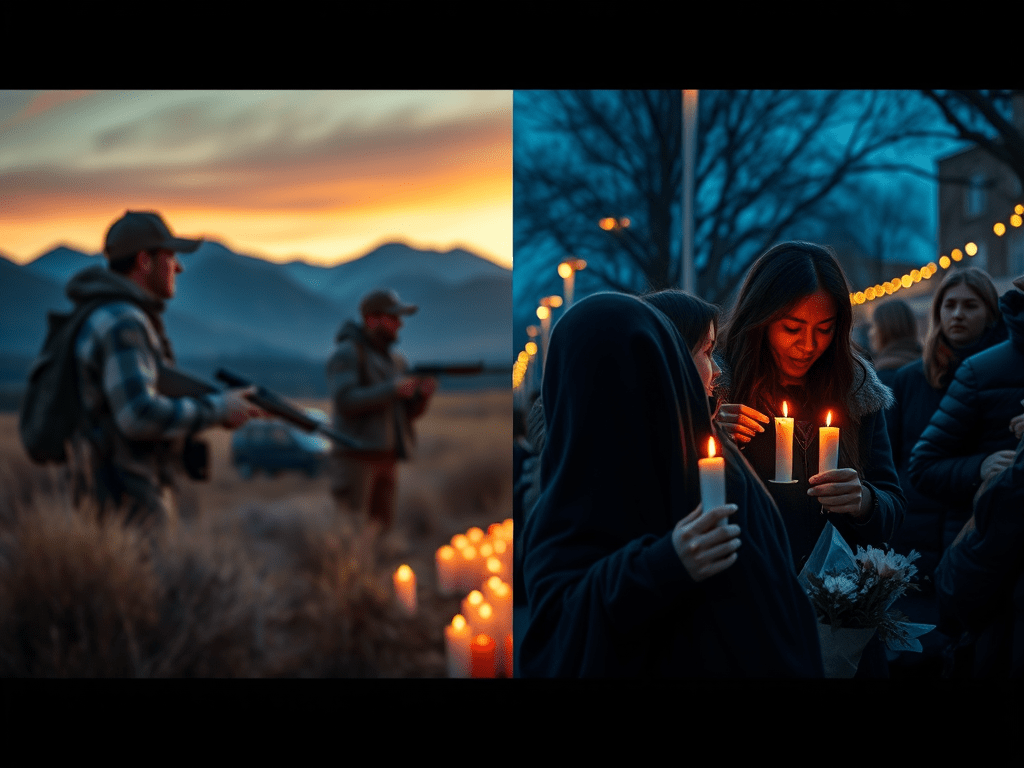
Colorado has become a significant battleground in America’s ongoing debate over gun rights and regulations. Recent legislation, legal challenges, and rising gun violence statistics have placed the state at the center of national attention on this issue. The discourse in Colorado reflects broader national tensions between public safety concerns and constitutional rights protections, with advocates on both sides presenting data-driven arguments to support their positions. This report examines the strongest arguments from proponents of stricter gun regulation and those advocating for broader gun rights, drawing from recent legislation, court decisions, and statistical evidence that shape Colorado’s evolving landscape of firearm policy.
The Case for Stronger Gun Regulations
Public Health and Safety Concerns
Advocates for stronger gun laws in Colorado frequently frame gun violence as a critical public health crisis that requires legislative intervention. According to data from the Johns Hopkins Center for Gun Violence Solutions, 1,036 people died from gun violence in Colorado in 2022, which translates to approximately one person killed every eight hours5. This represents a troubling 48% increase in the overall gun death rate over the preceding decade, positioning Colorado with the 18th highest gun death rate in the nation5. These statistics serve as powerful motivation for those advocating for more comprehensive gun safety measures.
Particularly concerning for public health advocates is the impact on vulnerable populations. Firearms were identified as the leading cause of death among Colorado children and teens ages 1-17 in 2022, with 61 young lives lost5. The data also reveals stark disparities in how gun violence affects different communities. Young Black males ages 15-34 were 20 times more likely to die by gun homicide than their white counterparts, while young Hispanic/Latino males faced nearly four times the risk5. These disparities underscore arguments that gun violence represents not just a public safety issue but also a matter of social justice.
The economic burden of gun violence further strengthens the public health argument. Gun violence costs Coloradans an estimated $11.4 billion per year, encompassing direct expenses like medical care and law enforcement as well as indirect costs like lost productivity and quality of life5. Proponents of stronger regulations argue that these substantial societal costs justify legislative intervention to reduce gun violence.
Effectiveness of Specific Regulatory Measures
Supporters of gun regulations point to evidence suggesting that certain policy interventions can effectively reduce gun deaths. One frequently cited example is Colorado’s “red flag” law, officially known as the Extreme Risk Protection Order (ERPO) law, passed in 2019. This law allows family members or law enforcement to request the temporary confiscation of firearms from individuals deemed to pose a threat to themselves or others4. Red flag laws are designed to intervene in potential crisis situations before violence occurs.
“It’s really intended to intervene on that trajectory of violence,” explained Shannon Frattaroli, a professor with the Johns Hopkins Center for Gun Violence Solutions4. The process includes judicial oversight, requiring evidence and hearings to balance public safety with individual rights. Advocates argue this approach provides a crucial tool for preventing mass shootings, domestic violence incidents, and suicides.
Research on waiting periods provides another pillar of support for regulatory advocates. A study published in the Proceedings of the National Academy of Sciences found that handgun waiting periods could reduce gun homicides by approximately 17%9. This finding suggests that creating a brief cooling-off period between the decision to purchase a firearm and taking possession may prevent impulsive acts of violence9. Supporters argue that such modest restrictions impose minimal burdens on law-abiding gun owners while potentially saving hundreds of lives.
Recent Legislative Approaches
Colorado’s most recent significant gun legislation, Senate Bill 3, represents one of the state’s most restrictive firearms regulations to date. Signed into law by Governor Jared Polis in April 2025, the bill bans the manufacture and drastically restricts the sale of certain semiautomatic firearms that can accept detachable ammunition magazines2. The law particularly targets weapons commonly used in mass shootings, including AR-15 and AK-47 rifles and their variants, along with tactical shotguns and some handguns.
“I really think this will make Colorado safer,” Governor Polis stated before signing the bill2. The law includes exceptions for military, law enforcement, and certain businesses, while also immediately banning rapid-fire trigger devices like bump stocks2. Regulation advocates argue that such measures specifically target the most lethal weapons that enable mass casualties, while still preserving access to firearms for personal protection, hunting, and sport shooting.
Colorado has implemented a comprehensive package of gun safety measures in recent years, which according to Giffords.org includes universal background checks, a large-capacity magazine ban, child access prevention laws, waiting periods, and lost and stolen firearm reporting requirements6. Proponents argue that this multi-faceted approach addresses various pathways to gun violence while respecting responsible gun ownership.
The Case for Gun Rights Protection
Constitutional Framework and Legal Precedents
Gun rights advocates ground their arguments primarily in constitutional protections and recent judicial interpretations that have strengthened Second Amendment rights. They point to the Supreme Court’s decisions in cases like District of Columbia v. Heller (2008) and New York State Rifle & Pistol Association v. Bruen (2022) as establishing clear limits on government authority to restrict firearm ownership and use.
David B. Kopel, a legal scholar cited in testimony against Colorado’s waiting period legislation, argues that such measures stand on “shaky constitutional ground” because “forced delays in firearms acquisition by adults did not exist when the Second Amendment was ratified in 1791, nor in 1868, when the Fourteenth Amendment was ratified”8. This argument reflects the “historical tradition” test established by the Supreme Court in Bruen, which requires gun regulations to be consistent with the nation’s historical understanding and practice regarding firearms regulation.
This constitutional framework has formed the basis for legal challenges to Colorado’s gun laws. Rocky Mountain Gun Owners (RMGO), described as “Colorado’s only no-compromise gun rights lobby,” filed a federal lawsuit challenging Colorado’s homemade firearm ban (Senate Bill 23-279), specifically citing the Bruen decision’s historical tradition standard7. “This law is an outright assault on the constitutional rights of peaceable Coloradans. It’s not just an overreach; it’s a direct defiance to our Second Amendment freedoms,” stated a representative from RMGO7.
Gun rights advocates argue that these constitutional principles must guide any firearms regulation, placing the burden on the government to prove that restrictions align with historical understanding rather than merely demonstrating a compelling public interest.
Self-Defense and Individual Rights
Central to the gun rights position is the argument that firearms provide essential tools for self-defense-a natural right that precedes government authority. Colorado law explicitly recognizes this principle, allowing “a person to carry a firearm in a vehicle if its use is for lawful protection of such person or another’s person or property”1. Advocates maintain that this right to self-protection is particularly important for vulnerable individuals who may be unable to physically defend themselves against stronger attackers.
Gun rights supporters argue that restrictive laws disproportionately affect law-abiding citizens while doing little to deter those with criminal intent. They contend that measures like Colorado’s semiautomatic weapon restrictions primarily burden responsible gun owners while motivated criminals will simply ignore or circumvent such laws. The focus, they argue, should be on enforcing existing laws against violent criminals rather than creating new barriers for peaceful citizens exercising their constitutional rights.
Furthermore, advocates emphasize that firearms serve as an equalizing force in society, providing women, elderly persons, and physically disabled individuals with effective means of protection against potential attackers. They argue that the right to keep and bear arms represents a fundamental expression of individual autonomy and self-determination that governments should not unnecessarily restrict.
Questioning the Efficacy of Gun Control Measures
Gun rights proponents challenge the effectiveness of many gun control measures, pointing to research that calls into question whether certain regulations actually reduce violence. For instance, Kopel’s testimony on Colorado’s waiting period legislation cited research suggesting that “background checks have no statistically discernable effect on homicide or suicide, and may lead to statistically significant increases in crime and suicide”8. This challenges the foundational assumptions behind many gun control policies.
Advocates argue that laws focusing on restricting access to firearms fail to address the root causes of violence, including mental health issues, socioeconomic factors, and the breakdown of community support systems. They suggest that resources would be better directed toward addressing these underlying issues rather than restricting constitutional rights.
Some gun rights supporters also point to data indicating that areas with strict gun control measures often continue to experience high rates of gun violence, suggesting that such policies may be ineffective at achieving their stated goals. They argue that Colorado’s increasing gun death rate despite expanding gun regulations demonstrates this disconnect between policy intentions and outcomes5.
Areas of Potential Common Ground
Mental Health Interventions and Resources
Despite deep disagreements on many aspects of gun policy, both sides often express support for improved mental health resources as part of a comprehensive approach to reducing gun violence. With 691 of Colorado’s 1,036 gun deaths in 2022 being suicides5, there is widespread recognition that addressing mental health crises could save many lives regardless of one’s position on gun rights.
Both gun control advocates and Second Amendment supporters have shown willingness to support policies that temporarily remove firearms from individuals experiencing acute mental health crises when proper due process protections are in place. The debate often centers not on whether such interventions should exist but rather on the specific legal mechanisms and safeguards that should govern them.
Enhanced Enforcement of Existing Laws
Another area of potential agreement involves better enforcement of laws prohibiting firearm possession by individuals with serious criminal histories or documented threats of violence. Both sides generally agree that focusing enforcement resources on individuals most likely to commit violence could reduce harm without imposing new restrictions on law-abiding gun owners.
This approach could include improved data sharing between agencies, more consistent prosecution of prohibited persons who attempt to purchase firearms, and ensuring that relevant records are promptly entered into background check systems. Such measures focus on individuals who have demonstrated higher risk rather than imposing broad restrictions affecting all gun owners.
Conclusion
The debate over gun laws in Colorado reflects fundamental differences in values, priorities, and constitutional interpretation that mirror the national conversation on firearms. Regulation advocates emphasize public health data showing the human and economic toll of gun violence, pointing to research suggesting certain policies can reduce deaths while still respecting responsible gun ownership. Gun rights supporters prioritize constitutional protections and individual liberty, questioning whether many regulations effectively address violence while expressing concern about government overreach.
What makes this issue particularly challenging is that both perspectives contain legitimate concerns and values. Public safety and constitutional rights are both essential elements of American society, creating tension when they appear to conflict. Colorado’s ongoing experience with evolving gun laws, legal challenges, and public discourse represents an important case study in how communities navigate these complex tradeoffs in a democratic society.
As Colorado and other states continue to grapple with these questions, the most productive path forward likely involves acknowledging the legitimate concerns on both sides, evaluating policies based on rigorous evidence rather than political ideology, and seeking solutions that effectively reduce violence while respecting constitutional principles.
Recommendations for Further Learning
Books
- “Gunfight: The Battle Over the Right to Bear Arms in America” by Adam Winkler – Offers a balanced historical perspective on the Second Amendment debate
- “Reducing Gun Violence in America: Informing Policy with Evidence and Analysis” edited by Daniel Webster and Jon Vernick – Provides research-based approaches to gun policy
- “The Second Amendment: A Biography” by Michael Waldman – Explores the historical context and evolution of Second Amendment interpretation
- “More Guns, Less Crime” by John Lott – Presents research supporting gun rights positions
- “The Gun Debate: What Everyone Needs to Know” by Philip J. Cook and Kristin A. Goss – Offers accessible overview of key issues from multiple perspectives
Websites
- Giffords Law Center to Prevent Gun Violence (giffords.org) – Research and advocacy for gun safety laws6
- Rocky Mountain Gun Owners (rmgo.org) – Colorado-based gun rights advocacy organization7
- Johns Hopkins Center for Gun Violence Solutions (publichealth.jhu.edu/center-for-gun-violence-solutions) – Academic research center focused on gun violence prevention5
- Colorado Department of Public Safety (publicsafety.colorado.gov) – Official state information on gun laws and regulations1
- RAND Corporation’s Gun Policy in America initiative – Research-based analysis of gun policies and their effects
Videos and Documentaries
- “The Price of Freedom” – Documentary examining the gun debate in America
- “Assaulted: Civil Rights Under Fire” – Explores Second Amendment rights perspective
- Congressional hearings on gun policy (available on C-SPAN)
- TED Talks by researchers from both perspectives on gun violence solutions
- Colorado Public Radio debates and discussions on state gun legislation
Citations:
- https://publicsafety.colorado.gov/get-involved/colorado-gun-laws
- https://www.cpr.org/2025/04/13/colorado-gun-ban-senate-bill-3-explained/
- https://www.pisanilaw.com/understanding-colorado-gun-laws/
- https://www.cpr.org/2022/11/22/how-colorados-red-flag-law-works-and-how-it-compares-to-other-states/
- https://publichealth.jhu.edu/center-for-gun-violence-solutions/colorado
- https://giffords.org/lawcenter/gun-laws/states/colorado/
- https://www.rmgo.org/about-us/rm/rocky-mountain-gun-owners-file-lawsuit-challenging-colorados-ghost-gun-ban/
- https://completecolorado.com/2023/03/01/kopel-colorado-bill-forcing-delay-of-firearms-acquisition-on-shaky-constitutional-ground/
- https://www.pnas.org/doi/abs/10.1073/pnas.1619896114
- https://foac-illea.org/Colorados-Dave-Kopel-To-U-S-Senate-Committee:-red-Flag-Laws-Must-Fully-Respect-Due-Process/News-Item/9403
- https://www.nraila.org/gun-laws/state-gun-laws/colorado/
- https://www.koaa.com/news/news5-investigates/a-look-at-colorados-red-flag-law-and-how-often-its-used
- https://everystat.org/wp-content/uploads/2024/05/Gun-Violence-in-Colorado-2024-05.pdf
- https://www.rand.org/research/gun-policy/key-findings/what-science-tells-us-about-the-effects-of-gun-policies.html
- https://en.wikipedia.org/wiki/Gun_laws_in_Colorado
- https://news.cuanschutz.edu/coloradosph/extreme-risk-protection-orders-in-communities-across-colorado
- https://csp.colorado.gov/colorado-gun-laws
- https://journalistsresource.org/criminal-justice/mass-shootings-red-flag-laws-update/
- https://www.cbsnews.com/colorado/news/semi-automatic-firearms-colorado-restrictive-gun-law-signed-governor-jared-polis/
- https://www.shouselaw.com/co/defense/gun-laws/
- https://www.cohousedems.com/news/sb25-003-signed-into-law
- https://bresee.com/blog/gun-laws-colorado/
- https://oag.ca.gov/news/press-releases/attorney-general-bonta-defends-colorados-three-day-waiting-period-firearms
- https://www.everytown.org/press/as-the-2025-legislative-session-begins-colorado-lawmakers-need-to-prioritize-legislation-to-close-the-states-high-capacity-magazine-ban-loophole/
- https://cdpsdocs.state.co.us/ors/Docs/Briefs/2024-11_FirearmUsage-ViolentCrimes-2019-2023.pdf
- https://preventfirearmsuicide.efsgv.org/states/colorado/
- https://www.rmgo.org/about-us/rm/rocky-mountain-gun-owners-sues-over-unconstitutional-three-day-minimum-waiting-periods-and-the-18-to-20-year-old-gun-ban/
- https://completecolorado.com/2024/03/19/kopel-colorado-senate-bill-131-creating-safe-zones-for-mass-shooters/
- https://www.shouselaw.com/co/blog/colorado-red-flag-laws-what-you-need-to-know/
- https://www.cpr.org/2023/11/14/colorado-keeping-three-day-gun-law/
- https://concealedcarryclassdenver.com/2024/01/29/does-colorado-have-a-firearm-magazine-capacity-limit/
- https://cdphe.colorado.gov/colorado-gun-violence-prevention-resource-bank/colorado-firearm-laws-and-regulations/extreme-risk
- https://cdphe.colorado.gov/colorado-gun-violence-prevention-resource-bank/firearm-injury-and-death/firearm-homicide
- https://cdphe.colorado.gov/colorado-gun-violence-prevention-resource-bank/firearm-injury-and-death/community-violence
- https://www.cdc.gov/nchs/pressroom/sosmap/firearm_mortality/firearm.htm
- http://coloradoceasefire.org/wp-content/uploads/2020/06/States-United-June-2020-Report-on-Gun-Deaths-Colorado-2.pdf
- https://cdphe.colorado.gov/sites/cdphe/files/documents/Firearm%20Deaths%20Fact%20Sheet%202016-2021%20FINAL.pdf
- https://www.cbsnews.com/colorado/news/colorado-lawmakers-consider-bill-create-do-not-sell-registry-prevent-suicides-firearms/
- https://giffords.org/lawcenter/resources/scorecard/
- https://gunsandamerica.org/story/20/02/06/giffords-gun-law-scorecard/
- https://thereload.com/colorado-sees-biggest-boost-in-gun-control-group-annual-rankings/
- https://www.nytimes.com/2019/04/19/us/politics/gabby-giffords-minnesota-guns.html
- https://pubmed.ncbi.nlm.nih.gov/29078268/
- https://legislature.maine.gov/testimony/resources/JUD20240307Goettsche%20Spurling,%20MD133542708513568157.pdf
- https://behavioralscientist.org/the-case-for-handgun-waiting-periods/
- https://www.cnn.com/2017/10/16/health/waiting-period-firearms-study
- https://congressionalsportsmen.org/news/following-heavy-amendments-the-semi-auto-firearms-ban-advances-in-colorado/
- https://www.pnas.org/gun-violence
Answer from Perplexity: pplx.ai/share

 Life's Adventure