Hovenweep National Monument: Ancient Puebloan Villages and Deserted Valley

Hovenweep National Monument: A Deserted Valley

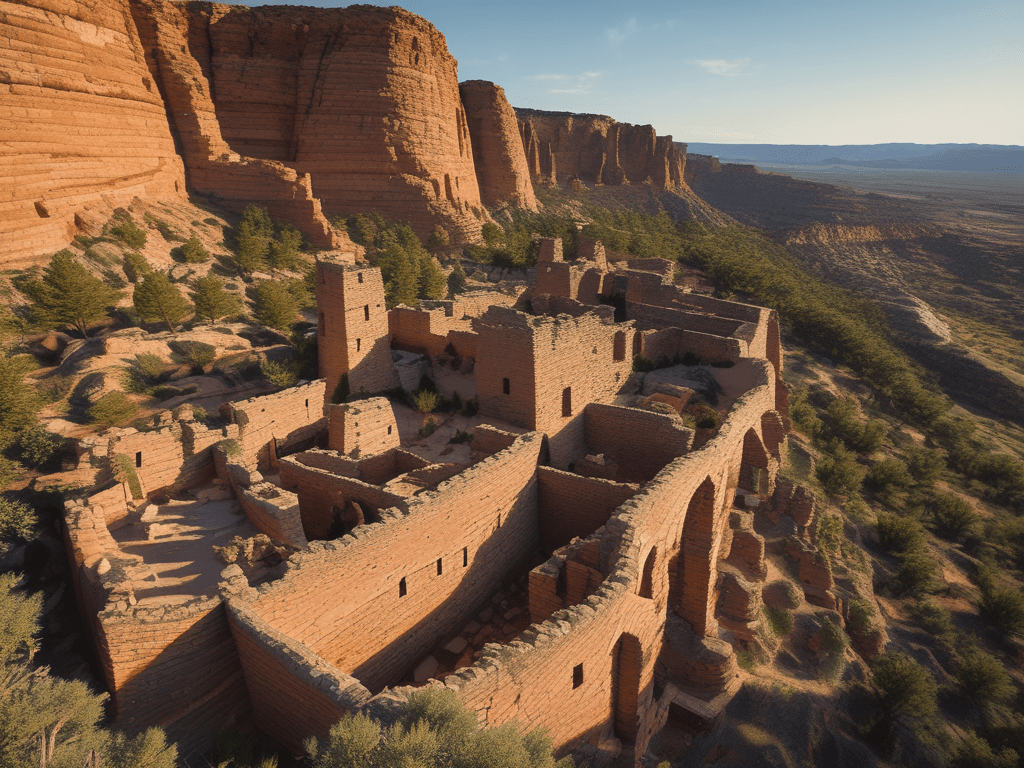
Hovenweep National Monument, straddling the Colorado-Utah border, is a significant archaeological site known for its well-preserved ancient Puebloan villages. The name “Hovenweep” is derived from a Paiute/Ute word meaning “deserted valley,” aptly describing the area’s historical and geographical context[1][2][3].

Historical Significance

Hovenweep was once home to more than 2,500 people between A.D. 900 and 1300. The site includes six prehistoric villages built by the ancestral Puebloans, a sedentary farming culture. These villages feature a variety of structures, including multistory towers, kivas (ceremonial structures), and storage granaries[2][4][5]. The towers, which are square, oval, circular, and D-shaped, are particularly notable for their intricate masonry and strategic locations on canyon rims and boulders[2][4].

Architectural Marvels

The structures at Hovenweep are remarkable for their architectural diversity and craftsmanship. The towers might have served multiple purposes, including celestial observation, defense, storage, and civic activities. The masonry work is considered some of the finest prehistoric construction in the United States, with carefully shaped stones and mortar used to fill gaps and protect against the elements[2][4].

Solitude and Natural Beauty

Hovenweep is celebrated for its solitude and undeveloped natural character, making it an ideal spot for visitors seeking tranquility and a connection with ancient history. The monument is also an International Dark Sky Park, offering stunning night skies for stargazing[3].

Visitor Information

  • Main Attractions: Square Tower Group, Little Ruin Canyon, Cutthroat Castle, Horseshoe & Hackberry, and Holly[1][4].
  • Activities: Hiking, camping, and exploring the archaeological sites. Pets are allowed on trails and in the campground but must be leashed[3][4].
  • Facilities: Visitor center, restrooms, picnic shelters, and a campground. Limited services are available, so visitors are advised to bring water, food, and other essentials[3][4].
  • Access: The monument is accessible via paved and gravel roads, with the main routes being the McElmo Canyon Route and the Pleasant View Route[2][4].

Practical Tips

  • Weather: The high desert region experiences wide temperature fluctuations. Summer temperatures can exceed 100°F (38°C), while winters can be quite cold[3].
  • Safety: Hydration is crucial, and visitors should carry ample water and protect themselves from the sun with sunscreen, hats, and light-colored clothing[3].
  • Respect the Site: Visitors are encouraged to stay on designated trails and not enter the ruins to help preserve the site’s integrity[1][3].

Hovenweep National Monument offers a unique glimpse into the lives of the ancestral Puebloans and stands as a testament to their ingenuity and resilience. Its remote location and well-preserved structures make it a fascinating destination for history enthusiasts and nature lovers alike.

Citations:
[1] https://www.utah.com/destinations/national-monuments/hovenweep-national-monument/
[2] https://mesaverdecountry.com/hovenweep-national-monument/
[3] https://cnha.org/visit/hovenweep-national-monument/
[4] https://bluffutah.org/hovenweep-national-monument/
[5] https://www.nps.gov/hove/learn/historyculture/index.htm
[6] https://www.nps.gov/hove/


Human Plague Confirmed in Pueblo County, Colorado: Causes, Symptoms, and Treatment

Colorado public health officials have confirmed a new case of human plague in Pueblo County. This rare but potentially deadly bacterial infection, caused by Yersinia pestis, has historically been infamous for causing the Black Death in the 14th century. However, modern medicine can effectively treat the disease with antibiotics if administered promptly.

Key Details

  • Location: Pueblo County, Colorado, about 100 miles south of Denver.
  • Confirmation: The case was confirmed by the Pueblo Department of Public Health and Environment.
  • Symptoms: The infected individual exhibited symptoms typical of bubonic plague, including sudden fever, chills, severe headache, muscle aches, nausea, vomiting, and swollen lymph nodes (buboes)[2][3][4].
  • Transmission: The plague is primarily transmitted through the bites of infected fleas that have fed on infected rodents, such as rats and prairie dogs. It can also spread through contact with infected animals or inhaling respiratory droplets from an infected person or animal[1][2][3].

Forms of Plague

  1. Bubonic Plague: The most common form, characterized by swollen and painful lymph nodes. It is not typically transmissible between humans.
  2. Septicemic Plague: Occurs when the bacteria enter the bloodstream, leading to severe symptoms like abdominal pain, shock, and bleeding into the skin.
  3. Pneumonic Plague: The most severe form, affecting the lungs and capable of spreading between humans through respiratory droplets[1][5].

Prevention and Treatment

  • Antibiotics: Early treatment with antibiotics is crucial for a full recovery.
  • Preventive Measures:
  • Avoid contact with wild rodents and their habitats.
  • Ensure pets are treated for fleas and kept away from rodent-infested areas.
  • Use insect repellent containing DEET when outdoors.
  • Eliminate rodent habitats around homes and avoid handling dead animals[1][2][4][5].

Historical Context and Current Incidence

  • Historical Impact: The plague caused millions of deaths during the Middle Ages but is now rare, with an average of seven cases reported annually in the U.S.
  • Current Incidence: Most cases in the U.S. occur in rural areas of the Southwest, including New Mexico, Arizona, and Colorado. Globally, the highest incidence is reported in the Democratic Republic of the Congo, Madagascar, and Peru[1][3][4].

Conclusion

While the confirmation of a human plague case in Colorado is concerning, it is important to note that the disease is treatable with prompt medical intervention. Public health officials continue to monitor and investigate the situation to prevent further spread and ensure public safety.

Citations:
[1] https://www.nbcnews.com/health/health-news/colorado-health-officials-investigating-human-case-bubonic-plague-rcna161272
[2] https://www.usatoday.com/story/news/health/2024/07/09/bubonic-plague-pueblo-county-colorado-symptoms/74336488007/
[3] https://abcnews.go.com/US/colorado-public-health-officials-confirm-human-plague-case/story?id=111792245
[4] https://thehill.com/policy/healthcare/4763660-human-plague-case-colorado/
[5] https://www.nbcbayarea.com/news/health/colorado-plague-case-confirmed-what-to-know/3588737/
[6] https://www.independent.co.uk/news/world/americas/colorado-human-plague-infection-b2577453.html
[7] https://www.washingtonpost.com/nation/2024/07/09/human-plague-treatment-symptoms-bubonic/?isMobile=1
[8] https://county.pueblo.org/public-health-department/public-health-officials-confirm-first-human-plague-case-pueblo-county
[9] https://www.usnews.com/news/health-news/articles/2024-07-10/case-of-human-plague-confirmed-in-colorado
[10] https://edition.cnn.com/2024/07/09/health/human-plague-case-colorado/index.html
[11] https://cdphe.colorado.gov/press-release/plague-activity-identified-in-colorado
[12] https://www.usatoday.com/story/news/health/2024/07/10/bubonic-plague-colorado-black-death/74352630007/

Bubonic Plague Confirmed in Pueblo County, Colorado: Symptoms, Treatment, and Prevention

A recent case of bubonic plague has been confirmed in Pueblo County, Colorado, approximately 100 miles south of Denver[1][4]. This incident has raised concerns and prompted health officials to provide important information about the disease. Here’s what you need to know:

The Case and Its Origin

The infection was initially identified through early test results last week, and local health authorities confirmed the case on Monday[1]. The infected individual was hospitalized but has shown signs of improvement[1]. Due to the endemic nature of plague in the area, pinpointing the exact source of the infection is challenging[1].

Understanding Bubonic Plague

Bubonic plague is caused by the bacterium Yersinia pestis[1][3]. It’s primarily spread through:

  • Bites from infected fleas
  • Contact with infected animals (especially rodents)
  • Inhaling bacteria droplets from infected individuals or animals[1]

Symptoms and Diagnosis

The symptoms of bubonic plague typically appear 1-7 days after exposure and include:

  • Sudden high fever and chills
  • Severe headache and muscle aches
  • Nausea and vomiting
  • Swollen, painful lymph nodes (buboes) in the armpits, groin, or neck[1][2]

The presence of buboes is a hallmark symptom and gives the disease its name[1].

Treatment and Prognosis

Bubonic plague can be effectively treated with antibiotics if diagnosed early[3]. Without treatment, the mortality rate is estimated at 30% to 60%[1]. However, with prompt medical attention, most people with bubonic plague survive[3].

Prevention Measures

To reduce the risk of infection:

  • Avoid contact with wild rodents
  • Clear areas near homes where rodents might hide
  • Treat pets regularly for fleas
  • Use insect repellent containing DEET when in potentially affected areas
  • Avoid handling sick or dead animals[1]

Plague in the United States

While plague is rare in the U.S., it does occur:

  • Most cases are reported in the Southwest and West
  • On average, about seven human plague cases are recorded annually in the U.S.[1]
  • From 1970 to 2022, Colorado documented 67 cases of plague[4]

Global Context

Plague is endemic in several countries, with the highest incidences reported in the Democratic Republic of Congo, Madagascar, and Peru[4]. While historically devastating, modern antibiotics and improved hygiene have significantly reduced its impact.

It’s important to note that while this case may cause concern, bubonic plague is not transmissible between individuals[1]. However, other forms of plague, such as pneumonic plague, can be transmitted person-to-person and are more severe[1][2]. If you experience symptoms or have been in contact with potentially infected animals, seek medical attention promptly.

Citations:
[1] https://www.usatoday.com/story/news/health/2024/07/09/bubonic-plague-pueblo-county-colorado-symptoms/74336488007/
[2] https://www.cdc.gov/plague/signs-symptoms/index.html
[3] https://www.mayoclinic.org/diseases-conditions/plague/symptoms-causes/syc-20351291
[4] https://edition.cnn.com/2024/07/09/health/human-plague-case-colorado/index.html
[5] https://my.clevelandclinic.org/health/diseases/17782-plague
[6] https://my.clevelandclinic.org/health/diseases/21590-bubonic-plague
[7] https://thehill.com/policy/healthcare/4763660-human-plague-case-colorado/
[8] https://emergency.cdc.gov/agent/plague/factsheet.asp
[9] https://www.who.int/news-room/fact-sheets/detail/plague
[10] https://abcnews.go.com/US/colorado-public-health-officials-confirm-human-plague-case/story?id=111792245
[11] https://en.wikipedia.org/wiki/Bubonic_plague
[12] https://www.washingtonpost.com/nation/2024/07/09/human-plague-treatment-symptoms-bubonic/
[13] https://www.webmd.com/a-to-z-guides/plague-faq
[14] https://www.cbsnews.com/colorado/news/infected-fleas-bring-a-human-case-of-the-plague-to-colorado/
[15] https://www.cdc.gov/plague/about/index.html

Barack Obama: A Legacy of Progress

With eloquence and grace,

He stepped up to lead the nation

With a message of hope and change

He brought a new sensation

He fought for healthcare reform

And worked to bring us peace

His leadership was bold and warm

He aimed to never cease

He broke through barriers of race

And made history in the land

A symbol of progress and grace

His legacy will forever stand

Through trials and tribulations

He kept his head held high

And left behind a nation

Of progress, unity and pride

Though his time in office has passed

His message will never die

Barack Obama, a legacy amassed

Of progress, forever high.