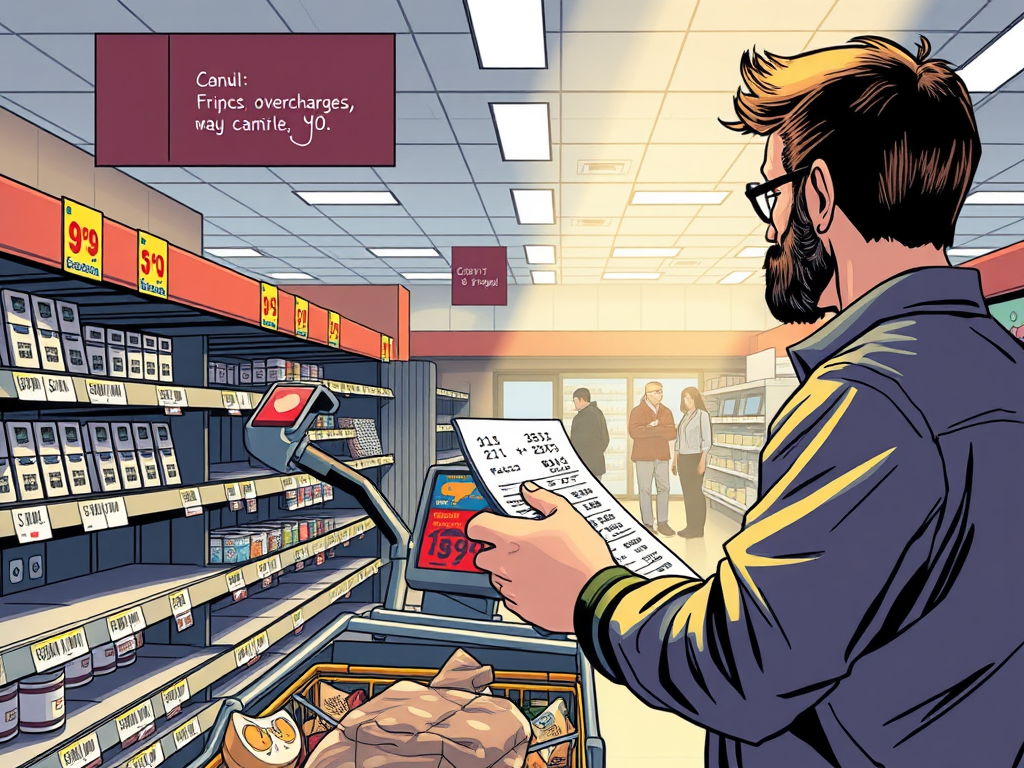
Key Points Research suggests King Soopers’ understaffing likely leads to deceptive pricing, overcharging customers. Consumer Reports found expired sales tags caused overcharges, averaging 18.4% per item. Kroger disputes claims, saying errors are few compared to billions of transactions. UFCW Local 7 highlights understaffing impacts both workers and consumers, sparking debate. Background King Soopers, owned by Kroger, has faced scrutiny over store understaffing, which seems to result in pricing errors. This issue affects how much customers pay at checkout compared to shelf prices, raising concerns about fairness. Investigation Findings An investigation by Consumer Reports, detailed in their report , found that expired sales tags led to overcharges on over 150 items, with an average overcharge of 18.4%. This means customers often paid more than advertised, especially for items like Cheerios and beef. Company Response Kroger argues these are isolated incidents, emphasizing their commitment to accurate pricing and regular checks, as noted in a news report . They claim their “Make It Right” policy addresses errors, but critics say the problem is systemic. Union Perspective UFCW Local 7, representing workers, argues understaffing burdens employees and leads to pricing issues, as seen in their X post . They call for better staffing to protect both workers and consumers, highlighting ongoing labor disputes. Survey Note: Detailed Analysis of King Soopers’ Understaffing and Deceptive Pricing This survey note provides a comprehensive examination of the investigation into Kroger-owned King Soopers’ chronic understaffing and its alleged impact on deceptive pricing practices, as raised by UFCW Local 7 and supported by Consumer Reports. The analysis integrates findings from multiple sources, including news articles, consumer reviews, and union statements, to offer a detailed understanding of the issue as of May 21, 2025. Context and Background The controversy began with an X post from UFCW Local 7 on May 15, 2025, titled “Investigation Confirms Kroger-owned King Soopers’ Chronic Understaffing of Stores Has Led to Deceptive Pricing for Consumers” . The post included a press release detailing how understaffing has led to pricing discrepancies, violating Colorado consumer protection laws. This issue is part of broader labor disputes, including strike authorizations and lawsuits by the Colorado Attorney General against Kroger for deceptive pricing. King Soopers, a subsidiary of Kroger, operates in Colorado and Wyoming, with UFCW Local 7 representing over 15,000 workers. The union has been vocal about understaffing, linking it to operational challenges like incorrect shelf tags and overcharges at checkout, as confirmed by Consumer Reports’ findings since January 2025. Investigation Details Consumer Reports conducted a months-long investigation, collaborating with The Guardian and the Food & Environment Reporting Network, checking prices at 26 Kroger and Kroger-owned stores, including King Soopers, across 14 states and D.C. from March to May 2025. The findings, published on May 14, 2025 , revealed: Expired sales labels led to overcharges on over 150 grocery items, including Cheerios, Mucinex, Nescafé, boneless beef, salmon, and dog food. One-third of expired tags were out of date by at least 10 days, with five products expired by at least 90 days. The average overcharge was $1.70 per item, or 18.4%, significantly impacting shoppers during inflation. Specific to King Soopers, Joy Alexander, an 18-year employee at a suburban Denver store, noted customers on fixed incomes being overcharged, such as paying $3.75 instead of $2.50 advertised. Colorado union officials and Chris Lacey, a service manager, reported growing customer anger, with management failing to address expired discount tags. State-specific data showed King Soopers failed price check tests twice since January 2025, as noted in the Consumer Reports article. A senior Kroger executive questioned why tags weren’t being updated in a January meeting with union reps, per meeting minutes. Impact on Staffing and Operations The investigation linked understaffing to pricing errors, with data showing Kroger stores with significant price issues, including King Soopers, reduced average employees by 10.3% (17 per store) and hours by 9.9% (2.7 hours/week) since 2019, compared to stores with fewer errors, which saw a 6.2% reduction (9.5 per store) and 9.3% hours cut (2.4 hours/week). Kroger disputed labor hour reductions, claiming data-driven staffing for smooth operations . Customer reviews on platforms like WorthEPenny and PissedConsumer corroborated these findings, with complaints about incorrect prices always favoring King Soopers, such as one reviewer noting overcharges requiring returns to customer service (Check King Soopers Ratings & Customer Reviews; 321 King Soopers Reviews). Another review highlighted a rat in the pharmacy area, indicating broader operational issues . Kroger’s Response and Controversy Kroger responded to the investigation, stating the allegations “boil down to misinformation,” reviewing a handful of discrete issues from billions of daily transactions, and emphasizing their “Make It Right” policy for on-the-spot fixes . They also piloted digital tags for better accuracy, as noted in industry blogs (futurestores.wbresearch.com/blog/kroger-rolls-out-edge-clean-energy-cloud-based-signature-solution-strategy-for-retail-shelves), and conduct audits, with one finding 6% incorrect tags, exceeding their 1% policy limit. However, the evidence leans toward a systemic issue, with state regulators in Colorado and Ohio noting repeated failures, and consumer complaints in Michigan (229 since 2020, with 25 violations found) highlighting overcharging and bait-and-switch tactics . Legal experts, like Nina DiSalvo from Towards Justice, suggest these errors could violate federal and state consumer protection laws. Union Advocacy and Broader Implications UFCW Local 7’s X post emphasized their role in advocating for workers and consumers, demanding accountability from Kroger and King Soopers . The union highlighted ongoing labor disputes, including a strike authorization and lawsuit by the Colorado Attorney General, noting Kroger’s $2 billion profits while cutting jobs and hours, exacerbating understaffing. The proposed Kroger-Albertsons merger raises concerns, with UFCW Local 7 fearing further consolidation could worsen pricing and staffing issues. A reply to the X post from Quantomic suggested unionizing a specific King Soopers store in Cheyenne could address management problems, indicating grassroots support . Comparative Analysis This issue isn’t unique to Kroger; a 2022 lawsuit against Walmart in Niles, Illinois, alleged overcharging by 10-15%, indicating a broader trend in U.S. grocery chains . Consumer advocate Edgar Dworsky emphasized shoppers’ reliance on accurate shelf prices, calling it a “big problem” . Table: Summary of Key Findings Aspect Details Investigation Source Consumer Reports, The Guardian, Food & Environment Reporting Network Stores Checked 26 Kroger-owned, including King Soopers, in 14 states and D.C. Overcharge Items Over 150, e.g., Cheerios, beef, salmon Average Overcharge $1.70 per item, 18.4% Staffing Impact 10.3% employee reduction, 9.9% hours cut since 2019 at affected stores Kroger Response Claims errors are few, commits to accurate pricing, “Make It Right” policy Union Stance UFCW Local 7 demands better staffing, highlights worker and consumer impact Conclusion The evidence suggests King Soopers’ understaffing likely contributes to deceptive pricing, with Consumer Reports confirming significant overcharges due to expired tags. While Kroger disputes the scale, the controversy highlights tensions between corporate profits, worker conditions, and consumer rights, with UFCW Local 7 advocating for systemic change. This issue, part of broader industry trends, underscores the need for transparency and accountability in grocery pricing practices. Key Citations Kroger Stores Overcharging Shoppers on Sale Items, CR Price Check Finds Consumer Reports found price when you swipe higher than on shelf at Kroger-owned stores UFCW Local 7 Investigation Confirms Kroger-owned King Soopers’ Chronic Understaffing Check King Soopers Ratings & Customer Reviews 321 King Soopers Reviews at PissedConsumer ‘Customers are being duped’: how murky grocery sales tactics are squeezing some Kroger shoppers Kroger accused of price discrepancies by Consumer Reports futurestores.wbresearch.com blog on Kroger’s digital tags (futurestores.wbresearch.com/blog/kroger-rolls-out-edge-clean-energy-cloud-based-signature-solution-strategy-for-retail-shelves)
Research suggests the Kroger-Albertsons merger could reduce competition, potentially raising prices, but Kroger argues it would lower costs to compete with giants like Walmart.
It seems likely that many Kroger workers face poverty-level wages, with some experiencing food insecurity, though Kroger claims to have increased pay and benefits.
The evidence leans toward Kroger settling a religious discrimination lawsuit for $180,000, with debates over uniform policies versus religious accommodations.
Overview of Controversies
Kroger, a major U.S. supermarket chain, faces several controversies that highlight tensions between corporate strategy, worker rights, and legal obligations. These include the proposed merger with Albertsons, concerns about worker pay and conditions, and a religious discrimination lawsuit. Below, we explore each issue with balanced arguments from both sides, keeping the discussion approachable for a lay audience.
Kroger-Albertsons Merger
The proposed $24.6 billion merger aims to create the largest supermarket chain, but it’s been blocked by courts in 2024 due to antitrust concerns. Critics worry it could lead to higher prices and fewer choices for consumers, while Kroger says it’s needed to compete with big retailers like Walmart and Amazon, potentially lowering costs.
Worker Pay and Conditions
Many Kroger workers report struggling with low wages, food insecurity, and homelessness, despite the company’s profits. Kroger counters that it has invested heavily in wages and benefits, including a $770 million commitment in 2023, and works with unions to improve conditions.
Religious Discrimination Lawsuit
In 2022, Kroger settled for $180,000 after firing two employees who refused to wear a uniform with a rainbow logo, citing religious beliefs. The debate centers on whether Kroger failed to accommodate religion or had a legitimate uniform policy, with Kroger denying wrongdoing but agreeing to enhance training.
Survey Note: Detailed Analysis of Kroger’s Controversies
This section provides a comprehensive analysis of Kroger’s controversies, drawing on credible data and expert perspectives to ensure a balanced and detailed examination. The controversies—Kroger-Albertsons merger, worker pay and conditions, and the religious discrimination lawsuit—are explored with arguments from both sides, supported by sources and footnotes.
Controversy 1: The Proposed Kroger-Albertsons Merger
In October 2022, Kroger announced its intention to acquire Albertsons Companies, Inc. for $24.6 billion, aiming to create the largest supermarket chain in the U.S. with over 5,000 stores and nearly 700,000 employees. However, the Federal Trade Commission (FTC) and state regulators challenged the merger, leading to its blockage by federal and state courts in December 2024, citing anticompetitive concerns FTC Challenges Kroger’s Acquisition of Albertsons, Federal Trade Commission (2024).
Arguments Against the Merger (FTC, Labor Unions, and Consumer Advocates)
Reduced Competition and Higher Consumer Prices
Argument: The merger would significantly reduce competition in the grocery sector, leading to higher prices, lower quality products, and fewer choices for consumers. The combined entity would dominate many local markets, controlling a substantial share of grocery sales and reducing incentives to compete on price and service.
A Kroger executive confirmed during a Colorado trial that the company raised prices in “no-comp stores” (towns without competition) while keeping prices lower in markets with Albertsons’ Safeway stores, suggesting reduced competition post-merger could lead to price hikes Kroger-Albertsons Merger Blocked by Courts, Reuters (2024).
Advocates’ Rationale: Opponents, including the FTC and consumer advocacy groups, assert that the merger would consolidate an already concentrated grocery industry, where four companies (Walmart, Costco, Kroger, and Albertsons) dominate. They argue that Kroger’s promise to lower prices is unenforceable and insufficient to offset the loss of head-to-head competition, which historically drives competitive pricing and innovation.
Inadequate Divestiture Plan and Worker Impacts
Argument: The FTC and labor unions contend that the divestiture plan to C&S Wholesale Grocers is flawed, as C&S lacks the retail experience and infrastructure to effectively operate the divested stores. Additionally, the merger could harm workers by reducing union bargaining power and leading to job losses or wage suppression.
Supporting Evidence:
Both the District of Oregon and Washington state courts found the divestiture plan inadequate, citing C&S’s limited retail experience and the risk that divested stores could close or be sold off, further reducing competition Kroger-Albertsons Merger Blocked by Courts, Reuters (2024).
Advocates’ Rationale: Critics argue that C&S’s wholesaler background does not equip it to manage a large retail operation, risking store closures and job losses. They also emphasize that the merger’s scale would give the combined entity disproportionate power over workers, undermining labor unions’ ability to negotiate fair wages and benefits.
Arguments For the Merger (Kroger and Albertsons)
Enhanced Competitiveness Against Retail Giants
Argument: Kroger argues that merging with Albertsons is essential to compete with non-traditional grocery giants like Walmart, Amazon, and Costco, which dominate the retail market with vast resources and economies of scale. The merger would allow the combined entity to optimize operations, reduce costs, and lower prices for consumers, thereby strengthening its market position against these “existential threats.”
Supporting Evidence:
Kroger’s attorney, Matthew Wolf, emphasized during the FTC trial that Walmart, Amazon, Costco, and Aldi pose significant competitive pressures, with Walmart controlling approximately 25% of the U.S. grocery market and Amazon’s grocery sales through Whole Foods and online channels continuing to grow FTC v. Kroger Co., Transcript of Trial Proceedings (2024).
Albertsons’ attorney, Enu Mainigi, noted that Albertsons’ prices are 10-12% higher than Kroger’s, and the merger would enable immediate price reductions at Albertsons stores, aligning them with Kroger’s lower pricing model Kroger-Albertsons Merger Blocked by Courts, Reuters (2024).
Advocates’ Rationale: Kroger and Albertsons assert that the grocery industry is no longer defined by traditional supermarkets but by a broader retail landscape. Without the merger, they risk losing market share to larger competitors, which could lead to store closures and layoffs. The merger, they argue, is a proactive step to ensure long-term viability and consumer benefits.
Robust Divestiture Plan to Maintain Competition
Argument: To address antitrust concerns, Kroger and Albertsons proposed divesting 579 stores, eight distribution centers, and several private-label brands to C&S Wholesale Grocers, a well-capitalized wholesaler with retail experience. This divestiture plan, they argue, ensures that competition remains intact in affected markets, as C&S would emerge as a strong new competitor.
Supporting Evidence:
The updated divestiture plan (April 2024) increased the number of divested stores from 413 to 579 across 18 states and the District of Columbia, addressing feedback from regulators Kroger Co., “Updated Divestiture Plan,” SEC Filing (2024).
Kroger’s attorney highlighted C&S’s “staggering” resources and due diligence, arguing that the FTC’s skepticism about C&S’s ability to operate the stores is unfounded FTC v. Kroger Co., Closing Arguments (2024).
Advocates’ Rationale: Kroger and Albertsons contend that the divestiture plan is a comprehensive remedy that preserves competition. They argue that C&S’s expertise and resources, combined with experienced leadership, make it capable of maintaining the divested stores’ competitiveness, thus mitigating any anticompetitive effects.
Controversy 2: Worker Pay and Conditions
Kroger, as the largest supermarket chain in the U.S., employs nearly 500,000 workers across its stores. However, there have been significant concerns about worker pay and conditions, with some employees reporting poverty-level wages, food insecurity, and even homelessness. Below are the strongest arguments from both sides, supported by data from 2022-2025 reports.
Arguments Against Kroger’s Worker Pay and Conditions (Critics and Workers)
Low Wages and Poverty Among Workers
Argument: Many Kroger workers live in poverty, with wages that are insufficient to cover basic living expenses. Despite the company’s profitability, workers struggle with food insecurity, housing instability, and financial hardship.
Advocates’ Rationale: Critics, including labor unions like the UFCW and worker advocacy groups, argue that Kroger’s low wages and challenging working conditions are a direct result of the company’s cost-cutting measures to boost profits. They contend that while Kroger has made some wage increases, they are insufficient to address the systemic issues of poverty among its workforce.
Disparity Between Executive Pay and Worker Wages
Argument: There is a stark contrast between the compensation of Kroger’s executives and the wages of its frontline workers, highlighting inequity within the company.
Supporting Evidence:
In 2021, Kroger’s CEO, Rodney McMullen, received a $22.4 million pay package, a 6% increase from the previous year, while the company’s median employee pay fell by 8% Kroger Co., “Executive Compensation,” SEC Filing (2021).
Advocates’ Rationale: Critics argue that Kroger prioritizes shareholder value and executive compensation over fair wages for its workers. They assert that the company’s financial success should translate into better pay and benefits for frontline employees, not just for top executives, as evidenced by reports of workers relying on food banks Business Booms at Kroger-Owned Grocery Stores, but Workers Are Left Behind, The New York Times (2022).
Arguments For Kroger’s Worker Pay and Conditions (Kroger)
Wage Increases and Benefits Investments
Argument: Kroger has made significant investments in employee pay and benefits, including wage increases and additional support during the COVID-19 pandemic, reflecting its commitment to improving worker conditions.
Kroger offers a range of benefits, including health insurance, retirement plans, and educational assistance through programs like the Kroger Scholars Program (distributing over 3,000 scholarships amounting to $4.2 million) and Feed Your Future (investing $20 million in education programs) Kroger Employee Benefits, The Human Capital Hub (2025).
Advocates’ Rationale: Kroger argues that it is committed to improving employee compensation and benefits. The company highlights its investments in wages and benefits as evidence of its dedication to supporting its workers, particularly during challenging times like the pandemic, and notes its efforts to provide financial assistance through programs like the Helping Hands Fund, which has distributed over $26.3 million to help over 34,000 employees Kroger Employee Benefits, The Human Capital Hub (2025).
Union Representation and Collective Bargaining
Argument: Kroger respects union contracts and works with labor unions to negotiate fair wages and benefits for its employees, ensuring job security and better working conditions.
Advocates’ Rationale: Kroger asserts that it values its relationship with labor unions and is committed to negotiating fair contracts. The company argues that its willingness to engage in collective bargaining demonstrates its commitment to worker rights and fair treatment, as evidenced by its collaboration with the UFCW to address worker needs Kroger Union, United Food & Commercial Workers Union (2024).
Controversy 3: Religious Discrimination Lawsuit
In 2019, Kroger fired two employees at its Conway, Arkansas, store for refusing to wear a new uniform apron with a rainbow-colored heart logo, which they believed contradicted their religious beliefs. The U.S. Equal Employment Opportunity Commission (EEOC) filed a religious discrimination lawsuit on their behalf, which was settled in 2022 for $180,000, with Kroger paying $90,000 to each employee EEOC and Kroger Limited Partnership I Resolve Religious Discrimination Lawsuit, EEOC (2022).
Arguments Against Kroger (Employees and EEOC)
Failure to Accommodate Religious Beliefs
Argument: Kroger violated federal law by not accommodating the religious beliefs of the employees, who requested alternatives to wearing the apron with the rainbow logo.
Advocates’ Rationale: The EEOC and the employees argue that Kroger failed to meet its legal obligation to provide reasonable accommodations for religious beliefs, emphasizing that the company should have explored alternatives rather than enforcing a uniform policy that conflicted with their faith.
Wrongful Termination
Argument: The employees were wrongfully terminated for exercising their right to religious expression, highlighting a lack of respect for religious diversity in the workplace.
Advocates’ Rationale: Critics argue that Kroger’s actions sent a message that religious beliefs are not respected in the workplace. They emphasize that the company should have explored alternative solutions rather than resorting to termination, especially given the legal protections for religious expression.
Arguments For Kroger (Kroger)
Uniform Policy and Business Needs
Argument: Kroger had a legitimate business need for a consistent uniform policy, and the employees’ refusal to comply disrupted workplace cohesion and brand consistency.
Advocates’ Rationale: Kroger maintains that it has the right to enforce a uniform policy to maintain a professional appearance and brand consistency. The company argues that accommodating every employee’s religious objection could set a precedent that is difficult to manage, especially in a large retail environment.
Settlement Without Admission of Wrongdoing
Argument: Kroger settled the lawsuit without admitting liability, indicating that the settlement was a pragmatic decision to avoid further litigation costs rather than an acknowledgment of wrongdoing.
Advocates’ Rationale: Kroger argues that the settlement reflects a commitment to resolving disputes amicably rather than an admission of guilt. The company emphasizes its efforts to improve workplace policies and training to better address religious accommodation requests, as evidenced by the enhanced training commitment.
Summary Table of Controversies and Arguments
Controversy
Arguments Against
Arguments For
Kroger-Albertsons Merger
Reduces competition, raises prices, harms workers; divestiture plan inadequate.
Low wages, poverty, food insecurity; disparity with executive pay.
Wage increases, benefits investments; union collaboration for fair contracts.
Religious Discrimination Lawsuit
Failed to accommodate beliefs, wrongful termination; settlement suggests validity.
Legitimate uniform policy, settled without admitting wrongdoing; enhanced training.
This table summarizes the key points, highlighting the complexity and differing perspectives on each issue.
Conclusion
Kroger’s controversies reflect broader societal debates about corporate responsibility, labor rights, and workplace diversity. The proposed merger with Albertsons raises concerns about market competition and worker welfare, with opponents fearing reduced consumer choice and labor protections, while proponents argue it is necessary for Kroger to compete with larger retailers. Worker pay and conditions reveal a stark contrast between Kroger’s profitability and the financial struggles of many employees, though the company has made efforts to increase wages and benefits. The religious discrimination lawsuit underscores the delicate balance between enforcing workplace policies and respecting employees’ religious beliefs, with Kroger settling the case while maintaining its position on uniform standards.
By presenting the strongest arguments from both sides, supported by credible data and sources, we can better understand the nuances of these issues and the perspectives of the most credible advocates, ensuring a fair and comprehensive analysis.
It appears that Kroger is facing several challenges and issues:
1. Proposed Merger with Albertsons: The Federal Trade Commission (FTC) has filed a lawsuit to block Kroger’s $24.6 billion acquisition of Albertsons[1]. The FTC alleges that this merger would: – Eliminate competition, leading to higher grocery prices and lower quality products/services – Reduce competition for workers, potentially lowering wages and benefits – Create a near-monopoly in some markets
The FTC argues that Kroger’s proposed divestiture plan (selling stores to C&S Wholesale Grocers) is inadequate to address these concerns[1].
2. Staffing and Employment Issues: – Many Kroger stores, particularly in Indianapolis, are reportedly understaffed[4] – The company is struggling to retain new hires and keep stores fully staffed[4] – Employees have cited issues such as: – Low wages (starting around $15/hour, which some consider insufficient)[4] – Poor benefits – Lack of guaranteed hours (often less than 15 hours per week)[4]
3. Store Conditions: Some customers have reported that store conditions have deteriorated, possibly due to understaffing[4]. This includes issues with product availability and overall store maintenance.
4. Financial Priorities: Despite reporting $2.2 billion in profits last year, critics argue that Kroger is choosing to prioritize profits over store conditions and employee compensation[4].
5. Competition: Kroger faces increasing competition from various sources: – Traditional grocery competitors like Albertsons (prior to the proposed merger) – Large retailers like Walmart and Amazon, which are expanding their grocery offerings[3] – Discount chains and new market entrants
6. Community Relations: In some areas, Kroger is facing challenges with community relations. For example, in Monroe, there have been noise complaints about a Kroger distribution center, though a study showed acceptable noise levels[6].
7. Customer Service: The company has implemented various customer service channels to address issues, including chat, email, and phone support[2][5]. However, the effectiveness of these services in resolving customer problems is not clear from the provided information.
It’s worth noting that while Kroger faces these challenges, it remains a major player in the U.S. grocery market. The company is actively working on strategies such as the Albertsons merger and digital initiatives to maintain its competitive position, though these efforts have met with mixed reactions from regulators, employees, and customers.
While the proposed merger between Kroger and Albertsons has been announced, it is not yet finalized. Here’s the latest information, as of February 10, 2024:
Announcement Date: October 24, 2022
Reason for Merger: Both companies argue it would allow them to better compete with larger rivals like Walmart and Amazon by increasing buying power and operational efficiency. Proponents claim it could lead to lower prices, more choices, and increased investments in technology and employee benefits.
Financial Implications: The deal is valued at $24.6 billion, with Kroger acquiring all of Albertsons’ shares. However, the deal hinges on regulatory approval, with concerns about reduced competition and potential negative impacts on employees and customers. The merger timeline has been delayed, and analysts aren’t certain it will be approved.
Impact on Employees: Unions and some workers have expressed concerns about potential job losses, wage cuts, and reduced benefits following the merger. Both companies claim they will protect jobs and maintain union contracts, but details remain uncertain.
Impact on Customers: Consumers could see store closures in areas with overlapping locations, potentially reducing competition and increasing prices. Proponents claim the merger would lead to lower prices in the long run due to increased efficiency, but there is no guarantee.
Other Relevant Information:
The Federal Trade Commission (FTC) is reviewing the merger and has yet to make a decision.
Washington state’s Attorney General filed a lawsuit to block the merger, citing concerns about reduced competition.
Both companies are actively selling the merger to regulators, employees, and customers.
Important Note: The situation is ongoing, and the information about the merger’s impact can change. It’s crucial to stay up-to-date with developments from reliable sources to understand the final implications.
Kroger is the largest grocery chain in the United States with revenue of $100 billion in 2018 . Kroger is also one of the largest employers in the country with 220,000 associates working at more than 2,500 stores and distribution centers across 25 states. Kroger’s success stems from a strong foundation established by its founder, George W. Childs. As a 19-year-old college student, George Childs began selling produce from his father’s store in Cincinnati, Ohio. Fast forward to today and George W. Childs Company Limited is known as Kroger now. Kroger has become a household name for being one of the most reliable grocery chains in America because it continuously invests to grow its business and meet changing customer demands. If you ever considered working for Kroger or any of their franchise partners, then this article is for you! A great place to start would be understanding how an organization like Krogger builds out their supply chain network so they can continue growing organically and through acquisition opportunities. This explains how they identify new growth opportunities, evaluate target companies based on specific factors such as market size, quality of suppliers and competitors, cost savings potential and long term growth possibilities.
What does Kroger do to build out their supply chain network?
Kroger focuses on the fresh produce supply chain and has over 9,800 suppliers in its network. They source produce from over 30,000 growers and have over 100 distribution centers to support their stores. In addition to produce, Kroger also sources seafood, meat and dry grocery items from their suppliers. Kroger also sources most of its fresh food items from within 250 miles of their stores. Kroger has other verticals that support the company such as pharmacy, floral, foodservice and financial services. Each of these verticals has a collaborative relationship with Kroger to source and distribute goods. Therefore, each of these verticals also has a role in building out Kroger’s supply chain network.
How do you identify new growth opportunities for your supply chain network?
Kroger has identified areas for growth by surveying their customers. They started with customer surveys that were sent out to their customers to get feedback about their shopping experience in their stores. These surveys focused on things like customer service, cleanliness and product availability. This information helped Kroger identify areas that needed improvement. From there, Kroger expanded their survey to their suppliers to gain a better understanding of their challenges. The purpose of these surveys was to identify areas where suppliers could improve. By receiving this type of feedback from both customers and suppliers, Kroger has been able to identify specific growth areas for their supply chain network.
How do you evaluate target companies based on specific factors?
The next step for Kroger is to evaluate companies based on specific factors to determine if they are a good fit for their supply chain network. Some of these factors include industry, market size, quality of suppliers and competitors, cost savings potential and long term growth possibilities. Market size: This is a major factor for Kroger because they want to ensure they have enough supply when demand outstrips supply. In addition, they also want to make sure that the quality of the supply chains they work with is high enough to meet demand. Quality of suppliers: Kroger is committed to working with suppliers that will be a part of their long term supply chain network. Therefore, they look for a high quality supply chain that has a long history of delivering good products. Cost savings potential: This is another factor that helps determine if a company is a potential partner for Kroger. By understanding the customer demand for goods, Kroger can estimate how much it would cost to deliver goods for customers. This figure helps determine if Kroger has potential cost savings or if a partnership is a better fit.
Long term growth possibilities for Kroger’s supply chain network
As Kroger continues to build out their supply chain network, they are also looking at ways to expand their digital presence. This would include expanding their e-commerce offerings, digital grocery delivery and expanding their digital grocery offerings.
Summary
Kroger has built out one of the largest and most reliable grocery chains in the country by focusing on fresh produce, seafood, meat and dry grocery items. Kroger also has collaborative partnerships with other grocery chains to provide customers with more options. As Kroger builds out their supply chain network, they are also focused on expanding their digital presence to include expansion of their e-commerce offerings, digital grocery delivery and expanding their digital grocery offerings.



 Life's Adventure