
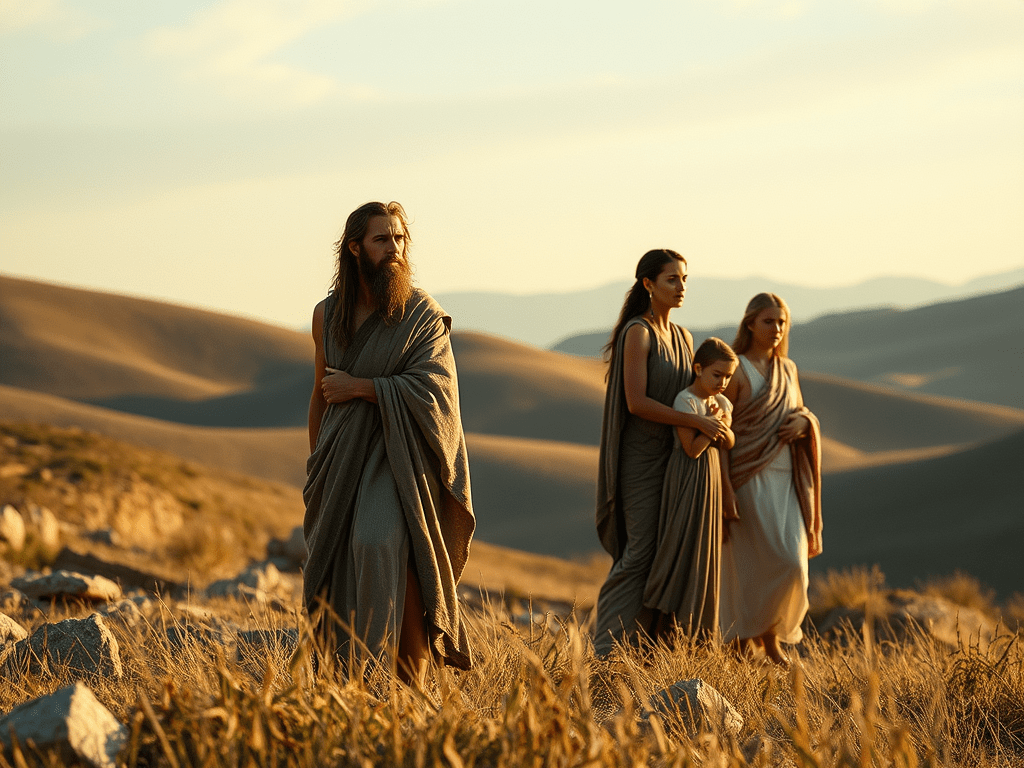
There are several examples of polygamy in the Bible, particularly in the Old Testament. Some notable figures who had multiple wives include:
- Lamech (Genesis 4:19): The first mention of polygamy in the Bible. Lamech, a descendant of Cain, had two wives, Adah and Zillah.
- Abraham (Genesis 16; 25:1-6): While his primary wife was Sarah, Abraham also took Hagar, Sarah’s maid, as a secondary wife (or concubine) to bear a child, Ishmael. After Sarah’s death, Abraham married Keturah, who bore him more children.
- Jacob (Genesis 29-30): Jacob had two wives, Leah and Rachel, who were sisters. He also had children with their maidservants, Bilhah and Zilpah, making him the father of the twelve tribes of Israel.
- Esau (Genesis 26:34; 28:9; 36:2-3): Esau had multiple wives, including Judith, Basemath, and Mahalath.
- Elkanah (1 Samuel 1): Elkanah had two wives, Hannah and Peninnah. The story of Hannah’s longing for a child is central to this narrative, leading to the birth of the prophet Samuel.
- David (2 Samuel 3:2-5; 5:13): King David had multiple wives, including Michal, Abigail, and Bathsheba. He also took more wives and concubines after becoming king in Jerusalem.
- Solomon (1 Kings 11:1-3): Perhaps the most famous example of polygamy, King Solomon had 700 wives and 300 concubines. His many marriages, especially to foreign women, were said to lead him away from his devotion to God.
These instances reflect cultural norms of ancient times. They are described rather than explicitly condoned or condemned in most biblical texts. Polygamy became less prevalent and eventually fell out of favor in later Jewish and Christian traditions.
The examples of polygamy in the Bible reflect the social and cultural norms of the times. They are not an endorsement or explicit acceptance of the practice. Polygamy was relatively common in ancient Near Eastern societies. However, the biblical text does not uniformly present it in a positive light. Here are a few considerations:
- Descriptive vs. Prescriptive: The Bible often describes practices without explicitly approving or condemning them. The instances of polygamy in the Bible are mainly descriptive. While God does not always directly rebuke these practices, neither does He establish them as the ideal. For example, the stories of Abraham, Jacob, David, and Solomon show that having multiple wives often led to conflict, jealousy, and other complications.
- Negative Outcomes:
- Abraham: The union with Hagar, Sarah’s maidservant, led to significant tension between Sarah and Hagar (Genesis 16). Later, there were conflicts between Ishmael (Hagar’s son) and Isaac (Sarah’s son), which had long-term implications for their descendants.
- Jacob: Jacob’s marriages to Leah and Rachel caused deep rivalry between the sisters, leading to envy and competition (Genesis 29-30).
- David: David’s multiple marriages led to family disputes and tragic events, including issues of succession, rebellion, and internal strife (2 Samuel 13-18).
- Solomon: Solomon’s many marriages, particularly to foreign women, are explicitly criticized in 1 Kings 11:1-13, as they led him to idolatry and a turning away from God.
- Biblical Ideal of Marriage: The creation narrative in Genesis 2:24 speaks of a man leaving his parents to unite with his wife, and “they shall become one flesh.” This verse, along with Jesus’ teachings in the New Testament (Matthew 19:4-6; Mark 10:6-9), suggests a model of monogamous marriage. The emphasis on “one flesh” implies an ideal of unity that is consistent with monogamy.
- New Testament Perspective: By the time of the New Testament, monogamy had become the expected norm among Jewish communities. In Christian teachings, leaders in the church, such as bishops and deacons, were explicitly instructed to be “the husband of one wife” (1 Timothy 3:2, 12; Titus 1:6). This further supports the shift toward monogamy as the standard.
The Old Testament includes numerous examples of polygamy. These narratives often highlight the problems and complexities that arise from such arrangements. The portrayal of an original design of monogamous marriage suggests that polygamy is tolerated in some cases. The New Testament’s emphasis on monogamy suggests that polygamy is not promoted as an ideal.
The Bible does not explicitly promote polygamy as an ideal. However, there are aspects of the Old Testament that can be interpreted as tolerating or accommodating the practice. This reflects the cultural norms of ancient times. Here are a few points that could be seen as indirectly supporting polygamy:
- Laws Regulating Polygamy:
- The Mosaic Law includes regulations that address situations involving multiple wives, which implies a recognition and allowance of polygamy. For example, Deuteronomy 21:15-17 provides rules about inheritance for children from different wives, ensuring that the rights of the firstborn son are respected even if he is the son of a less-favored wife. This law seeks to protect family order and justice within a polygamous setting rather than forbidding the practice.
- Deuteronomy 25:5-10 describes the practice of “levirate marriage,” where a man is required to marry his deceased brother’s widow if she has no children. This could lead to a man having more than one wife if he was already married, though the primary goal was to preserve the family line.
- God’s Provision for Polygamous Families:
- God’s interactions with polygamous figures like Abraham, Jacob, David, and Solomon can be seen as accommodating polygamous relationships. Despite the problems that sometimes arose, God continued to work through these individuals, and they were still part of God’s covenant promises.
- For example, God promised Abraham that he would be the father of many nations, which included the descendants of both Isaac (Sarah’s son) and Ishmael (Hagar’s son). While the union with Hagar was born out of Sarah’s desire to secure an heir, it shows that God did not reject this polygamous situation outright.
- God’s Commands Leading to Polygamy:
- In some cases, God’s commands could lead to polygamous situations. For example, after King Saul’s death, God instructed David to take over as king, and David ended up taking more wives during his reign (2 Samuel 5:13). Though not a direct endorsement of polygamy, this could be interpreted as tacit acceptance within a cultural context where multiple marriages were common for kings to form alliances and secure power.
- Similarly, God’s instructions regarding levirate marriage (Deuteronomy 25) could lead to a man having multiple wives, especially if his brother died without children while he was already married.
- Patriarchs and Kings Practicing Polygamy:
- Many of the most significant figures in the Old Testament, such as Abraham, Jacob, David, and Solomon, had multiple wives. Their stories are central to the biblical narrative, and in some cases, their polygamous relationships played a role in God’s larger plans. For example, Jacob’s twelve sons from his four wives became the twelve tribes of Israel, forming the foundation of the nation. While the Bible does not explicitly command or promote their polygamy, their practices were integrated into the unfolding of the biblical story.
- Wealth and Status:
- In ancient cultures, having multiple wives could be a sign of wealth, status, and power. Kings and wealthy men often had several wives, concubines, or both. The Bible, while not actively promoting this, does reflect these cultural norms without overt condemnation, suggesting a level of social acceptance. For example, Solomon’s many marriages were a way of forming political alliances with neighboring nations (1 Kings 3:1, 11:1).
In conclusion, while the Bible does not actively promote polygamy, it contains regulations and narratives that indicate an acceptance of the practice in certain contexts. The lack of outright prohibition and the accommodation of polygamous relationships among some key biblical figures reflect the cultural realities of the time. However, these examples do not necessarily present polygamy as a divine ideal; instead, they show how God’s plans unfolded within the cultural frameworks of ancient societies.



 Life's Adventure