A Bridge to the Future

When the storm swept through Maple Grove, it brought more than just rain and wind—it brought devastation. Trees were uprooted, power lines downed, and the bridge that connected the town to its neighboring communities was completely destroyed.

The old wooden bridge had been more than just a way across the river; it was a lifeline. Farmers used it to transport their goods to market, children crossed it to reach their school, and friends met halfway for picnics by its banks. Without it, the town felt cut off from the world—and from each other.

Assessing the Damage

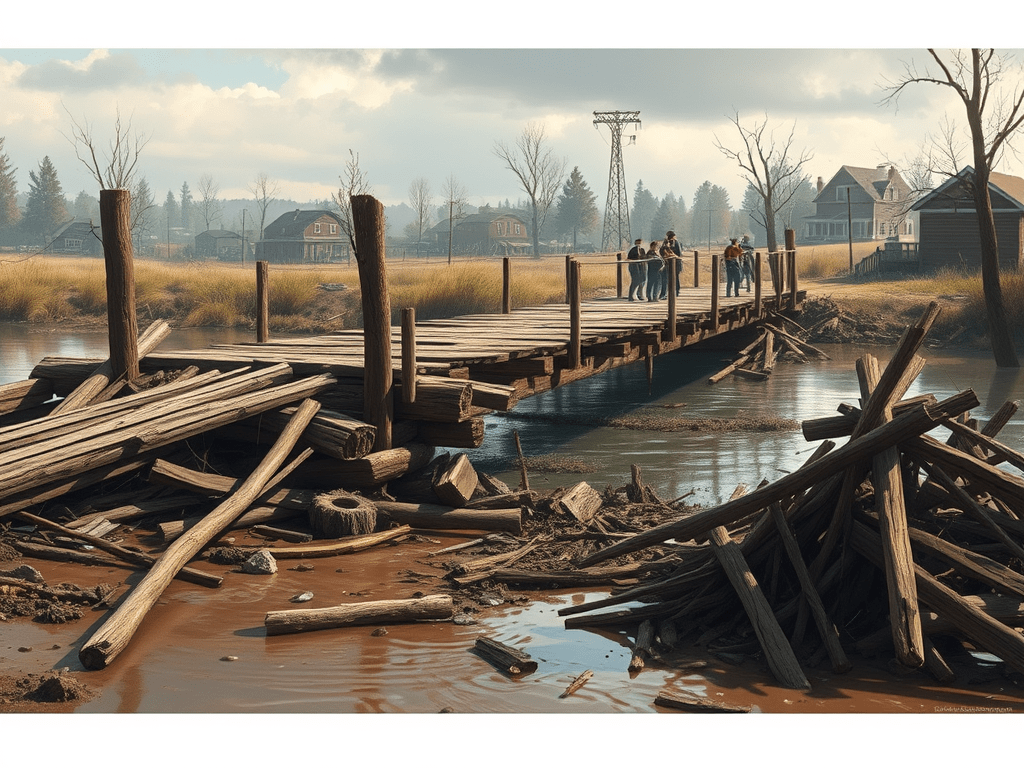
The morning after the storm, the townspeople gathered by the river. The once-sturdy bridge was now a pile of splintered wood and twisted metal, scattered like matchsticks along the muddy banks.

“What are we going to do?” asked Mr. Carter, the town’s baker. “We can’t afford to rebuild it. And even if we could, it would take months.”

The mayor, a pragmatic woman named Ellen, nodded grimly. “We’ll find a way,” she said. “This bridge isn’t just about crossing the river—it’s about who we are.”

The First Steps

The town held a meeting in the school gym that evening. Ideas were tossed around, but no one could agree on a solution. Then, a quiet voice cut through the noise.

“We could do it ourselves,” said Jonah, a retired carpenter.

The room fell silent.

Jonah stood and cleared his throat. “I know it sounds impossible. But if we work together—if everyone contributes what they can—I think we can rebuild this bridge.”

A murmur of agreement spread through the crowd.

“I can design it,” said Lisa, an architect who had moved back to Maple Grove to care for her aging parents.

“And I’ll provide the wood,” offered Mr. Langley, who owned the lumber mill on the outskirts of town.

One by one, people raised their hands, volunteering their skills, time, and resources.

Rebuilding Together

The next weekend, work began. Jonah taught a group of volunteers how to sand and shape the wood. Lisa organized the construction plan, breaking it down into manageable tasks.

Children painted signs to cheer on the workers, and Mrs. Thompson, the town’s unofficial chef, set up a food station to keep everyone fed.

At first, progress was slow. There were arguments over how to handle certain tasks and setbacks when materials ran short. But the community persisted, driven by the belief that they were building something bigger than a bridge—they were rebuilding their town’s spirit.

Overcoming Challenges

One day, heavy rains threatened to wash away the foundations they had laid. The workers scrambled to secure the site, forming a human chain to carry sandbags to the riverbank. Soaked and exhausted, they managed to save their progress.

“Nothing worth building is ever easy,” Jonah said, patting the shoulder of a teenage boy who had been ready to give up.

Those words became the team’s motto, written in chalk on the makeshift workstation and repeated whenever morale faltered.

The New Bridge

Months later, on a crisp autumn morning, the new bridge was finally complete. Made of strong timber and reinforced steel, it was sturdy and beautiful, with decorative railings carved by local artisans.

The whole town gathered for the ribbon-cutting ceremony. Jonah, Lisa, and the mayor stood at the center, scissors in hand.

“This bridge is more than a structure,” Ellen said, addressing the crowd. “It’s a symbol of what we can accomplish when we come together. It’s a bridge to our future.”

As the ribbon was cut, cheers erupted, and the first group of children ran across, their laughter echoing in the crisp air.

A Lasting Legacy

The new bridge quickly became a source of pride for Maple Grove. It brought back commerce, reconnected families, and became a destination for visitors who admired its craftsmanship and the story behind it.

More importantly, it reminded the townspeople of their resilience and the strength of their community.

Years later, a plaque was added to the bridge’s entrance. It read:

“This bridge was built by the hands and hearts of Maple Grove. May it always stand as a testament to the power of unity and hope.”

And stand it did, carrying the weight of countless stories, dreams, and journeys for generations to come.
The Butterfly Garden

The Johnson family’s backyard had always been a patch of uneven grass and wild weeds. But to nine-year-old Sophie, it was her kingdom. She’d sit for hours imagining castles, magical creatures, and secret adventures.

One spring morning, Sophie was sitting by the window, watching a lone butterfly flutter among the dandelions. Her mother, Laura, walked in with a cup of tea and a weary smile. Sophie’s illness had taken a toll on the whole family, but her daughter’s spirit remained unbroken.

“Mom,” Sophie said, her voice filled with quiet wonder, “what if we turned the yard into a garden? A garden just for butterflies.”

Laura hesitated, unsure of how much energy Sophie had for such a big project. But Sophie’s eyes sparkled with excitement. “A garden where everyone could feel happy, just like I do when I see butterflies.”

Laura nodded, her heart full. “Let’s do it.”

Planting Hope

The next weekend, Sophie and her parents began transforming the yard. Sophie picked out colorful flowers—milkweed, zinnias, and marigolds—that would attract butterflies. Her dad, Eric, dug up the weeds while Sophie directed him like a foreman, giggling whenever he dramatically wiped his brow.

Neighbors noticed the activity and stopped by to help. Mrs. Bennett from next door brought over a bag of soil, and Mr. Patel offered wooden planks for raised flower beds. Soon, it wasn’t just Sophie’s family working on the garden—it was the whole community.

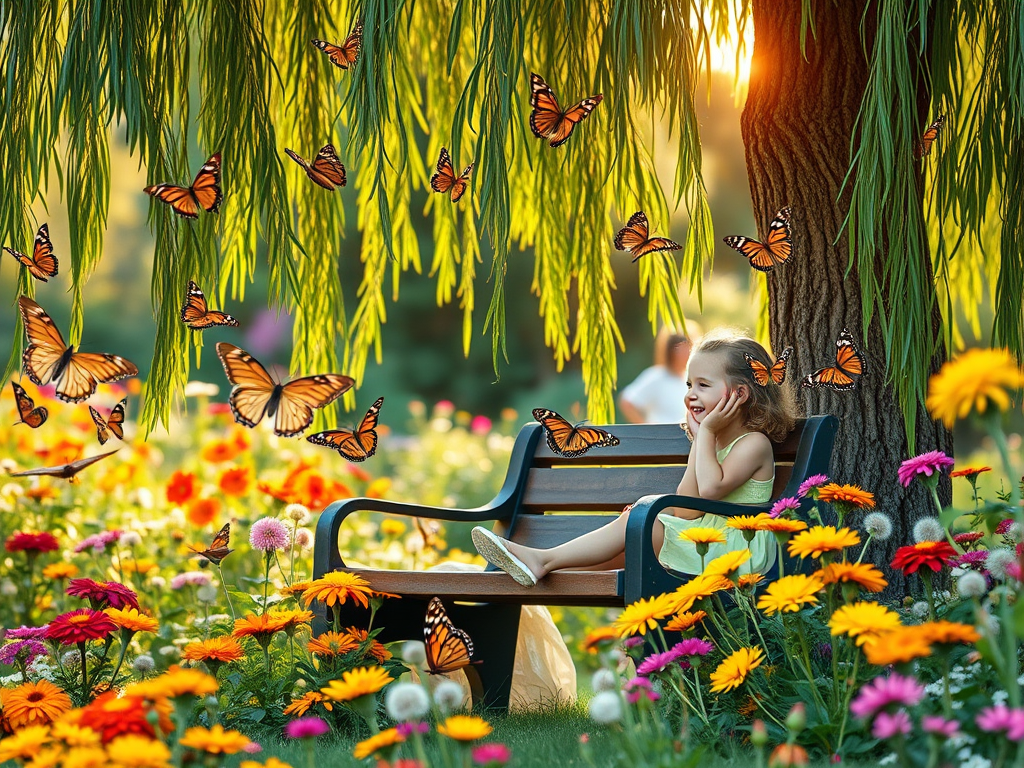
As the garden grew, Sophie spent her days painting small signs with names like “Butterfly Bistro” and “Puddle Paradise.” Her favorite spot was a small bench beneath a willow tree, where she could sit and watch the butterflies dance.

The First Visitor

By mid-summer, the garden was alive with color. Butterflies of all shapes and sizes flitted between the flowers, and Sophie’s giggles echoed through the yard.

One afternoon, a boy named Ben visited with his mom. Ben had recently moved to the neighborhood and was painfully shy. Sophie, sitting on her bench, waved him over.

“Do you like butterflies?” she asked.

Ben nodded but didn’t say much. Sophie handed him a tiny painted rock shaped like a butterfly. “This is your ticket to the garden,” she said with a grin.

For the first time, Ben smiled. He began visiting the garden daily, helping Sophie water the plants and even painting rocks for other visitors.

A Garden of Connection

As word spread, more people came to see the garden. Some came to admire its beauty; others came seeking solace.

One day, Mrs. Thompson, who had recently lost her husband, sat on Sophie’s bench. “This place feels magical,” she said, her voice trembling.

Sophie, now frailer but just as spirited, smiled warmly. “Butterflies always bring good things. Maybe they’ll bring you something happy, too.”

Mrs. Thompson nodded, tears glistening in her eyes.

Sophie’s Legacy

As summer turned to autumn, Sophie grew weaker. She could no longer spend as much time in the garden, but her parents would wheel her out to the bench whenever the weather allowed. One crisp October morning, Sophie sat quietly, watching a monarch butterfly land on her hand.

“They’re so free,” she whispered. “That’s what I want this garden to be—a place where people can feel free, happy, and loved.”

Those were her last words in the garden.

Sophie passed away peacefully a few days later, surrounded by her family.

Blooming Hope

In the weeks following Sophie’s passing, the community came together to honor her memory. They added a plaque near her bench that read:

“The Butterfly Garden: A place of hope, joy, and love, created by Sophie Johnson, who believed in the magic of butterflies and the beauty of life.”

The garden didn’t wither in her absence. It flourished. Visitors continued to come—not just for the flowers and butterflies, but for the peace the garden seemed to offer.

Children painted rocks, families planted new flowers, and people from all walks of life found comfort on Sophie’s bench. Ben, now one of the garden’s young caretakers, often told visitors about Sophie’s dream.

“She wanted everyone to feel happy here,” he’d say, his voice filled with pride. “And they do.”

The Garden That Grew Hearts

Years later, the garden remained a vibrant sanctuary. Sophie’s story inspired others to create similar gardens in nearby towns. What began as one child’s dream became a ripple of kindness and connection that reached far beyond her backyard.

And on quiet days, when the sun was just right, visitors to the garden could see butterflies soaring high, as if carrying Sophie’s spirit with them, spreading joy wherever they went.

Hantavirus Outbreak in Arizona: Key Facts and Prevention Measures

Hantavirus, a potentially fatal disease transmitted from rodents to humans, has recently caused concern in the United States, particularly in Arizona. Here are the key details about the current situation:

  1. Recent cases and fatalities:
  • Seven confirmed cases of Hantavirus Pulmonary Syndrome (HPS) have been reported in Arizona from January 1 to July 1, 2024, resulting in three deaths[1][3].
  • California has reported two cases and one death this year[3].
  • In total, four deaths have been attributed to hantavirus in the U.S. in 2024[3][4].
  1. Disease characteristics:
  • Hantavirus is spread primarily through contact with infected rodent urine, saliva, or feces[1][4].
  • The virus has a fatality rate of approximately 38%[3].
  • Symptoms typically appear 1 to 8 weeks after exposure and include fever, muscle aches, nausea, and abdominal pain, progressing to severe respiratory issues[2][3].
  1. Geographic distribution:
  • Hantavirus cases are predominantly reported in the Western and Southwestern United States[2].
  • Arizona ranks among the states with the highest number of reported hantavirus infections[2].
  • The disease is not confined to a specific region and can be present in many areas with rodent activity[4].
  1. Factors contributing to the increase in cases:
  • Seasonal changes in rodent populations may be responsible for the uptick in cases[2].
  • Experts are considering climate change and extreme heat waves as potential contributing factors[2][3].
  1. Prevention and treatment:
  • There is currently no specific treatment, cure, or vaccine for hantavirus infection[2][4].
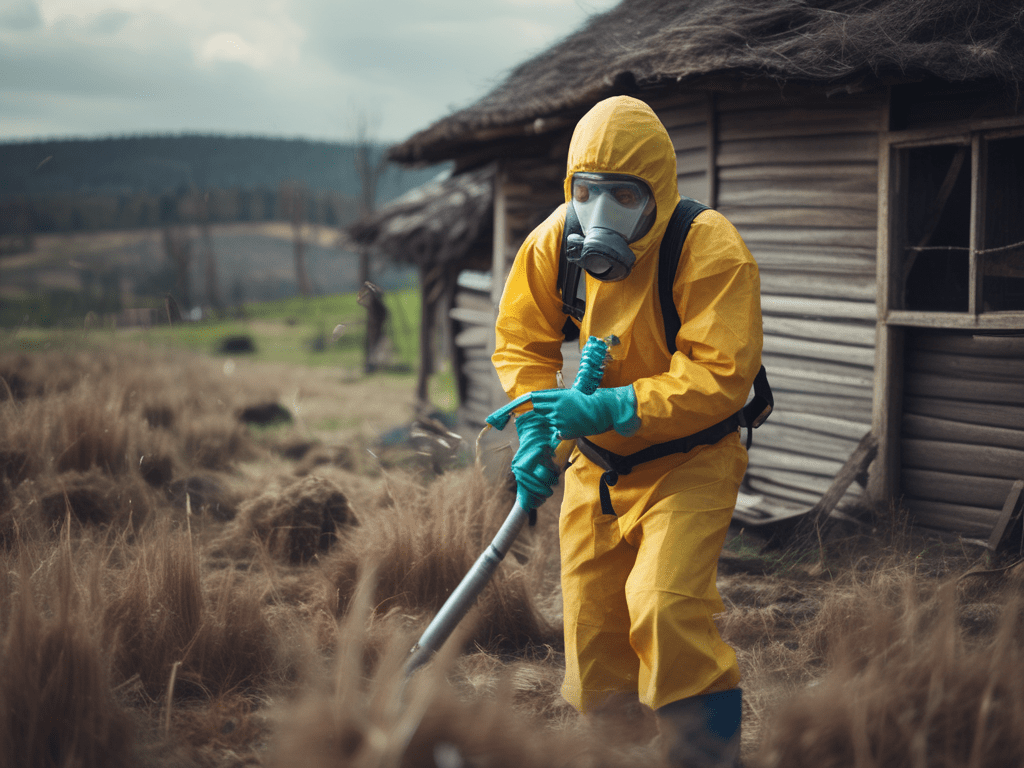
  • Prevention measures include proper cleaning and disinfection of areas with rodent activity, sealing entry points in homes, and using traps[4].

Health officials are urging the public to be cautious and take preventive measures, especially when entering or cleaning rural structures that may harbor rodents[2][4]. The recent increase in cases and fatalities highlights the importance of public awareness and proper hygiene practices to minimize the risk of hantavirus transmission.

Citations:
[1] https://cmmonline.com/news/hantavirus-concerns-in-arizona-as-fatalities-occur
[2] https://www.nbcnews.com/health/health-news/hantavirus-arizona-warn-spread-potentially-fatal-rcna162593
[3] https://timesofindia.indiatimes.com/world/us/hantavirus-in-us-deadly-rat-disease-kills-four-health-officials-on-alert/articleshow/112023247.cms
[4] https://metro.co.uk/2024/07/25/rat-disease-hantavirus-kills-four-us-health-warning-21292461/

Wildlife Health Alert: Unprecedented Case of ‘Staggering Disease’ in Mountain Lion

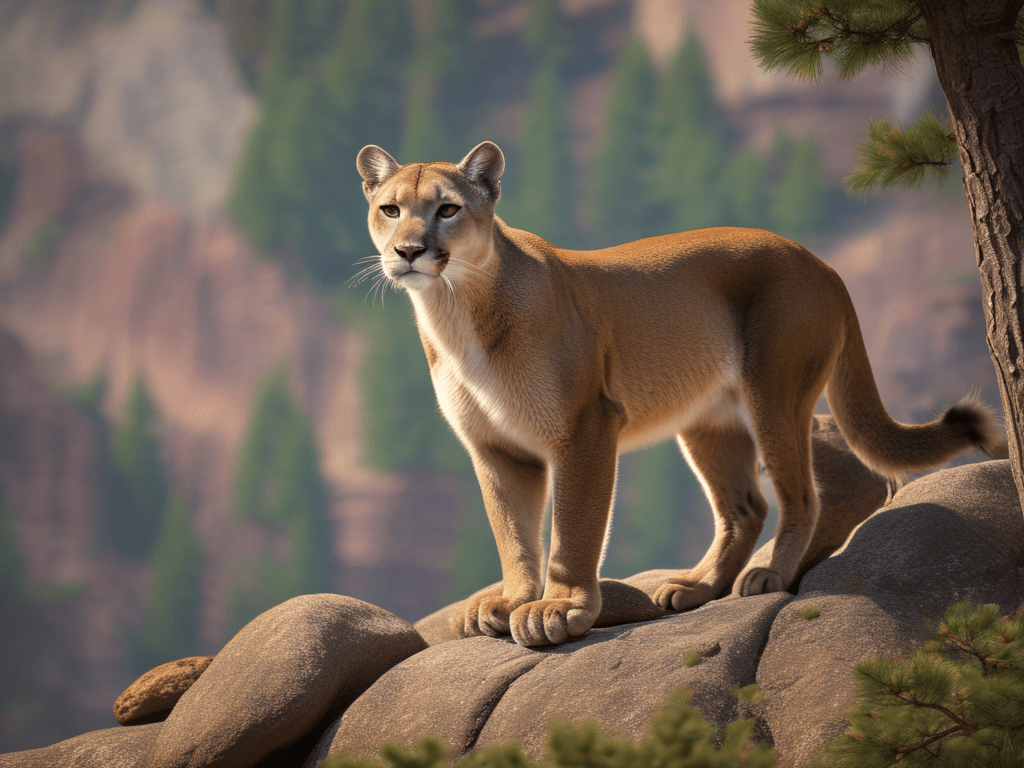
A deadly neurological condition known as “staggering disease” has been discovered in a mountain lion in Colorado, marking the first reported case of this illness in a mountain lion in North America[1][2][3][4]. This finding is significant as it represents the first time the disease has been identified in this species on the continent.

The disease, which is caused by a virus, has been commonly found in domestic animals but had not previously been observed in wild mountain lions in North America[2][5]. Colorado Parks and Wildlife confirmed this groundbreaking discovery, highlighting its importance in understanding the spread of the disease among wildlife populations[4].

“Staggering disease” is named for one of its primary symptoms, which causes affected animals to exhibit unsteady movements. The condition is often fatal, raising concerns about its potential impact on mountain lion populations and other wildlife in the region[1][4].

This discovery underscores the importance of ongoing wildlife health monitoring and research, as it reveals new information about the spread of diseases among different animal species in North America. Wildlife officials and researchers will likely continue to study this case to better understand the implications for mountain lion populations and to develop strategies for monitoring and potentially managing the disease in wild animals.

Citations:
[1] https://www.idahostatesman.com/news/article290169244.html
[2] https://www.idahostatesman.com/news/nation-world/national/article290160429.html
[3] https://www.summitdaily.com/news/colorado-mountain-lion-staggering-disease-north-america/
[4] https://kdvr.com/news/local/first-north-american-case-of-staggering-disease-found-in-colorado-mountain-lion/
[5] https://www.kentucky.com/news/nation-world/national/article290160429.html

The Fish and the Frog

Once upon a time, there was a fish who lived in a pond. He was lonely and bored, for he had no friends to play with. He spent his days swimming around the pond, looking for something interesting to do.

One day, he saw a frog sitting on a lily pad. The frog was green and spotted, with big eyes and a wide mouth. He looked very different from the fish, but also very intriguing.

“Hello, who are you?” the fish asked, swimming closer to the frog.

“I’m a frog, and who are you?” the frog replied, hopping into the water.

“I’m a fish, and I live in this pond. Do you live here too?” the fish asked.

“No, I live on the land. I only come to the pond to catch insects and cool off. But I can also breathe underwater, see?” the frog said, showing his gills.

“Wow, that’s amazing. You can live in both water and land. You must have a lot of fun,” the fish said, admiring the frog.

“Well, not really. I don’t have many friends either. Most of the other frogs think I’m weird because I like to swim underwater. And most of the other animals on land are afraid of me because I’m a frog,” the frog said, sadly.

“That’s too bad. You seem very nice to me. Maybe we can be friends,” the fish said, kindly.

“Really? You want to be friends with me?” the frog asked, surprised.

“Sure, why not? You’re different from me, but that makes you interesting. And you’re friendly and smart. I think we have a lot in common,” the fish said.

“Thank you. You’re very sweet. I think you’re interesting too. And you’re beautiful and graceful. I like your shiny scales and your long fins,” the frog said.

The fish and the frog smiled at each other, and felt a warm feeling in their hearts. They decided to be friends, and started to spend more time together. They taught each other about their different worlds, and learned from each other. They played games, told jokes, and shared stories. They had a lot of fun, and made each other happy.

Soon, their friendship turned into love. They realized that they wanted to be more than friends, and to stay together forever. But they also knew that they belonged to different worlds, and that their love was impossible.

“How can we be together, when you live in the water and I live on the land?” the frog asked, sadly.

“I don’t know. Maybe we can find a way. Maybe we can ask someone for help,” the fish said, hopefully.

They decided to seek the advice of the wise old turtle, who lived at the bottom of the pond. He was the oldest and the smartest animal in the pond, and he knew everything.

“Hello, Mr. Turtle. We need your help. We are in love, but we don’t know how to be together. Can you help us?” the fish and the frog asked, respectfully.

The turtle looked at them with his old and wise eyes, and said:

“My children, I’m glad that you have found love, for love is the most precious thing in life. But I’m also sad, for your love is doomed. You belong to different worlds, and you can never be together. You have two choices: either you give up your love, and go back to your own worlds, or you sacrifice your lives, and become one with each other.”

The fish and the frog were shocked and confused. They didn’t want to give up their love, but they also didn’t want to die.

“What do you mean, become one with each other?” the fish asked.

“There is a magic flower that grows on the shore of the pond. It is called the flower of love. If you both eat it, you will merge into one being, and you will be together forever. But you will also lose your own identities, and you will cease to exist as separate beings,” the turtle explained.

“That sounds scary. Is there no other way?” the frog asked.

“No, there is no other way. You must choose between love and life. It is a hard choice, but it is yours to make,” the turtle said.

The fish and the frog thanked the turtle for his advice, and swam away. They went to the shore of the pond, where the flower of love grew. It was a beautiful flower, with red petals and a golden center. It smelled sweet and inviting.

They looked at each other, and held each other’s hands. They knew what they wanted to do. They loved each other more than anything, and they wanted to be together forever. They decided to eat the flower of love, and become one.

They kissed each other, and said:

“I love you.”

“I love you too.”

They ate the flower of love, and felt a strange sensation. They felt their bodies and minds merging, and their souls blending. They felt a surge of joy and peace, and then they felt nothing.

They were gone.

But in their place, a new creature emerged. It was a hybrid of a fish and a frog, with scales and spots, gills and lungs, fins and legs. It was a beautiful and unique creature, unlike any other. It was the embodiment of their love.

It swam in the water, and jumped on the land. It explored both worlds, and made friends with both animals. It was happy and free, and it never forgot its origin.

It was the fish and the frog, and it was one.

Druid Meditation Day 1

Find a quiet, peaceful place to sit or lie down where you will not be disturbed. Close your eyes and take a deep breath in through your nose, filling your lungs with air. Hold the breath for a few seconds, then exhale slowly through your mouth. Repeat this deep breathing several times, feeling your body relax with each breath.

Focus your mind on the natural world around you. Imagine the trees, the grass, the flowers, and the animals. Imagine the sun, the moon, and the stars. Imagine the wind, the rain, and the snow. Imagine the earth beneath you, supporting and nourishing you.

As you meditate, repeat the following quote to yourself:

“Nature is not a place to visit. It is home.” – Gary Snyder

Questions to reflect on after your meditation:

  1. How did the natural world make you feel during your meditation?
  2. What did you notice about your body and mind during the meditation?
  3. How can you incorporate more nature into your daily life?
  4. How does the quote resonate with you and your relationship with nature?
  5. How can you use this meditation to connect more deeply with the earth?

Stoic Meditation: Day 1

“I am in control of my thoughts and reactions. External events will not be able to control my emotions. I will focus on what is within my power to change and let go of what is not. I will strive to live in accordance with nature and reason and work towards virtue and wisdom. I am grateful for this day and the opportunity to practice self-control.”

Questions to consider:

  • How can I apply this meditation to my daily life?
  • What are some specific situations where I can practice detachment from external events?
  • How can I focus on what is within my power to change and let go of what is not?
  • How can I strive to live in accordance with nature and reason?
  • What does it mean to work towards virtue and wisdom, and how can I do so?

Fairbanks Park

Decided to visit Fairbanks Park today here in Terre Haute, Indiana as I wait to hear back about a position with Great Dane. The agency Aegis Worldwide hadn’t returned my call from yesterday letting them know I was here. Started to get a little anxious and so I had gone for a little walk to see what this park was like. The Wabash River borders one side and makes me think of Huckleberry Finn. It’s amazing how wide the river is. Must be pretty deep too as to how still it looks. The park itself is pretty big from what I can see from google maps.

Wabash River bordering Fairbanks Park
The park from where I chose to rest for a spell

Regarding SCOTUS Decision On Roe V. Wade

I find it disgusting and distasteful that the justices at SCOTUS overturned the Roe v Wade ideal. It takes away from the foundation of our country and deprives justice for those who ultimately decide their own fate. As well, it takes an option away from those who could truly use it, saying to the world that life and health and a person’s own sentience don’t matter.

The religious paradigm shows it has no taste for the individual, a disgust for women, and that it has no true regard for the human condition. I begin to wonder what they would do if one of their mistresses became pregnant with their child(ren).