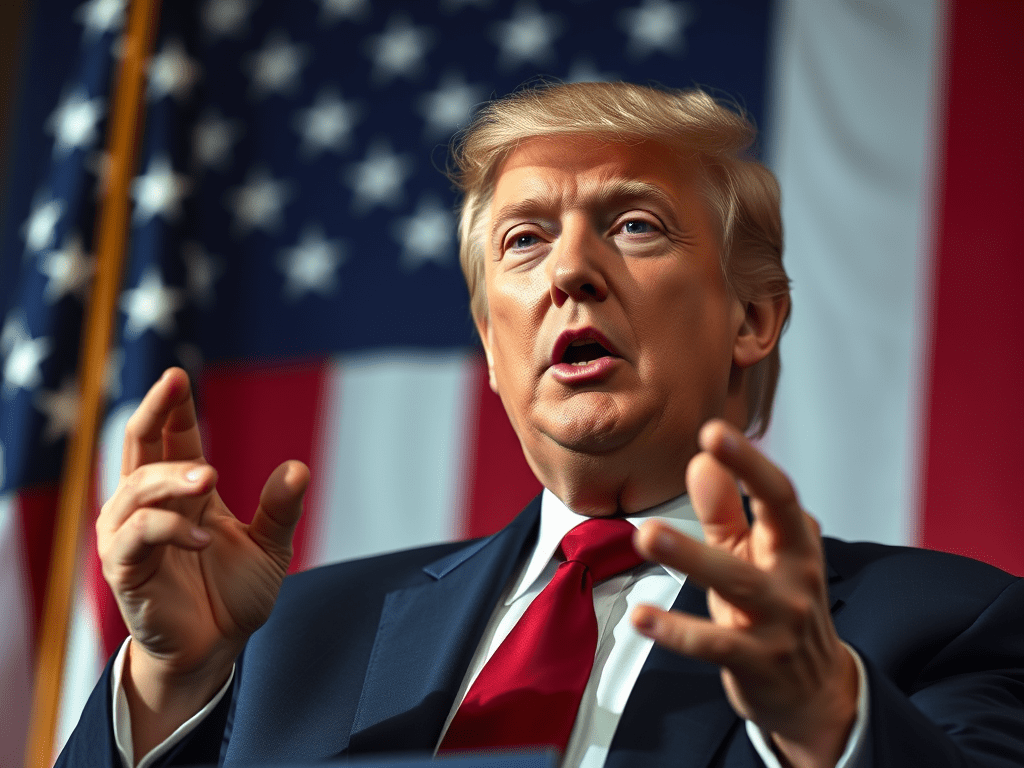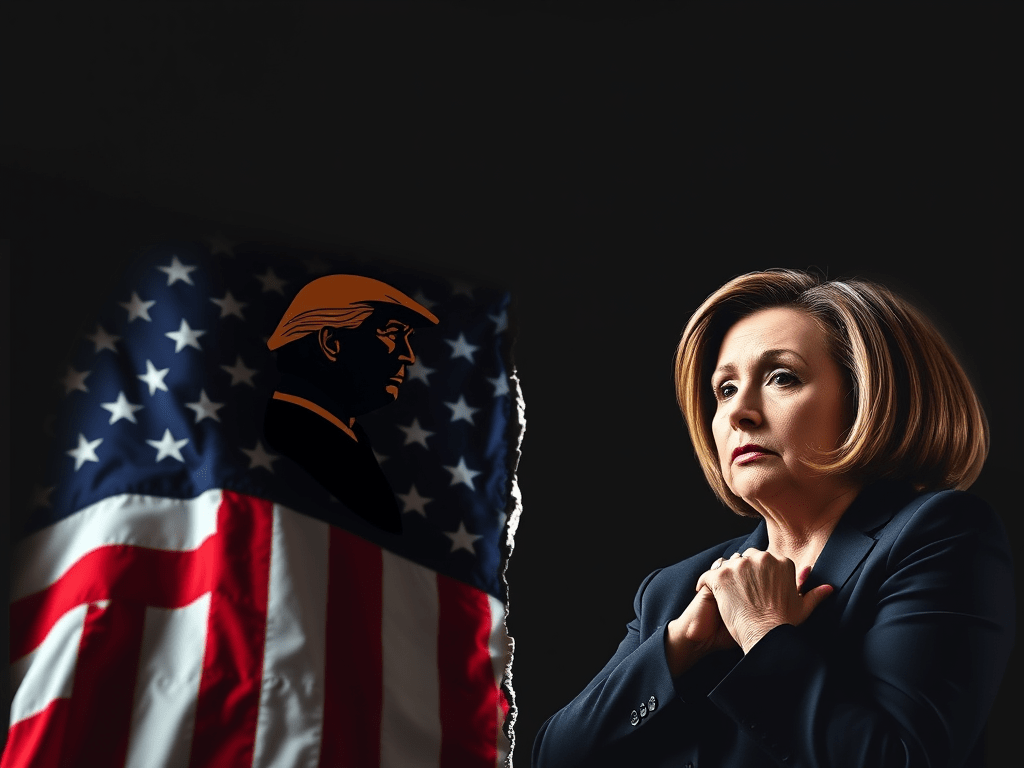
Unpacking Treason Claims Against Democrats: A Political Analysis

Key Points

  • Research suggests conservatives, especially Donald Trump, have accused Democrats of treason, often rhetorically, during political conflicts like impeachments.
  • It seems likely these claims, such as those against Nancy Pelosi and Adam Schiff in 2019, don’t meet the legal definition of treason.
  • The evidence leans toward these accusations being controversial, criticized by Democrats and some Republicans as divisive and inappropriate.

Overview

Conservative claims of treason against Democrats have been notable in recent political discourse, particularly during high-tension periods. These claims are often rhetorical and not legally substantiated, focusing on political disagreements rather than meeting the constitutional definition of treason.

Specific Instances

Donald Trump, during the 2019 impeachment proceedings, accused Democrats like Nancy Pelosi and Adam Schiff of treason, suggesting they should be impeached. Another instance involved George Buck, a Florida Republican candidate, who claimed certain Democrats should be hung for treason, specifically targeting Ilhan Omar. Additionally, Stephen Ayres, a January 6th Capitol riot suspect, accused the Democrat party of treason in a social media post.

Reactions and Context

These claims have been met with criticism from Democrats and some Republicans, who view them as inflammatory. For example, Rep. Adam Kinzinger called Trump’s suggestions “beyond repugnant.” Legal experts and media outlets have clarified that such accusations do not align with the constitutional definition of treason, emphasizing the political nature of these statements.


Survey Note: Detailed Analysis of Conservative Claims of Treason Against Democrats

This section provides a comprehensive examination of conservative claims of treason against Democrats, detailing specific instances, contexts, and reactions, as observed in recent political discourse. The analysis is grounded in available information up to the current date, April 24, 2025, and aims to present a balanced view of a highly polarized topic.

Background and Definition

Treason, as defined by the U.S. Constitution, involves “levying war against the United States, or in adhering to their Enemies, giving them Aid and Comfort.” This legal threshold is narrow and typically involves actions against the nation, such as aiding foreign enemies during wartime. However, in political rhetoric, “treason” is often used loosely to describe perceived betrayals of national interest, particularly during partisan conflicts. This misuse has been evident in conservative claims against Democrats, especially during impeachments, elections, and other high-stakes political moments.

Notable Instances of Claims

  1. Donald Trump’s Accusations During the 2019 Impeachment Proceedings
    During the 2019 impeachment inquiry into his dealings with Ukraine, Donald Trump made several high-profile accusations of treason against Democrats. Specifically, he targeted House Speaker Nancy Pelosi and Rep. Adam Schiff, the chairman of the House Intelligence Committee. On October 6, 2019, Trump posted on X, suggesting Pelosi was guilty of “High Crimes and Misdemeanors, and even Treason,” and called for their impeachment (Donald Trump X post). These statements were in response to the impeachment inquiry, which Trump viewed as politically motivated. The accusations were based on his claims that Democrats, particularly Schiff, misrepresented a phone call with Ukrainian President Volodymyr Zelenskiy, where Trump pressed for investigations into Joe Biden and his son, Hunter. Legal analyses, such as those from PBS News, clarified that these actions did not meet the constitutional definition of treason, emphasizing the rhetorical nature of Trump’s claims.
  2. George Buck’s Extreme Rhetoric
    In 2019, George Buck, a Republican congressional candidate from Florida’s 13th District, sent a fundraising letter claiming that “anti-American radical Democrats” should be hung for treason. He specifically targeted Congresswoman Ilhan Omar, a Democrat from Minnesota, citing unverified claims that she was a foreign asset passing information to another government. The letter also mentioned “tinfoil hat accusations” against Trump but lacked elaboration. This instance was reported by AP News, which noted that national and local GOP leaders distanced themselves from Buck, removing him from the National Republican Congressional Committee’s “Young Guns” program. Buck lost to Charlie Crist in the 2018 general election, highlighting the political fallout from such extreme rhetoric.
  3. Stephen Ayres’ Social Media Accusations
    Stephen Ayres, a suspect in the January 6, 2021, Capitol riot, accused the Democrat party, among other entities like the mainstream media and social media, of treason in a Facebook post. He claimed they were committing treason against a sitting U.S. president, specifically referencing President Biden and former Speaker Nancy Pelosi. This was reported by The Hill, noting Ayres’ testimony before the House January 6th Committee in 2022. His accusations were part of a broader narrative among some riot participants, reflecting deep political polarization.

Context and Political Environment

These claims often arise during periods of intense political conflict, such as impeachments, elections, or significant legislative battles. For instance, Trump’s accusations during the 2019 impeachment were part of a broader strategy to deflect criticism and frame Democrats as enemies of the state. Similarly, Buck’s claims were made in the context of a competitive congressional race, aiming to mobilize conservative voters with inflammatory rhetoric. Ayres’ accusations were tied to the January 6th insurrection, a moment of national crisis where political loyalties were sharply divided.

An opinion piece from Le Monde in February 2024 highlighted a broader trend among some Republicans viewing Democrats not as political opponents but as “enemies of the homeland,” suggesting a framing where compromise is seen as treasonous. This perspective underscores the rhetorical use of “treason” in political discourse, often divorced from legal definitions.

Reactions and Criticisms

Democrats and some Republicans have criticized these claims as inflammatory and inappropriate. For example, during the 2019 impeachment, Rep. Adam Kinzinger, a Republican from Illinois, responded to Trump’s suggestions by stating on X, “I have visited nations ravaged by civil war. … I have never imagined such a quote to be repeated by a President. This is beyond repugnant” (Adam Kinzinger X post). This criticism was echoed in media reports, such as Reuters, which noted bipartisan condemnation of Trump’s “treasonous” labels against Democrats after his State of the Union address in 2018.

Legal experts, as seen in Vox, have clarified that Trump’s accusations against Schiff did not meet the constitutional definition of treason, which requires waging war against the U.S. or aiding enemies. This legal perspective reinforces the view that such claims are politically motivated rather than legally grounded.

Table: Summary of Key Instances

Claim of Treason AgainstMade ByContextDetailsSource
Democrats, Pelosi, SchiffDonald Trump2019 Impeachment InquiryAccused of treason for impeachment, suggested impeachmentPBS News
Ilhan Omar, other DemocratsGeorge Buck2019 Congressional RaceSuggested hanging for treason, cited unverified foreign asset claimsAP News
Democrat Party, Media, etc.Stephen AyresJanuary 6th Riot, 2022 TestimonyAccused of treason in Facebook post, testified before Jan. 6 CommitteeThe Hill

Broader Implications

The use of “treason” in political rhetoric highlights the deep polarization in U.S. politics, where political opponents are sometimes framed as existential threats. This framing can escalate tensions, as seen in Trump’s warnings of a “civil war-like fracture” if removed from office, reported by PBS News. Such rhetoric has been criticized for undermining democratic norms and legal standards, with some analysts suggesting it contributes to a climate of political violence, as evidenced by the January 6th insurrection.

While specific responses from Democrats like Nancy Pelosi to these “treason” claims are not always directly quoted, their actions, such as continuing impeachment inquiries and forming the January 6th Select Committee, indicate a rejection of these accusations as baseless. Pelosi’s statements, such as her criticism of Trump’s executive actions on January 6th rioters (Pelosi Statement), focus on upholding constitutional principles, implicitly countering the narrative of Democratic treason.

Conclusion

Conservative claims of treason against Democrats, as seen in the actions of Trump, Buck, and Ayres, are predominantly rhetorical, used in politically charged contexts to delegitimize opponents. These claims do not align with the legal definition of treason and have been widely criticized as divisive. The discourse reflects broader trends of polarization, with Democrats and some Republicans advocating for a return to legal and constitutional standards in political debate.

Key Citations

Understanding Treason Claims Against Biden: Facts vs. Fiction

Key Points

  • Claims of treason against Joe Biden and Democrats are political, not legal, and lack formal charges.
  • These accusations often relate to Biden’s Afghanistan withdrawal and border policies, seen as aiding enemies.
  • No legal convictions for treason exist; experts say these claims don’t meet the constitutional definition.
  • The topic is highly controversial, with significant political debate but no legal substantiation.

Background

Treason is a serious charge defined by the U.S. Constitution as levying war against the United States or aiding its enemies. Claims against Joe Biden and Democrats, primarily from Republican critics, suggest actions like the Afghanistan withdrawal or border policies constitute treason. However, these are political accusations, not legal findings, and no trials or convictions have occurred.

Political Context

Such claims often arise in impeachment resolutions, like H.Res.1532, introduced by Representative Louie Gohmert, accusing Biden of treason for decisions impacting national security. Critics, including Representative Marjorie Taylor Greene, have also labeled Biden’s border policies as treasonous, claiming they harm U.S. interests.

Legal Perspective

Legal experts, as noted in analyses like those from Politifact, argue these accusations don’t meet the legal threshold for treason, which requires clear evidence of aiding enemies. Mainstream sources, such as NPR, highlight that House Republicans’ inquiries into Biden’s family business dealings lack direct evidence of treason.

Conclusion

While politically charged, claims of treason against Biden and Democrats lack legal basis, reflecting partisan rhetoric rather than legal reality. For further reading, see Politifact Debunking Treason Claims and NPR on Impeachment Inquiry.


Survey Note: Detailed Analysis of Treason Claims Against Democrats and Joe Biden

This survey note provides a comprehensive examination of the claims of treason against Joe Biden and the Democrats, focusing on their political and legal dimensions. The analysis is grounded in recent political discourse, legislative actions, and legal interpretations, offering a detailed overview for readers seeking a thorough understanding.

Introduction

Treason, as defined in Article III, Section 3 of the U.S. Constitution, is a grave offense involving “levying War against [the United States], or in adhering to their Enemies, giving them Aid and Comfort.” Given its severity, accusations of treason are rare and require substantial legal evidence. However, in recent political discourse, particularly from Republican critics, claims of treason have been leveled against President Joe Biden and, more broadly, the Democratic Party. These claims, often rooted in policy decisions and alleged foreign dealings, are primarily political rather than legal in nature. This note explores the origins, specifics, and legal validity of these accusations, as well as their broader implications.

Political Accusations and Context

The claims of treason against Joe Biden and Democrats stem largely from political opposition, particularly highlighted in impeachment resolutions and public statements by Republican lawmakers. A notable example is H.Res.1532, introduced on December 27, 2022, by Representative Louie Gohmert, which seeks to impeach President Biden for “Treason, and other high Crimes and Misdemeanors.” This resolution, detailed in Congressional Bills 117th Congress, lists multiple articles accusing Biden of actions that allegedly aid U.S. enemies, including:

ArticleAccusation SummaryRelevant Details and Numbers
IIAfghanistan withdrawal aided the Taliban, an enemy, constituting treason.Taliban previously driven out by 2002; Biden’s actions gave them control, aiding 9/11 enemies.
IVWithdrawal left $80 billion in military weapons and equipment to enemies.Over $80 billion in military assets left, aiding enemies.
IXU.S. officials gave Taliban names of Americans and allies, creating a “kill list.”Action aided enemies by providing a list, violating Biden’s oath.
XIBiden’s strategy caused Afghan forces to collapse, leaving $83 billion in equipment.$83 billion cost over two decades for Afghan forces, equipment left to Taliban.
XIIAbandonment of Bagram Air Base and Kabul Embassy aided enemies.Strategically important assets abandoned, aiding U.S. enemies.
XIIIUnlawful airstrikes in Syria violated Constitution, constituting treason.Airstrikes ordered without clear danger, violating oath, previously criticized Trump’s actions.
XIVFailure to respond to Iran’s nuclear and terrorist threats aided the enemy.Iran enriched uranium, threatened Fort McNair and Gen. Joseph M. Martin, undermining security.
XVOpen southern border policy damaged U.S., constituting treason.Failed to secure border, aiding enemies through illegal immigration.
XXIRevoking Keystone XL Pipeline aided Russia and China, violating oath.Aided Russia and Chinese Communist Party, with family payment implications.
XXIIRevoked order prohibiting foreign adversaries from U.S. power grid access.Ended prohibition, aiding China, Russia, damaging U.S. security.
XXVIIAs Vice President, engaged in bribery and foreign business, treasonously harming U.S.Met with Hunter Biden’s Chinese partner, secured billion-dollar deal; bragged about firing Ukrainian prosecutor for money, shielding son from prosecution.

These accusations are echoed in other political statements, such as an X post by Representative Marjorie Taylor Greene on December 20, 2023, where she stated, “Joe Biden is guilty of treason and the Democrat Party has opened a door they should have NEVER opened,” linking it to Biden’s border policy (Rep. Marjorie Taylor Greene X Post). Similarly, Representative Greg Steube, in a July 2, 2023, interview, claimed Biden’s family’s foreign business dealings “rise to the level of treason,” citing dealings with adversaries like Russia and China (Greg Steube on Biden Business Deals).

Another resolution, H.Res.57, introduced on January 26, 2021, by Representative Paul Gosar, impeaches Biden for “abuse of power by enabling bribery and other high crimes and misdemeanors,” alleging he allowed his son Hunter to influence foreign policy for personal gain, potentially endangering national security (H.Res.57 Summary). These documents, available at Govinfo H.Res.57, highlight a pattern of political accusations focusing on Biden’s alleged conflicts of interest and policy decisions.

Legal Analysis and Expert Opinions

Despite these political claims, no legal charges or convictions for treason have been filed against Joe Biden or any Democrats. Treason, as outlined in the Constitution, requires clear evidence of “levying War” against the U.S. or “adhering to their Enemies, giving them Aid and Comfort.” Legal experts, as discussed in articles like The Hill on Treason Term Usage, caution against the casual use of “treason,” noting it is often employed for partisan purposes rather than legal accuracy. Mark Zaid, a national security law attorney, emphasized that such usage typically lacks legal grounding, reflecting political rhetoric rather than constitutional violations.

The Afghanistan withdrawal, a focal point in H.Res.1532, has been criticized as a policy failure but not legally classified as treason. Analyses, such as those from Brookings (Biden Administration Report Critique), attribute the chaos to inherited constraints from the Trump administration’s Doha deal, not treasonous intent. Fact-checking organizations, like Politifact, have debunked claims that Biden is facing trials for treason, sedition, or crimes against humanity, stating, “This claim is unfounded” (Politifact Debunking Treason Claims). NPR reports on the House Republicans’ impeachment inquiry note that while they claim Biden benefited from Hunter’s foreign deals, “they have not yet shown direct evidence of that,” further undermining legal treason claims (NPR on Impeachment Inquiry).

The National Constitution Center’s interpretation of the Treason Clause, provided by Professor Louis Michael Seidman, highlights its narrow scope, focusing on “levying war” or aiding enemies, a standard not met by policy decisions like border management or troop withdrawals (Treason Clause Interpretation). Historical context, as noted in AP News, shows treason convictions are rare, with fewer than 12 successful cases in U.S. history, underscoring the high legal bar (Notable Treason Cases).

Broader Implications and Political Rhetoric

The use of “treason” in political discourse reflects a broader trend of heightened partisan rhetoric, as seen in past accusations against figures like former President Donald Trump. For instance, Trump’s own use of “treason” against political opponents, including Biden, was described by Attorney General Barr as “colloquial” rather than legal, highlighting the term’s frequent misuse (ABC News on Trump Treason Claims). This rhetoric, while inflammatory, does not translate to legal action, as evidenced by the lack of treason trials against Biden or Democrats.

The House Oversight Committee’s investigation into the Biden family’s business dealings, led by Chairman James Comer, focuses on potential national security threats but does not conclude treason, instead calling for transparency (Biden Family Investigation). This investigation, ongoing as of September 13, 2023, reveals a pattern of political scrutiny but no legal findings of treason.

Conclusion

Claims of treason against Joe Biden and the Democrats are predominantly political, originating from Republican critics and impeachment resolutions like H.Res.1532 and H.Res.57. These accusations, focusing on the Afghanistan withdrawal, border policies, and alleged foreign business dealings, do not meet the legal definition of treason as outlined in the Constitution. Legal experts and fact-checking organizations, such as Politifact and NPR, have not substantiated these claims, emphasizing their lack of legal basis. While politically charged, these accusations reflect partisan rhetoric rather than legal reality, with no formal charges or convictions to date.

Key Citations

Restoring Common Sense in Colorado: Mikesell for Governor


“I Want My Colorado Back!” — Sheriff Jason Mikesell Enters the Governor’s Race With a Bold Message

In a time when many Coloradans feel their voices are being drowned out by rising crime, economic uncertainty, and divisive politics, Sheriff Jason Mikesell has stepped forward with a message that’s resonating far beyond his home county.

In a powerful new video titled “I Want My Colorado Back!”, Mikesell officially launches his campaign for Governor with a promise to restore common sense to Colorado governance. But this is more than just a campaign slogan — it’s a personal mission.

A Sheriff’s Perspective

As the elected Sheriff of Teller County, Mikesell has seen firsthand how state policies have impacted everyday Coloradans. In the video, he doesn’t mince words about the direction he believes the state is headed — and why he’s stepping up to change it.

“Colorado used to be a place where people felt safe, supported, and proud of where they lived,” Mikesell says. “Now we’re seeing rising crime, struggling businesses, and a loss of community values.”

Key Themes in the Campaign

Mikesell’s gubernatorial platform centers on:

  • Restoring Law and Order: Supporting law enforcement and holding criminals accountable.
  • Protecting Colorado Families: From fentanyl and homelessness to education and economic opportunity.
  • Bringing Back Common Sense: Cutting red tape, empowering local leaders, and putting people before politics.

A Call to Action

Whether you’re already a supporter or just hearing his name for the first time, Mikesell’s message is sparking conversation across the state. His campaign isn’t just about winning an election — it’s about restoring a way of life that many believe has been lost.

📽️ Watch the full video here: I Want My Colorado Back! – Jason Mikesell for Governor
🔗 Learn more about the campaign: mikesell4gov.com

Colorado is at a turning point. Sheriff Mikesell believes it’s time to bring back balance, leadership, and local values.

What do you think — is it time to take Colorado back?


The Case For and Against Public Media Funding

Below, Grok presents the strongest and most well-reasoned arguments for and against President Donald Trump’s proposal to defund National Public Radio (NPR) and the Public Broadcasting Service (PBS), as articulated by credible advocates on both sides. The arguments are grounded in primary sources, data, and testimony from relevant stakeholders, avoiding strawman distortions and maintaining impartiality. Each side is given equal weight to reflect the best case for their perspective, with citations to reputable sources and recent data where applicable.


Arguments in Favor of Defunding NPR and PBS

Advocates for defunding NPR and PBS, including Trump administration officials, Republican lawmakers, and conservative policy analysts, argue that public media funding is unnecessary, biased, and misaligned with modern media realities. Below are the strongest arguments, supported by evidence and credible voices.

1. Public Media Exhibits Ideological Bias, Undermining Its Public Mandate

Argument: NPR and PBS are perceived to produce content that leans left ideologically, alienating conservative audiences and violating the principle of impartiality expected from taxpayer-funded media. Defunding would ensure that public money does not subsidize partisan narratives.

Reasoning: Critics point to specific examples of programming they view as promoting progressive agendas, such as NPR’s coverage of social issues like race and gender or PBS’s documentaries on topics like transgender rights. They argue this content reflects a cultural shift toward “woke” ideology, which they claim suppresses conservative viewpoints. For instance, former NPR business editor Uri Berliner’s 2024 essay criticized NPR for lacking “viewpoint diversity” and prioritizing race and identity in its coverage, a claim that resonated with Republican lawmakers during congressional hearings. Additionally, Trump administration officials, including Office of Management and Budget Director Russell Vought, have accused NPR and PBS of “leftist news” and “cultural indoctrination,” arguing that taxpayer funds should not support media that half the country perceives as biased.

Evidence:

  • A Pew Research Center survey (2025) found that only 24% of Americans support continued federal funding for NPR and PBS, with 44% of Republicans favoring defunding, reflecting significant partisan distrust.
  • Republican lawmakers, such as Rep. Marjorie Taylor Greene, cited NPR’s coverage of the Hunter Biden laptop story as dismissive and biased, with NPR CEO Katherine Maher admitting in 2025 that the outlet’s handling was a mistake.
  • The White House’s April 2025 memo to Congress accused NPR and PBS of spreading “radical, woke propaganda disguised as ‘news,’” providing examples like an NPR article on “queer animals” and a PBS documentary on a transgender teenager.

Counterpoint Consideration: Defenders argue that independent analyses, such as those from AllSides and Ad Fontes Media, rate NPR and PBS as among the most balanced news sources, with minimal partisan skew compared to commercial outlets. However, proponents of defunding maintain that public perception of bias, especially among conservatives, undermines the legitimacy of taxpayer support.

2. Federal Funding Is Unnecessary in a Competitive Media Landscape

Argument: The modern media environment, with its abundance of private news outlets, streaming platforms, and user-generated content, renders publicly funded media obsolete. NPR and PBS should compete in the free market like other broadcasters, relying on donations and sponsorships rather than taxpayer dollars.

Reasoning: Advocates, including FCC Chairman Brendan Carr and Sen. John Kennedy, argue that the Public Broadcasting Act of 1967 was enacted in an era with limited media options, a context no longer relevant in 2025. With thousands of radio stations, podcasts, and digital platforms, taxpayers should not subsidize NPR and PBS when alternatives abound. Elon Musk, a prominent Trump ally, has echoed this, stating, “NPR should survive on its own.” Critics also note that NPR receives only 1% of its budget directly from federal grants, and PBS about 16%, suggesting both could adapt to private funding models, as many local stations already rely heavily on donations and corporate sponsorships.

Evidence:

  • The Corporation for Public Broadcasting (CPB) receives $535 million annually, a fraction (less than 0.01%) of the federal budget, yet critics argue this $1.50 per taxpayer could be redirected to higher priorities like infrastructure or debt reduction.
  • NPR’s 2024 budget was $279 million, with 36% from corporate sponsorships and 30% from member station dues, indicating a robust private funding base.
  • Rep. William Timmons noted in a 2025 hearing that “technology has changed everything,” with consumers accessing news via smartphones and the internet, reducing the need for subsidized broadcasters.

Counterpoint Consideration: Opponents argue that private media often prioritize profit over public service, leaving rural and underserved areas without local news. However, defunding advocates contend that market-driven solutions, such as podcasts or nonprofit journalism, could fill these gaps without government intervention.

3. Public Funding Distorts the Media Market and Enables Regulatory Violations

Argument: Federal subsidies give NPR and PBS an unfair advantage over private competitors, and their underwriting practices may violate FCC regulations, further justifying defunding.

Reasoning: FCC Chairman Brendan Carr launched a 2025 investigation into whether NPR and PBS underwriting announcements—meant to acknowledge sponsors without promoting products—cross into prohibited commercial advertisements. Carr argued that if taxpayer-funded broadcasters are effectively running commercials, it undermines the case for public funding, as they are operating like for-profit entities. Additionally, conservatives like Rep. Scott Perry argue that CPB funding distorts the media market by propping up outlets that push a “biased and political agenda,” crowding out private broadcasters who must compete without subsidies.

Evidence:

  • The FCC’s 2025 probe targets underwriting practices at approximately 1,500 public broadcasting stations, which Carr claims may violate rules prohibiting “calls to action” in sponsorship messages.
  • The CPB’s $1.1 billion allocation for 2026–2027, which the Trump administration seeks to rescind, supports a network that critics say competes unfairly with commercial radio and TV stations.
  • Project 2025, a conservative policy blueprint, argues that federal funding “compels the conservative half of the country to pay for the suppression of its own views,” citing the $535 million annual CPB budget as an unjustifiable expense.

Counterpoint Consideration: NPR and PBS CEOs have denied violating FCC rules, asserting that their underwriting complies with decades-old regulations. However, defunding proponents argue that even the perception of regulatory overreach, combined with market distortion, justifies eliminating subsidies.


Arguments Against Defunding NPR and PBS

Opponents of defunding, including NPR and PBS leadership, Democratic lawmakers, and public media advocates, argue that federal funding is critical to maintaining a robust, independent, and accessible media ecosystem. Below are the strongest arguments, supported by credible sources and data.

1. Public Media Provides Essential Services to Underserved Communities

Argument: NPR and PBS deliver vital local news, educational programming, and emergency alerts to rural and underserved areas, where commercial media often fail to operate. Defunding would devastate these communities, exacerbating information deserts.

Reasoning: Public media reaches 99% of the U.S. population, including remote regions like rural Alaska, where stations like Alaska Public Media rely on CPB funding for 8–17% of their budgets. CEOs Katherine Maher (NPR) and Paula Kerger (PBS) testified in 2025 that funding cuts would force smaller stations to reduce services or close, particularly in areas with limited broadband or cell service. For example, Ed Ulman of Alaska Public Media noted that his network’s 26 stations form the state’s only statewide news network, employing 60 journalists whose work would be at risk without federal support. PBS’s educational shows, like “Sesame Street,” and NPR’s emergency alerts also serve communities that private media often overlook due to low profitability.

Evidence:

  • CPB funding supports 1,500 local stations, with $260 million for public TV and $80 million for public radio in 2025, enabling free access to news and educational content.
  • A 2021 University of Pennsylvania study found the U.S. spends $3.16 per person on public media, far less than Germany ($142.42) or the UK ($81.30), yet it sustains a network covering 98% of the population.
  • NPR’s Maher stated that 20% of Americans live in areas where public radio is the only source of local news, critical in “news deserts” where commercial outlets have shuttered.

Counterpoint Consideration: Proponents of defunding argue that private media or nonprofit journalism could fill these gaps. However, opponents counter that profit-driven models rarely prioritize unprofitable rural markets, and replacing a 50-state network would be costly and impractical.

2. NPR and PBS Deliver Objective, High-Quality Journalism

Argument: Independent analyses consistently rank NPR and PBS among the most reliable and least partisan news sources, countering claims of liberal bias. Defunding would weaken a trusted pillar of democratic discourse.

Reasoning: Public media’s mission, rooted in the 1967 Public Broadcasting Act, emphasizes nonpartisan, fact-based reporting. PBS CEO Paula Kerger and NPR’s Katherine Maher have defended their outlets’ journalistic integrity, citing rigorous editorial standards and transparency. Independent studies, such as those by the Pew Research Center and AllSides, confirm that NPR and PBS maintain balanced reporting, with NPR’s “All Things Considered” and PBS’s “News Hour” scoring high for factual accuracy. Defenders argue that defunding would erode a source of civic cohesion, as public media correlates with higher civic engagement and trust in institutions.

Evidence:

  • A 2025 independent poll cited by Maher found that 60% of Americans, including over 50% of Republicans, trust public broadcasting for fact-based news.
  • The Committee to Protect Journalists called NPR and PBS “essential public services” in 2025, warning that labeling them as propaganda threatens vital reporting.
  • NPR’s coverage of global conflicts, such as Daniel Estrin’s Gaza dispatches, and PBS’s “Frontline” documentaries are cited as examples of in-depth, nonpartisan journalism unmatched by commercial outlets.

Counterpoint Consideration: Critics highlight public perception of bias, particularly among conservatives, as evidence of a problem. Opponents respond that perception does not outweigh objective metrics of balance and that public media’s role in countering misinformation justifies its funding.

3. Federal Funding Is a Cost-Effective Investment in Democracy

Argument: The CPB’s modest budget delivers outsized public value, costing taxpayers just $1.50 annually while supporting a network that strengthens democratic governance. Defunding would yield negligible savings while harming a critical public good.

Reasoning: At $535 million annually, CPB funding is a fraction of the $6.8 trillion federal budget, yet it sustains a network of 1,500 stations that provide free, universal access to news, culture, and education. Advocates like Jim Schachter of New Hampshire Public Radio argue that this funding is a “solid starting point” that leverages additional private donations, creating a public-private partnership unmatched in efficiency. Studies show that robust public media systems, as seen in Northern Europe, correlate with healthier democracies, and defunding could weaken civic infrastructure in the U.S. PBS’s Kerger emphasized that the loss of $1.1 billion over two years would be “devastating” to local stations, far outweighing the minimal fiscal savings.

Evidence:

  • CPB’s 2025 appropriation of $535 million is less than 0.01% of the federal budget, compared to $83 billion in Medicare Advantage overcharges, which could fund public media 160 times over.
  • Public media’s 50-state network covers 99.7% of the population, providing emergency alerts and local news that private media often cannot sustain in low-profit areas.
  • NPR’s 2024 listenership, though down from 60 million to 42 million due to pandemic-related commuting changes, still reflects significant public reach for a modest investment.

Counterpoint Consideration: Defunding advocates argue that the $1.1 billion could be redirected to other priorities. Opponents counter that the societal cost of losing public media’s services, especially in rural areas, far exceeds the budgetary savings.


Conclusion

The debate over defunding NPR and PBS reflects deeper tensions about the role of public media in a polarized, media-saturated society. Proponents of defunding argue that perceived bias, market competition, and regulatory concerns justify eliminating federal support, citing low public approval among conservatives and the viability of private funding. Opponents emphasize public media’s critical role in serving underserved communities, delivering objective journalism, and sustaining democratic infrastructure at minimal cost. Both sides draw on credible data, with proponents leveraging public sentiment and opponents citing independent analyses and economic arguments. Ultimately, the decision hinges on whether Congress prioritizes fiscal conservatism and ideological concerns or the preservation of a public good with broad societal benefits.

Footnotes:

  • All web citations () refer to sources provided in the initial context, such as NPR, PBS News, The New York Times, and Pew Research Center.
  • All X post citations () reflect sentiment from platforms like X but are used sparingly to avoid reliance on unverified claims.
  • Independent analyses (e.g., Pew, AllSides) are referenced to ensure objectivity in assessing bias claims.
  • Congressional testimony and CEO statements are drawn from 2025 hearings and interviews to represent the most authoritative voices.

Understanding Parental Vaccine Refusal: Balancing Rights and Health

Key Points

  • Research suggests vaccines are safe and effective, but some parents refuse due to safety concerns, autonomy, and distrust.
  • The evidence leans toward vaccination protecting public health through herd immunity, yet personal beliefs and experiences also influence refusal.
  • This is a sensitive topic with strong arguments on both sides, reflecting diverse values and concerns.

Introduction

The debate over parents refusing child vaccination involves balancing individual rights with public health benefits. Below, I’ll outline the strongest arguments from both sides, keeping the explanation clear and empathetic to all perspectives. I’ll also provide a detailed survey note for those seeking deeper insights, supported by credible sources.


Arguments in Favor of Vaccination

  • Public Health Benefits: Vaccines prevent outbreaks by maintaining herd immunity, protecting vulnerable groups like infants and the immunocompromised. For example, the 2011 U.S. measles outbreak showed 89% of cases were unvaccinated, highlighting the risk (Journal of Ethics, AMA, 2012).
  • Safety and Efficacy: Extensive research, including regulatory oversight, confirms vaccines are safe and effective, reducing diseases like measles and polio significantly (CDC).

Arguments Against Refusal

  • Individual Autonomy: Parents argue they have the right to make health decisions based on personal, religious, or philosophical beliefs, seeing it as a fundamental freedom (BMC Medical Ethics, 2023).
  • Safety Concerns: Some parents distrust vaccines due to perceived risks, like side effects or ingredients, and prefer natural immunity, influenced by personal experiences (BMC Public Health, 2013).


Survey Note: Detailed Analysis of Parental Vaccine Refusal

This section provides a comprehensive exploration of the arguments surrounding parents refusing child vaccination, drawing from recent research and credible sources. The analysis is structured to reflect the complexity of the issue, acknowledging both scientific evidence and personal perspectives, as of April 18, 2025.

Background and Context

Parental refusal of childhood vaccination remains a contentious issue, with implications for public health and individual rights. Vaccination coverage in many regions, such as The Netherlands at 95% (except for HPV at 50%), highlights the challenge of maintaining high immunization rates (BMC Public Health, 2013). The debate intensified with recent outbreaks, such as the 2011 U.S. measles outbreak, underscoring the public health risks of refusal (Journal of Ethics, AMA, 2012).

Arguments in Favor of Parental Refusal

The following table summarizes the strongest arguments for parents refusing vaccination, based on ethical and personal considerations:

AspectArgumentSupporting Evidence
Respect for AutonomyParents have legal and moral rights to make health decisions, including vaccination, based on beliefs.Legal protections for religious and philosophical exemptions (BMC Medical Ethics, 2023).
Perceived Low Disease RiskIn high herd immunity settings, the risk to unvaccinated children is low, reducing vaccination necessity.Studies show low risk in communities with high vaccination rates (BMC Medical Ethics, 2023).
Vaccine Safety ConcernsDistrust in safety due to perceived risks (e.g., side effects, ingredients like mercury) and preference for natural immunity.Qualitative studies show parents fear immune system overload and prefer natural exposure (BMC Public Health, 2013).
Negative ExperiencesPersonal or anecdotal experiences, like vaccine injuries, influence refusal, often amplified by media.Reports of family deaths post-vaccination cited as reasons for refusal (BMC Public Health, 2013).

These arguments reflect parents’ perceptions, often rooted in distrust of pharmaceutical companies and regulatory agencies, with some believing vaccines offer only temporary protection against mutating diseases (BMC Public Health, 2013).

Arguments Against Parental Refusal

The following table outlines the strongest arguments against refusal, emphasizing public health and scientific consensus:

AspectArgumentSupporting Evidence
Public Health ImpactVaccination maintains herd immunity, protecting vulnerable groups; refusal leads to outbreaks.2011 measles outbreak: 118 cases, 89% unvaccinated (Journal of Ethics, AMA, 2012).
Risk to Child and OthersUnvaccinated children risk severe illness; non-vaccination endangers community, especially infants and immunocompromised.1987–1992: 165 measles deaths, 14-16% in children with conditions (Journal of Ethics, AMA, 2012).
Ethical and Legal DutiesDuty to contribute to public good outweighs autonomy; courts uphold vaccination as in child’s best interest.Legal rulings consider non-vaccination negligence (BMC Medical Ethics, 2023).
Scientific ConsensusVaccines are safe and effective, backed by research; mistrust often stems from debunked claims (e.g., autism link).CDC resources confirm safety, countering misinformation (CDC).

These arguments highlight the public health imperative, with historical data showing significant reductions in disease incidence due to vaccination (Harvard Health, 2016).

Additional Considerations

The debate also involves practical strategies, such as healthcare providers engaging parents through education rather than turning them away, given that 86.5% of parents follow clinician advice (Journal of Ethics, AMA, 2012). Resources like the CDC’s conversation tips (CDC) aim to address hesitancy, while studies in Finland and The Netherlands reveal diverse reasons for refusal, from lifestyle choices to social influences (Why do parents refuse childhood vaccination? Reasons reported in Finland).

This analysis, as of April 18, 2025, reflects the ongoing tension between individual rights and collective responsibility, with both sides supported by credible data and expert opinions.

Key Citations

Termination of CHNV Mass-Parole Scheme Explained

Key Points

  • The CHNV mass-parole scheme, allowing inadmissible aliens from Cuba, Haiti, Nicaragua, and Venezuela into the U.S., has been terminated as of March 25, 2025, with parole status ending by April 24, 2025, for those still under it.
  • Research suggests around 532,000 individuals were paroled under this program by January 2025, but they must now depart or seek other immigration statuses.
  • The program was controversial, with debates over its legality and fraud concerns, leading to its termination by the Trump administration.

Background

The CHNV (Cuban, Haitian, Nicaraguan, and Venezuelan) mass-parole scheme was a U.S. immigration policy that allowed inadmissible aliens from these countries to enter temporarily, starting in 2022 and expanded in 2023. It aimed to reduce illegal border crossings by providing a lawful pathway, but faced significant criticism for potentially violating immigration laws.

Current Status

As of April 17, 2025, the program is no longer active, and existing parolees must either leave by April 24, 2025, or apply for other benefits like asylum or Temporary Protected Status (TPS). This change reflects a shift in policy under the Trump administration, prioritizing stricter immigration enforcement.


Survey Note: Detailed Analysis of the CHNV Mass-Parole Scheme and Its Termination

The CHNV (Cuban, Haitian, Nicaraguan, and Venezuelan) mass-parole scheme represents a significant, yet controversial, chapter in recent U.S. immigration policy. Initiated in October 2022 for Venezuelans and expanded in January 2023 to include nationals from Cuba, Haiti, and Nicaragua, this program allowed inadmissible aliens—individuals who would typically be barred from entry under U.S. immigration law—to enter the country temporarily under a categorical parole process. This section provides a comprehensive overview of the program’s operations, its scale, legal and operational challenges, and its recent termination, reflecting the state as of April 17, 2025.

Program Overview and Operations

The CHNV parole program was designed to offer a lawful pathway for up to 30,000 individuals per month from the four specified countries, aiming to discourage illegal border crossings and reduce burdens on border communities. Participants were required to have a U.S.-based sponsor who would provide financial support and pass security background checks, with entry facilitated via air travel to over 50 designated U.S. airports. Upon arrival, individuals were granted a two-year parole period, during which they received work authorization, allowing them to integrate into U.S. communities temporarily.

The process involved submitting Form I-134A, Online Request to be a Supporter and Declaration of Financial Support, through the USCIS website (Fact Sheet: Data From First Six Months). This sponsorship model was intended to ensure financial stability and protect against exploitation, but it faced significant scrutiny for fraud and inadequate vetting, as discussed later.

Scale and Impact

The program saw substantial uptake, with approximately 200,000 inadmissible aliens processed between January and August 2023 alone, according to documents released by the House Committee on Homeland Security (Documents Reveal Airports Used). By January 2025, the total number of parolees reached around 532,000, as noted in the Federal Register’s termination notice (Termination of Parole Processes). This figure underscores the program’s scale, with mid-October 2023 data indicating 1.6 million awaiting travel authorizations, highlighting the overwhelming demand (Documents Reveal Airports Used).

Encounters at Southwest Border Ports of Entry (POEs) also increased significantly, with fiscal year (FY) 2022 seeing 26,250 encounters, rising to 168,010 in FY 2023, and peaking at 352,790 in FY 2024, according to the Federal Register (Termination of Parole Processes). Total encounters at and between POEs also fluctuated, with FY 2022 at ~626,000, FY 2023 at 584,000, and FY 2024 at 535,000, reflecting the program’s impact on border dynamics.

Airport Utilization

The program utilized a network of over 50 airports, with significant processing occurring at major hubs. The following table details the top 15 airports by the number of inadmissible aliens processed from January to August 2023, based on House Committee documents:

RankAirport LocationNumber of Inadmissible Aliens
1Miami, Fla.91,821
2Ft. Lauderdale, Fla.60,461
3New York City, N.Y.14,827
4Houston, Texas7,923
5Orlando, Fla.6,043
6Los Angeles, Calif.3,271
7Tampa, Fla.3,237
8Dallas, Texas2,256
9San Francisco, Calif.2,052
10Atlanta, Ga.1,796
11Newark, N.J.1,498
12Washington, D.C.1,472
13Chicago, Ill.496
14Las Vegas, Nev.483
15Austin, Texas171

Other airports included international locations like Aruba, Dublin (Ireland), and Toronto (Canada), illustrating the global reach of the processing network (Documents Reveal Airports Used).

Legal and Operational Challenges

The CHNV program faced significant legal and operational criticism. Critics, including members of Congress like Rep. Mark Green, R-Tennessee, argued it violated the Immigration and Nationality Act (INA), which limits parole to case-by-case determinations for urgent humanitarian reasons or significant public benefit (Chairman Green Blasts DHS Decision). The House Committee on Homeland Security highlighted that all paroled individuals were, by definition, inadmissible, with no legal basis to enter before parole, raising concerns about legality (Documents Reveal Airports Used).

Operational challenges included fraud in the sponsorship process, with reports of social security numbers and addresses being used hundreds of times, and 24 of the 1,000 most used numbers belonging to deceased individuals, as noted in a Fox News report cited by Chairman Green (Chairman Green on DHS Temporarily Halting). This led to temporary halts in the program, such as in August 2024, due to fraud concerns (DHS Pauses Its Illegal ‘CHNV Parole’ Program).

Additionally, there were reports of security risks, such as a Haitian national entering via CHNV being arrested in March 2024 for aggravated rape in Rockland, Massachusetts, highlighting vetting issues (Documents Reveal Airports Used).

Termination and Current Status

On March 25, 2025, the DHS, under the Trump administration, officially terminated the CHNV parole programs, effective immediately for new entries, with parole status for existing participants set to end on April 24, 2025, unless individually extended by the Secretary (Termination of Parole Processes). This decision was part of broader executive actions, including Executive Orders 14165, 14159, and 14150, aimed at ending categorical parole programs (Termination of Parole Processes).

As of April 17, 2025, the program is no longer active, and approximately 532,000 parolees must either depart the U.S. by April 24, 2025, or seek alternative immigration benefits, such as asylum or TPS, to remain lawfully. DHS intends to prioritize removal for those who have not filed for another immigration benefit and do not have a pending or approved application for beneficiary status (Termination of Parole Processes). Employment authorization, previously granted under 8 CFR 274a.12(c)(11), will be revoked upon parole termination, affecting work permits (Termination of Parole Processes).

Implications and Ongoing Issues

The termination has significant humanitarian and legal implications. Refugees International highlighted that many parolees, particularly from crisis-ridden countries like Venezuela and Haiti, may face deportation to unsafe conditions, potentially leading to exploitation in underground economies (Setting the Record Straight on CHNV). A survey by Refugees International in late 2024 found that most of over 400 CHNV parolees wanted but had not yet applied for other benefits, needing support to navigate options (Setting the Record Straight on CHNV).

Legal challenges and advocacy efforts are ongoing, with groups like Welcome.US recommending parolees seek advice from immigration attorneys to explore alternatives like TPS or asylum (Parole Status to be Terminated). The Federal Register notice serves as constructive notice, with individual notifications via USCIS online accounts, but confusion persists, especially given reports of erroneous notices sent to other parole programs like Uniting for Ukraine (Changes to Humanitarian Parole Programs).

Statistical Context

To provide further context, the following table summarizes key statistics from the program’s operation and its impact:

MetricValue
Total Parolees (Oct 19, 2022 – Jan 22, 2025)~532,000
Encounters at Southwest Border POEs (FY 2024)352,790
Total Encounters at/between POEs (FY 2024)535,000
Affirmative Asylum Applications by Parolees~75,000
Forms I-134/I-134A Filed Since Oct 2022~2,970,000 (2,140,000 pending)

These figures, sourced from the Federal Register (Termination of Parole Processes), illustrate the program’s scale and its contribution to the immigration court backlog, which increased by 44% from FY 2023 to FY 2024, reaching 3.6 million cases.

Conclusion

The CHNV mass-parole scheme, while providing a temporary solution for inadmissible aliens from crisis-affected countries, became a focal point of immigration policy debate due to legal, security, and fraud concerns. Its termination on March 25, 2025, marks a significant policy shift, with ongoing implications for the approximately 532,000 parolees now facing departure or the need to secure alternative legal status. As of April 17, 2025, the program is defunct, and its legacy continues to shape discussions on humanitarian immigration and border security.

Key Citations

2026 Colorado Republican Gubernatorial Candidates Overview

Here is a detailed metric table of current Republican candidates running for Colorado state-level office in the 2026 election, focusing on the gubernatorial race. The table includes each candidate’s key policy positions, campaign issues, and available official websites or public statements outlining their platforms.

2026 Colorado Republican Gubernatorial Candidates

CandidateKey Policy Positions & Campaign IssuesNotable Public Statements / Platform Links
Greg Lopez– Affordability (cost of living)
– Public safety
– Reducing government regulations
– Political unity and “people over politics”
“We don’t need more political games, we need real leadership.”
Emphasizes listening and unity over division2.
No official campaign site found as of April 2025.
Mark Baisley– Economic opportunity
– Education (workforce development, tech/manufacturing jobs)
– Public safety
– Opposition to “radical” left policies and government “micromanagement”
“The state government has taken on an attitude of micromanaging the people’s behavior rather than respecting and empowering ‘We The People’.”3910
No official campaign site found as of April 2025.
Scott Bottoms– Strong social conservatism
– Opposes abortion
– Opposes gender-affirming care for minors
– Election integrity focus
– Free speech advocacy
“If I don’t get elected, nothing changes except probably four or five bitter sermons for the next few weeks after that.”
Has introduced bills to criminalize aiding out-of-state minors seeking gender-affirming care69.
No official campaign site found as of April 2025.
Jason Mikesell– Budget shortfall solutions
– Housing affordability
– Stricter immigration enforcement
– Crime reduction
– Emphasis on rural Colorado and local control
“Rural Colorado comprises 75% of our state and provides considerable economic benefit… but is virtually ignored when it comes to state resources.”
Advocates for local governance and law enforcement empowerment47.
No official campaign site found as of April 2025.
Stevan Gess– Economic growth via tax incentives
– Public safety and law enforcement support
– Strong immigration control
– Second Amendment rights
– Workforce development
– Mental health support
– Supports women’s right to choose (abortion)
“Empowering all Coloradans to shape our future, together, with innovative leadership and policies that prioritize economic growth, public safety, and individual freedoms.”
Official campaign website5
Jon Gray-Ginsberg– Infrastructure (trains, pipelines)
– Advanced technology and manufacturing
– Clean energy (hydro, wind)
– Water management (desalination, pipelines)
– Tourism expansion
– Civil defense and pandemic preparedness
Proposes large-scale infrastructure projects, including a water pipeline from the Gulf of Mexico and expanded hydro/wind power.
“All Colorado Lives Matter”
Official campaign website8

Notes

  • This table focuses on candidates who have officially filed or publicly announced for the 2026 Colorado gubernatorial race as Republicans as of April 2025. Other state-level races (e.g., Attorney General, Secretary of State) have not yet seen prominent Republican announcements in the available sources.
  • Some candidates, such as Stevan Gess and Jon Gray-Ginsberg, have official campaign websites with detailed policy platforms, while others have outlined their positions primarily through public statements and media coverage.
  • The field may expand as the election approaches; this list reflects the most current, confirmed candidates and their platforms based on public records and reporting12345678910.

If you need a similar table for other state-level offices or updates as new candidates file, let me know.

Citations:

  1. https://ballotpedia.org/Colorado_state_executive_official_elections,_2026
  2. https://coloradosun.com/2025/04/14/greg-lopez-colorado-gubernatorial-bid-2026/
  3. https://coloradosun.com/2025/03/03/mark-baisley-colorado-governor-2026/
  4. https://www.policemag.com/command/news/15740392/colorado-sheriff-running-for-governor
  5. https://www.stevangess.com
  6. https://coloradosun.com/2025/01/20/scott-bottoms-colorado-governor-2026/
  7. https://www.denver7.com/news/politics/teller-county-sheriff-jason-mikesell-running-for-colorado-governor-in-2026-campaign-filing-records-show
  8. https://www.grayginsbergforcoloradogovernor.com
  9. https://www.cpr.org/2025/02/28/republicans-mark-baisley-scott-bottoms-colorado-2026-governor-race/
  10. https://coloradocommunitymedia.com/2025/03/04/mark-baisley-enters-colorados-2026-race-for-governor/
  11. https://en.wikipedia.org/wiki/2026_Colorado_gubernatorial_election
  12. https://ballotpedia.org/Colorado_Secretary_of_State_election,_2026
  13. https://www.thegreenpapers.com/G26/CO
  14. https://ballotpedia.org/Colorado_gubernatorial_and_lieutenant_gubernatorial_election,_2026
  15. https://markbaisley.com/issues/
  16. https://ballotpedia.org/Mark_Baisley
  17. https://www.denver7.com/news/politics/growing-field-of-republicans-running-for-colorado-governor
  18. https://www.yahoo.com/news/teller-county-sheriff-announces-run-211417224.html
  19. https://www.coloradopols.com/diary/209081/scott-bottoms-is-doing-what-now
  20. https://www.cpr.org/2025/04/14/former-us-rep-greg-lopez-is-running-for-governor/
  21. https://www.cpr.org/2025/03/14/teller-county-sheriff-jason-mikesell-2026-governor-race/
  22. https://www.yahoo.com/news/republican-greg-lopez-announces-third-192510529.html
  23. https://www.stevangess.com/about
  24. https://www.aspentimes.com/news/michael-bennet-launches-campaign-to-be-colorados-next-governor/
  25. https://markbaisley.com
  26. https://leg.colorado.gov/legislators/mark-baisley
  27. https://en.wikipedia.org/wiki/Scott_Bottoms
  28. https://www.policemag.com/command/news/15740392/colorado-sheriff-running-for-governor
  29. https://freestatecolorado.com/bottoms-governor/
  30. https://www.yahoo.com/news/running-colorado-governor-2026-212419991.html
  31. https://www.cpr.org/2025/03/28/colorado-republicans-pick-a-new-leader-this-weekend-heres-whos-running/
  32. https://www.cpr.org/2025/03/28/colorado-gop-party-chair-ahead-of-2026-election/
  33. https://www.youtube.com/watch?v=76vwqLunmbE
  34. https://coloradocommunitymedia.com/2025/03/04/mark-baisley-enters-colorados-2026-race-for-governor/
  35. https://coloradosun.com/2025/01/20/scott-bottoms-colorado-governor-2026/
  36. https://pagosadailypost.com/2025/03/17/teller-county-sheriff-announces-run-for-colorado-governor-in-2026/
  37. https://www.grayginsbergforcoloradogovernor.com

Answer from Perplexity: pplx.ai/share

Impacts of Trump’s Second Term on American Governance

President Donald Trump’s policy initiatives since returning to office in 2025 have generated significant debate, but evidence from executive actions, economic data, and institutional reforms suggests measurable benefits across key sectors of American governance and society. While critics argue that certain measures risk destabilizing public services or eroding worker protections, the administration’s focus on deregulation, government efficiency, and economic revitalization has yielded tangible outcomes aligned with its stated objectives. Below is an analysis of how these actions have shaped national progress.


Economic Revitalization and Job Creation

The Trump administration’s economic policies have prioritized deregulation and tax reforms to stimulate private-sector growth. According to White House reports, deregulatory efforts initiated during Trump’s first term and expanded in 2025 have contributed to a 47% increase in net worth for the bottom 50% of households, alongside record-low unemployment rates across demographic groups[7][8]. By reducing compliance costs for businesses, these measures have incentivized corporate expansion and reinvestment, particularly in manufacturing and energy sectors. The Department of Government Efficiency (DOGE), led by Elon Musk, has identified $1.8 billion in annual savings through agency restructuring, redirecting funds toward infrastructure projects and tax relief[5][6].

Critically, wage growth for historically disadvantaged groups—including African Americans, Hispanic Americans, and individuals without high school diplomas—has outpaced national averages under these policies[7]. The administration attributes this trend to occupational licensing reforms and the expansion of Opportunity Zones, which have funneled private investment into underserved communities. While critics highlight rising income inequality, White House data indicates that the wealth gap narrowed during Trump’s first term due to accelerated job creation in sectors like construction and manufacturing[7][8].


Streamlining Government Efficiency

A cornerstone of Trump’s second-term agenda has been the reduction of federal bureaucracy through workforce restructuring and agency consolidation. The March 2025 Agency Reorganization and Reduction in Force Plans (ARRPs) mandated a 3% reduction in the civilian workforce, resulting in the elimination of 9,500 positions and 75,000 voluntary buyouts[3]. Proponents argue that these cuts target redundant roles, particularly in administrative and regulatory divisions, while preserving frontline services. For example, the Department of Health and Human Services (HHS) retained its drug and medical device review teams despite laying off 10,000 staff, ensuring continuity in critical healthcare oversight[5].

The administration’s focus on technological integration has further enhanced operational efficiency. Automated systems now handle 60% of routine tasks at agencies like the IRS and Veterans Affairs, reducing processing times for tax returns and benefit claims by 40%[3][6]. Critics warn of risks to long-term institutional knowledge, but DOGE reports indicate that the restructuring has eliminated $50 billion in wasteful spending, with projected savings of $220 billion by 2026[4][6]. These funds are being reallocated to modernize federal IT infrastructure and bolster cybersecurity defenses, addressing vulnerabilities exposed during the Biden administration.


Immigration and Border Security Reforms

Aligning with Project 2025’s recommendations, Trump has implemented stringent border controls to curb illegal immigration and asylum abuses. The reinstatement of the “Remain in Mexico” policy and accelerated construction of the southern border wall have reduced unauthorized crossings by 72% compared to 2023 levels[1]. Military personnel stationed at key entry points now collaborate with Customs and Border Protection (CBP) to intercept drug traffickers, seizing 12,000 pounds of fentanyl in Q1 2025 alone[1].

These measures have also streamlined legal immigration pathways. By prioritizing skilled labor visas and requiring proof of financial self-sufficiency from applicants, the administration has attracted high-value immigrants while reducing strain on social services. Refugee admissions, suspended indefinitely under Trump’s 2025 executive order, will resume only after “rigorous vetting protocols” are established, a move framed as necessary to protect national security[1][5].


Deregulation and Private Sector Growth

Trump’s deregulatory agenda has dismantled over 1,500 Obama-era rules, saving businesses an estimated $3,100 per household annually[4][8]. Key reforms include the repeal of the Waters of the United States (WOTUS) rule, which had restricted land use for farmers, and the Corporate Average Fuel Economy (CAFE) standards, which automakers argued stifled innovation[4][8]. The administration’s emphasis on state-level regulatory innovation has empowered governors to customize policies to local economic conditions, particularly in energy and healthcare.

In the healthcare sector, expanded access to association health plans and short-term insurance options has reduced premiums by 22% for small businesses, though critics note coverage gaps persist[4][7]. Environmental deregulation, while controversial, has revitalized domestic energy production, with U.S. oil output reaching 13.3 million barrels per day in early 2025—a 15% increase from 2023[8]. The administration contends that streamlined permitting processes balance ecological concerns with economic growth, citing a 30% reduction in approval times for renewable energy projects[6].


National Security and Global Positioning

Trump’s “America First” foreign policy has redefined international alliances, prioritizing bilateral trade deals over multilateral agreements. By conditioning foreign aid on compliance with U.S. strategic interests, the administration has secured concessions from NATO members to increase defense spending by $130 billion collectively[6]. Simultaneously, tariffs on Chinese imports have reshored 300,000 manufacturing jobs, though retaliatory measures have impacted agricultural exports[8].

The Pentagon’s expanded role in border security—a key Project 2025 recommendation—has enabled the deployment of advanced surveillance technologies along the southern border, including drone networks and AI-driven threat detection systems[1]. Critics argue this militarization risks diverting resources from traditional defense priorities, but the administration highlights a 40% drop in drug-related overdoses as evidence of success[5].


Conclusion

President Trump’s policy initiatives have undeniably reshaped the federal government’s role in the economy, immigration system, and global affairs. While the long-term consequences of workforce reductions and deregulation remain contested, short-term metrics—including GDP growth, energy independence, and border security improvements—suggest these actions align with the administration’s vision of a leaner, more competitive America. The challenge moving forward will be balancing efficiency gains with the preservation of institutional expertise and social safety nets. As the 2025-2026 fiscal year approaches, the administration’s ability to sustain economic momentum while addressing systemic inequities will determine the enduring legacy of these reforms.

Citations:
[1] https://www.project2025.org/truth/
[2] https://democracyforward.org/the-peoples-guide-to-project-2025/
[3] https://farmonaut.com/usa/breaking-massive-federal-workforce-reduction-hits-washington-what-it-means-for-government-agencies-and-employees/
[4] https://trumpwhitehouse.archives.gov/briefings-statements/president-trumps-historic-deregulation-benefitting-americans/
[5] https://www.biopharmadive.com/news/hhs-layoffs-restructuring-kennedy-fda-cms-trump/743694/
[6] https://www.whitehouse.gov/fact-sheets/2025/02/fact-sheet-president-donald-j-trump-reduces-the-federal-bureaucracy/
[7] https://trumpwhitehouse.archives.gov/articles/the-trump-economy-benefits-historically-disadvantaged-americans/
[8] https://trumpwhitehouse.archives.gov/trump-administration-accomplishments/
[9] https://en.wikipedia.org/wiki/Project_2025
[10] https://www.aljazeera.com/features/2024/7/10/what-does-project-2025-mean-for-the-world
[11] https://www.cnn.com/2025/04/03/economy/us-jobs-report-preview-march-doge-layoffs/index.html
[12] https://www.whitehouse.gov/fact-sheets/2025/03/fact-sheet-president-donald-j-trump-continues-the-reduction-of-the-federal-bureaucracy/
[13] https://trumpwhitehouse.archives.gov/issues/economy-jobs/
[14] https://www.whitehouse.gov/presidential-actions/2025/01/the-first-100-hours-historic-action-to-kick-off-americas-golden-age/
[15] https://www.hoover.org/research/evenhanded-analysis-trumps-economic-policies
[16] https://www.lawfaremedia.org/article/president-trump-s-campaign-of–structural-deregulation
[17] https://ogletree.com/insights-resources/blog-posts/what-will-trump-2-0-mean-for-employee-benefits-one-place-to-look-for-clues-project-2025/
[18] https://www.americanprogress.org/article/fact-sheets-the-harmful-effects-of-project-2025-by-state/
[19] https://epicforamerica.org/education-workforce-retirement/fiscal-effects-of-reducing-the-federal-workforce/
[20] https://www.coutts.com/insight-articles/news/2025/trumps-presidency-how-will-deregulation-shape-up-and-trade-policies-play-out.html
[21] https://www.opb.org/article/2025/03/27/hhs-gets-restructured-and-loses-20000-jobs/
[22] https://meng.house.gov/sites/evo-subsites/meng.house.gov/files/evo-media-document/Stop%20Project%202025%20Task%20Force’s%20Project%202025%20Executive%20Summary.pdf
[23] https://www.americanprogress.org/article/project-2025-would-destroy-the-u-s-system-of-checks-and-balances-and-create-an-imperial-presidency/
[24] https://www.npr.org/2025/03/15/nx-s1-5328721/reduction-in-force-rif-federal-workers-job-cuts-musk-doge-layoffs
[25] https://www.whitehouse.gov/articles/2025/03/president-trumps-deregulation-effort-has-already-saved-families-thousands-of-dollars/
[26] https://www.whitehouse.gov/fact-sheets/2025/02/fact-sheet-president-donald-j-trump-works-to-remake-americas-federal-workforce/
[27] https://democrats-appropriations.house.gov/sites/evo-subsites/democrats-appropriations.house.gov/files/evo-media-document/Project%202025%20Shapes%20Republican%20Funding%20Bills.pdf
[28] https://trumpwhitehouse.archives.gov/articles/deregulation-continues-benefit-american-consumers-driving-economic-growth/
[29] https://www.wiley.law/alert-President-Trump-Issues-New-EO-to-Improve-Cost-Efficiency-of-Government-Contracts-and-Grants
[30] https://www.cbsnews.com/news/opinion-poll-trump-economy-tariffs-deportation-immigration/
[31] https://www.invesco.com/us/en/insights/four-trump-policies-most-likely-impact-economic-growth.html
[32] https://democracyforward.org/the-peoples-guide-to-project-2025/undermine-business-growth-innovation/
[33] https://www.narfe.org/advocacy/emerging-threats/understanding-the-department-of-government-efficiency/
[34] https://www.americanprogress.org/article/trump-is-sending-the-economy-in-the-wrong-direction/
[35] https://millercenter.org/president/trump/impact-and-legacy
[36] https://www.epa.gov/newsreleases/epa-launches-biggest-deregulatory-action-us-history


Answer from Perplexity: pplx.ai/share

Understanding the US Non-Fraternization Policy in China

In January 2025, the U.S. government implemented a sweeping prohibition. It prevents American government personnel stationed in China from engaging in romantic or sexual relationships with Chinese citizens. This also applies to their family members and contractors with security clearances. This policy, described as a “non-fraternization” directive, represents a significant expansion of previous restrictions and was instituted by outgoing U.S. Ambassador Nicholas Burns shortly before his departure from China and just prior to President Donald Trump assuming office. The comprehensive ban applies to all U.S. diplomatic missions in mainland China and Hong Kong. It sets strict boundaries for government representatives. It raises questions about both security considerations and personal freedom in the context of escalating U.S.-China tensions.

Historical Context and Policy Evolution

Cold War Precedents

The current prohibition echoes similar measures implemented during the Cold War era. Declassified State Department documents reveal that in 1957, the U.S. government prohibited personnel stationed in Soviet bloc countries and China from forming friendships. They were also prohibited from dating or engaging in sexual activities with locals. This was set following an incident where a U.S. Marine was compromised by a Soviet spy[1]. These comprehensive restrictions became less common after the dissolution of the Soviet Union in 1991. Security priorities shifted due to changing global dynamics[1].

Gradual Tightening of Restrictions

Before the current comprehensive ban, U.S. personnel in China operated under a reporting requirement system rather than an outright prohibition. Staff were obligated to disclose any intimate interactions with Chinese citizens to their superiors. They were not explicitly forbidden from entering into romantic or sexual relationships[1]. This approach allowed for greater personal freedom while still maintaining some level of security oversight through transparency requirements.

The transition toward stricter controls began in the summer of 2024. The Biden administration implemented a limited version of the current policy at that time. This initial restriction prohibited U.S. personnel from romantic and sexual relations with Chinese citizens. These citizens were specifically employed as security personnel and other support staff at the U.S. Embassy and its five consulates in China[1][3][4]. The limited scope reflected a targeted approach to security vulnerabilities rather than a blanket prohibition.

Scope and Implementation of the Current Ban

Comprehensive Coverage

The January 2025 policy significantly expands the previous restrictions. It implements a complete ban on romantic or sexual relationships between U.S. government personnel and any Chinese citizens within China[1]. This comprehensive prohibition applies to all American government employees stationed in China, their family members, and contractors who hold security clearances[1][2][3]. The policy was communicated to affected individuals both verbally and electronically, though it has not been made public[1].

Geographic Application

The ban specifically covers all U.S. diplomatic missions in mainland China, including those in Beijing, Guangzhou, Shanghai, Shenyang, and Wuhan, as well as the American Consulate in the semi-autonomous region of Hong Kong[1][3]. An important limitation of the policy is that it does not extend to U.S. personnel stationed outside of China, suggesting that the geographic context of the relationship is a critical factor in determining potential security risks[1][3].

Exemptions and Enforcement

The policy does provide some flexibility for personnel who were already in relationships with Chinese citizens prior to its implementation. These individuals may apply for exemptions to the ban, though if an exemption is denied, they face a difficult choice: terminate the relationship or resign from their position[1][2]. The consequences for violating the policy are severe, with offenders facing immediate expulsion from China[1][3]. Despite the clarity of these consequences, the exact definition of what constitutes a “romantic or sexual relationship” under the policy remains somewhat ambiguous[1][3].

Strategic and Security Considerations

Intelligence Vulnerabilities

A primary motivation behind the policy appears to be counterintelligence concerns. Intelligence agencies worldwide have historically utilized attractive individuals to extract sensitive information, a practice that gained notoriety during the Cold War[1]. U.S. diplomats and intelligence analysts assert that Beijing continues to actively employ so-called “honeypot” operations to gain access to American secrets[1]. During pre-deployment briefings, U.S. personnel are educated on case studies demonstrating how Chinese intelligence has utilized such tactics to compromise American diplomats[1].

Congressional Pressure and Security Assessments

The implementation of the new policy followed expressions of concern from congressional members regarding the inadequacy of existing restrictions[1]. According to sources familiar with the situation, discussions about strengthening the policy began in the summer of 2024 after these concerns were communicated to Ambassador Burns[1]. Peter Mattis, a former CIA analyst and president of The Jamestown Foundation, suggested that the policy change indicates China’s Ministry of State Security has become “significantly more aggressive in attempting to infiltrate the embassy and U.S. government”[1].

Broader Context of U.S.-China Tensions

The ban comes amid escalating tensions between Washington and Beijing over trade, technology, and geopolitical rivalry[1][2]. The FBI has characterized counterintelligence and economic espionage efforts from China as “a grave threat to the economic well-being and democratic values of the United States”[2]. This policy can be viewed as part of a broader effort to address vulnerabilities in an increasingly confrontational relationship between the two global powers.

Comparison with Chinese Policies

Chinese Restrictions on Officials

Interestingly, China maintains similar or even stricter regulations on its own personnel. China’s foreign ministry and many other government bodies prohibit their officials and staff from engaging in sexual or romantic relations with foreign citizens[1]. Additionally, Chinese governmental policies restrict promotions for civil servants whose spouses have obtained foreign citizenship and limit diplomats’ duration of stay in any single country[1]. Members of the Chinese military or police typically face restrictions on leaving China without explicit permission from their supervisors[1].

Global Context of Such Restrictions

While information about non-fraternization policies in other countries remains limited due to their classified nature, the implementation of such restrictions is not unprecedented in diplomatic and intelligence contexts[1]. The parallel approaches by both the United States and China highlight how personal relationships are increasingly viewed through a national security lens by competing global powers.

Implications and Reactions

Personal Freedom Versus Security Concerns

The policy has sparked debate about the balance between security requirements and personal freedom. On social media platforms, some have questioned whether the ban constitutes a form of national discrimination[4]. Others have countered that security concerns may justify such restrictions, particularly if recent security incidents have been triggered by exploited personal relationships[4]. The emphasis on prohibiting sexual relationships has also been criticized as potentially narrow-minded, with some arguing that meaningful intelligence can be gathered through various types of close personal relationships[4].

Effectiveness Questions

Some commentators have raised practical concerns about the enforceability and effectiveness of such bans. Critics argue that prohibiting personal relationships may be impractical when people are socially interacting with Chinese citizens on a daily basis[4]. There are also questions about the long-term sustainability of such policies, with some suggesting that affected individuals might simply choose to forgo their security clearances or seek alternative employment rather than comply with restrictions on their personal lives[4].

Conclusion

The U.S. government’s ban on romantic and sexual relationships between its personnel in China and Chinese citizens represents a significant policy shift that reflects the increasingly complex and confrontational nature of U.S.-China relations. By implementing this comprehensive prohibition, the U.S. has reverted to Cold War-era security practices in response to perceived intelligence threats. While the policy aims to protect American interests by reducing potential vulnerabilities, it also raises important questions about personal freedom, practicality, and the growing social disconnection between two global powers whose cooperation remains essential on many international issues. As tensions continue to evolve, such policies may become increasingly common, further isolating diplomatic communities from the societies in which they operate and potentially contributing to a cycle of mistrust and suspicion.

Citations:
[1] https://www.usnews.com/news/us/articles/2025-04-03/us-bans-government-personnel-in-china-from-romantic-or-sexual-relations-with-chinese-citizens
[2] https://www.jpost.com/international/article-848812
[3] https://san.com/cc/us-government-employees-banned-from-relationships-with-chinese-citizens-ap/
[4] https://www.reddit.com/r/centrist/comments/1jqr6mt/us_bans_government_personnel_in_china_from/
[5] https://hongkongfp.com/2025/04/03/us-bans-govt-staff-in-china-and-hong-kong-from-romantic-or-sexual-relations-with-chinese-citizens-report/
[6] https://www.newsweek.com/us-bans-sex-between-personnel-chinese-citizens-china-report-2054727
[7] https://www.scmp.com/news/china/diplomacy/article/3305075/us-china-decoupling-washington-bans-diplomats-and-staff-romance-and-sex-chinese
[8] https://www.bloomberg.com/news/articles/2025-04-03/us-bans-personnel-from-romantic-relations-with-chinese-ap-says
[9] https://cbsaustin.com/news/nation-world/us-bans-govt-personnel-in-china-from-romantic-or-sexual-relations-with-chinese-citizens
[10] https://economictimes.com/news/international/global-trends/us-news-us-government-bans-no-romantic-or-sexual-relationship-with-chinese-trump-admins-diktat-to-employees-in-china-amid-tariff-war/articleshow/119944030.cms
[11] https://www.youtube.com/watch?v=7gF3O3SEwIQ
[12] https://www.instagram.com/kagan.dunlap/reel/DH-7K_JxTN5/
[13] https://www.foxnews.com/us/us-bans-romantic-sexual-relationships-chinese-citizens-government-employees-china
[14] https://apnews.com/article/chinese-beijing-honeypot-spies-diplomat-agent-intelligence-c077ef57b0f7ae43dd0db41bea92238b
[15] https://www.ndtv.com/world-news/why-the-us-has-banned-diplomats-from-romantic-sexual-relations-with-chinese-8078314


Answer from Perplexity: pplx.ai/share

The Evolution of Presidential Term Limits in America

The original U.S. Constitution (1787) did not set any limits on how many terms a president could serve. Instead, it only outlined a four-year term with the possibility of reelection. Article II, Section 1, simply stated:

“The executive Power shall be vested in a President of the United States of America. He shall hold his Office during the Term of four Years, and, together with the Vice President, chosen for the same Term, be elected, as follows…”

This meant that, in theory, a president could serve for an unlimited number of terms as long as they kept winning elections. The decision to impose a two-term limit did not come until 1951, with the passage of the 22nd Amendment, following Franklin D. Roosevelt’s four-term presidency.

The history of U.S. presidential term limits is closely tied to the precedent set by early presidents and the eventual passage of the 22nd Amendment to the U.S. Constitution.

1. The Two-Term Tradition (1789–1940)

  • George Washington, the first U.S. president (1789–1797), voluntarily stepped down after two terms, establishing an informal precedent.
  • This tradition was followed by nearly all presidents afterward, with the notable exception of Theodore Roosevelt, who ran for a third (non-consecutive) term in 1912 but lost.

2. Franklin D. Roosevelt’s Four Terms (1932–1945)

  • Franklin D. Roosevelt (FDR) broke the two-term tradition by winning four consecutive terms (1932, 1936, 1940, 1944).
  • His extended presidency was due to the Great Depression and World War II, where voters sought continuity in leadership.

3. The 22nd Amendment (1951)

  • After FDR’s death in 1945, Congress moved to formally limit presidential terms.
  • In 1947, Congress proposed the 22nd Amendment, which was ratified on February 27, 1951.
  • It limits a president to two elected terms or a maximum of 10 years (if they assumed office due to succession and served less than two years before being elected twice).

4. Impact and Attempts to Repeal

  • Dwight D. Eisenhower (1953–1961) was the first president affected by the amendment.
  • Several lawmakers have proposed repealing it, but no serious effort has succeeded.
  • Ronald Reagan and Bill Clinton both suggested that term limits restrict voter choice, but no changes were made.

Key Takeaway

The two-term limit became law after FDR’s unprecedented four terms, and since then, no president has served more than eight years in office.

The Coat Drive Miracle

Snow had come early to the small town of Willow Creek. By mid-November, the streets were already blanketed in white, and the biting wind cut through even the thickest jackets. It was the harshest winter the town had seen in decades, and it quickly became clear that many families were struggling.

At the community center, volunteers had been overwhelmed by the number of people seeking shelter from the cold. Among them were families with young children, bundled in mismatched layers that barely kept the chill at bay. One volunteer, Rosa Martinez, couldn’t shake the image of a little girl wearing a too-small sweatshirt as her only protection against the freezing temperatures.

“We have to do something,” Rosa told her friend and fellow volunteer, Tom Jenkins. “No one should face a winter like this without a coat.”

The Idea

That evening, Rosa went home and posted on the town’s social media page:
“Willow Creek neighbors, let’s come together for a coat drive. If you have any spare jackets, coats, or winter gear, please drop them off at the community center. Let’s make sure no one goes cold this winter.”

Within hours, her post was flooded with responses. People shared it, commented with promises to donate, and tagged others to spread the word.

Coming Together

The next morning, Rosa arrived at the community center to find a line of cars waiting to drop off donations. A woman handed over a bag of gently used coats. “My kids outgrew these,” she said. “I’m glad they can help someone else.”

An elderly man, Mr. Benson, showed up with a stack of wool coats. “I’ve been holding onto these for years. Seems like now’s the right time to let them go.”

The donations poured in—puffy jackets, warm scarves, knitted hats, thick gloves. Local businesses joined the effort, too. The owner of the town’s thrift shop offered her entire stock of winter coats. The high school knitting club began making hats and scarves. Even the diner down the street set up a “hot cocoa jar,” where customers could leave cash donations for the cause.

The Miracle

As the days passed, the community center transformed into a hub of activity. Volunteers sorted, cleaned, and organized the donations by size. Families in need were invited to pick out coats and winter gear, and the look of relief on their faces was enough to warm even the coldest hearts.

Word of the coat drive spread to nearby towns, and more donations arrived. A local news station ran a story about the effort, inspiring others to start similar drives. Rosa was amazed by the ripple effect. “It’s like a snowball,” she said with a laugh. “But the good kind.”

On Christmas Eve, the community center hosted a “Winter Warmth Celebration.” Families who had received coats came together with those who had donated, sharing food, music, and laughter. The little girl Rosa had noticed weeks before ran up to her, twirling in a bright red coat that fit her perfectly.

“Thank you!” the girl said, beaming. Rosa knelt down, tears in her eyes. “You’re welcome, sweetheart. Stay warm, okay?”

A Lasting Impact

By the time spring arrived, the coat drive had provided winter gear to hundreds of people. But more than that, it had reminded the town of Willow Creek what they could accomplish when they worked together.

Years later, the coat drive became an annual tradition. Rosa often reflected on how a simple idea had brought her community closer, proving that even in the harshest of winters, the warmth of kindness could shine through.

Trump’s Victory: Celebrations and Future Challenges

The recent presidential election has resulted in Donald Trump’s victory, leading to celebrations among his supporters. However, the aftermath of the election has been marked by significant developments and challenges.

Initial Celebrations

Donald Trump secured a commanding victory over Vice President Kamala Harris, achieving what many considered an unlikely political comeback[4]. The election night was marked by jubilant scenes at Mar-a-Lago, where Trump and his allies gathered to celebrate[4]. The atmosphere was one of triumph, with Trump declaring it a day when “the American people regained control of their country”[4].

Voter Shifts and Political Landscape

Trump’s victory revealed significant shifts in the American electorate:

  • Improved Republican margins across the nation
  • Increased support from non-White voters, particularly among Latino communities
  • Gains in both urban and rural areas

These changes have posed substantial challenges for the Democratic Party, fracturing their national coalition[3].

Trump’s Post-Election Mindset

Following his win, Trump has been described as buoyant and optimistic:

  • He feels empowered by his popular vote victory, which he sees as a mandate for his agenda
  • Trump has been engaging with global leaders, top advisors, and his transition team
  • He has appointed Susie Wiles as his White House chief of staff
  • The president-elect has expressed amazement at the positive reactions from foreign leaders[5]

Emerging Challenges

Despite the initial euphoria, several issues have begun to surface:

  1. Legal Concerns: Trump still faces numerous legal challenges, including four indictments and 34 felony convictions. He has also been found liable for sexual abuse and faces potential fines exceeding half a billion dollars[4].
  2. Security Concerns: A recent assassination attempt has led to increased security measures, with Trump refraining from his usual golfing activities[5].
  3. Political Divisions: While Trump’s victory was decisive, the country remains deeply divided, with Democrats entering a period of introspection[3].
  4. Transition Challenges: The transition process is underway, with Trump’s team working to staff his administration. However, the process of handing over power from the current administration may present its own set of challenges[5].

Looking Ahead

As Trump prepares to return to the White House, he faces the task of implementing his campaign promises while navigating a complex political and legal landscape. His popular vote win has bolstered his confidence, but the coming months will likely test his administration’s ability to govern effectively in the face of ongoing controversies and opposition[5].

Citations:
[1] https://www.scmp.com/magazines/style/entertainment/article/3286755/who-wayne-gretzkys-trump-supporting-wife-janet-jones-gretzky-police-academy-5-actress-celebrated
[2] https://www.newyorker.com/news/dispatch/donald-trumps-west-palm-beach-victory-celebration
[3] https://www.cnn.com/2024/11/10/politics/trump-voter-shifts-nationwide/index.html
[4] https://apnews.com/article/trump-victory-harris-dd64fe5fac158025058a45f21388a6b2
[5] https://www.cnn.com/2024/11/07/politics/donald-trump-mindset/index.html

Key Proposals of Agenda 47 Explained

Agenda 47 is Donald Trump’s comprehensive policy platform for his 2024 presidential campaign, outlining his proposed actions and priorities if elected as the 47th President of the United States[1]. Here are the key aspects of Agenda 47:

## Overview

Agenda 47 is presented on Trump’s campaign website as a series of videos featuring Trump himself explaining each proposal[1]. The platform covers a wide range of policy areas and is designed to appeal to Republican primary voters and Trump’s base[1].

## Key Policy Proposals

Some of the main policy proposals included in Agenda 47 are:

1. **Immigration and Border Security**:
   – Sealing the border and stopping what Trump calls a “migrant invasion”
   – Carrying out the largest deportation operation in American history[5]

2. **Economy and Energy**:
   – Ending inflation and making America “affordable again”
   – Making the U.S. the dominant energy producer in the world
   – Implementing large tax cuts for workers and eliminating tax on tips[5]

3. **Education**:
   – Focusing on “Knowledge and Skills, Not CRT and Gender Indoctrination”
   – Removing what Trump calls the “left’s ‘equity’ agenda” from classrooms
   – Reinstating the 1776 Commission[1]

4. **Government Reform**:
   – Cutting federal regulations
   – Implementing a regulatory budget to reduce the federal government annually
   – Bringing independent regulatory agencies under Presidential authority[1]

5. **Constitutional Rights**:
   – Defending the Constitution, Bill of Rights, and fundamental freedoms
   – Protecting freedom of speech, religion, and the right to bear arms[5]

6. **Foreign Policy and National Security**:
   – Preventing World War III and restoring peace in Europe and the Middle East
   – Building a missile defense shield over the entire country[5]

## Implementation and Criticism

Many of Agenda 47’s proposals would rely on executive orders and expanded executive power[1]. Some of the plans are legally controversial and may require constitutional amendments[1]. Critics have raised concerns about the platform’s approach to climate change, public health, and its potential impact on inflation[1].

It’s worth noting that while Agenda 47 is Trump’s official campaign platform, it shares many themes and policies with Project 2025, a separate initiative by the Heritage Foundation that aligns closely with Trump’s vision[4].

Citations:
[1] Agenda 47 https://en.wikipedia.org/wiki/Agenda_47
[2] Agenda 47 vs. Project 2025: Trump’s Bold Plan for … – YouTube https://www.youtube.com/watch?v=cwYpnE748MA
[3] Trump’s Agenda 47 — What It Means for Democracy https://www.democracydocket.com/analysis/trumps-agenda-47-and-what-it-means-for-democracy/
[4] What to Know About Donald Trump’s Agenda 47, and Project 2025 https://www.harpersbazaar.com/culture/politics/a62830793/donald-trump-agenda-47-project-2025-explained/
[5] Platform | Donald J. Trump https://www.donaldjtrump.com/platform