
Key Points
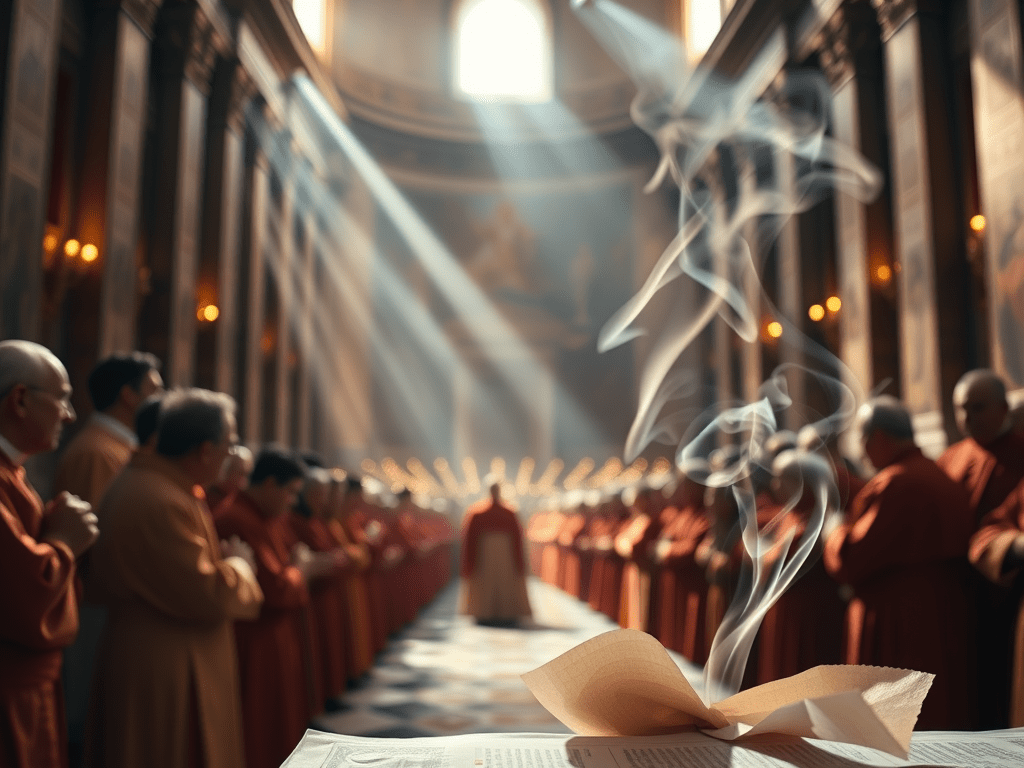
- The process to elect a new pope, called a papal conclave, involves cardinals voting in secret until a two-thirds majority is reached.
- It seems likely that the conclave starts 15-20 days after the pope’s death or resignation, with cardinals under 80 voting in the Sistine Chapel.
- Research suggests the election requires strict secrecy, with no outside communication, and uses smoke signals (black for no result, white for a new pope).
- The evidence leans toward the new pope choosing a name and being announced from St. Peter’s Basilica, ending with a blessing to the crowd.
Overview
The election of a new pope is a significant event in the Catholic Church, steeped in tradition and governed by specific rules. It begins after the current pope’s death or resignation, involving a series of steps to ensure a fair and spiritual process. Here’s a breakdown for clarity:
Trigger and Preparation
- After the pope’s passing, a nine-day mourning period includes the funeral, typically 4-6 days later, allowing global dignitaries to pay respects.
- The College of Cardinals, led by the Cardinal Camerlengo, manages affairs, verifying the death and destroying the papal seal to mark the start of the “sede vacante” (vacant seat).
The Conclave Process
- Cardinals under 80, usually around 120, gather in Rome, staying at Domus Marthae Sanctae, cut off from the outside world with no phones or media.
- The conclave, held in the Sistine Chapel, starts 15-20 days post-death, with voting in secret ballots requiring a two-thirds majority.
- Voting happens up to four times daily, with ballots burned after each round: black smoke means no pope yet, white smoke signals success, often accompanied by bells since 2005.
Election and Announcement
- Once elected, the new pope is asked to accept and chooses a papal name, a tradition for the last 470 years to honor predecessors.
- He appears on St. Peter’s Basilica’s balcony, introduced as “Habemus papam,” and gives the Urbi et Orbi blessing to the crowd, marking the end of the interregnum.
This process ensures a solemn, secure, and spiritually guided election, reflecting centuries of tradition with modern adaptations.
Survey Note: Detailed Examination of Papal Election Process
The election of a new pope, known as a papal conclave, is a meticulously structured process within the Catholic Church, governed by the apostolic constitution Universi Dominici gregis (1996), with updates by Pope Benedict XVI in 2007 and 2013. This section provides a comprehensive analysis, expanding on the overview with historical context, procedural details, and recent considerations, ensuring a thorough understanding for researchers and interested parties.
Historical Context and Evolution
The method of electing popes has evolved significantly over nearly two millennia. Early elections involved consensus among the clergy and laity of Rome, but by 1179, the two-thirds majority vote by cardinals was established. The conclave system, where cardinals are locked in seclusion, dates back to the 13th century, formalized by Pope Gregory X in 1274 to prevent delays, such as the two-year vacancy before Celestine V’s election in 1294. Subsequent reforms, like those by Pius IV in 1562 and Gregory XV in 1621-1622, refined enclosure and electoral procedures. Pope Pius X’s 1904 constitution consolidated rules, and John Paul II’s 1996 reforms modernized aspects, fixing the location in Vatican City since the 1929 Lateran Treaties, except for the 1799-1800 Venice conclave due to French occupation.
Immediate Actions Post-Pontiff
Upon the pope’s death or resignation, the Cardinal Camerlengo verifies the death, pronouncing “sede vacante,” and destroys the Ring of the Fisherman and papal seal, symbolizing the end of the reign. For instance, following Pope Francis’s death on April 21, 2025, at age 88, this process initiated, with the next conclave anticipated between May 6-11, 2025 (TIME: How a New Pope Is Chosen). A nine-day mourning period, including the funeral 4-6 days post-death, allows global dignitaries to pay respects, with the body lying in state at St. Peter’s Basilica, as seen in past events like Pope John Paul II’s funeral.
Pre-Conclave Preparations
The College of Cardinals, convened by the Dean, handles day-to-day matters via a particular congregation, including the Camerlengo and three assistants (one bishop, priest, deacon, rotated every three days). The conclave must start 15-20 days after death, extendable for cardinals’ arrival, as per historical practice (Wikipedia: Papal conclave). Cardinals under 80, limited to 120 since 1975 by Pope Paul VI but occasionally exceeded (e.g., 135 electors in 2025), are eligible to vote. In 2013, Cardinal Walter Kasper, 79 at vacancy, voted at 80 due to timing changes by John Paul II. They reside at Domus Sanctae Marthae since 2005, ensuring comfort during sequestration.
Conclave Logistics and Voting
The conclave, held in the Sistine Chapel since 1846, begins with a Mass in St. Peter’s Basilica, followed by a procession singing the Litany of the Saints and “Veni Creator Spiritus.” Cardinals take an oath of secrecy, enforced by potential excommunication for breaches, with Wi-Fi blocked and signal jammers used (Wikipedia: Papal conclave). Voting requires a two-thirds supermajority, reaffirmed by Benedict XVI in 2007, with one optional ballot on the first day, then up to four daily (two morning, two afternoon). If no election after three days, a day’s break for prayer occurs, with addresses by senior cardinals after further ballots, potentially leading to a runoff between top candidates, still needing two-thirds.
The voting process includes:
- Pre-scrutiny: Nine cardinals drawn by lot for scrutineers (3), infirmarii (3, collecting sick votes), revisers (3), roles fixed post-first scrutiny.
- Scrutiny: Secret ballots with the oath “Testor Christum Dominum, qui me iudicaturus est, me eum eligere, quem secundum Deum iudico eligi debere.”
- Post-scrutiny: Votes counted, revisers check, ballots burned with chemicals since 1963—black smoke (potassium perchlorate, anthracene, sulfur) for no election, white smoke (potassium chlorate, lactose, pine rosin) for success, with bells added in 2005 for clarity (New York Times: Vatican Reveals Recipes for Conclave Smoke).
Election and Proclamation
Upon reaching the majority, the Dean asks, “Acceptasne electionem de te canonice factam in Summum Pontificem?” The elect can decline, as Giovanni Colombo did in 1978. If accepting and not a bishop, ordination follows (deacon, priest, bishop) by the Dean or senior cardinal bishop if impeded, like Cardinal Giovanni Battista Re in 2013. The pope chooses a name, a tradition since Pope John II in 533, and is proclaimed by the protodeacon with “Annuntio vobis gaudium magnum; habemus Papam: Eminentissimum ac Reverendissimum Dominum, Dominum [given name] Sanctae Romanae Ecclesiae Cardinalem [surname] qui sibi nomen imposuit [papal name].” He appears on the balcony, imparts the Urbi et Orbi blessing, and may address crowds, as Popes John Paul II and Francis did.
Recent Considerations and Potential Reforms
While the process remains stable, discussions on reforms exist. A 2023 article suggested Pope Francis considered limiting general congregations to under-80 cardinals, enhancing pre-conclave discussions due to fewer consistories (Pillar Catholic: Pope Francis Looks at Synodal Reforms). However, no significant changes were implemented by April 24, 2025, with the process aligning with historical norms for the upcoming conclave.
Comparative Analysis
The table below summarizes key stages, timelines, and outcomes, highlighting the structured nature of the process:
| Stage | Timeline/Duration | Key Outcome |
|---|---|---|
| Immediate Actions & Mourning | 9 days mourning | Funeral, body in state, global respects paid. |
| Pre-Conclave Preparations | 15-20 days post-death | Cardinals under 80 assembled, sequestered at Domus Marthae. |
| Conclave Voting | Up to 4 ballots/day, may suspend after 3 days | Two-thirds majority needed, smoke signals (black/white) indicate progress. |
| Election and Announcement | Ends with public appearance | New pope accepts, chooses name, blesses crowd from St. Peter’s balcony. |
This detailed examination ensures a comprehensive understanding, reflecting both tradition and modern practice as of April 24, 2025.
Key Citations
 Life's Adventure