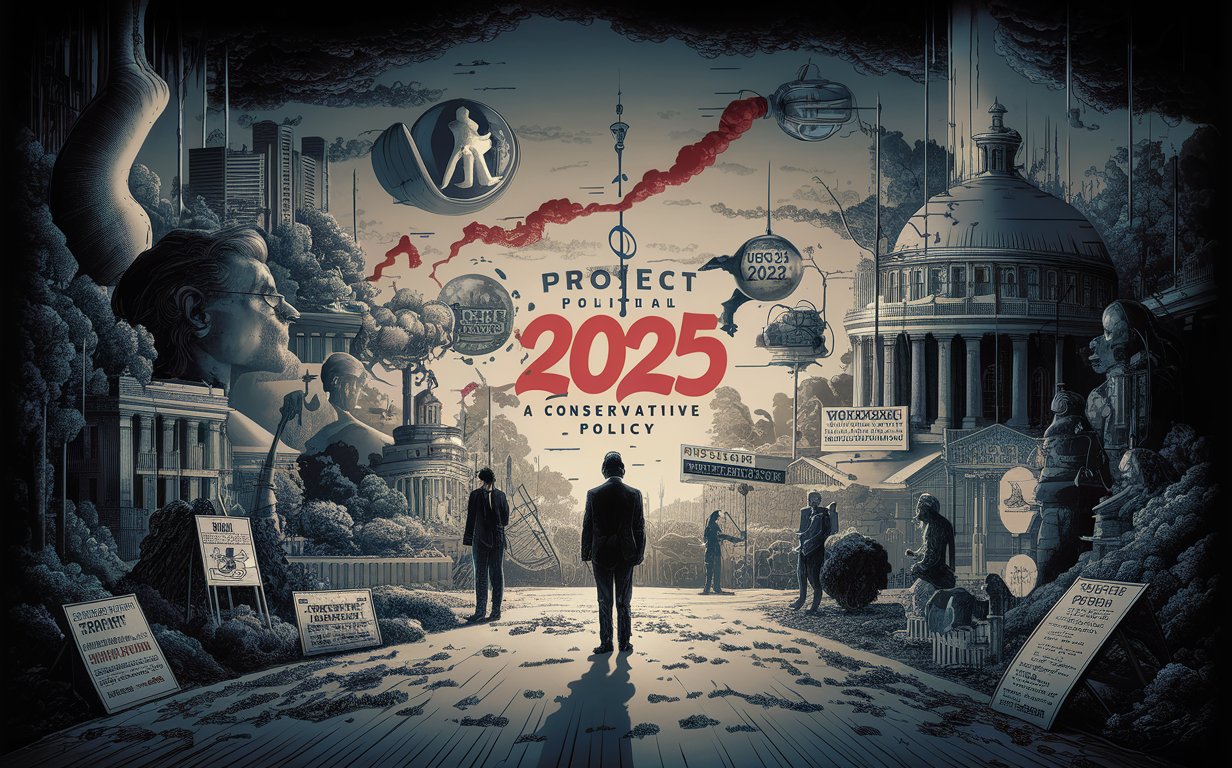
What We Get Wrong About America’s ‘Dark Turning Point’: 5 Surprising Insights

Introduction: Beyond the Noise

There is a palpable anxiety in the air, a widespread feeling that America is approaching a dark turning point. The language of civil war, martial law, and societal collapse has moved from the fringes to the mainstream of our political discourse. Many fear a spectacular, cataclysmic event that will irrevocably break the nation. But a deeper analysis reveals that the most significant threats are not the ones we typically imagine. They are quieter, more complex, and in many ways, already here.

This essay moves beyond the noise to distill five surprising and counter-intuitive takeaways from a careful assessment of America’s current political landscape. These insights challenge our popular conceptions of conflict, law, and power, revealing that the true danger is not a sudden break with the past, but a slow erosion of the very foundations of a free society.

1. The Next American Conflict Won’t Be a Civil War

The popular conception of a second American Civil War—a replay of 1861 with clear battle lines between “Red” and “Blue” states—is a dangerous fiction. The structural and geographical conditions for such a conventional, state-versus-state conflict simply do not exist in modern America.

The nation’s political geography is not a clean divide but a complex “patchwork of political enclaves.” Liberal urban centers like Madison and Milwaukee exist within the same state as conservative rural regions; even a bastion of progressivism like California contains strongly conservative inland areas. This intricate intermingling of political loyalties makes a traditional territorial war impossible. The real threat is a far messier and more localized phenomenon: a “fragmented, non-state conflict.” This new form of internal strife would be characterized by urban-rural clashes, guerrilla warfare, targeted assassinations, and cyberattacks on critical infrastructure. This reality is, in many ways, more dangerous than a conventional war. It represents a decentralized collapse of civil order that is far harder to contain, threatening a simmering insurgency that could lead to mass civilian displacement and a humanitarian crisis.

2. The Law Can’t Stop a Power Grab in Real-Time

While the Supreme Court has set constitutional limits on executive power, there is a dangerous catch: these limits are almost always applied after the fact. Landmark cases have established that the government cannot use military tribunals to try civilians when civilian courts are open, but these rulings came years after the crises that prompted the overreach had passed.

During the Civil War, President Lincoln invoked sweeping emergency powers, but the Supreme Court’s rebuke of his overreach in Ex parte Milligan did not come until 1866—a year after the war was over. Decades later, President Roosevelt ratified the imposition of martial law in Hawaii after Pearl Harbor, which was only struck down by the Court in Duncan v. Kahanamoku in 1946, long after the immediate military threat had passed. In Milligan, Justice David Davis wrote powerfully that the Constitution is not suspended in a crisis:

The Constitution applies “equally in war and in peace” and “covers with the shield of its protection all classes of men, at all times, and under all circumstances”.

The crucial implication of this historical pattern is that while the law eventually provides a check, it offers no real-time prevention. A leader could deploy the military domestically or invoke other emergency powers under the pretense of “paramount necessity,” knowing they would have a significant window of unchecked authority before the courts could intervene—potentially long after their political goals were achieved.

3. The ‘1984’ Surveillance State Is Already Here—And It’s a Public-Private Partnership

The Orwellian surveillance state is not a future threat but a present reality. The surprising twist, however, is that it doesn’t look like the centralized, state-run monolith we were taught to fear. Instead, it operates as an ironic and symbiotic “public-private partnership.”

In the 1960s, lawmakers, deeply fearful of totalitarian control, focused on preventing the creation of a single federal government database of citizen information. In a classic case of unintended consequences, they blinded themselves to the problems created by the solution: putting vast amounts of data in the hands of private companies. Today, corporations have become the chief custodians of citizens’ private data, creating a “transparent world” where our finances, affiliations, and movements are constantly collected and stored. Government agencies can then access this vast, largely unregulated network of private information, effectively bypassing the very fears that led to this system’s creation. As Senator Frank Church presciently warned decades ago, we risk falling into a “critical abyss from which there is no return” if technological advances are turned against the American people. This distributed model of surveillance is more insidious and harder to regulate than the centralized system Orwell imagined, embedding itself into the very fabric of our economy and daily lives.

4. We’re No Longer Arguing About Policy—We’re Fighting a Symbolic War

The core of modern polarization is no longer just about policy disagreements over taxes or healthcare. It has metastasized into a symbolic and moral war for the “soul of America.” When political conflict becomes a crusade, the rules of engagement change dramatically.

To understand this shift, consider the source’s analysis of a hypothetical event: the assassination of a prominent conservative activist like Charlie Kirk. The analysis shows the event would be immediately framed not as a crime to be investigated, but as a “dramatic clash of symbols and models.” The debate would not be over the facts of the murder, but over what the victim and his killer represented. On one side stands the model of a “Christian nation” built on a unifying “love of God,” and on the other, a society of “maximum individualism” where disunity is seen as the highest form of freedom. This shift is profoundly dangerous. When political conflict is framed as a moral battle between two irreconcilable visions of the nation, compromise becomes impossible. Worse, violence can become a legitimized tool in a sacred cause.

5. America’s Political Parties Have Completely Flipped Before

Today’s political battle lines feel permanent and absolute, but history offers a startling reminder of their impermanence. The core identities of America’s political parties have undergone seismic shifts before, and they could again.

It is a surprising historical fact that during the 19th century, the Democratic Party was the primary political force protecting the institution of slavery. After the Civil War, Southern Democrats, known as “Redeemers,” regained control and constructed the segregationist Jim Crow laws that dominated the “Solid South” for nearly a century, using tactics like poll taxes and literacy tests to disenfranchise Black voters. This began to change in the mid-20th century with a process known as “party realignment.” When the Democratic party, led by President Lyndon B. Johnson, championed the Civil Rights Act of 1964, it fractured the party. Segregationist Southern Democrats began a mass migration to the Republican Party, which had nominated Barry Goldwater, an opponent of the Act. This historical reversal demonstrates that the fundamental platforms of our political parties are not set in stone. They can, and do, completely transform in response to major social and moral crises.

Conclusion: The Slow Erosion

The true “dark turning point” facing America is not a single, spectacular event like a second Civil War. It is a gradual, technologically-enabled descent into a fragmented, post-truth society. The foundations of democracy are not being dynamited; they are being slowly eroded by a self-reinforcing feedback loop.

The most potent threat is the cycle where fragmented, localized violence—amplified and weaponized by a decentralized propaganda machine—provides the very justification for authoritarian measures to “restore order.” In this environment, shared facts become a rare commodity, and political debate is replaced by a symbolic war. The mechanisms of democracy are hollowed out, leaving a system that is democratic in name only. This slow decay is the most profound and imminent threat we face. It leaves us with a critical question: If the fight to save democracy must come “from the bottom up,” what does it look like to re-engage with evidence-based problem-solving in our own communities?

Scott Bottoms: Military Veteran and Colorado Gubernatorial Hopeful

Representative Scott Bottoms, a Colorado Springs Republican and church pastor, has formally entered the 2026 Colorado gubernatorial race with a bold promise to “save” the state from what he perceives as mismanagement under current Democratic leadership. Bottoms, currently serving his second term in the Colorado House of Representatives for District 15, filed his paperwork with the Colorado Secretary of State’s Office in early 2025, becoming one of the first major Republican candidates to declare for the race to replace term-limited Governor Jared Polis7. His campaign presents a deeply conservative vision centered around fiscal responsibility, parental rights, and traditional values, positioning himself as the solution to what he characterizes as Colorado’s downward trajectory under progressive policies. Bottoms brings his background as a U.S. Navy veteran, religious leader, and staunch conservative to a race that will determine Colorado’s political direction following eight years of Democratic governance. His campaign raises important questions about the state’s political future and whether his brand of conservatism can appeal to the increasingly moderate-to-liberal Colorado electorate.

Background and Political Rise

Scott Bottoms brings a diverse background to his gubernatorial candidacy, having served in multiple leadership roles throughout his career. Before entering politics, Bottoms served eight years in the U.S. Navy, establishing his credentials as a patriot committed to national service5. His educational background includes a Bachelor of Arts in Church Ministries from Southwestern Assemblies of God University, a Master of Arts in Urban and Intercultural Ministries, and a Doctorate of Ministry in Intercultural Spiritual Leadership, credentials he earned between 2002 and 201125. This academic foundation in religious studies aligns with his professional role as lead pastor of the Church at Briargate in Colorado Springs, a position he has held for nearly thirteen years, following earlier ministerial work in Strasburg and Rocky Ford that broadened his connections across both rural and urban Colorado communities5.

Bottoms’ community involvement extends beyond his pastoral duties to include leadership positions on several executive boards. He has served on boards for the Assemblies of God, Nelson University, and Strong Cross Ministries, where he chaired Sarah’s Home, an organization supporting vulnerable Coloradans5. This combination of military service, religious leadership, and community involvement formed the foundation of Bottoms’ entry into politics, where he won election to the Colorado House of Representatives in 2022. Since taking office in January 2023, Bottoms has established himself as one of the most conservative members of the legislative body, often generating controversy through his strong positions on social issues and occasional conflicts with Democratic colleagues over chamber decorum7. His relatively brief political resume-having served less than one full term before announcing his gubernatorial ambitions-suggests a rapid political ascent driven by ideological conviction rather than traditional political ladder-climbing.

Representative Bottoms maintains strong family values that inform his policy positions, having been married to his wife, Linda, for 34 years5. Together they have raised three children and welcomed two daughters-in-law and three grandchildren, all part of what his campaign describes as “their Colorado story”5. This personal narrative of family stability and religious devotion forms a central component of Bottoms’ political identity and appeal to socially conservative voters in Colorado.

Campaign Launch and Central Message

Scott Bottoms made his gubernatorial ambitions official in a distinctive and personally authentic manner, announcing his candidacy during a Sunday church service where he serves as lead pastor3. The announcement, which blended his religious role with his political aspirations, provided an early glimpse into how Bottoms intends to position himself in the race-as a candidate whose faith informs his politics and who isn’t afraid to merge these aspects of his life. During his announcement, Bottoms displayed his characteristic blunt approach, jokingly telling his congregation, “If I don’t get elected, nothing changes except probably four or five bitter sermons for the next few weeks after that”3. This remark, while humorous, highlighted the deep connection between his pastoral role and political identity that distinguishes him from many other candidates.

The central message of Bottoms’ campaign revolves around the narrative that Colorado is in decline under Democratic leadership and requires rescue through conservative governance. His campaign materials present stark claims about the state’s condition, asserting that Colorado ranks first nationally in bank robberies and cocaine use, second in car theft, third in drug use and addiction, and stands as the third most dangerous state in the country5. These alarming statistics, prominently featured on his campaign website, serve to support Bottoms’ assertion that Colorado has “buckled” under what he describes as “reckless spending, rising crime, and failing schools”5. This framing allows Bottoms to position himself as the solution to these problems by offering what he characterizes as “real solutions” rather than “empty promises” from political elites whom he portrays as being disconnected from ordinary Coloradans5.

Bottoms’ campaign launch coincided with that of another Republican legislator, Senator Mark Baisley of Woodland Park, who has also entered the 2026 gubernatorial race7. Both candidates are positioning themselves as conservative alternatives to the policies implemented under Governor Polis’s administration, though Bottoms appears to be staking out positions further to the right on social issues7. The early entry of these candidates into a race still nearly two years away signals the Republican Party’s eagerness to begin building momentum toward recapturing the governor’s mansion after what will be 20 years of Democratic control, with the exception of Bill Owens who served until 20077.

Bottoms’ Vision and Platform for Colorado

At the core of Representative Bottoms’ gubernatorial platform is a promise to bring radical transparency to state government through what he calls the “Colorado D.O.G.E.”-although the specific meaning and implementation of this acronym is not fully explained in the available materials5. This transparency initiative appears central to his approach to fiscal management, promising taxpayers will know “exactly where your tax dollars go”5. His economic vision emphasizes support for small businesses by reducing what he characterizes as excessive regulations that he believes have hampered growth under current leadership5. This deregulatory approach aligns with traditional Republican economic philosophy and would represent a significant shift from the current administration’s policies if implemented.

The educational component of Bottoms’ platform centers around empowering parents and promoting what he calls “honest education”5. While not explicitly defining this term, the context suggests alignment with conservative education movements that have opposed progressive curriculum changes related to history, gender, and sexuality in public schools. His description of “standing with parents” reflects the growing Republican focus on parental rights in education that has gained traction nationally following debates over critical race theory, comprehensive sexuality education, and policies regarding transgender students5. Bottoms’ legislative record, which includes opposition to gender-affirming care and support for restrictions on related medical practices, suggests his educational policies would likely incorporate similar socially conservative positions78.

Public safety represents another key pillar of Bottoms’ campaign platform, with his website highlighting concerning crime statistics to underscore what he portrays as a failure of current leadership to maintain order and security5. The specific policies he would implement to address these issues remain somewhat undefined in available materials, though his legislative record suggests an approach that emphasizes stricter enforcement rather than the criminal justice reforms that have characterized Democratic governance in recent years78. This focus on crime rates and public safety concerns may resonate with voters regardless of political affiliation, particularly in communities experiencing increased crime rates and declining perceptions of public safety.

Legislative Record and Policy Positions

Representative Bottoms’ legislative record provides significant insight into his policy priorities and the approaches he might take as governor. During his tenure in the Colorado House of Representatives, Bottoms has sponsored several controversial bills that reflect his deeply conservative stance on social issues. One of his most notable legislative efforts was House Bill 25-1145, which proposed making it a felony human trafficking offense to bring a minor from another state to Colorado for abortion or gender-affirming care8. This bill, which Bottoms introduced without any co-sponsors, demonstrated his willingness to pursue aggressive legislative approaches to restrict access to services that conflict with his religious and social values, even in a state that has explicitly protected such access through other legislation8.

Other legislative initiatives from Bottoms have included a bill to classify helping an out-of-state minor come to Colorado for gender-affirming care as a Class 2 felony and a proposal to ban commercial insect production for human consumption7. He also co-sponsored legislation with fellow gubernatorial candidate Mark Baisley that would have made it more difficult for medical professionals providing gender-affirming care to minors to obtain medical malpractice insurance7. These bills, all of which were defeated in the Democratic-controlled legislature, provide a window into the policy directions Bottoms might pursue if elected governor with a more supportive legislative environment. His focus on restricting gender-affirming care for minors has been particularly consistent, suggesting this would remain a priority in his administration78.

On broader social issues, Bottoms is described in reporting as having “embraced election conspiracies” and being a “fierce abortion opponent”3. These positions place him firmly within the more conservative wing of the Republican Party nationally and may present challenges in a state that has increasingly voted for Democratic candidates and policies in recent election cycles. Bottoms has also worked to promote religious expression in public life, co-sponsoring legislation to create an “In God We Trust” license plate option for Colorado drivers7. This initiative aligns with his background as a religious leader and his apparent desire to bring faith-based values into his governing philosophy.

Campaign Strategy and Electoral Challenges

Bottoms’ gubernatorial campaign faces significant strategic challenges in a state that has been trending increasingly Democratic in recent election cycles. Colorado has not elected a Republican governor since Bill Owens won reelection in 2002, representing a two-decade drought for the GOP in statewide executive races7. To overcome this historical disadvantage, Bottoms appears to be pursuing a strategy that emphasizes mobilizing the conservative base through strong positions on social issues rather than moderating his stance to appeal to the broader electorate. His campaign materials and legislative record suggest he believes energizing conservative voters who share his values, particularly on religious and family issues, offers his best path to victory.

The reception to Bottoms’ candidacy has been mixed, with supportive coverage from conservative outlets like Free State Colorado describing him as “one of Colorado’s top-rated Pro-Liberty Legislators” who has been a “passionate defender of Colorado values”4. In contrast, more progressive sources like Colorado Pols have been harshly critical, describing him as “one of the dimmest bulbs in the House Republican Caucus” and dismissing his chances of electoral success3. This polarized reception reflects both the divisiveness of Bottoms’ policy positions and the highly partisan nature of Colorado’s political environment. How Bottoms navigates these divided perceptions will significantly impact his ability to build a coalition capable of winning a statewide election.

The timing of Bottoms’ announcement, coming more than 18 months before the election, provides him with an extended runway to build name recognition and develop his campaign infrastructure. As one of the first major candidates to declare, Bottoms has an opportunity to define himself to voters before his opponents can do so, though this early announcement also means sustaining campaign momentum over a longer period37. His use of his church platform for his announcement suggests he will likely continue leveraging his religious connections as both a messaging channel and potential source of grassroots support and volunteers throughout the campaign3. This strategy may prove effective for mobilizing conservative religious voters but could potentially alienate more secular or moderate voters in the general election.

Political and Ideological Context

Scott Bottoms’ gubernatorial campaign emerges within a complex political environment in Colorado, a once-reliable Republican state that has shifted significantly toward the Democratic Party over the past two decades. His candidacy represents an attempt to reverse this trend through an unapologetically conservative platform that contrasts sharply with the state’s recent political direction. Bottoms appears to be positioning himself as part of a broader conservative movement seeking to “reclaim” states from progressive governance, as suggested by his campaign website’s tagline: “Reclaiming Our State’s…”5. This framing suggests Bottoms views his candidacy as more than just a conventional political campaign but rather as part of an ideological mission to fundamentally redirect Colorado’s political trajectory.

The current political landscape in Colorado presents both opportunities and obstacles for Bottoms’ candidacy. The state legislature has been under Democratic control since 2018, allowing for the passage of progressive legislation on issues ranging from climate change to reproductive rights that conflicts with Bottoms’ conservative vision7. This legislative record provides Bottoms with clear points of contrast to highlight in his campaign messaging, but it also reflects the political preferences of a majority of Colorado voters in recent elections. The 2026 gubernatorial election will occur without an incumbent on the ballot due to term limits for Governor Polis, potentially creating a more open competition that could benefit a Republican challenger7.

Bottoms’ strong stances on divisive social issues place him firmly within the culture war dynamics that have increasingly defined American politics. His opposition to abortion access and gender-affirming care, coupled with his embrace of election conspiracies, aligns him with national Republican messaging on these issues3. However, Colorado voters have consistently supported abortion rights, including voting against restrictions in multiple ballot initiatives, suggesting a potential misalignment between Bottoms’ positions and the electorate’s preferences on at least some key issues8. This tension between Bottoms’ ideological commitments and Colorado’s political center of gravity represents perhaps his greatest challenge in translating his candidacy into electoral success.

Conclusion and Electoral Outlook

Representative Scott Bottoms’ gubernatorial campaign represents one of the earliest and most clearly defined conservative alternatives for Colorado’s 2026 election. His background as a pastor, veteran, and outspoken conservative legislator provides him with a distinctive identity in what will likely become a crowded field of candidates seeking to succeed Governor Polis. Bottoms’ platform, centered around fiscal responsibility, parental rights in education, reduced business regulation, and socially conservative values, offers a stark contrast to the progressive policies implemented during eight years of Democratic control of the governor’s office. This clear differentiation could prove beneficial in a Republican primary where candidates typically compete to appeal to the party’s conservative base.

The electoral viability of Bottoms’ candidacy in a general election remains questionable given Colorado’s recent political trajectory. His embrace of positions that have alienated moderate voters in other contexts, such as election conspiracy theories and strong opposition to abortion access, may limit his appeal beyond the Republican base3. Some political observers have already dismissed his chances, with Colorado Pols bluntly stating, “Scott Bottoms will not be Colorado’s next Governor. You can write it down with a Sharpie”3. However, the political environment in 2026 could differ significantly from current conditions, potentially creating opportunities for Republican candidates if Democratic governance faces public backlash over issues like crime, inflation, or other emerging concerns.

As the campaign progresses, Bottoms will face the challenge of balancing his deeply held conservative principles with the pragmatic necessities of winning a statewide election in a purple-trending-blue state. His early entry into the race provides time to refine his messaging and build campaign infrastructure, but also extends the period during which he will face scrutiny of his legislative record and policy positions. Whether Bottoms can translate his vision to “save” Colorado into an effective campaign narrative that resonates beyond his conservative base will ultimately determine if his gubernatorial ambitions advance beyond the primary stage to present a serious challenge for control of the state’s highest office.

Citations:

  1. https://leg.colorado.gov/legislators/scott-bottoms
  2. https://ballotpedia.org/Scott_Bottoms
  3. https://www.coloradopols.com/diary/209081/scott-bottoms-is-doing-what-now
  4. https://freestatecolorado.com/bottoms-governor/
  5. https://www.scottbottoms.com
  6. https://savethecolorado.org/stc-board/
  7. https://www.cpr.org/2025/02/28/republicans-mark-baisley-scott-bottoms-colorado-2026-governor-race/
  8. https://coloradotimesrecorder.com/2025/02/bill-would-make-bringing-a-minor-to-colorado-for-abortion-gender-affirming-care-a-felony/67235/
  9. https://www.pastorscottforhd15.com
  10. https://coloradosun.com/2025/01/20/scott-bottoms-colorado-governor-2026/
  11. https://en.wikipedia.org/wiki/Scott_Bottoms
  12. https://www.coloradohouserepublicans.com/rep-bottoms
  13. https://www.billtrack50.com/legislatordetail/27887
  14. https://www.youtube.com/watch?v=_8iFWsEtZUU
  15. https://www.pastorscottforhd15.com
  16. https://gusto.com/resources/states/colorado/securechoice
  17. https://www.fox5atlanta.com/news/keisha-lance-bottoms-confirms-she-plans-run-ga-governor-2026
  18. https://rockymountainvoice.com/2025/03/a-shepherd-in-the-trenches-rep-scott-bottoms-answers-the-call-to-fight-for-colorado/
  19. https://www.wabe.org/bottoms-stresses-equity-transparency-first-state-city-address/
  20. https://en.wikipedia.org/wiki/Scott_Bottoms
  21. https://www.instagram.com/repscottbottoms/
  22. https://www.politico.com/newsletters/west-wing-playbook-remaking-government/2025/05/14/doge-cuts-run-into-wall-on-the-hill-00349978
  23. https://thefreedomindex.org/co/legislator/23996/votes/report-2023/pdf/sca/
  24. https://rumble.com/v6t7vtz-rep-scott-bottoms-plans-to-save-colorado-by-becoming-governor.html
  25. https://leg.colorado.gov/legislators/scott-bottoms
  26. https://www.scottbottoms.com
  27. https://coloradosun.com/2025/01/20/scott-bottoms-colorado-governor-2026/
  28. https://www.coloradopols.com/diary/209081/scott-bottoms-is-doing-what-now
  29. https://thehill.com/homenews/campaign/5232971-former-atlanta-mayor-plans-run-for-georgia-governor/
  30. https://savethecolorado.org/stc-board/
  31. https://coloradosun.com/2022/11/03/scott-bottom-house-district-15/
  32. https://coag.gov/2025/statement-on-doge-access-to-sensitive-information/
  33. https://leg.colorado.gov/bills/sb25-135
  34. https://coloradosun.com/2025/05/11/colorado-americorps-mile-high-youth-corps-doge-cuts/
  35. https://www.9news.com/article/money/elon-musk-doge-cuts-colorado/73-0cf1999b-5a32-4d25-9486-150ac8569ef1
  36. https://berthoudsurveyor.com/doge-cuts-and-chaos-come-to-colorado/
  37. https://roughdraftatlanta.com/2018/05/02/atlanta-mayor-bottoms-discusses-transparency-unity-in-state-of-the-city/
  38. https://coloradosun.com/2025/03/26/colorado-250-million-health-services-doge-cuts/
  39. https://www.youtube.com/watch?v=XViR_ZlNEJs
  40. https://twitter.com/NickRogersBTL/status/1921348181155098699
  41. https://twitter.com/repscottbottoms/status/1900646822588412096
  42. https://www.foxnews.com/media/colorado-female-staffers-allegedly-fear-retaliation-filing-bathroom-complaint-transgender-aide
  43. https://www.hks.harvard.edu/faculty-research/policy-topics/public-finance/what-awaits-department-government-efficiency-hks
  44. https://budget.house.gov/press-release/via-the-hill-what-a-trump-musk-government-efficiency-department-should-do-in-its-first-100-days
  45. https://www.reddit.com/r/Denver/comments/1kkjtqh/americorps_workers_are_doing_good_all_over/
  46. https://www.axios.com/2024/11/07/elon-musk-government-efficiency-trump

Answer from Perplexity: pplx.ai/share

2026 Colorado Republican Gubernatorial Candidates Overview

Here is a detailed metric table of current Republican candidates running for Colorado state-level office in the 2026 election, focusing on the gubernatorial race. The table includes each candidate’s key policy positions, campaign issues, and available official websites or public statements outlining their platforms.

2026 Colorado Republican Gubernatorial Candidates

CandidateKey Policy Positions & Campaign IssuesNotable Public Statements / Platform Links
Greg Lopez– Affordability (cost of living)
– Public safety
– Reducing government regulations
– Political unity and “people over politics”
“We don’t need more political games, we need real leadership.”
Emphasizes listening and unity over division2.
No official campaign site found as of April 2025.
Mark Baisley– Economic opportunity
– Education (workforce development, tech/manufacturing jobs)
– Public safety
– Opposition to “radical” left policies and government “micromanagement”
“The state government has taken on an attitude of micromanaging the people’s behavior rather than respecting and empowering ‘We The People’.”3910
No official campaign site found as of April 2025.
Scott Bottoms– Strong social conservatism
– Opposes abortion
– Opposes gender-affirming care for minors
– Election integrity focus
– Free speech advocacy
“If I don’t get elected, nothing changes except probably four or five bitter sermons for the next few weeks after that.”
Has introduced bills to criminalize aiding out-of-state minors seeking gender-affirming care69.
No official campaign site found as of April 2025.
Jason Mikesell– Budget shortfall solutions
– Housing affordability
– Stricter immigration enforcement
– Crime reduction
– Emphasis on rural Colorado and local control
“Rural Colorado comprises 75% of our state and provides considerable economic benefit… but is virtually ignored when it comes to state resources.”
Advocates for local governance and law enforcement empowerment47.
No official campaign site found as of April 2025.
Stevan Gess– Economic growth via tax incentives
– Public safety and law enforcement support
– Strong immigration control
– Second Amendment rights
– Workforce development
– Mental health support
– Supports women’s right to choose (abortion)
“Empowering all Coloradans to shape our future, together, with innovative leadership and policies that prioritize economic growth, public safety, and individual freedoms.”
Official campaign website5
Jon Gray-Ginsberg– Infrastructure (trains, pipelines)
– Advanced technology and manufacturing
– Clean energy (hydro, wind)
– Water management (desalination, pipelines)
– Tourism expansion
– Civil defense and pandemic preparedness
Proposes large-scale infrastructure projects, including a water pipeline from the Gulf of Mexico and expanded hydro/wind power.
“All Colorado Lives Matter”
Official campaign website8

Notes

  • This table focuses on candidates who have officially filed or publicly announced for the 2026 Colorado gubernatorial race as Republicans as of April 2025. Other state-level races (e.g., Attorney General, Secretary of State) have not yet seen prominent Republican announcements in the available sources.
  • Some candidates, such as Stevan Gess and Jon Gray-Ginsberg, have official campaign websites with detailed policy platforms, while others have outlined their positions primarily through public statements and media coverage.
  • The field may expand as the election approaches; this list reflects the most current, confirmed candidates and their platforms based on public records and reporting12345678910.

If you need a similar table for other state-level offices or updates as new candidates file, let me know.

Citations:

  1. https://ballotpedia.org/Colorado_state_executive_official_elections,_2026
  2. https://coloradosun.com/2025/04/14/greg-lopez-colorado-gubernatorial-bid-2026/
  3. https://coloradosun.com/2025/03/03/mark-baisley-colorado-governor-2026/
  4. https://www.policemag.com/command/news/15740392/colorado-sheriff-running-for-governor
  5. https://www.stevangess.com
  6. https://coloradosun.com/2025/01/20/scott-bottoms-colorado-governor-2026/
  7. https://www.denver7.com/news/politics/teller-county-sheriff-jason-mikesell-running-for-colorado-governor-in-2026-campaign-filing-records-show
  8. https://www.grayginsbergforcoloradogovernor.com
  9. https://www.cpr.org/2025/02/28/republicans-mark-baisley-scott-bottoms-colorado-2026-governor-race/
  10. https://coloradocommunitymedia.com/2025/03/04/mark-baisley-enters-colorados-2026-race-for-governor/
  11. https://en.wikipedia.org/wiki/2026_Colorado_gubernatorial_election
  12. https://ballotpedia.org/Colorado_Secretary_of_State_election,_2026
  13. https://www.thegreenpapers.com/G26/CO
  14. https://ballotpedia.org/Colorado_gubernatorial_and_lieutenant_gubernatorial_election,_2026
  15. https://markbaisley.com/issues/
  16. https://ballotpedia.org/Mark_Baisley
  17. https://www.denver7.com/news/politics/growing-field-of-republicans-running-for-colorado-governor
  18. https://www.yahoo.com/news/teller-county-sheriff-announces-run-211417224.html
  19. https://www.coloradopols.com/diary/209081/scott-bottoms-is-doing-what-now
  20. https://www.cpr.org/2025/04/14/former-us-rep-greg-lopez-is-running-for-governor/
  21. https://www.cpr.org/2025/03/14/teller-county-sheriff-jason-mikesell-2026-governor-race/
  22. https://www.yahoo.com/news/republican-greg-lopez-announces-third-192510529.html
  23. https://www.stevangess.com/about
  24. https://www.aspentimes.com/news/michael-bennet-launches-campaign-to-be-colorados-next-governor/
  25. https://markbaisley.com
  26. https://leg.colorado.gov/legislators/mark-baisley
  27. https://en.wikipedia.org/wiki/Scott_Bottoms
  28. https://www.policemag.com/command/news/15740392/colorado-sheriff-running-for-governor
  29. https://freestatecolorado.com/bottoms-governor/
  30. https://www.yahoo.com/news/running-colorado-governor-2026-212419991.html
  31. https://www.cpr.org/2025/03/28/colorado-republicans-pick-a-new-leader-this-weekend-heres-whos-running/
  32. https://www.cpr.org/2025/03/28/colorado-gop-party-chair-ahead-of-2026-election/
  33. https://www.youtube.com/watch?v=76vwqLunmbE
  34. https://coloradocommunitymedia.com/2025/03/04/mark-baisley-enters-colorados-2026-race-for-governor/
  35. https://coloradosun.com/2025/01/20/scott-bottoms-colorado-governor-2026/
  36. https://pagosadailypost.com/2025/03/17/teller-county-sheriff-announces-run-for-colorado-governor-in-2026/
  37. https://www.grayginsbergforcoloradogovernor.com

Answer from Perplexity: pplx.ai/share

The Controversy Surrounding Project 2025 and Its Potential Impact on Trump’s 2024 Campaign

Donald Trump’s attempt to distance himself from Project 2025 appears to be backfiring, as recent developments have highlighted the close ties between the former president and the controversial conservative policy initiative. Here’s an overview of the situation:

Trump’s Denial and Democratic Response

Late Wednesday night, Trump took to Truth Social to disavow any connection to Project 2025, stating, “I know nothing about Project 2025. I have not seen it, have no idea who is in charge of it, and unlike our very well received Republican Platform, had nothing to do with it.”[1] He accused Democrats of spreading “pure disinformation” by trying to link him to the project’s policies.

However, evidence suggests that Trump’s claim of ignorance is likely untrue. A CNN analysis found at least 140 people who worked in Trump’s administration were involved in Project 2025, including six former cabinet secretaries[1]. The project’s 900-page master plan even includes roughly 20 pages credited to Trump’s first deputy chief of staff[1].

Project 2025 and Its Ties to Trump

Project 2025 is a comprehensive policy plan developed by the Heritage Foundation and other conservative organizations. While not directly created by Trump, it is closely aligned with his potential second-term agenda:

  1. Many of Trump’s associates are linked to the project, including former Trump appointee Russ Vought and Ed Martin, who sit on the advisory board[1].
  2. The project outlines extreme conservative policies, including a federal ban on abortion and IVF, which has become a point of contention[1].
  3. Several former Trump administration officials are directly involved, such as ex-Office of Management and Budget director Russ Vought, former acting Defense Secretary Christopher Miller, and former HUD Secretary Ben Carson[4].

Democratic Strategy and Public Response

Democrats, particularly the Biden campaign, have seized on Project 2025 as a way to attack Trump:

  1. The DNC placed Project 2025 billboards around Trump’s rally in Florida[1].
  2. Biden’s campaign launched a website tying Trump to the project and released a video warning that “Project 2025 will destroy America”[1].
  3. Public interest in Project 2025 has grown significantly, with Google Trends showing a dramatic increase in searches for the term[3].

Potential Impact on Trump’s Campaign

The controversy surrounding Project 2025 may be damaging to Trump’s campaign:

  1. It exposes potential contradictions between Trump’s public stance and the policies advocated by his allies.
  2. The project’s extreme positions on issues like abortion and IVF are at odds with the majority of the electorate[1].
  3. Increased public awareness of Project 2025 could influence swing voters and those still undecided about voting[3].

As the 2024 election approaches, the debate over Project 2025 is likely to intensify. Democrats are celebrating what they see as a successful strategy to expose Trump’s connections to extreme conservative policies, while Trump and his campaign attempt to create distance from the initiative. The controversy highlights the ongoing struggle within the Republican Party to balance appealing to its conservative base while not alienating moderate voters.

Citations:
[1] https://newrepublic.com/post/183697/trump-project-2025-meltdown
[2] https://www.nytimes.com/article/project-2025.html
[3] https://www.salon.com/2024/07/05/project-2025-was-supposed-to-boost-donald-campaign–but-it-may-be-backfiring-instead/
[4] https://www.nbcnews.com/politics/donald-trump/project-2025-trump-heritage-foundation-what-know-rcna161338
[5] https://newrepublic.com/post/183706/report-trump-ties-project-2025
[6] https://apnews.com/article/trump-project-2025-biden-9d372469033d23e1e3aef5cf0470a2e6
[7] https://www.thedailybeast.com/project-2025-director-paul-dans-in-resurfaced-interview-donald-trump-is-very-bought-in
[8] https://www.theguardian.com/us-news/article/2024/jul/08/trump-project-2025
[9] https://abcnews.go.com/US/trump-distance-project-2025-architects-helped-shape-rnc/story?id=111759747
[10] https://www.cnn.com/2024/07/11/politics/trump-allies-project-2025/index.html
[11] https://www.bbc.com/news/articles/c977njnvq2do
[12] https://time.com/6995370/trump-disavows-project-2025-transition-plan/
[13] https://www.npr.org/2024/07/11/nx-s1-5035272/project-2025-trump-biden-heritage-foundation-conservative
[14] https://www.democracydocket.com/analysis/what-is-project-2025-and-why-is-it-alarming/
[15] https://www.reuters.com/world/us/trump-seeks-disavow-project-2025-despite-ties-conservative-group-2024-07-05/

Project 2025: Conservative Policy Initiative Overview and Potential Threats

Project 2025: An Overview and Its Potential Threats

Project 2025 is a comprehensive policy initiative spearheaded by the Heritage Foundation and supported by over 100 conservative organizations. It aims to reshape the U.S. federal government significantly, consolidating executive power and implementing a far-reaching conservative agenda. The initiative is designed to be enacted swiftly should a Republican, presumably Donald Trump, win the 2024 presidential election.

Key Components and Proposals

1. Executive Power Consolidation:

  • Reclassification of Civil Servants: Project 2025 proposes reclassifying tens of thousands of federal civil service workers as political appointees. This would allow the replacement of career civil servants with individuals loyal to the administration’s policies[2].
  • Unitary Executive Theory: The project asserts that the entire executive branch is under the direct control of the president, based on Article II of the U.S. Constitution[2].

2. Economic Reforms:

  • Tax Policy: The project seeks to extend the Tax Cuts and Jobs Act of 2017, simplify individual income taxes to two brackets (15% and 30%), reduce the corporate tax rate to 18%, and impose a 15% tax on capital gains and dividends[2].
  • Federal Reserve: It proposes abolishing the Federal Reserve and advocates for a commodity-backed currency like the gold standard[2].

3. Social and Civil Policies:

  • Civil Rights: Critics argue that Project 2025 would undermine civil liberties, including the rights of women, persons of color, and the LGBTQ community[2].
  • Reproductive Rights: The project includes proposals to restrict access to reproductive care and prohibit the abortion pill[5].
  • Education: It envisions reducing the federal government’s role in education, promoting school choice, and eliminating what it calls “woke propaganda” in public schools[2].

4. Environmental and Labor Policies:

  • Climate Change: The project is criticized for its lack of concern for climate change and its intent to roll back environmental protections[1].
  • Labor Protections: It aims to cut overtime pay, relax worker safety rules, and allow more workplace discrimination[1].

Potential Threats and Criticisms

1. Undermining Democracy:

  • Authoritarianism: Critics, including legal experts and anti-authoritarian groups, argue that Project 2025 represents an authoritarian plan that could transform the U.S. into an autocracy by undermining the rule of law, separation of powers, and civil liberties[2][3].
  • Executive Overreach: The project’s emphasis on consolidating executive power and bypassing congressional approval for many actions is seen as a significant threat to democratic governance[1][2].

2. Economic and Social Impact:

  • Economic Inequality: The proposed tax reforms and deregulation could exacerbate economic inequality and increase the national debt[2].
  • Social Safety Nets: The project includes plans to dismantle social safety net programs, which could reduce food assistance for millions and cut support for veterans with disabilities[1].

3. Environmental Degradation:

  • Climate Policy: The project’s disregard for climate change and environmental protections could lead to increased pollution and long-term environmental harm[1].

Political Reactions

Donald Trump has recently attempted to distance himself from Project 2025, despite its alignment with his administration’s principles and the involvement of his former aides in its creation. This disavowal is seen by some as a strategic move to avoid alienating moderate voters and to mitigate potential backlash from the project’s controversial proposals[5][6].

Conclusion

Project 2025 represents a significant shift towards a more centralized and conservative federal government. While its proponents argue it is necessary to dismantle what they see as an unaccountable bureaucracy, critics warn that it poses severe threats to democracy, civil rights, and the environment. Understanding these threats is crucial for informed public discourse and democratic engagement.

Citations:
[1] https://democracyforward.org/the-peoples-guide-to-project-2025/
[2] https://en.wikipedia.org/wiki/Project_2025
[3] https://www.wbur.org/onpoint/2024/07/11/authoritarian-promo
[4] https://www.project2025.org
[5] https://www.theguardian.com/us-news/article/2024/jul/08/trump-project-2025
[6] https://www.nytimes.com/article/project-2025.html
[7] https://www.youtube.com/watch?v=WeMjng07qB8
[8] https://www.cbsnews.com/amp/news/what-is-project-2025-trump-conservative-blueprint-heritage-foundation/
[9] https://newrepublic.com/post/183660/project-2025-trump-ally-tom-homan-revenge-threat-deportation
[10] https://www.project2025.org/about/about-project-2025/
[11] https://www.reuters.com/world/us/trump-seeks-disavow-project-2025-despite-ties-conservative-group-2024-07-05/
[12] https://www.bbc.com/news/articles/c977njnvq2do
[13] https://www.youtube.com/watch?v=nIu5gnOX6FU
[14] https://www.npr.org/2024/07/11/nx-s1-5035272/project-2025-trump-biden-heritage-foundation-conservative
[15] https://www.msnbc.com/opinion/msnbc-opinion/project-2025-what-know-trump-president-second-term-rcna160465

Project 2025: Republican Government Reshaping Plan Unveiled

Project 2025, also known as the Presidential Transition Project, is a comprehensive conservative policy proposal developed by the Heritage Foundation and other right-wing organizations to reshape the United States federal government if a Republican candidate, presumably Donald Trump, wins the 2024 presidential election[1][5]. Here are the key aspects of Project 2025:

Government Structure and Power

  • Proposes placing the entire federal bureaucracy under direct presidential control[1]
  • Advocates reclassifying tens of thousands of federal civil service workers as political appointees to replace them with loyalists[1]
  • Seeks to expand presidential power and drastically cut federal agencies like the Department of Education[3]
  • Aims to implement the controversial “unitary executive theory,” giving the president direct control over independent agencies like the Department of Justice[5]

Economic Policies

  • Recommends extending the Tax Cuts and Jobs Act of 2017[1]
  • Proposes simplifying individual income taxes to two brackets: 15% and 30%[1]
  • Aims to reduce the corporate tax rate to 18%[1]
  • Suggests abolishing the Federal Reserve and potentially returning to a gold-backed currency[5]
  • Advocates for slashing federal funding for renewable energy research and investment[5]

Social and Cultural Policies

  • Seeks to infuse the government and society with Christian values[1]
  • Proposes banning pornography and shutting down tech companies that facilitate access to such content[5]
  • Recommends withdrawing FDA approval for the abortion pill mifepristone[3][5]
  • Advocates for school choice and parental control over education[5]
  • Proposes eliminating terms like “sexual orientation,” “diversity, equity, and inclusion,” and “reproductive rights” from federal regulations[5]

Immigration and Border Security

  • Proposes increased funding for a wall on the US-Mexico border[5]
  • Recommends consolidation and expansion of powers for immigration agencies[5]
  • Suggests increasing fees on immigrants and allowing fast-tracked applications for those who pay a premium[5]

Implementation Strategy

  • Includes a 180-day playbook of actions to be taken in the first six months of a new conservative administration[2]
  • Outlines strategies for implementing policies immediately after the presidential inauguration in January 2025[5]

Critics have characterized Project 2025 as an authoritarian plan that could undermine the rule of law, separation of powers, and civil liberties[1]. However, proponents frame it as a means to dismantle what they see as an unaccountable government bureaucracy[1].

It’s worth noting that while Donald Trump has recently attempted to distance himself from Project 2025[3][4], many individuals involved in crafting the Republican Party platform and Trump’s campaign have ties to the project[3]. This has led to skepticism about Trump’s disavowal, with some suggesting it may be an attempt to avoid potential controversy during the election campaign[4].

Citations:
[1] https://en.wikipedia.org/wiki/Project_2025
[2] https://www.project2025.org
[3] https://abcnews.go.com/US/trump-distance-project-2025-architects-helped-shape-rnc/story?id=111759747
[4] https://www.theguardian.com/us-news/article/2024/jul/08/trump-project-2025
[5] https://www.bbc.com/news/articles/c977njnvq2do
[6] https://www.documentcloud.org/documents/24088042-project-2025s-mandate-for-leadership-the-conservative-promise
[7] https://www.cbsnews.com/amp/news/what-is-project-2025-trump-conservative-blueprint-heritage-foundation/
[8] https://www.heritage.org/conservatism/commentary/project-2025
[9] https://www.project2025.org/about/about-project-2025/
[10] https://www.project2025.org/policy/
[11] https://www.newsnationnow.com/politics/2024-election/heritage-foundation-project-2025-explained/
[12] https://www.democracydocket.com/analysis/what-is-project-2025-and-why-is-it-alarming/