
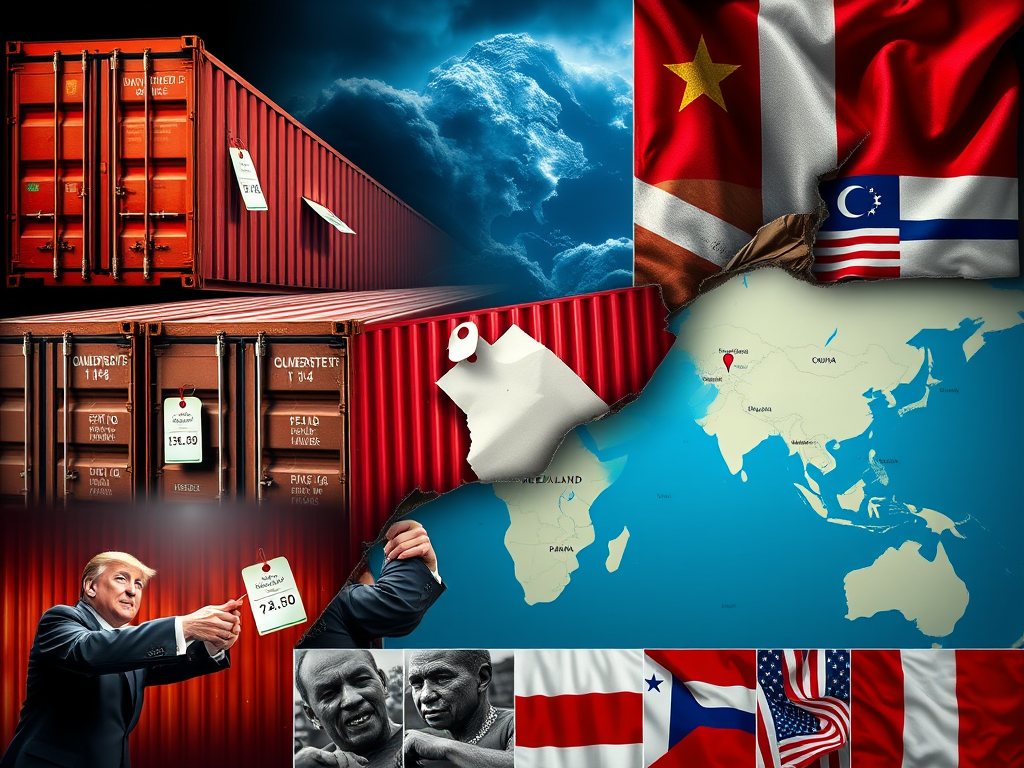
The proposition that “Trump Just Took Over the World” invites a nuanced examination of President Donald Trump’s foreign policy. It also demands consideration of its global implications. Below are the strongest, well-reasoned arguments from both proponents and critics of this perspective, supported by credible data and sources.
Argument 1: Trump’s Assertive Foreign Policy and Expansionist Actions
Proponents’ Viewpoint:
President Trump’s tenure has been marked by a series of assertive foreign policy moves. These suggest a shift towards a more imperialistic U.S. stance. Notable actions include:
- Trade Policies: The administration has imposed extensive tariffs on imports from numerous countries. They aim to correct perceived unfair trade practices against the U.S. These tariffs are intended to revitalize American manufacturing. They also aim to reduce trade deficits. However, they have been criticized for potentially destabilizing global financial markets. They might also alienate allies. (apnews.com)
- Territorial Ambitions: President Trump has made controversial statements about acquiring Greenland from Denmark. He has also spoken about reclaiming the Panama Canal. These actions have raised concerns among international observers. They have strained diplomatic relations. (time.com)
- Renaming Geographical Features: The administration has proposed renaming the Gulf of Mexico to the “Gulf of America.” This move is perceived as an assertion of dominance over the region. (time.com)
Critics’ Viewpoint:
Critics argue that these actions represent a departure from traditional U.S. foreign policy and could have detrimental effects on international relations and global stability. They contend that such policies may:
- Alienate Allies: The aggressive stance towards Canada and Denmark includes demands for territorial changes. This approach risks damaging longstanding alliances. It could also provoke nationalist responses. (theatlantic.com)
- Undermine International Order: The shift away from multilateralism is concerning. Established international norms are also being threatened. This shift threatens the liberal world order that has underpinned global peace and prosperity since World War II. (brookings.edu)
- Erode Global Stability: The administration’s focus is on unilateral actions and transactional diplomacy. These actions may lead to increased global instability. They could also weaken the effectiveness of international institutions. (foreignpolicy.com)
Argument 2: America’s Ability to Pursue Independent Policies
Proponents’ Viewpoint:
Supporters of President Trump’s approach argue that the United States has the capacity to function independently. This is due to its geographic advantages and economic structure. They believe it can do so without the need for global alliances. They point out that:
- Geopolitical Isolation: The U.S. mainland’s relative isolation provides a level of security that allows for a more independent foreign policy stance. (ft.com)
- Economic Resilience: The U.S. economy’s size and diversity enable it to withstand global economic shifts and pursue policies that prioritize national interests.
Critics’ Viewpoint:
Opponents counter that such isolationist policies could be disastrous for global stability and may:
- Weaken International Relations: A withdrawal from multilateral engagements could erode trust and cooperation among nations, leading to fragmented international relations. (foreignpolicy.com)
- Harm Global Stability: The U.S. has historically played a key role in maintaining global order. Retreating from this role could lead to increased conflicts and power vacuums. (brookings.edu)
- Neglect Global Challenges: Issues such as climate change, pandemics, and international terrorism require coordinated global responses. An isolationist approach could undermine these responses.
Conclusion:
The debate over President Trump’s foreign policy reflects a fundamental tension between national sovereignty and international cooperation. While some advocate for a more assertive and independent U.S. role on the global stage, others warn that these actions may significantly affect international relations. They could also impact global stability.
 Life's Adventure