The Kindness Marathon

The idea for the Kindness Marathon started with a simple question.

“What if we treated kindness like a sport?” asked 12-year-old Ava Thompson during a town council meeting.

The room fell silent, and Mayor Patel raised an eyebrow. “What do you mean, Ava?”

“Well,” Ava explained, “we have marathons where people run to show how strong they are. What if we had a marathon to show how kind we can be? Everyone could do as many acts of kindness as possible in 24 hours.”

The idea struck a chord. By the end of the meeting, the Kindness Marathon was born, and the small town of Brookhaven began planning the event that would change their community forever.

Rallying the Town

News of the Kindness Marathon spread quickly. Flyers went up in store windows, announcements were made at school, and the local radio station broadcast interviews with Ava and Mayor Patel.

Volunteers signed up to help organize, and local businesses offered prizes for participants who completed the most acts of kindness. The event wasn’t about competition, though—it was about creating a ripple effect of positivity.

Participants were encouraged to think creatively. Kindness could be as small as helping a neighbor carry groceries or as big as organizing a community cleanup.

The Starting Line

On a crisp Saturday morning, the marathon began. The town square buzzed with excitement as families, students, and even senior citizens gathered to kick off the event. Each participant received a “Kindness Card” to log their acts of kindness throughout the day.

Ava stood on stage, holding a megaphone. “Remember,” she said, her voice echoing through the square, “kindness isn’t about winning. It’s about making someone’s day better. Ready? Go!”

The crowd cheered and scattered in all directions, eager to spread kindness.

Acts of Kindness Everywhere

By mid-morning, Brookhaven was transformed.

At the local diner, high school students paid for strangers’ meals. At the park, kids handed out handmade cards to passersby. Elderly neighbors received surprise visits from volunteers who helped with yard work and house chores.

The fire station hosted a free pancake breakfast for families, while the library waived overdue book fees for the day.

Ava and her friends spent hours visiting the animal shelter, walking dogs, and cuddling cats. At one point, they spotted a group of kids who had set up a “Free Hugs” booth outside the grocery store.

Unexpected Connections

As the day turned into evening, acts of kindness began creating unexpected connections.

Mrs. Reynolds, who had lived alone for years, found herself laughing with a group of teenagers who came to rake her leaves. “I haven’t had this much company in ages,” she said, her eyes twinkling.

At the town’s only gas station, a man who had been struggling financially received an anonymous gift card. “Whoever did this, thank you,” he said, his voice breaking. “You’ve given me hope.”

Even rival businesses joined forces. The owners of the town’s two competing coffee shops partnered to deliver free coffee to the local hospital staff working overnight.

The Midnight Finale

As the clock neared midnight, participants gathered back in the town square to celebrate the end of the marathon. A large board had been set up to tally the acts of kindness completed.

“Let’s see what we accomplished together!” Mayor Patel announced as the final numbers were revealed.

Over 3,000 acts of kindness had been logged in 24 hours. The crowd erupted in cheers, hugging one another and sharing stories of their experiences.

Ava took the stage again, her face glowing with pride. “Look what we did,” she said. “We proved that kindness isn’t just an idea—it’s something we can do every single day.”

A Lasting Impact

The Kindness Marathon didn’t just end when the clock struck midnight. The event inspired new traditions and initiatives in Brookhaven. A kindness club was formed at the high school, neighbors organized regular volunteer days, and the town decided to make the marathon an annual event.

For Ava, the best part wasn’t the recognition or the applause—it was seeing how a single idea could bring people together and make the world a little brighter.

In the days that followed, acts of kindness continued to ripple through Brookhaven, proving that the impact of the marathon would last far longer than 24 hours.

A Bridge to the Future

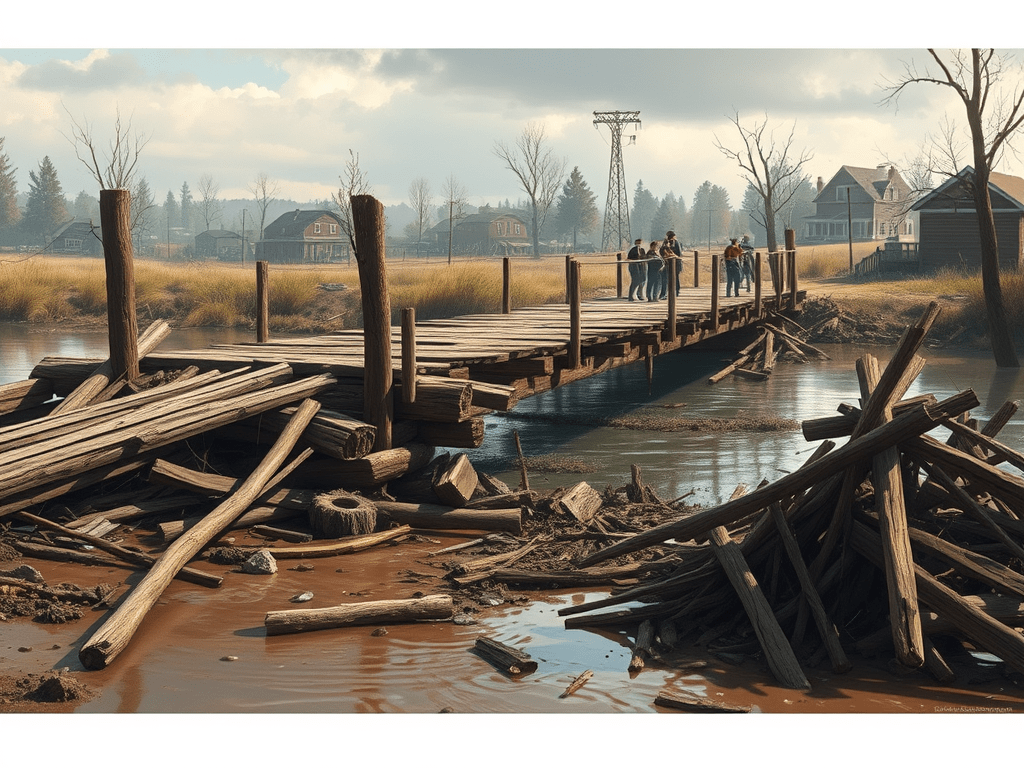
When the storm swept through Maple Grove, it brought more than just rain and wind—it brought devastation. Trees were uprooted, power lines downed, and the bridge that connected the town to its neighboring communities was completely destroyed.

The old wooden bridge had been more than just a way across the river; it was a lifeline. Farmers used it to transport their goods to market, children crossed it to reach their school, and friends met halfway for picnics by its banks. Without it, the town felt cut off from the world—and from each other.

Assessing the Damage

The morning after the storm, the townspeople gathered by the river. The once-sturdy bridge was now a pile of splintered wood and twisted metal, scattered like matchsticks along the muddy banks.

“What are we going to do?” asked Mr. Carter, the town’s baker. “We can’t afford to rebuild it. And even if we could, it would take months.”

The mayor, a pragmatic woman named Ellen, nodded grimly. “We’ll find a way,” she said. “This bridge isn’t just about crossing the river—it’s about who we are.”

The First Steps

The town held a meeting in the school gym that evening. Ideas were tossed around, but no one could agree on a solution. Then, a quiet voice cut through the noise.

“We could do it ourselves,” said Jonah, a retired carpenter.

The room fell silent.

Jonah stood and cleared his throat. “I know it sounds impossible. But if we work together—if everyone contributes what they can—I think we can rebuild this bridge.”

A murmur of agreement spread through the crowd.

“I can design it,” said Lisa, an architect who had moved back to Maple Grove to care for her aging parents.

“And I’ll provide the wood,” offered Mr. Langley, who owned the lumber mill on the outskirts of town.

One by one, people raised their hands, volunteering their skills, time, and resources.

Rebuilding Together

The next weekend, work began. Jonah taught a group of volunteers how to sand and shape the wood. Lisa organized the construction plan, breaking it down into manageable tasks.

Children painted signs to cheer on the workers, and Mrs. Thompson, the town’s unofficial chef, set up a food station to keep everyone fed.

At first, progress was slow. There were arguments over how to handle certain tasks and setbacks when materials ran short. But the community persisted, driven by the belief that they were building something bigger than a bridge—they were rebuilding their town’s spirit.

Overcoming Challenges

One day, heavy rains threatened to wash away the foundations they had laid. The workers scrambled to secure the site, forming a human chain to carry sandbags to the riverbank. Soaked and exhausted, they managed to save their progress.

“Nothing worth building is ever easy,” Jonah said, patting the shoulder of a teenage boy who had been ready to give up.

Those words became the team’s motto, written in chalk on the makeshift workstation and repeated whenever morale faltered.

The New Bridge

Months later, on a crisp autumn morning, the new bridge was finally complete. Made of strong timber and reinforced steel, it was sturdy and beautiful, with decorative railings carved by local artisans.

The whole town gathered for the ribbon-cutting ceremony. Jonah, Lisa, and the mayor stood at the center, scissors in hand.

“This bridge is more than a structure,” Ellen said, addressing the crowd. “It’s a symbol of what we can accomplish when we come together. It’s a bridge to our future.”

As the ribbon was cut, cheers erupted, and the first group of children ran across, their laughter echoing in the crisp air.

A Lasting Legacy

The new bridge quickly became a source of pride for Maple Grove. It brought back commerce, reconnected families, and became a destination for visitors who admired its craftsmanship and the story behind it.

More importantly, it reminded the townspeople of their resilience and the strength of their community.

Years later, a plaque was added to the bridge’s entrance. It read:

“This bridge was built by the hands and hearts of Maple Grove. May it always stand as a testament to the power of unity and hope.”

And stand it did, carrying the weight of countless stories, dreams, and journeys for generations to come.

The Relentless Pursuit of Success

“Success is walking from failure to failure with no loss of enthusiasm.” This powerful quote by Winston Churchill encapsulates the essence of perseverance and resilience in the face of adversity. It reminds us that the path to success is rarely a straight line, but rather a winding road paved with obstacles and setbacks.

The quote suggests that true success lies not in the absence of failures, but in the ability to embrace them as stepping stones towards growth and achievement. Each failure presents an opportunity to learn, adapt, and refine one’s approach, allowing for personal and professional development.

In everyday life, this quote can serve as a source of inspiration and motivation. It reminds us that setbacks and disappointments are inevitable, but they should not be perceived as permanent roadblocks. Instead, they should be embraced as temporary detours, challenging us to re-evaluate our strategies and emerge stronger and wiser.

By maintaining enthusiasm and determination in the face of failure, we cultivate the resilience necessary to overcome obstacles and ultimately achieve our goals. It is this unwavering spirit that separates those who merely dream of success from those who actively pursue it, undeterred by the challenges that lie ahead.

The quote also highlights the importance of passion and enthusiasm as driving forces behind success. When we approach our endeavors with genuine enthusiasm and a love for what we do, the setbacks become mere speed bumps on the road, rather than insurmountable barriers.

Applying this mindset in everyday life can have profound implications across various domains. In the professional realm, it encourages us to take calculated risks, experiment with new ideas, and learn from failures without losing sight of our ultimate goals. It fosters a growth mindset, where setbacks are viewed as stepping stones rather than definitive endpoints.

In personal pursuits, such as learning a new skill or developing a hobby, this quote reminds us to embrace the journey and celebrate the small victories along the way. Progress is rarely linear, and by maintaining enthusiasm and perseverance, we can overcome the inevitable challenges and frustrations that arise.

Furthermore, this quote holds particular relevance in the realm of entrepreneurship and innovation. Successful entrepreneurs often cite their ability to bounce back from failures as a critical factor in their eventual success. By embracing a mindset of resilience and enthusiasm, they are better equipped to navigate the uncertainties and setbacks inherent in the entrepreneurial journey.

In essence, Winston Churchill’s quote serves as a powerful reminder that success is not a destination but a continuous journey, one that requires unwavering enthusiasm, perseverance, and a willingness to learn from failures. By embracing this mindset, we can cultivate the resilience necessary to overcome obstacles and ultimately achieve our goals, one step at a time.

Embracing Personal Growth

The quote “The only person you should try to be better than is the person you were yesterday” is a powerful reminder of the importance of continuous self-improvement and personal growth. It encourages us to focus our efforts not on comparing ourselves to others, but on striving to become a better version of ourselves each day.

In our fast-paced and often competitive world, it’s easy to fall into the trap of measuring our worth by how we stack up against others. However, this mindset can lead to feelings of inadequacy, envy, and dissatisfaction. By shifting our perspective and concentrating on our own journey of self-betterment, we can cultivate a healthier and more fulfilling approach to life.

This quote suggests that true progress lies in the small, incremental steps we take towards becoming the best versions of ourselves. It’s about recognizing our potential for growth and actively working towards realizing it, one day at a time. Whether it’s developing a new skill, adopting a healthier habit, or cultivating a more positive mindset, each day presents an opportunity to be better than we were the day before.

Applying this philosophy in everyday life can have far-reaching benefits. It fosters a growth mindset, which encourages us to embrace challenges, learn from mistakes, and view setbacks as opportunities for growth. It also promotes self-awareness, as we become more attuned to our strengths, weaknesses, and areas for improvement.

Furthermore, by focusing on our own personal development, we free ourselves from the trap of comparison and the constant pursuit of external validation. We can find joy and satisfaction in the journey itself, celebrating our progress and acknowledging the efforts we’ve made towards becoming the best versions of ourselves.

In essence, this quote serves as a powerful reminder to prioritize our own personal growth and to embrace the process of continuous self-improvement. By striving to be better than we were yesterday, we can unlock our full potential, cultivate a sense of fulfillment, and ultimately lead a more purposeful and meaningful life.

Embracing this mindset can also positively impact our relationships and interactions with others. When we shift our focus inward and concentrate on our own personal growth, we become less inclined to compare ourselves to others or engage in unhealthy competition. Instead, we can celebrate the successes and achievements of those around us, recognizing that their journey is distinct from our own.

Moreover, by continuously working on self-improvement, we naturally become better versions of ourselves in various aspects of life – as partners, friends, colleagues, or community members. Our personal growth can inspire and positively influence those around us, fostering a ripple effect of positivity and personal development.

Applying this quote to everyday life requires a conscious effort and a commitment to self-reflection. It involves taking the time to identify areas for improvement, setting achievable goals, and consistently working towards them. It may also involve seeking guidance, whether through books, mentors, or personal development programs, to help us navigate our journey of self-betterment.

Ultimately, the quote “The only person you should try to be better than is the person you were yesterday” is a powerful reminder to embrace personal growth as a lifelong pursuit. By focusing on our own journey and striving to be better than we were the day before, we can unlock our true potential, cultivate a sense of fulfillment, and positively impact those around us. It’s a philosophy that encourages us to embrace the process of self-improvement and to find joy in the journey itself.

Uncovering Potential Amidst Adversity

“In the middle of difficulty lies opportunity.” – Albert Einstein

This quote by Albert Einstein resonates deeply with me, as it encapsulates a profound truth about the nature of challenges and the opportunities they present. When we find ourselves in the midst of difficulty, it’s easy to become consumed by the obstacles before us, losing sight of the potential that lies within those very struggles.

At the heart of Einstein’s words is the recognition that adversity, while daunting, is not an insurmountable barrier but rather a gateway to growth and discovery. Difficulties force us to confront our limits, question our assumptions, and explore new perspectives. It is within this crucible of challenge that we have the opportunity to tap into our inner reserves of resilience, creativity, and problem-solving abilities.

In my own life, I have encountered numerous difficulties, ranging from academic challenges to personal struggles. Each time, these obstacles initially felt overwhelming, casting doubt on my abilities and threatening to derail my progress. However, by embracing Einstein’s wisdom, I learned to reframe these difficulties as opportunities for growth.

One particular instance that stands out was during my undergraduate studies when I faced a daunting statistics course. Initially, the subject matter seemed impenetrable, and I found myself struggling to grasp the concepts. Instead of succumbing to despair, I took Einstein’s quote to heart and saw this difficulty as an opportunity to develop my analytical skills and perseverance. Through dedicated effort, seeking guidance, and embracing a growth mindset, I not only overcame the challenge but also discovered a newfound appreciation for the power of statistical analysis.

This experience taught me that within every difficulty lies the seed of opportunity – an opportunity to learn, to grow, and to emerge stronger and more resilient. It is a reminder that challenges are not obstacles to be feared but rather catalysts for personal and professional development.

In our everyday lives, we encounter myriad difficulties, from interpersonal conflicts to professional setbacks. By embracing Einstein’s wisdom, we can approach these challenges with a curious and open mind, seeking the opportunities they present. Perhaps a disagreement with a colleague could lead to a deeper understanding of differing perspectives or a professional setback could reveal a new, more fulfilling career path.

Ultimately, “In the middle of difficulty lies opportunity” is a call to embrace challenges with courage and curiosity, recognizing that within every obstacle lies the potential for growth, innovation, and self-discovery. By adopting this mindset, we can transform adversity into a powerful force for personal and professional transformation, unlocking our full potential and achieving greatness in the face of life’s inevitable difficulties.

Mastering the Resilience Mindset: The Skill for Thriving Through Adversity

“Success is not final, failure is not fatal: It is the courage to continue that counts.” – Winston Churchill

Introduction:

In 2001, few could have predicted that a small online bookseller would bounce back after failing to profit for its first six years and survive the dot-com bust. Against all odds, Amazon showed astounding resilience, with its founder Jeff Bezos exemplifying Churchill’s famous words. Rather than being derailed, their ability to courageously persist allowed them to adapt into one of the world’s most disruptive companies.

With the only constant being change, resilience has emerged as perhaps the most invaluable skill for thriving through chaos and adversity. Whether dealing with a global pandemic, economic volatility, or rapidly evolving industries – developing a resilience mindset allows individuals and organizations to flexibly respond to disruptions and grow stronger from challenges. This article explores what the resilience mindset entails and how to systematically cultivate it.

I. What is the Resilience Mindset?

At its core, the resilience mindset is a powerful combination of attitudes and behaviors that enable people to recover, adapt, and thrive in the face of significant adversity, pressure, or risk. More than just “toughing it out,” resilience allows growth and strengthening from difficult experiences.

Key characteristics include optimism about being able to bounce back, adaptability to rapidly changing circumstances, emotional awareness and self-regulation, and a hardy sense of control over outcomes. A landmark study by psychologists at the University of California found resilient individuals displayed physiologically different neurological responses that allowed them to more quickly recover from traumatic events.

While some may have a natural predisposition, the resilience mindset is not an innate trait – it’s a versatile skill that can be actively developed through intentional practice.

II. Building Blocks of Resilience

The resilience mindset stems from strengthening three interdependent areas: cognitive strategies, emotional competencies, and hardiness.

Cognitive Strategies:

  • Avoiding a pessimistic, victim mindset and taking responsibility for one’s circumstances
  • Reframing adversity as a temporary challenge and finding meaning or growth opportunities
  • Practicing cognitive flexibility to stay open-minded and objectively evaluate situations

Emotional Competencies:

  • Self-regulation and impulse control to avoid rash reactions
  • Accurate self-awareness and confidence in one’s abilities
  • Prioritizing self-care routines like exercise, mindfulness, and work/life balance

Hardiness:

  • An unwavering commitment and determination to push forward no matter the obstacles
  • Having an internal locus of control – believing one can influence outcomes
  • Operating from an ethical foundation that adverse events can’t compromise

Strengthening these interconnected areas builds “mental toughness” to persevere and handle problems constructively. While adversity is inevitable, developing resilience ensures trauma doesn’t become disabling.

III. Cultivating a Resilient Mindset

While resilience was once viewed as an inborn trait, psychologists now understand it is very much a learnable skill that can be systematically developed. Just like building physical endurance through training, specific exercises and routines can train our cognitive, emotional, and philosophical “resilience muscles.”

Cognitive-Behavioral Therapy (CBT) techniques are foundational. CBT allows improving cognitive strategies by identifying irrational thought patterns that produce anxiety or despair. It replaces these with more realistic, empowering perspectives. Mindfulness meditation cultivates emotional awareness and regulation. Regularly practicing gratitude, optimism exercises, and self-affirmations also bolster resilience.

Many high-performance organizations now incorporate resilience training into their cultures and curricula. The U.S. Army, for example, has implemented a comprehensive resilience and performance program focused on building mental toughness. Corporate programs reframe failure not as something to be ashamed of, but a growth opportunity. They emphasize learning from setbacks through techniques like after-action reviews.

The evidence is clear – resilience capabilities can be methodically grown with the right knowledge, strategies, and dedicated practice over time. While challenging at first, developing the resilience mindset provides a potent safeguard against stress and adversity.

IV. Resilience in Action: Modern Case Studies

The resilience mindset isn’t just theory – it leads to demonstrably different results when facing crises and setbacks. We can find inspiration from many individuals and organizations who have embodied resilience:

Individual Story: Oprah Winfrey’s nightmarish childhood and humble roots in rural poverty could have defined her future. Instead, Winfrey showed tremendous resilience, optimism, and determination, building an entertainment empire while becoming one of the most influential cultural icons.

Organizational Resilience: After multiple product failures, near bankruptcy, and leadership changes, experts predicted Apple’s downfall in the late 90s. Yet the company bounced back by displaying hardiness, creativity, and adapting to reinvent itself with innovations like the iMac, iPod, and iPhone.

Corporate Example: When a machine failed at his bakery, sending smoke through the air, Robert Herjavec didn’t quit – he showed resilience. The future Shark Tank star doubled down, investing in fire safety, and scaling his business to eventually sell it for $100 million.

While their circumstances differed, the common thread is that these resilient individuals and teams faced down harsh realities, maintained self-regulation during chaos, exercised cognitive flexibility to pivot, and displayed a determined, solution-focused mindset channeling adversity into growth.

Conclusion:

“It’s your reaction to adversity, not the adversity itself, that determines how your life’s story will develop.” This insight from renowned resilience researcher Dr. Steven Southwick encapsulates the power of the resilience mindset.

Rather than being crippled by setbacks, resilience skills allow deriving strength from difficulties, faster rebounding, and enduring with a hardy, growth-oriented perspective. While challenges are inevitable in our volatile era of change, developing cognitive strategies, emotional competencies, and hardiness equips us to courageously continue as Churchill advocated.

The great news is resilience is a skill we can systematically cultivate through practices backed by psychological research. It takes dedicated training and discomfort, just like building physical fitness. But the payoff of resilience – being able to flexibly respond to inevitable pressures and turning adversity into advantage – makes purposefully developing this mindset tremendously worthwhile.

Are you ready to make mastering resilience your most invaluable skill for thriving in our ever-changing world?

Trust in the Wisdom of the Hazel Tree

The hazel tree is a symbol of wisdom and protection, and its energy can help us navigate difficult situations with grace and understanding. Here are some positive messages to inspire you to trust in the wisdom of the hazel tree:

Believe in Yourself: Have faith in your own strength and resilience, just like the hazel tree[1]. Trust that you have the inner resources to overcome any challenge that comes your way.

Protect Your Spirit Growth: The hazel tree reminds us to protect our own spirit growth and trust that what is born of us will grow[2]. Nurture your own growth and trust in your own potential.

Value Trust: Trust is worth treasuring, and it is not easy to gain or maintain[3]. Be careful with the trust given to you, and do your best to show that the trust and confidence given to you will be worth it.

Plant Forgiveness: Just like planting a seed, if you plant forgiveness, you will reap reconciliation[4]. Trust in the power of forgiveness to heal relationships and bring peace.

Listen to Your Inner Voice: The hazel tree can help you find the still, small voice inside you[6]. Trust in your own intuition and inner wisdom to guide you through difficult situations.

In summary, trust in the wisdom of the hazel tree to help you navigate difficult situations with grace and understanding. Believe in yourself, protect your spirit growth, value trust, plant forgiveness, and listen to your inner voice.

Citations:
[1] Always Believe in Yourself https://www.org4life.com/always-believe
[2] Hazel http://www.thegoddesstree.com/trees/Hazel.htm
[3] 70+ Trust Messages and Inspirational Quotes https://www.theedadvocate.org/70-trust-messages-and-inspirational-quotes/
[4] Countless Smiles, Reflection and Celebration Blanket … https://www.alasu.edu/countless-smiles-reflection-and-celebration-blanket-commencement
[5] The Honeysuckle and the Hazel Tree https://publishing.cdlib.org/ucpressebooks/view?docId=ft4580069z%3Bchunk.id%3D0%3Bdoc.view%3Dprint
[6] From The Hazel Tree – Echo’s Children – Bandcamp https://echoschildren.bandcamp.com/album/from-the-hazel-tree

By Perplexity at https://www.perplexity.ai/search/3ce82cc2-cd6a-443b-a8f4-8ca3be701bbb?s=m

Stoic Meditation for Day 2

“The obstacle is the way. I will not be defeated by difficulties, but will use them as opportunities to grow and become stronger. I will not complain about what I lack, but will make use of what I have. I will focus on the present moment and not let past regrets or future fears control me. I will strive to be content with what I have, and work towards achieving excellence in all that I do.” -Ryan Holiday

Questions to consider:

  • How can I turn obstacles into opportunities for growth?
  • How can I make use of what I have, rather than complaining about what I lack?
  • How can I stay focused on the present moment, rather than dwelling on past regrets or future fears?
  • What does it mean to strive for contentment and excellence?
  • How can I apply this meditation to specific challenges or difficulties in my life?

Stoic Meditation: Day 1

“I am in control of my thoughts and reactions. External events will not be able to control my emotions. I will focus on what is within my power to change and let go of what is not. I will strive to live in accordance with nature and reason and work towards virtue and wisdom. I am grateful for this day and the opportunity to practice self-control.”

Questions to consider:

  • How can I apply this meditation to my daily life?
  • What are some specific situations where I can practice detachment from external events?
  • How can I focus on what is within my power to change and let go of what is not?
  • How can I strive to live in accordance with nature and reason?
  • What does it mean to work towards virtue and wisdom, and how can I do so?

First Leg

So far, the 1st leg of the trip went well. Nampa, Idaho was the city we stayed the night in, just short of Boise. The initial part of today’s trip will be to Salt Lake City, Utah.

The hotel we stayed in last night looked a little seedy, with a notice on the front desk talking about zero tolerance for drug use and even a whiff of anything that could be construed in that direction will result in a trespass and cops called. Needless to say that I wondered what kind of people stayed there on a consistent basis.

The day started off chilly but sunny and promises warmth.

Seek It In Yourselves

No man is free who is not master of himself. A man should so live that his happiness shall depend as little as possible on external things. The world turns aside to let any man pass who knows where he is going.” ― Epictetus

When we stop looking for happiness through external factors and start looking at cleaning, straightening, and improving the inside, our view of the world improves and by affect help improve the world around us.