
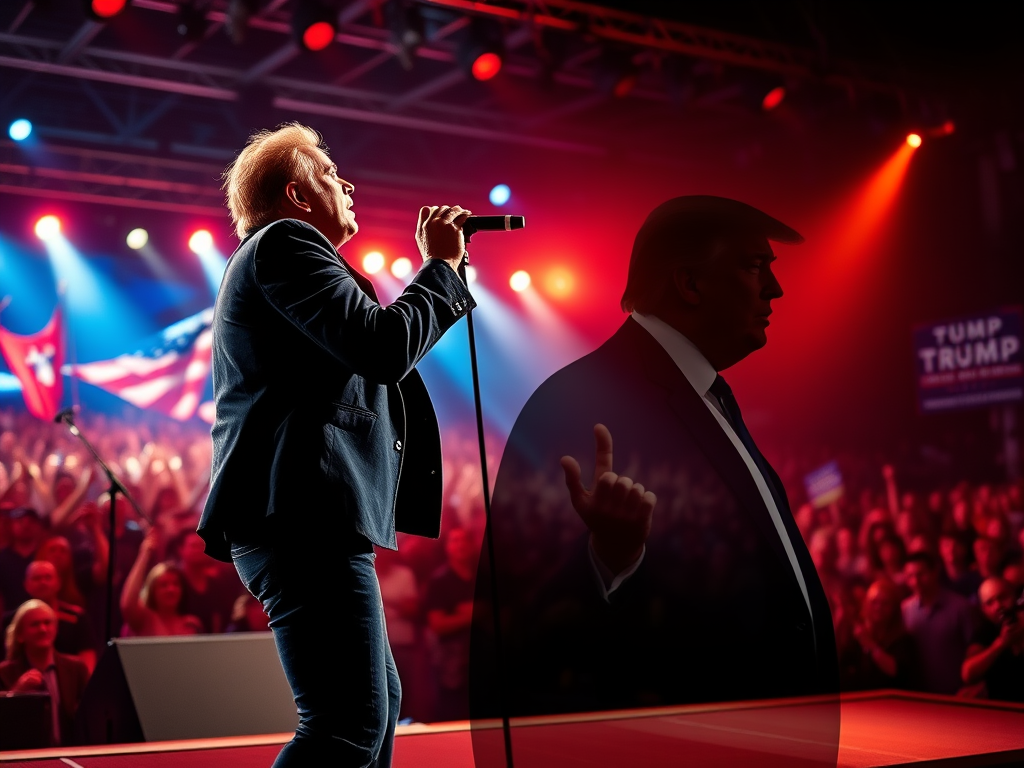
The ability to critically evaluate persuasive arguments is a cornerstone of informed citizenship. In an era of rapid information dissemination and often polarized discourse, understanding the techniques used to sway public opinion is more important than ever. This report breaks down the recent exchange between Bruce Springsteen and Donald Trump to illustrate a step-by-step process for discerning the elements of persuasive arguments, including identifying biases, recognizing manipulative language, evaluating logical merit, verifying source credibility, and guarding against emotional manipulation.
1. Identifying Bias and Motive
To effectively analyze any persuasive argument, the initial step involves understanding the potential biases and motivations of the individuals involved. In the case of Bruce Springsteen’s criticism of Donald Trump’s administration, several factors point to his underlying perspective. Springsteen has a well-established history of supporting Democratic candidates and expressing liberal political viewpoints.1 This consistent alignment with the Democratic party suggests that his criticisms of a Republican administration might stem from fundamental ideological differences and a genuine concern regarding the direction of the country under President Trump. This perspective is further reinforced by his past public criticisms of Trump, whom he labeled a “moron” in 2016 and the “most dangerous candidate” in 2024.2 This history indicates that his recent remarks are not an isolated incident but rather part of a longer pattern of opposition to Trump’s leadership.
The context in which Springsteen made these remarks is also relevant. He delivered his criticisms during a concert in Manchester, England, as part of his “Land of Hope and Dreams” tour.1 As a prominent public figure with a substantial platform, Springsteen’s choice to voice his political opinions in this setting suggests an intention to connect with his audience on shared values and concerns, potentially aiming to galvanize them around these issues. Furthermore, Springsteen articulated specific grievances against the Trump administration, citing concerns such as the persecution of free speech, the abandonment of the poor, the rollback of civil rights legislation, the administration’s stance on international allies and dictators, and the defunding of universities.2 By providing these specific examples, Springsteen attempts to ground his broader criticisms in tangible issues, suggesting his motivations are linked to his perception of the administration’s policies and actions in these areas.
Turning to Donald Trump’s perspective, his primary motivation in responding to Springsteen’s criticism is likely to defend his administration and its policies. As the current President, any public critique, especially one as strongly worded as Springsteen’s, could be perceived as a challenge to his leadership and the legitimacy of his agenda.1 Understanding this context is crucial for interpreting his response. Moreover, Trump has a well-documented history of reacting strongly and often personally to public criticism, frequently employing insults and dismissive language.1 His response to Springsteen, characterized by personal insults such as calling him “highly overrated,” “dumb as a rock,” and a “dried out prune” 1, aligns with this established pattern. This approach suggests a tactic of attempting to undermine the credibility of the critic rather than directly addressing the substance of the criticism.
Furthermore, Trump dismissed Springsteen’s political views as “radical left politics” and referenced his support for Joe Biden.1 By framing Springsteen’s criticism as purely partisan, Trump might be attempting to diminish its impact on individuals who do not share those political leanings. Finally, Trump specifically criticized Springsteen for speaking out in a “Foreign Country”.1 This suggests an attempt to appeal to nationalist sentiments and imply that such criticism should be reserved for domestic forums. Understanding these potential biases and motivations is fundamental to a comprehensive analysis of the persuasive arguments presented by both individuals.
| Figure | Political Affiliation/Support | Key Past Statements Regarding the Other |
| Bruce Springsteen | Long-time Democrat supporter | Called Trump a “moron” (2016), “most dangerous candidate” (2024) 2 |
| Donald Trump | Republican | Frequently criticizes Democratic figures and policies; referred to Springsteen as “highly overrated,” “dumb as a rock,” and a “dried out prune” 1 |
2. Recognizing Manipulative or Emotionally Loaded Language
The language employed by both Bruce Springsteen and Donald Trump in their exchange is replete with emotionally charged terms and phrases, highlighting the importance of recognizing such language when analyzing persuasive arguments. Springsteen utilized strong negative descriptors to characterize the Trump administration, labeling it “corrupt, incompetent and treasonous” 1 and invoking the concept of “authoritarianism”.1 These words carry significant negative emotional weight and can elicit strong reactions from an audience, potentially influencing their perception of the administration without necessarily prompting a thorough examination of the underlying facts.
Springsteen also employed evocative imagery to further his persuasive aims. Phrases such as “beacon of hope and liberty” 1 tap into deeply held American ideals, creating a stark contrast with his subsequent criticisms. His descriptions of specific actions, such as “persecuting people for using their right to free speech” and “abandoning the world’s poorest children to sickness and death” 2, are designed to evoke strong emotional responses like outrage and empathy. Finally, Springsteen’s direct call to action, urging those who “believe in democracy and the best of our American experience to rise with us” and “raise your voices against authoritarianism” 1, is a clear attempt to connect with his audience’s values and inspire them to take a particular stance.
In contrast, Donald Trump’s language in response is characterized by personal insults and name-calling. His use of terms like “Highly Overrated,” “dumb as a rock,” “pushy, obnoxious JERK,” and “dried out ‘prune’ of a rocker” 1 is a prime example of emotionally loaded language aimed at belittling and discrediting Springsteen. Such personal attacks often trigger emotional responses in the audience, such as amusement among supporters or outrage among detractors, potentially diverting attention from the actual substance of Springsteen’s criticisms. Trump also adopted a dismissive and belittling tone, stating, “Never liked him, never liked his music, or his Radical Left Politics” 1 and questioning Springsteen’s talent by saying “he’s not a talented guy”.1 This approach seeks to undermine Springsteen’s credibility and influence by portraying him as lacking in talent and driven by partisan motives. Finally, Trump’s statement, “This dried out ‘prune’ of a rocker…ought to KEEP HIS MOUTH SHUT until he gets back into the Country…Then we’ll all see how it goes for him!” 1, can be interpreted as a thinly veiled threat, intended to intimidate Springsteen and discourage future criticism. Recognizing these instances of manipulative or emotionally loaded language is crucial for readers to move beyond immediate emotional reactions and engage in a more reasoned analysis of the arguments being presented.
3. Evaluating Logical Merit
Evaluating the logical merit of an argument involves assessing whether the claims made are supported by sound reasoning and evidence. In the exchange between Springsteen and Trump, their arguments present different challenges from a logical standpoint. Springsteen made several strong assertions about the Trump administration, including labeling it “corrupt,” “incompetent,” and “treasonous,” and accusing it of actions like persecuting free speech and abandoning the poor.1 While the research material confirms that Springsteen made these statements, his initial remarks, as reported, do not provide detailed evidence or specific examples within the speech itself to substantiate each of these significant claims. For Springsteen’s arguments to be considered logically robust, each assertion would ideally be supported by concrete examples, verifiable data, or a clear chain of reasoning. The absence of such detailed support in his initial statement, at least as reported in these sources, makes it challenging to fully evaluate its logical merit based solely on the provided information.
Springsteen’s broader argument appears to be that the Trump administration’s actions are fundamentally at odds with American values and democratic principles. This line of reasoning implicitly relies on the audience sharing his interpretation of these core values and agreeing with his assessment of the administration’s impact on them. Such implicit arguments can be persuasive if they resonate with the audience’s pre-existing beliefs and values. However, their logical strength can be limited if these shared understandings are not present or if alternative interpretations of the values or the administration’s actions are equally plausible.
In contrast, Donald Trump’s response to Springsteen’s criticism is characterized by a significant logical flaw: the ad hominem fallacy. Trump’s reaction primarily consists of personal attacks directed at Springsteen, such as questioning his talent and appearance 1, rather than directly addressing the serious accusations of corruption, incompetence, and treason leveled against his administration. Attacking the person making the argument does not, in itself, invalidate the argument. This type of logical fallacy is often employed to deflect attention from the substantive issues at hand.
Furthermore, Trump’s criticisms regarding Springsteen’s musical talent or his decision to voice his opinions while abroad are not logically relevant to the core of Springsteen’s political accusations. Whether or not Trump enjoys Springsteen’s music or believes he should only criticize the President on American soil has no bearing on the potential validity of Springsteen’s claims about the administration’s conduct. Finally, Trump’s response notably lacks any counter-evidence or reasoning that would directly refute Springsteen’s claims. His reaction is largely reactive, dismissive, and focused on personal attacks rather than engaging with the substance of the criticism. A logically sound rebuttal would typically involve presenting evidence or offering alternative interpretations of the events or policies that Springsteen alluded to. The absence of such a substantive response weakens the logical merit of Trump’s argument in addressing the core criticisms raised.
4. Verifying Source Credibility and Track Record
When evaluating persuasive arguments, assessing the credibility and track record of the sources involved is crucial. In this exchange, both Bruce Springsteen and Donald Trump have established public profiles and histories that provide context for their statements. Bruce Springsteen’s primary domain of expertise lies in music and entertainment. He is a highly acclaimed artist with a long and successful career, recognized with numerous awards and accolades.1 While his cultural influence is undeniable, his expertise is not primarily in political science or policy analysis. Therefore, while his opinions on political matters carry weight due to his public standing, they should be considered in the context of his background. However, Springsteen does have a significant history of political activism and has consistently expressed his political views and supported Democratic candidates over the years.1 This established track record of political engagement suggests that his recent criticism of President Trump is consistent with his long-held political beliefs and is not a sudden or opportunistic stance.
Donald Trump’s primary expertise lies in the realms of business and politics, having served as the President of the United States. However, his public statements have frequently been scrutinized and often criticized for lacking factual accuracy.5 Fact-checkers have documented numerous instances of false or misleading claims made by Trump throughout his career, including during his presidency. This history of questionable accuracy can impact the credibility of his statements, particularly when responding to criticism. Furthermore, as previously noted, Trump has a well-established track record of responding to criticism with personal attacks and dismissive language rather than engaging in substantive rebuttals.1 This consistent pattern of behavior provides insights into his communication style when faced with opposition and should be taken into consideration when evaluating his response to Springsteen’s accusations. While Trump holds a position of significant authority, his history of inaccuracies and his typical methods of responding to criticism are important factors to consider when assessing the credibility of his arguments in this context.
5. Guarding Against Emotional Manipulation
The exchange between Bruce Springsteen and Donald Trump serves as a compelling case study in the use of emotionally charged language and persuasive techniques. To guard against emotional manipulation when analyzing such arguments, several strategies can be employed. The first step involves actively recognizing the emotional appeals being made. Readers should pay attention to words and phrases that are designed to evoke strong feelings, whether positive or negative. In this instance, Springsteen’s use of terms like “treasonous” and “authoritarianism,” as well as his vivid descriptions of alleged injustices, are intended to elicit strong negative emotions towards the Trump administration.1 Similarly, Trump’s use of personal insults and belittling language is designed to provoke emotional responses, such as anger or amusement, and to undermine Springsteen’s credibility.1 Recognizing these emotional appeals is the first line of defense against being unduly influenced.
Secondly, it is essential to focus on facts and evidence rather than solely relying on emotional rhetoric. When Springsteen makes claims about the administration’s actions, a critical reader should seek to identify the specific policies or events he is referring to and look for credible sources that can either support or refute these claims. Similarly, when Trump dismisses Springsteen’s views as “radical left politics,” a reader should consider whether this label accurately reflects the substance of Springsteen’s criticisms or if it is simply a way to avoid engaging with the issues raised. Relying on verifiable facts and evidence provides a more objective basis for forming opinions.
Thirdly, actively seeking diverse perspectives on the issue is crucial. To avoid being swayed by a single viewpoint, readers should consult news and analysis from a variety of sources, including those with differing political leanings. This can help to identify potential biases in reporting and analysis and provide a more comprehensive understanding of the complexities of the situation.
Fourthly, understanding common logical fallacies, such as the ad hominem attack, is vital. Trump’s response to Springsteen provides a clear example of this fallacy, as he primarily attacks Springsteen’s character and abilities rather than addressing the substance of his political criticisms. Recognizing such fallacies allows readers to dismiss these irrelevant aspects of the argument and focus on the actual claims being made.
Finally, when confronted with emotionally charged exchanges, it can be beneficial to take a step back and allow for a period of reflection before forming a definitive opinion. Strong emotions can cloud judgment and make it more difficult to engage in rational analysis. By taking time to process the information and the emotional appeals being made, readers can arrive at a more reasoned and objective assessment of the arguments presented.
Conclusions
The exchange between Bruce Springsteen and Donald Trump offers a valuable opportunity to examine the dynamics of persuasive arguments in the public sphere. Springsteen, leveraging his platform as a cultural icon, voiced strong criticisms of the Trump administration, employing emotionally charged language and highlighting specific concerns. His long history of political activism and support for the Democratic party provides a context for understanding his perspective. Trump, in response, adhered to his characteristic style of communication, relying heavily on personal insults and dismissive language aimed at discrediting his critic rather than directly addressing the substance of the accusations. His track record of frequently making inaccurate statements further complicates the assessment of his credibility in this exchange.
This analysis underscores the importance of approaching persuasive arguments with a critical mindset. By consciously identifying potential biases and motivations, recognizing manipulative language, rigorously evaluating logical merit, carefully considering source credibility, and actively guarding against emotional manipulation, individuals can become more discerning consumers of information and develop their own well-informed opinions. The case of Springsteen and Trump highlights how these critical thinking skills are essential for navigating the complexities of political discourse and forming reasoned judgments in a polarized world.
Works cited
- Trump slams Springsteen after the rocker called him ‘treasonous’ – Yahoo, accessed May 16, 2025, https://www.yahoo.com/news/trump-slams-springsteen-rocker-called-182752587.html
- After Bruce Springsteen calls Trump “treasonous,” the president responds by criticizing the rock star’s skin – CBS News, accessed May 16, 2025, https://www.cbsnews.com/news/bruce-springsteen-land-of-hopes-and-dreams-tour-trump-truth-social-post/
- ‘Corrupt, incompetent and treasonous’: Springsteen eviscerates …, accessed May 16, 2025, https://www.politico.eu/article/corrupt-incompetent-and-treasonous-bruce-springsteen-lashes-donald-trump/
- Trump slams Springsteen after singer’s attacks in U.K. – Spectrum News, accessed May 16, 2025, https://spectrumlocalnews.com/nc/triad/politics/2025/05/16/donald-trump-responds-bruce-springsteen-criticism
- Trump Has Embarrassing Public Meltdown After Bruce Springsteen Diss – Yahoo News, accessed May 16, 2025, https://news.yahoo.com/trump-embarrassing-public-meltdown-bruce-182656169.html
- Bruce Springsteen Lets Rip on ‘Treasonous’ Trump Administration – Newsweek, accessed May 16, 2025, https://www.newsweek.com/bruce-springsteen-trump-treasonous-concert-2072574
- Trump slams Springsteen after the rocker called him ‘treasonous’ – NORTHEAST – NEWS CHANNEL NEBRASKA, accessed May 16, 2025, https://northeast.newschannelnebraska.com/story/52781797/trump-slams-springsteen-after-the-rocker-called-him-treasonous
- Trump calls Springsteen ‘highly overrated’ after rocker labels him ‘treasonous’ overseas, accessed May 16, 2025, https://www.yahoo.com/news/trump-calls-springsteen-highly-overrated-143152633.html
- ‘Born in the USA’ singer Bruce Springsteen says Trump is incompetent, ‘running rogue’, accessed May 16, 2025, https://timesofindia.indiatimes.com/world/us/born-in-the-usa-singer-bruce-springsteen-says-trump-is-incompetent-running-rogue/articleshow/121193721.cms
- Bruce Springsteen calls Trump administration “corrupt, incompetent and treasonous”, accessed May 16, 2025, https://www.pizzicato.lu/bruce-springsteen-calls-trump-administration-corrupt-incompetent-and-treasonous/
- ‘Treasonous’ Trump strikes back at ‘prune’ Bruce Springsteen – Yahoo, accessed May 16, 2025, https://www.yahoo.com/news/treasonous-trump-strikes-back-prune-194700296.html
- Bruce Springsteen Calls Out ‘Corrupt, Incompetent, and Treasonous’ Trump Administration, accessed May 16, 2025, https://www.youtube.com/watch?v=xXKdI3NR4sY
- Donald Trump Calls Bruce Springsteen A “Dried Out Prune Of A Rocker” After Superstar Singer Deems Potus “Corrupt, Incompetent And Treasonous” – IMDb, accessed May 16, 2025, https://www.imdb.com/news/ni65287263/?ref_=nm_nwr_2
- Trump insults Bruce Springsteen, Taylor Swift from Air Force One – CTV News, accessed May 16, 2025, https://www.ctvnews.ca/world/article/trump-insults-bruce-springsteen-taylor-swift-from-air-force-one/
- Bruce Springsteen says Trump is ‘unfit’ and ‘incompetent’ in remarks during U.K. show, accessed May 16, 2025, https://www.ctvnews.ca/entertainment/article/bruce-springsteen-says-trump-is-unfit-and-incompetent-in-remarks-during-uk-show/
- Trump Slams Bruce Springsteen After Criticism: ‘He’s a Prune, Pushy, and Talentless’, accessed May 16, 2025, https://www.agenzianova.com/en/news/trump-vs-bruce-springsteen-after-criticism-and-a-pushy-and-talentless-prune/
- ‘Dumb as a rock’: Trump fires back at ‘obnoxious jerk’ Bruce Springsteen – Global News, accessed May 16, 2025, https://globalnews.ca/news/11183881/bruce-springsteen-donald-trump-jerk/
- Trump slams Supreme Court, Springsteen and Swift – NBC10 Philadelphia, accessed May 16, 2025, https://www.nbcphiladelphia.com/news/business/money-report/trump-slams-supreme-court-springsteen-and-swift/4187163/
- Trump slams Springsteen after singer’s attacks in U.K. – Spectrum News, accessed May 16, 2025, https://spectrumlocalnews.com/tx/san-antonio/politics/2025/05/16/donald-trump-responds-bruce-springsteen-criticism
- Trump Warns Springsteen: “He Ought to Keep His Mouth Shut Until He’s Back Into the Country” – Yahoo, accessed May 16, 2025, https://www.yahoo.com/news/trump-warns-springsteen-ought-keep-151423368.html
- Bruce Springsteen slams Trump’s administration | DW News – YouTube, accessed May 16, 2025, https://www.youtube.com/shorts/Gu2z8y2BYOM
- Donald Trump Reacts To Springsteen Calling Him ‘Treasonous’ – YouTube, accessed May 16, 2025, https://www.youtube.com/watch?v=fjLOb1LhBF4
- Donald Trump’s shocking words spark drama around Taylor Swift’s reputation – The Times of India, accessed May 16, 2025, https://timesofindia.indiatimes.com/sports/nfl/donald-trumps-shocking-words-spark-drama-around-taylor-swifts-reputation/articleshow/121217740.cms
- Trump denounces ‘activist’ judges. He’s not the first president to do so – NPR, accessed May 16, 2025, https://www.npr.org/2025/05/16/nx-s1-5393684/activist-judges-supreme-court-presidents-trump-fdr
- Rhetoric of Donald Trump – Wikipedia, accessed May 16, 2025, https://en.wikipedia.org/wiki/Rhetoric_of_Donald_Trump
- False or misleading statements by Donald Trump – Wikipedia, accessed May 16, 2025, https://en.wikipedia.org/wiki/False_or_misleading_statements_by_Donald_Trump
- Trump Responds To Obama criticism: ‘He Was An Incompetent President’ – YouTube, accessed May 16, 2025, https://www.youtube.com/watch?v=DyIJoj3a1VU
- The Age of the Winning Executive: The Case of Donald J. Trump – Harvard Law Review, accessed May 16, 2025, https://harvardlawreview.org/forum/vol-134/the-age-of-the-winning-executive/
- How America Changed During Donald Trump’s Presidency – Pew Research Center, accessed May 16, 2025, https://www.pewresearch.org/politics/2021/01/29/how-america-changed-during-donald-trumps-presidency/
- Letitia James and Donald Trump’s history of clashes – BBC, accessed May 16, 2025, https://www.bbc.com/news/world-us-canada-63000691
- Donald Trump: Domestic affairs – Miller Center, accessed May 16, 2025, https://millercenter.org/president/trump/domestic-affairs
- How Trump’s rhetoric compares to historic fascist language | PBS News, accessed May 16, 2025, https://www.pbs.org/newshour/show/how-trumps-rhetoric-compares-to-historic-fascist-language
- President Trump’s worst offenses – Citizens for Responsibility and Ethics in Washington, accessed May 16, 2025, https://www.citizensforethics.org/news/analysis/president-trumps-worst-offenses/
- Bruce Springsteen speech on Donald Trump at concert labels him ‘corrupt, incompetent and treasonous’ – YouTube, accessed May 16, 2025, https://www.youtube.com/watch?v=OUms1H4qRmY
 Life's Adventure