
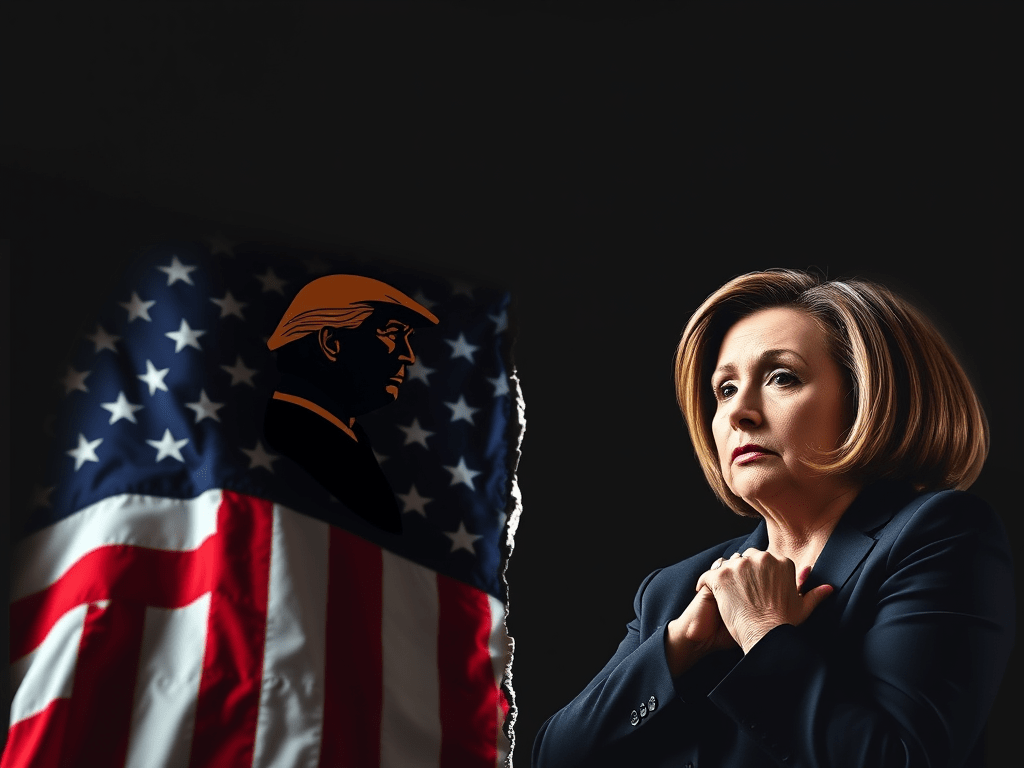
Key Points
- Research suggests conservatives, especially Donald Trump, have accused Democrats of treason, often rhetorically, during political conflicts like impeachments.
- It seems likely these claims, such as those against Nancy Pelosi and Adam Schiff in 2019, don’t meet the legal definition of treason.
- The evidence leans toward these accusations being controversial, criticized by Democrats and some Republicans as divisive and inappropriate.
Overview
Conservative claims of treason against Democrats have been notable in recent political discourse, particularly during high-tension periods. These claims are often rhetorical and not legally substantiated, focusing on political disagreements rather than meeting the constitutional definition of treason.
Specific Instances
Donald Trump, during the 2019 impeachment proceedings, accused Democrats like Nancy Pelosi and Adam Schiff of treason, suggesting they should be impeached. Another instance involved George Buck, a Florida Republican candidate, who claimed certain Democrats should be hung for treason, specifically targeting Ilhan Omar. Additionally, Stephen Ayres, a January 6th Capitol riot suspect, accused the Democrat party of treason in a social media post.
Reactions and Context
These claims have been met with criticism from Democrats and some Republicans, who view them as inflammatory. For example, Rep. Adam Kinzinger called Trump’s suggestions “beyond repugnant.” Legal experts and media outlets have clarified that such accusations do not align with the constitutional definition of treason, emphasizing the political nature of these statements.
Survey Note: Detailed Analysis of Conservative Claims of Treason Against Democrats
This section provides a comprehensive examination of conservative claims of treason against Democrats, detailing specific instances, contexts, and reactions, as observed in recent political discourse. The analysis is grounded in available information up to the current date, April 24, 2025, and aims to present a balanced view of a highly polarized topic.
Background and Definition
Treason, as defined by the U.S. Constitution, involves “levying war against the United States, or in adhering to their Enemies, giving them Aid and Comfort.” This legal threshold is narrow and typically involves actions against the nation, such as aiding foreign enemies during wartime. However, in political rhetoric, “treason” is often used loosely to describe perceived betrayals of national interest, particularly during partisan conflicts. This misuse has been evident in conservative claims against Democrats, especially during impeachments, elections, and other high-stakes political moments.
Notable Instances of Claims
- Donald Trump’s Accusations During the 2019 Impeachment Proceedings
During the 2019 impeachment inquiry into his dealings with Ukraine, Donald Trump made several high-profile accusations of treason against Democrats. Specifically, he targeted House Speaker Nancy Pelosi and Rep. Adam Schiff, the chairman of the House Intelligence Committee. On October 6, 2019, Trump posted on X, suggesting Pelosi was guilty of “High Crimes and Misdemeanors, and even Treason,” and called for their impeachment (Donald Trump X post). These statements were in response to the impeachment inquiry, which Trump viewed as politically motivated. The accusations were based on his claims that Democrats, particularly Schiff, misrepresented a phone call with Ukrainian President Volodymyr Zelenskiy, where Trump pressed for investigations into Joe Biden and his son, Hunter. Legal analyses, such as those from PBS News, clarified that these actions did not meet the constitutional definition of treason, emphasizing the rhetorical nature of Trump’s claims. - George Buck’s Extreme Rhetoric
In 2019, George Buck, a Republican congressional candidate from Florida’s 13th District, sent a fundraising letter claiming that “anti-American radical Democrats” should be hung for treason. He specifically targeted Congresswoman Ilhan Omar, a Democrat from Minnesota, citing unverified claims that she was a foreign asset passing information to another government. The letter also mentioned “tinfoil hat accusations” against Trump but lacked elaboration. This instance was reported by AP News, which noted that national and local GOP leaders distanced themselves from Buck, removing him from the National Republican Congressional Committee’s “Young Guns” program. Buck lost to Charlie Crist in the 2018 general election, highlighting the political fallout from such extreme rhetoric. - Stephen Ayres’ Social Media Accusations
Stephen Ayres, a suspect in the January 6, 2021, Capitol riot, accused the Democrat party, among other entities like the mainstream media and social media, of treason in a Facebook post. He claimed they were committing treason against a sitting U.S. president, specifically referencing President Biden and former Speaker Nancy Pelosi. This was reported by The Hill, noting Ayres’ testimony before the House January 6th Committee in 2022. His accusations were part of a broader narrative among some riot participants, reflecting deep political polarization.
Context and Political Environment
These claims often arise during periods of intense political conflict, such as impeachments, elections, or significant legislative battles. For instance, Trump’s accusations during the 2019 impeachment were part of a broader strategy to deflect criticism and frame Democrats as enemies of the state. Similarly, Buck’s claims were made in the context of a competitive congressional race, aiming to mobilize conservative voters with inflammatory rhetoric. Ayres’ accusations were tied to the January 6th insurrection, a moment of national crisis where political loyalties were sharply divided.
An opinion piece from Le Monde in February 2024 highlighted a broader trend among some Republicans viewing Democrats not as political opponents but as “enemies of the homeland,” suggesting a framing where compromise is seen as treasonous. This perspective underscores the rhetorical use of “treason” in political discourse, often divorced from legal definitions.
Reactions and Criticisms
Democrats and some Republicans have criticized these claims as inflammatory and inappropriate. For example, during the 2019 impeachment, Rep. Adam Kinzinger, a Republican from Illinois, responded to Trump’s suggestions by stating on X, “I have visited nations ravaged by civil war. … I have never imagined such a quote to be repeated by a President. This is beyond repugnant” (Adam Kinzinger X post). This criticism was echoed in media reports, such as Reuters, which noted bipartisan condemnation of Trump’s “treasonous” labels against Democrats after his State of the Union address in 2018.
Legal experts, as seen in Vox, have clarified that Trump’s accusations against Schiff did not meet the constitutional definition of treason, which requires waging war against the U.S. or aiding enemies. This legal perspective reinforces the view that such claims are politically motivated rather than legally grounded.
Table: Summary of Key Instances
| Claim of Treason Against | Made By | Context | Details | Source |
|---|---|---|---|---|
| Democrats, Pelosi, Schiff | Donald Trump | 2019 Impeachment Inquiry | Accused of treason for impeachment, suggested impeachment | PBS News |
| Ilhan Omar, other Democrats | George Buck | 2019 Congressional Race | Suggested hanging for treason, cited unverified foreign asset claims | AP News |
| Democrat Party, Media, etc. | Stephen Ayres | January 6th Riot, 2022 Testimony | Accused of treason in Facebook post, testified before Jan. 6 Committee | The Hill |
Broader Implications
The use of “treason” in political rhetoric highlights the deep polarization in U.S. politics, where political opponents are sometimes framed as existential threats. This framing can escalate tensions, as seen in Trump’s warnings of a “civil war-like fracture” if removed from office, reported by PBS News. Such rhetoric has been criticized for undermining democratic norms and legal standards, with some analysts suggesting it contributes to a climate of political violence, as evidenced by the January 6th insurrection.
While specific responses from Democrats like Nancy Pelosi to these “treason” claims are not always directly quoted, their actions, such as continuing impeachment inquiries and forming the January 6th Select Committee, indicate a rejection of these accusations as baseless. Pelosi’s statements, such as her criticism of Trump’s executive actions on January 6th rioters (Pelosi Statement), focus on upholding constitutional principles, implicitly countering the narrative of Democratic treason.
Conclusion
Conservative claims of treason against Democrats, as seen in the actions of Trump, Buck, and Ayres, are predominantly rhetorical, used in politically charged contexts to delegitimize opponents. These claims do not align with the legal definition of treason and have been widely criticized as divisive. The discourse reflects broader trends of polarization, with Democrats and some Republicans advocating for a return to legal and constitutional standards in political debate.
Key Citations
- Trump suggests Democrats are committing treason, PBS News
- Florida Republican: ‘We should hang’ treasonous Democrats, AP News
- Riot suspect who accused Democrats of ‘treason’ to testify, The Hill
- Republicans join Democrats’ stand against Trump’s claims, Reuters
- For Republicans, compromise is treason, Democrats enemies, Le Monde
- Trump called for Schiff arrest for treason, treason definition, Vox
- Did Donald Trump and supporters commit treason, The New Yorker
 Life's Adventure